


Our goal with The Daily Brief is to simplify the biggest stories in the Indian markets and help you understand what they mean. We won’t just tell you what happened; we’ll tell you why and how too. We do this show in both formats: video and audio. This piece curates the stories that we talk about.
You can listen to the podcast on Spotify, Apple Podcasts, or wherever you get your podcasts and watch the videos on YouTube. You can also watch The Daily Brief in Hindi.
In today’s edition of The Daily Brief:
1. FDI in India: easy come, easy go?
Net foreign direct investment into India reached a four-year high of $13.8 billion between April and August, up from $9.6 billion a year earlier. However, the apparent recovery masks an ongoing structural leak: in FY26, despite a record $97 billion pouring in, $90.3 billion drained out through foreign parent stake sales and outbound M&A by Indian firms. Furthermore, much of the fresh capital is buying into existing banks and brownfield assets rather than funding greenfield factories or advanced semiconductor manufacturing.
2. Catching up to the economics of electrification
While electric three-wheelers have achieved a 65% market share in India, a massive transition opportunity remains untapped in low-temperature industrial heat, which accounts for 30% of factory heat consumption. Switching to electric heat pumps delivers up to 3.5 units of heat per unit of power—far outperforming fossil boilers—and could lift India’s electrification rate from 19% to 32%. However, the shift remains constrained by steep upfront capital costs, skewed industrial power tariffs, and lagging grid capacity.
FDI in India: easy come, easy go?
If you only read the headlines this month, India’s foreign investment story looks like it’s turning a corner. As per the RBI, net foreign direct investment, or net FDI, has registered sustained improvement this year. More foreign money stayed in India between April and August 2026 than in the same months of any year since FY23.
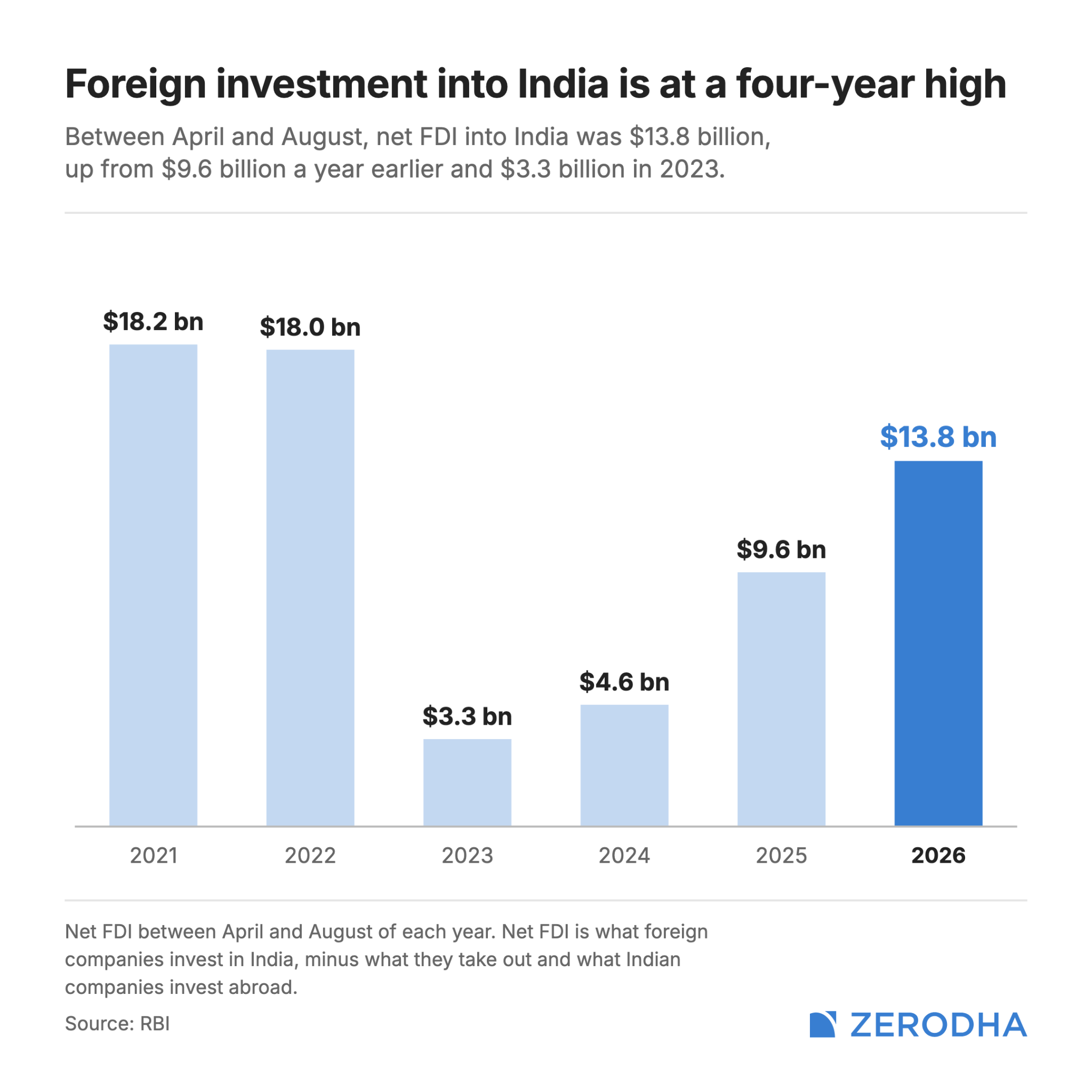
However, we are still well short of the levels reached in FY22. More importantly, a good start doesn’t guarantee a good year. For instance, in FY25, the first five months looked decent, and by March the year had almost nothing to show for it.
So, what kind of money does this net FDI represent? Will it still be here when things get rough? To answer that, we first need to clear up what FDI actually means.
First, what counts as FDI?
Broadly, foreign money comes into India in two forms.
Foreign direct investment is the long-term kind. Think of a company that builds a factory here, or buys a big chunk of an Indian business and gets a say in how it’s run.
Foreign portfolio investment, or FPI, is the short-term kind. These are funds that buy small slices of listed shares, and can sell them in seconds.
There are also two thresholds at which FDI and FDI tend to separate.
One, any stake in any Indian unlisted company counts as FDI.
Two, and more importantly if a foreign investor owns 10% or more of a listed company, that’s FDI, and anything less is FPI. This number is a global convention: at that size, an investor is assumed to have a lasting interest in the company and real influence over it. If a portfolio investor crosses the line, it has five trading days to either sell down or reclassify the stake as FDI.
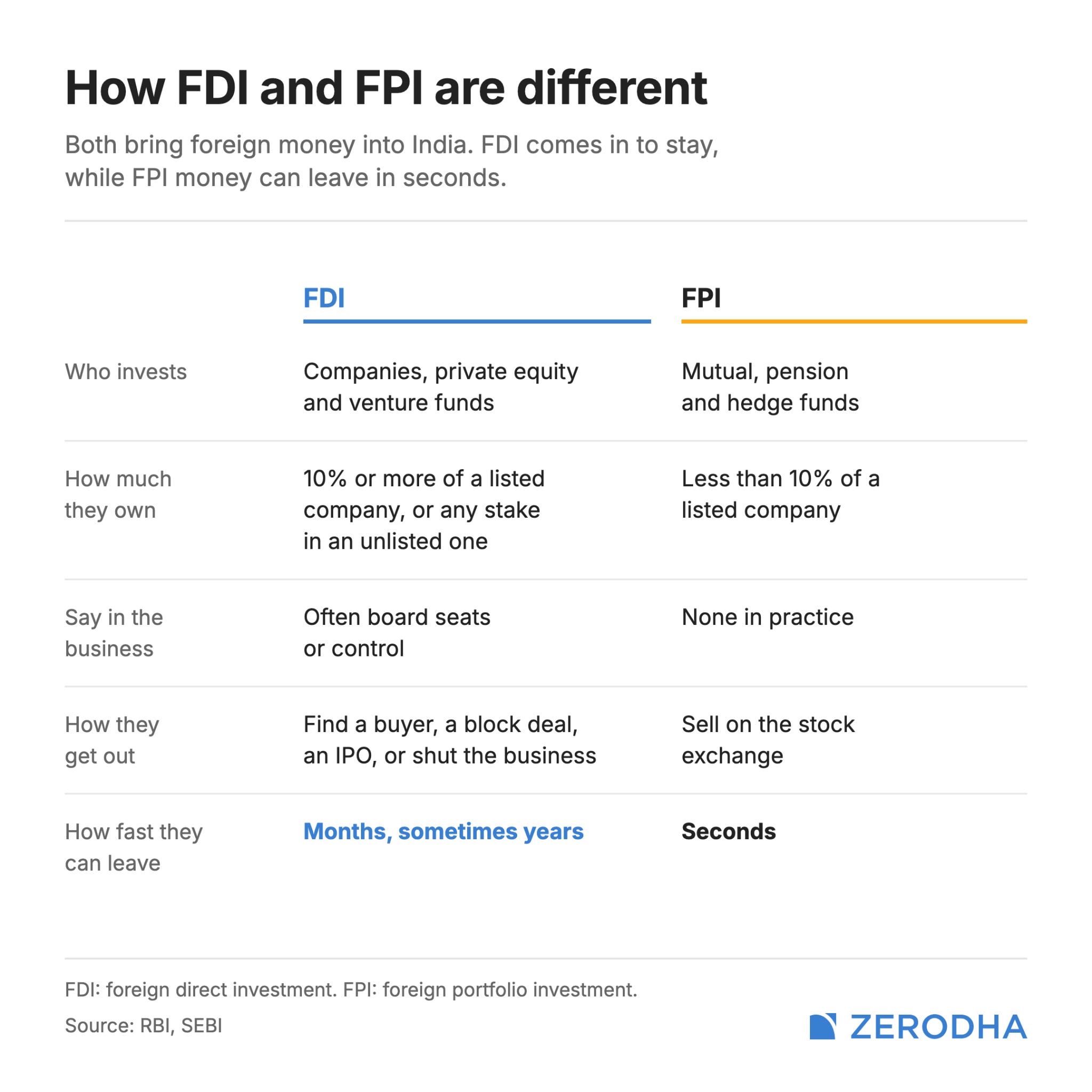
Either way, the difference really boils down to how long the investment sticks. A fund holding 2% of a listed bank can sell out in a single trading session. But exiting a big FDI stake is a much longer process where you need a buyer, a price that follows RBI’s rules, or an IPO. A factory is harder still. That’s why FDI gets called sticky money, and FPI hot money.
See what happens in actual exits. In March 2024, British American Tobacco sold 3.5% of ITC in a single block deal, worth ~₹17,500 crore. That was FDI walking out the door, since BAT still owns about a quarter of ITC. Portfolio investors, though, make hundreds of mall sales to pull money out.
That being said, while the 10% line tells you who owns what, it doesn’t tell you what the money does. It is long-term money, yes, but does it necessarily build new factories? We’ll circle back to this question later.
Where the money went
Think of FDI as a water tank. On one end of the pipe, foreign money pours in. But the pipe drains out through two outlets. One is foreign investors taking their money home, and the other is Indian companies investing abroad. Net FDI is whatever’s left in the tank.
For the last few years, the pipe kept pouring in, but both drains kept getting wider.
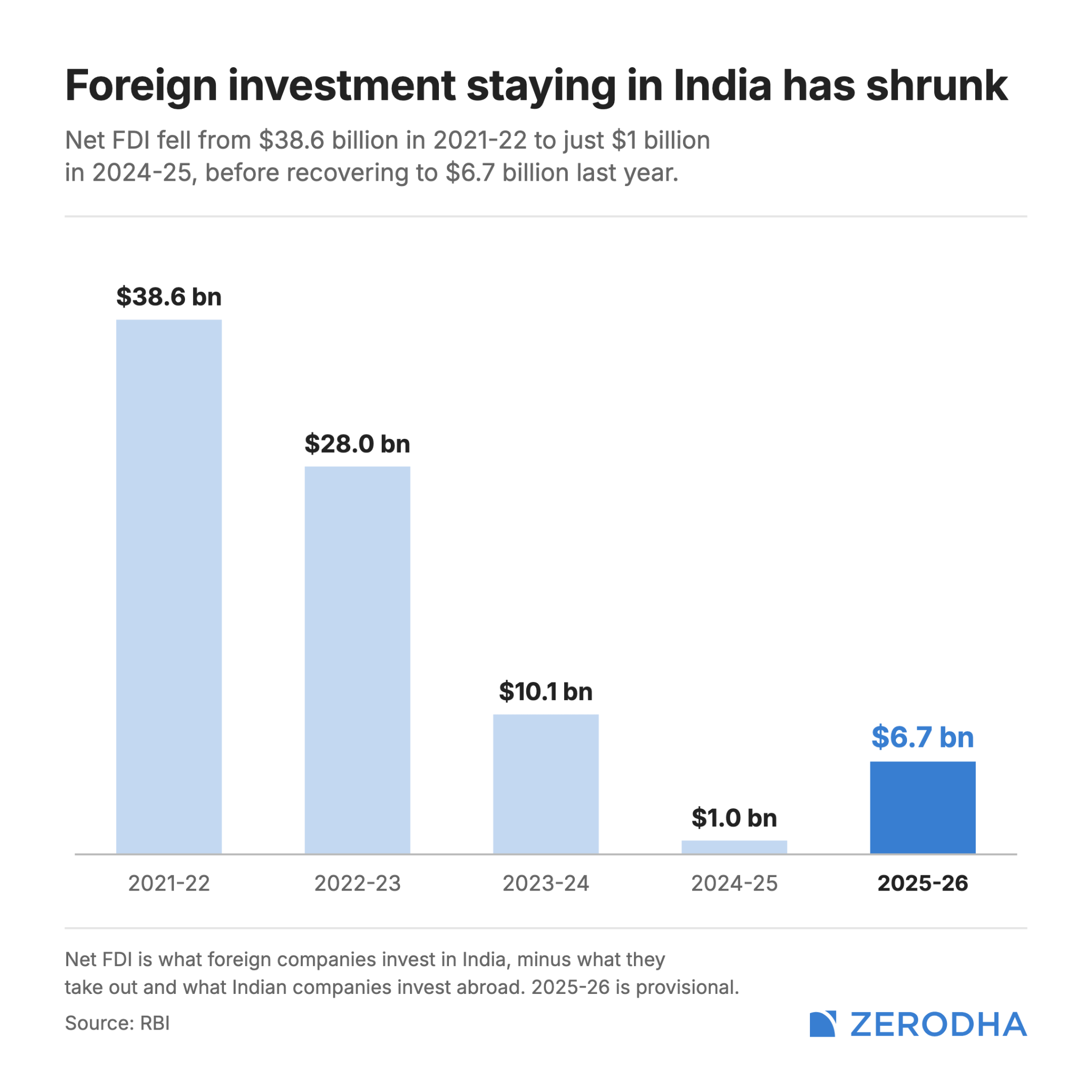
FY26 shows the problem best. It was a record year for money coming in, and still, almost all of it drained right back out.
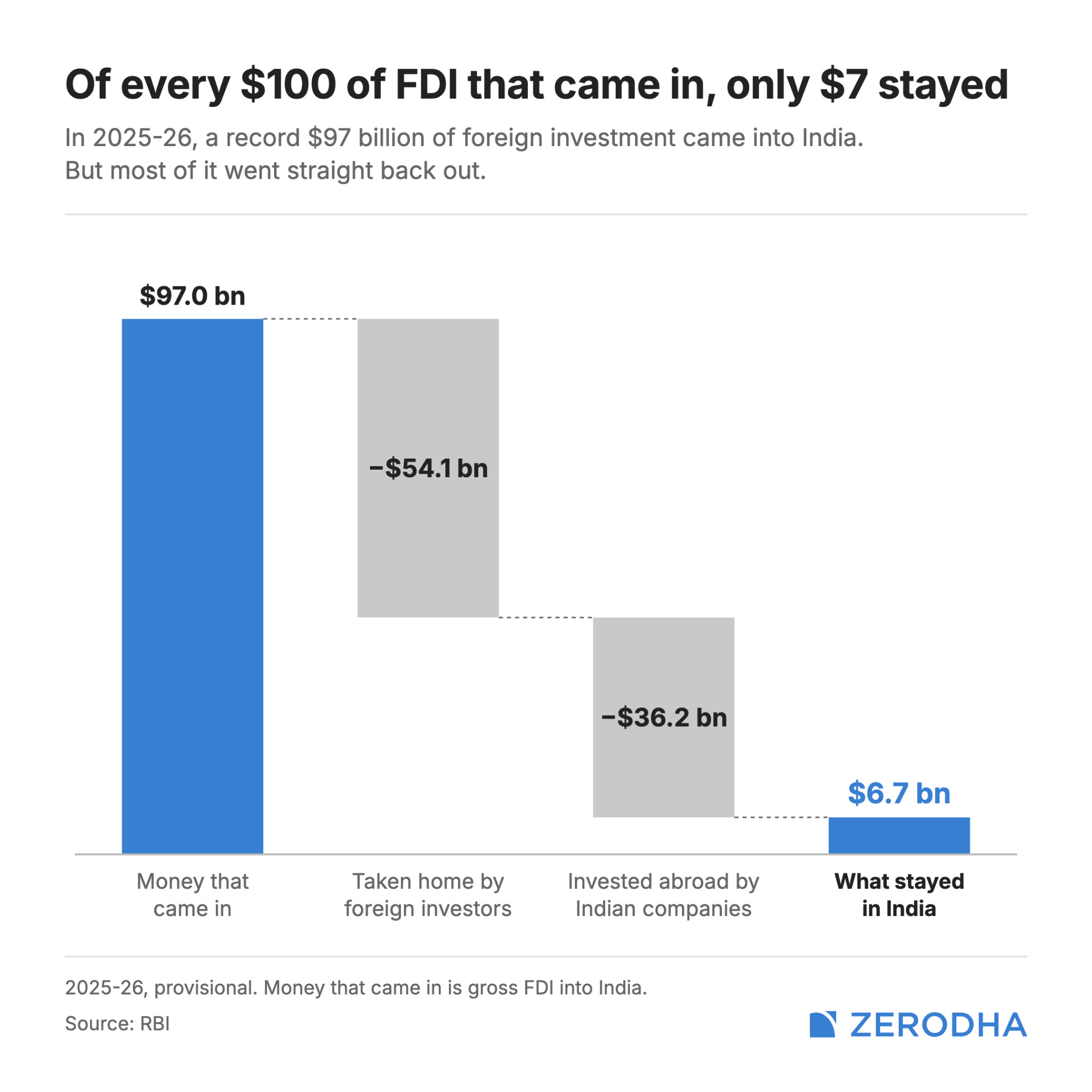
The drainout was mostly caused by investors cashing in on India’s long stock market rally. Foreign parent companies listed their Indian arms and sold part of their stakes. Hyundai, for instance, sold 17.5% of its Indian unit in a ₹27,870 crore IPO in 2024, and LG did the same in 2025. Along with a few other listings, these sent nearly $5 billion home. Neither company left India, though.
The second drain was Indian companies going shopping abroad, and IT companies have been some of the busiest shoppers. Earlier this year, Coforge bought US software engineering firm Encora for $2.35 billion. A few months later, Persistent Systems announced a billion-dollar deal for Germany’s Nagarro, the biggest acquisition in its history. Many other Indian IT firms have gone on a buying spree of their own lately, and we’ve dived into the logic underlying it in a past story.
So, what changed this year? You might think the drains narrowed, but they didn’t. In absolute terms, Indian companies have invested more abroad than last financial year, and foreign investors took home a little more too. Outward investment only grew more slowly than last year, but didn’t fall. It’s just that pipe inflow increased.
Which brings us to the obvious question: what is all this new money buying?
What is the money buying?
Foreign money can help build something completely new (or greenfield), like a factory or a data centre. Or it can buy a share of something that already exists (brownfield).
Banking is the clearest example of the second kind. Over the past year, foreign lenders have been buying big stakes in Indian ones. Japan’s SMBC took 20% of Yes Bank. Mitsubishi UFJ took 20% of Shriram Finance. Dubai’s Emirates NBD is putting money into RBL Bank. And the biggest deal is still to close: Canada’s Fairfax Financial is buying 60.72% of IDBI Bank for ₹52,878 crore, set to be the largest foreign investment in an Indian bank.

These deals don’t all work the same way. When a bank issues new shares to a foreign buyer, the money becomes fresh capital it can lend out. But in the IDBI deal, the money goes to the sellers, the government and LIC. IDBI Bank itself doesn’t get a rupee of new capital.
What about FDI in greenfield projects? The standout is data centres. Alphabet’s $14.5 billion data centre plan in India, for instance, was the biggest new project announced anywhere in the world last year. And it isn’t a one-off, either. This year, India ranks third in the world for announced new projects.
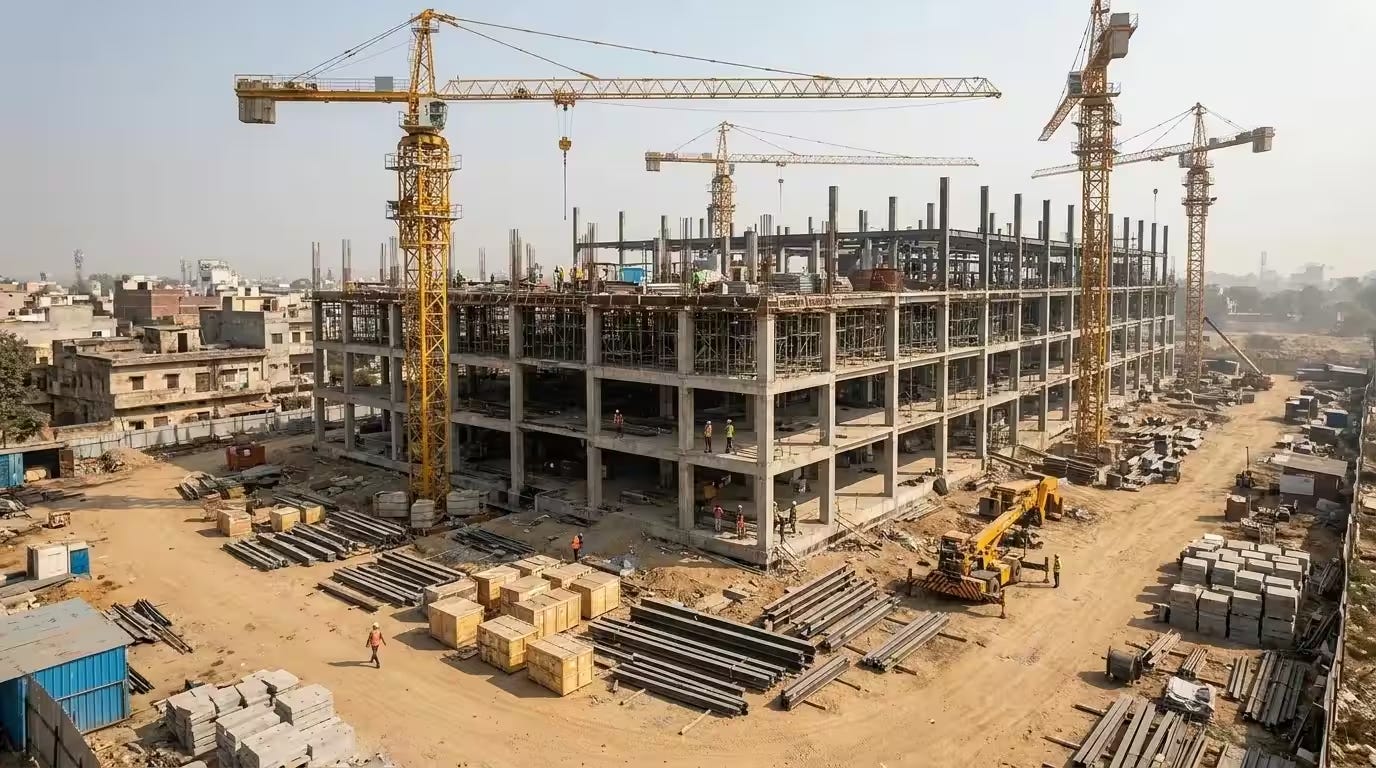
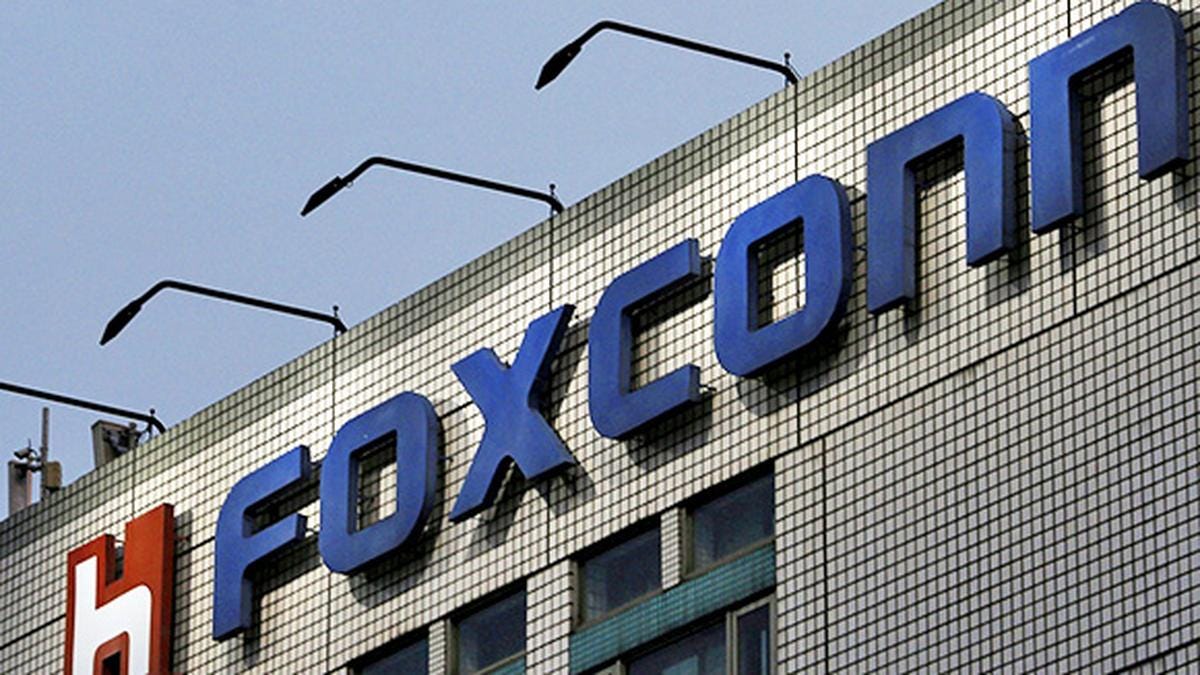
But an announcement isn’t money in the bank. Last year, Tamil Nadu announced a ₹15,000 crore Foxconn investment that Foxconn later denied. So the real test is how many of these plans turn into actual spending. And that depends on the next dilemma.
Should it be easy for foreign money to leave?
In any fast-growing emerging market, foreign investors show up when there’s money to be made, and leave when there isn’t. So how hard should a country make it to leave?
Make it easy, and more investors come in, because they know they can get out smoothly. That’s how the RBI sees the recent wave of exits, calling it a sign of a mature market. A fund that exits with a profit is basically an ad for its next fund cycle.
The catch is that easy money is only as loyal as its returns. A stake in a listed bank can be sold in a day, but a factory really needs patient money for years, and even longer to earn real profits. That’s exactly the money India wants most, and it’s the hardest to get.
Foxconn shows both sides of this. Its iPhone plant near Bengaluru is a $2.8 billion project that hired 30,000 people in under a year. That’s hard to walk away from. But in 2023, Foxconn also walked out of a $19.5 billion chip venture with Vedanta, before a single factory was built.
India knows this, which is why it tries to lock money in using its industrial policy. We covered one such scheme for foreign EV makers last year. In it, carmakers are promised lower import duties if they promise to invest at least $500 million here within three years, along with value addition targets to be met by the third and fifth years of operations. They also have to post a bank guarantee worth 5 years of foregone duties, which the government can seize if the conditions above aren’t met.
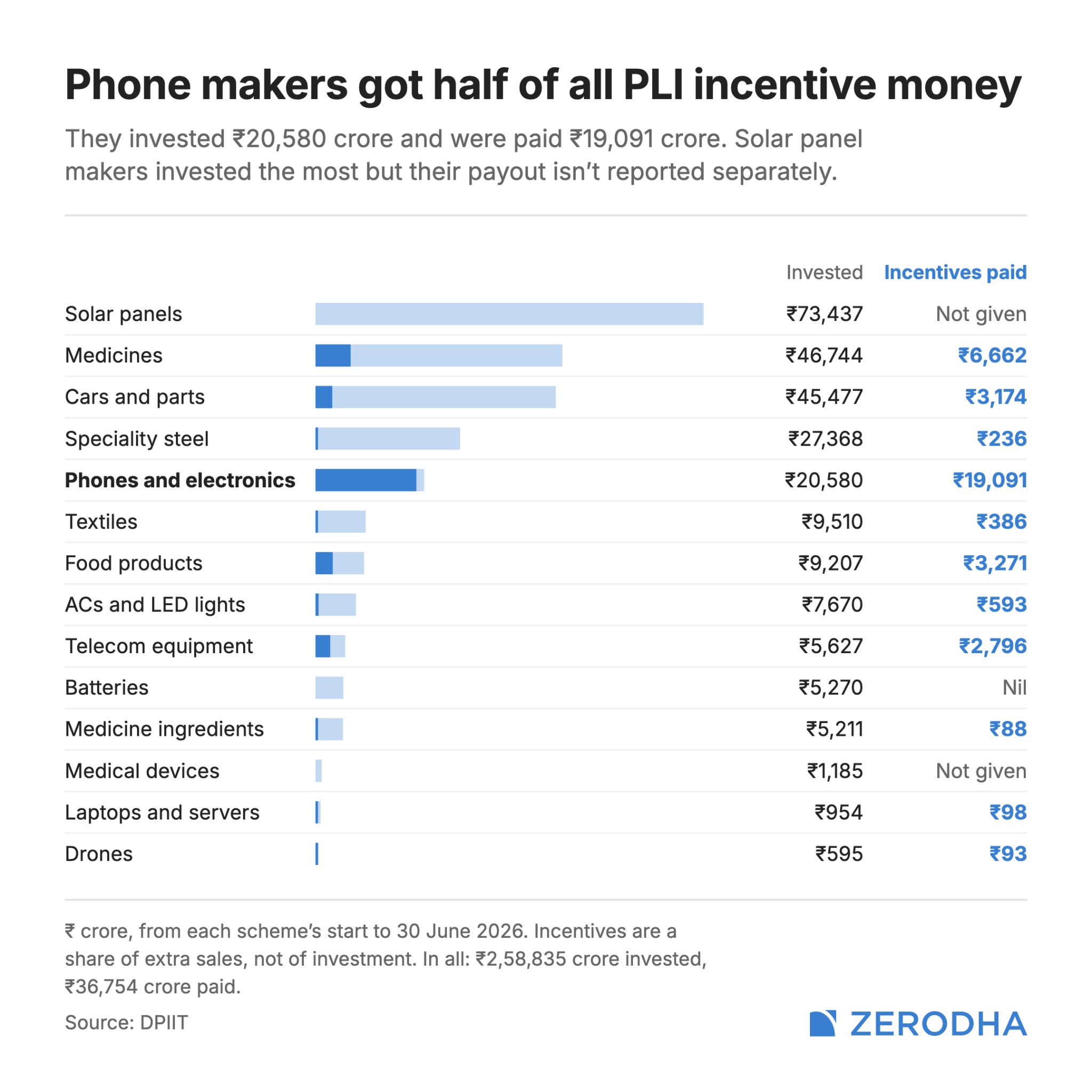
The softer tool is the production-linked incentive scheme, or PLI. It only pays companies for what they produce, so they have to invest first. It has pulled in ₹2.58 lakh crore of investment, Indian and foreign combined. But results vary a lot. The scheme for battery cells hasn’t paid out a single rupee, because no company has hit its production targets yet.
There’s no clean answer here. Too many conditions, and investors stay away. Too few, and the money walks out at the first sign of trouble.
Keeping up with the rupee
The amount of FDI we bring in also affects the rupee. India buys more from the world than it sells, and it pays the difference in dollars. So every steady source of dollars helps hold the rupee up, and FDI is one of those sources.
But it’s far from the biggest. Our IT and services exports, and remittances from abroad, bring in many times more dollars than FDI does.
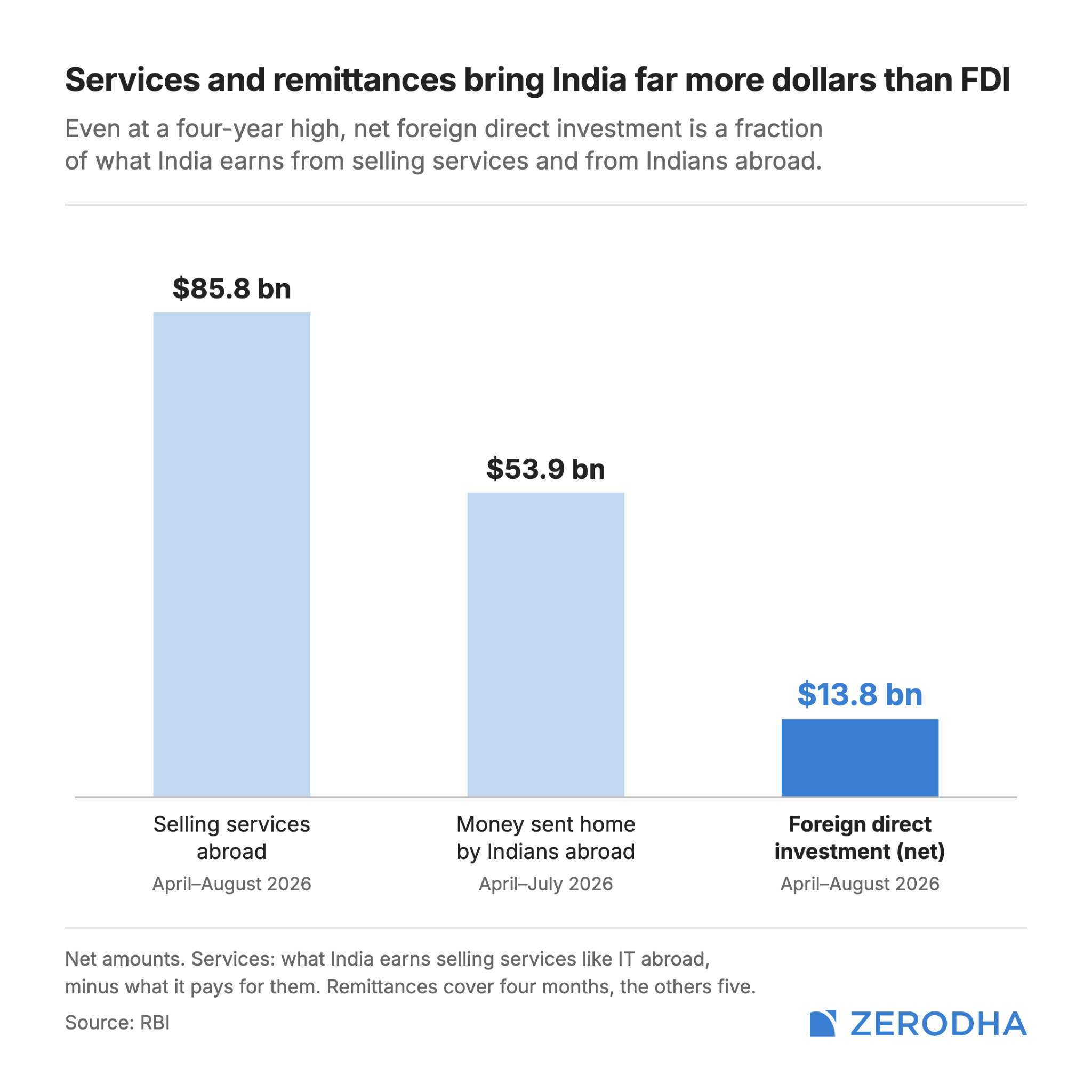
When the rupee was in real trouble this year due to portfolio sell-offs, the rescue came from remittances. In June, the RBI made it cheaper for banks to raise dollar deposits from non-resident Indians, and about $17.4 billion poured in within six weeks.
That bought some time, since deposits eventually mature and the money can go home. Meanwhile, our IT exporters, who bring in the most dollars, are staring at a problem called AI. The whole world is betting on it. India, mostly, isn’t.
The AI trade
For much of last year, global investors pulled money out of India to chase the AI boom in South Korea and Taiwan. AI-linked companies now make up far more of the MSCI index in those two markets than in ours; we recently covered what some of those companies in India might be.
Now, investors are getting nervous about AI valuations. Even the RBI Governor flagged it as a risk this month. So some brokerages are pitching India as the opposite bet. Jefferies, for instance, calls India the “inverse AI trade”: a calm, home-grown market to hide in.
But is that really entirely a compliment? India works as a hedge against AI because it owns so little of the AI supply chain. We don’t make advanced chips or memory at scale, and very little of the hardware. The Indian government knows this, which is why it has launched a massive semiconductor industrial policy. The kind of FDI that could change that is exactly what this story has been about: factories that take years to build, need foreign technology, and are the hardest money to attract and keep.
Conclusion
More foreign money is staying in India than it has in a few years, and companies are still lining up big plans here.
But a lot of it buys stakes in banks and companies that already exist, the kind of investment that can be sold in a block deal or an IPO the moment returns dry up. The chip plants and battery lines India actually needs are slower to arrive and much harder to lock in. They’re also what would give India a real stake in the AI economy now rattling its IT exporters.
We won’t know for years whether this recovery means anything. Factories take a decade to prove themselves, and the money that builds them is the money India finds hardest to keep. Five good months is a start. That’s about all it is.

Catching up to the economics of electrification
Around 65% of all new three-wheelers sold in India now run on electricity. A large chunk of what prompted this switch was not just that electric three-wheelers were cheaper to own, but also cheaper to operate day-to-day.
The IEA has released their latest annual electrification report, which suggests there are other parts of our economy where switching to electricity already makes sense. But unlike three-wheelers, they haven’t seen the same shift yet.
Now, much of this report covers ground we often have before, and not much has changed since we did. Which is why, while we recommend going through the original report itself, this story is purely about the more relatively undiagnosed nuances about electrification.
The easy opportunity we’re missing
When we talk about switching to electricity, electric vehicles usually get most of the attention. But there’s another big opportunity inside India’s factories.
Around 30% of the heat used by Indian industries is low-temperature heat, which refers to temperatures below 150°C, and is used to dye clothes, pasteurise milk, dry grains and clean equipment. Much of it still comes from burning fuels like coal and natural gas directly. In theory, electricity could do the same job.
But electricity often costs more per unit of energy than coal, gas or diesel. So why would switching make sense?
That boils down to the fact that electric machines use energy much more efficiently. An electric vehicle converts around ~85% of its electricity into movement, compared with just 25-35% for a petrol car. The rest is mostly lost as heat. As per the IEA, spending one dollar on electricity gives an electric car around 7 kilowatt-hours of useful energy for movement, compared with just 2 kWh for a petrol car.
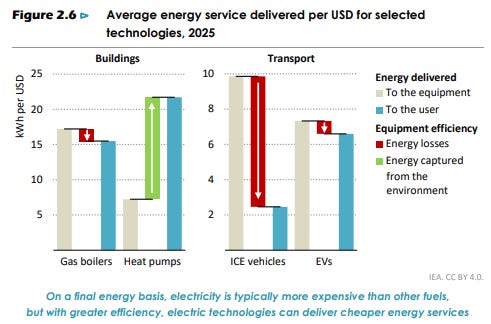
Factories can benefit from something similar. One way is through a heat pump, which works much like an AC in reverse. Instead of burning fuel to produce heat, it collects heat from its surroundings and raises its temperature. This allows a heat pump to deliver around 3.5 units of heat for every unit of electricity it consumes. A natural gas boiler, meanwhile, typically delivers less than 0.9 units of useful heat for every unit of fuel energy it burns.
Take India’s textile industry. Processes like dyeing, washing and finishing often need temperatures below 170°C, which electric boilers and some industrial heat pumps can provide. Textile clusters in Gujarat, Rajasthan and Tamil Nadu are already exploring these technologies. IIT Madras and Aspiration Energy have also developed heat pumps that produce steam, with demonstrations at DCM Shriram’s sugar plant in Uttar Pradesh.
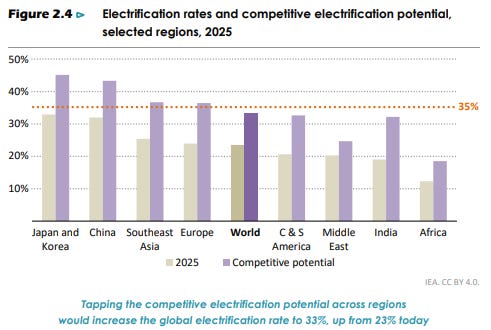
The potential is quite large. If India switched to electricity wherever it already makes financial sense, electricity’s share of our total energy consumption could rise from 19% to around 32%, based on today’s technology costs and energy prices. We’ve covered how the Solar Energy Corporation of India (SECI) is trying to encourage industries to switch to electricity.
The immediate burden
So, if the technology is available and the numbers already make sense in many cases, why aren’t more factories making the switch?
The IEA points to a simple problem. Something can be cheaper to use over ten years and still be too expensive to buy upfront today. That’s true for both EVs and industrial heat pumps. And families with tight budgets or small manufacturers short on cash can’t afford it. Borrowing for the same is expensive, too. The IEA explicitly points out that high financing costs are one reason industrial heat pumps haven’t caught on in developing Asia.
The same problem shows up with cars. According to the IEA, an average electric car in India is already cheaper to own than a comparable petrol car over a typical ownership period. But someone who drives very little, or is buying an inexpensive hatchback, may not recover the higher purchase price within five years. The case is stronger for electric two- and three-wheelers. Besides price, the availability of charging stations is another concern.
Factories face an additional conundrum. You see, industrial electricity in India is expensive partly because businesses pay higher tariffs that help keep electricity cheaper for households and farmers. So even if an electric heat pump uses less energy than a coal or gas boiler, the savings depend on how much the factory pays for electricity compared with its existing fuel. This cross-subsidisation was extensively covered in our Subtext episode with Mudit Narain, co-founder of Noida-based battery maker VoltSeal.
Unlocking the grid
Suppose we solve these problems. What happens if every factory and household suddenly wants to switch to electricity?
Even if everyone could afford to switch tomorrow, our grid, which has often been a subject of interest for The Daily Brief, wouldn’t necessarily be ready to handle the extra demand.
The IEA says major electricity transmission projects around the world can take anywhere from 5-13 years to plan, get approvals and complete. In India, large inter-state transmission projects, which carry electricity between states, typically take three to five years. They can take even longer when acquiring land or getting permission to run power lines through private property becomes difficult.
One reason is that different parts of the electricity system don’t always plan together. The Central Electricity Authority and the Central Transmission Utility of India help plan the national transmission network. State agencies have their own approval processes, while landowners and local authorities can affect where power lines are built. Delays at any stage can hold up an entire project.
This creates a problem for businesses. A textile factory in Rajasthan might find that installing industrial heat pumps could save money. But when it approaches its local electricity distribution company, it could discover that the network can’t handle the additional demand. Upgrading the connection might take another 18 months.
What rural India can teach us about electrification
So far, we’ve looked at places that already have electricity but need to use more of it. But what happens when people still can’t get reliable electricity in the first place?
India has spent decades trying to bring electricity to every village and household. Programmes like Saubhagya have helped expand connections, but having a connection doesn’t always mean having reliable power.
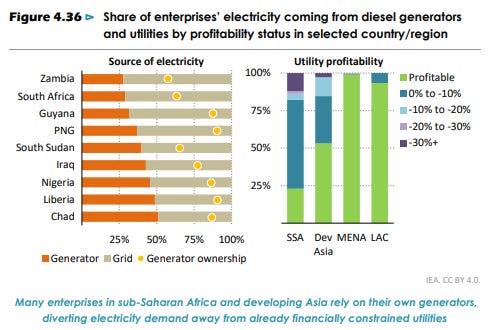
In parts of eastern UP and rural Bihar, some households still receive electricity for much less than 12 hours a day, often without knowing when it will arrive. Businesses that need a steady supply sometimes rely on diesel generators instead.
One proposed solution has been the mini-grid. It’s a small electricity network, often powered by solar panels and batteries, that supplies a village or a group of nearby customers without depending entirely on the main grid.
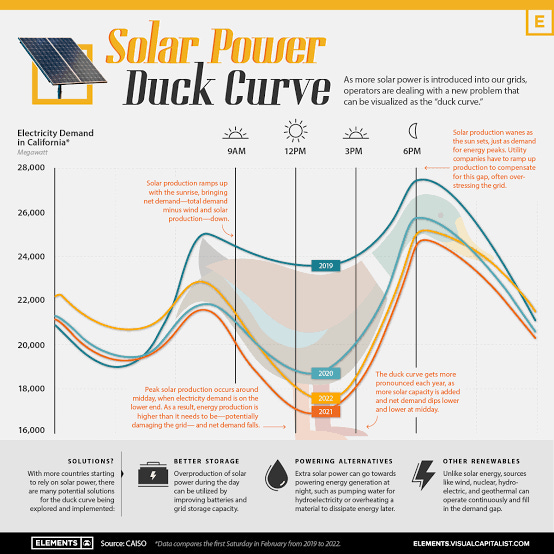
But many early mini-grid businesses struggled to survive. This was because solar-based mini-grids ran into the infamous duck curve that solar is known for, where most electricity demand came only in the evenings, while for much of the day, the system wasn’t being used enough. Selling electricity only to households often wasn’t a viable business.
The IEA discusses a possible solution in its chapter on electricity access, particularly for sub-Saharan Africa, where many more people still lack electricity almost entirely. Instead of supplying only to households, mini-grids can also serve businesses that need power throughout the day. A flour mill, cold-storage facility, dairy chilling unit or irrigation pump could all be useful customers. These are called anchor loads, meaning customers whose regular electricity demand helps make the whole mini-grid financially viable.
India already has an example of this approach.
Husk Power Systems, a company founded in Bihar in 2008, initially focused on supplying electricity to rural households. But the business struggled to make money. In 2014, it shifted its focus towards rural MSMEs that needed reliable power. Many of these businesses had been using diesel generators.
By serving businesses alongside households, Husk found a more workable model. The company became EBITDA-positive in India and Nigeria in late 2022. It now operates more than 150 mini-grids across Uttar Pradesh and Bihar.
There’s a similar idea behind India’s PM-KUSUM programme, which has supported the deployment of over two million solar-powered irrigation pumps. Instead of depending on diesel or unreliable grid electricity, farmers can use solar power to pump water.
It is worth knowing that these efforts didn’t begin as part of one big masterplan. Husk changed its business model because selling electricity only to households wasn’t working. PM-KUSUM was designed to support farmers and reduce diesel use in agriculture.
The question is whether India can build on these experiences. Can regulations make it easier for more companies like Husk to set up mini-grids?
Conclusion
The narrative that, compared to petrostates that were mostly dependent on oil, the modern world will herald the rise of the electrostate has proliferated fairly well. But switching to full-blown electrification requires a lot more than the long-term economics working on paper.
In some places, people and businesses can’t afford the upfront cost. Elsewhere, electricity prices make the switch less attractive. Even when both problems are solved, the grid may take years to catch up. And in rural areas, the challenge is still finding a way to provide reliable electricity at a price people can afford.
India’s experience with mini-grids shows that some solutions are already working. But making electricity cheaper, easier to access and more reliable will take more than better technology.
- This edition of the newsletter was written by Kulsum & Maine.
Tidbits:
1. Tata Electronics’ exports near ₹1 lakh crore in FY26 as Apple deepens
Three Tata Electronics entities reported combined exports of ₹99,128 crore in FY26 as the group expanded its role in Apple’s India supply chain. Tata Electronics’ consolidated net loss widened to ₹1,611 crore, while foreign-exchange outflow remained higher than export earnings, highlighting continued dependence on imported inputs.
Source: The Economic Times
2. Amazon India expects EV fleet to cross 20,000 over next year
Amazon expects its electric vehicle fleet in India to grow from more than 15,000 vehicles to over 20,000 during the next year. The expansion comes alongside plans to deploy 3,000 electric trucks with Tata Motors and build out charging infrastructure for its logistics network.
Source: The Hindu BusinessLine
3. L&T second-quarter net profit jumps 33% to ₹5,202 crore
Larsen & Toubro reported a 32.5% year-on-year increase in its consolidated net profit to ₹5,202 crore for the September quarter. Revenue grew 16% to ₹78,750 crore, while order inflows rose 28% to ₹1,47,665 crore, driven by robust domestic and international infrastructure demand.
Source: Financial Express
4. Anduril and Qualcomm partner to build US-made laptops for defence and government users
Anduril and Qualcomm have unveiled BlueChip, a new line of rugged computers that will be designed and assembled in the United States for defence, government and other critical-sector customers. The companies plan to progressively increase domestic sourcing, with the long-term goal of creating an end-to-end American computer supply chain.
Source: Bloomberg
5. Government considers easing FDI paperwork for up to 10% land-border ownership
The Indian government is considering relaxing foreign direct investment paperwork requirements for entities where investors from land-border-sharing countries hold a non-controlling stake of up to 10%. The move aims to ease the compliance burden for businesses operating under the automatic route while maintaining security oversight over larger or controlling investments.
Source: Business Standard
Want more tidbits? Catch up on last week’s recap!

Beyond Today’s Brief
There’s always more happening at Markets by Zerodha.
The Chatter: What are regulators and corporate leadership across capital goods, insurance, and pharma signalling for Q2 FY27? How is SEBI planning a domestic market-specific AI model and new investment frameworks, while L&T secures a record ₹1.48 trillion in quarterly order inflows and commits $750 million to AI data centres?
Points & Figures: Where did India’s international flyers go? From a 9% drop in total international passenger traffic to Indian airlines losing a decade of market share gains to foreign rivals, what does flight data reveal about post-conflict travel demand and carrier resilience?
Aftermarket Report: How did Nifty trade choppily between 22,500 and 22,775 to close slightly lower near 22,700 amid elevated crude oil prices and cautious domestic sentiment? And what do nine sectors advancing led by Auto, persistent FII index-futures selling, and the Fear & Greed Index lingering in extreme fear at 22 indicate for market direction ahead of US GDP data?
Join us on WhatsApp, where we share interesting soundbites from concalls, articles, and everything else we come across throughout the day. You’ll also get notified the moment a new video or article drops so that you can read or watch it right away.
Thank you for reading. Do share this with your friends and make them as smart as you are 😉