

Our goal with The Daily Brief is to simplify the biggest stories in the Indian markets and help you understand what they mean. We won’t just tell you what happened; we’ll tell you why and how too. We do this show in both formats: video and audio. This piece curates the stories that we talk about.
You can listen to the podcast on Spotify, Apple Podcasts, or wherever you get your podcasts and watch the videos on YouTube. You can also watch The Daily Brief in Hindi.
In today’s edition of The Daily Brief:
The coordination puzzle staring at India’s EV story
The second coming of Micromax
Tamal Bandyopadhyay on the microfinance industry cycle
After going through 144 concalls across 18 microfinance companies just to watch a single credit cycle play out in slow motion, we were left with a bigger question: why do these crises keep happening, over and over, roughly every few years like clockwork? To make sense of all this, we spoke to Tamal Bandyopadhyay, who has covered Indian banking for nearly three decades, is a senior advisor at Jana Small Finance Bank, and authored the book Pandemonium. Our conversation dives deep into what caused the latest microfinance cycle, how this time is different, and what the industry can do to avoid repeating the same mistakes. Listen to the full conversation on Spotify and Apple Podcasts. Read the key takeaways on Subtext.

Watch the full podcast episode below, where Tamal breaks down the recurring cycles of the microfinance industry.
The coordination puzzle staring at India’s EV story
A few weeks ago, on our podcast series, Subtext, we sat down with Zohra Khan, the founder of IPEC, a Bangalore-based company that designs and manufactures EV chargers for India’s leading two- and three-wheeler makers.
Everyone knows about India’s subsidy architecture: PM E-DRIVE, state-level incentives, the GST differential versus petrol cars. But one of the key points of discussion that stuck with us well after the chat had little to do with it. It was that India’s EV transition needed a lot more than just getting those right.
For instance, here’s what she said about India’s grid:
“But I think what India has is a distribution problem. And that’s where the DISCOMs and a lot of these players come into the picture. This distribution layer, which is mainly the 11 kV and the 415 volt lines — that’s what actually connects the grid to your neighborhood. Right now a lot of these lines are overloaded. For example, transformers which are serving these residential areas were probably installed with requirements from ten years ago, or a long time ago. So they are overloaded. They need to be upgraded. Even the air conditioning loads that are coming into effect right now will be causing a strain on the grid, let alone EV charging coming into the picture.”
When we dug deeper, we realized that electricity itself is just one part of the EV story.
Think about it. For one, charging stations need a lot of land, so land acquisition becomes a factor. Each state is in control of its own transport, but they’ll have to coordinate when it comes to charging infrastructure.
And India needs all of this to happen at roughly the same pace, because the vehicles are already here. India sold nearly 25 lakh EVs in FY26. But every one of those vehicles has to plug into a grid, at a station, on a piece of land, and the policies governing those three things were never designed to talk to each other.
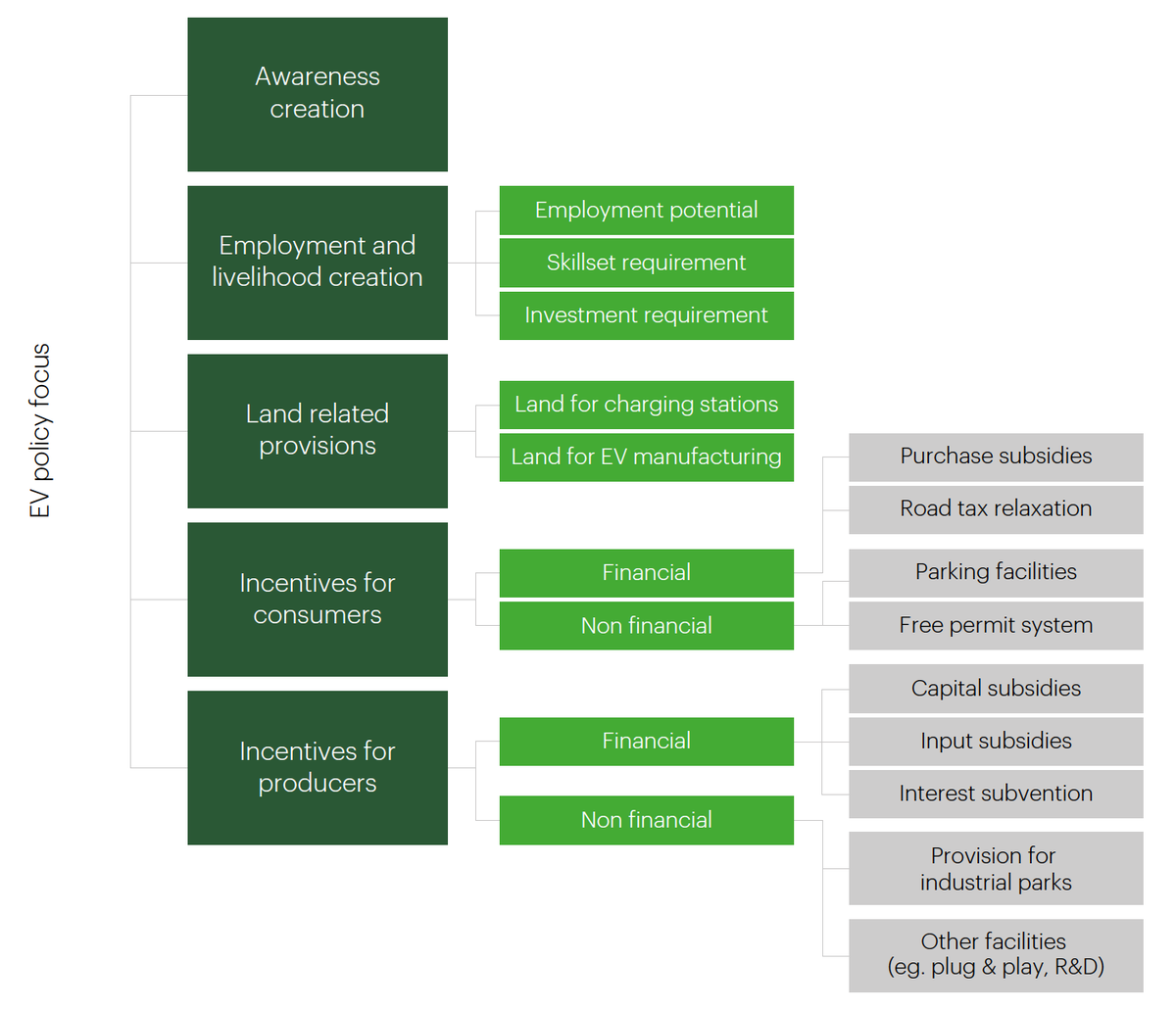
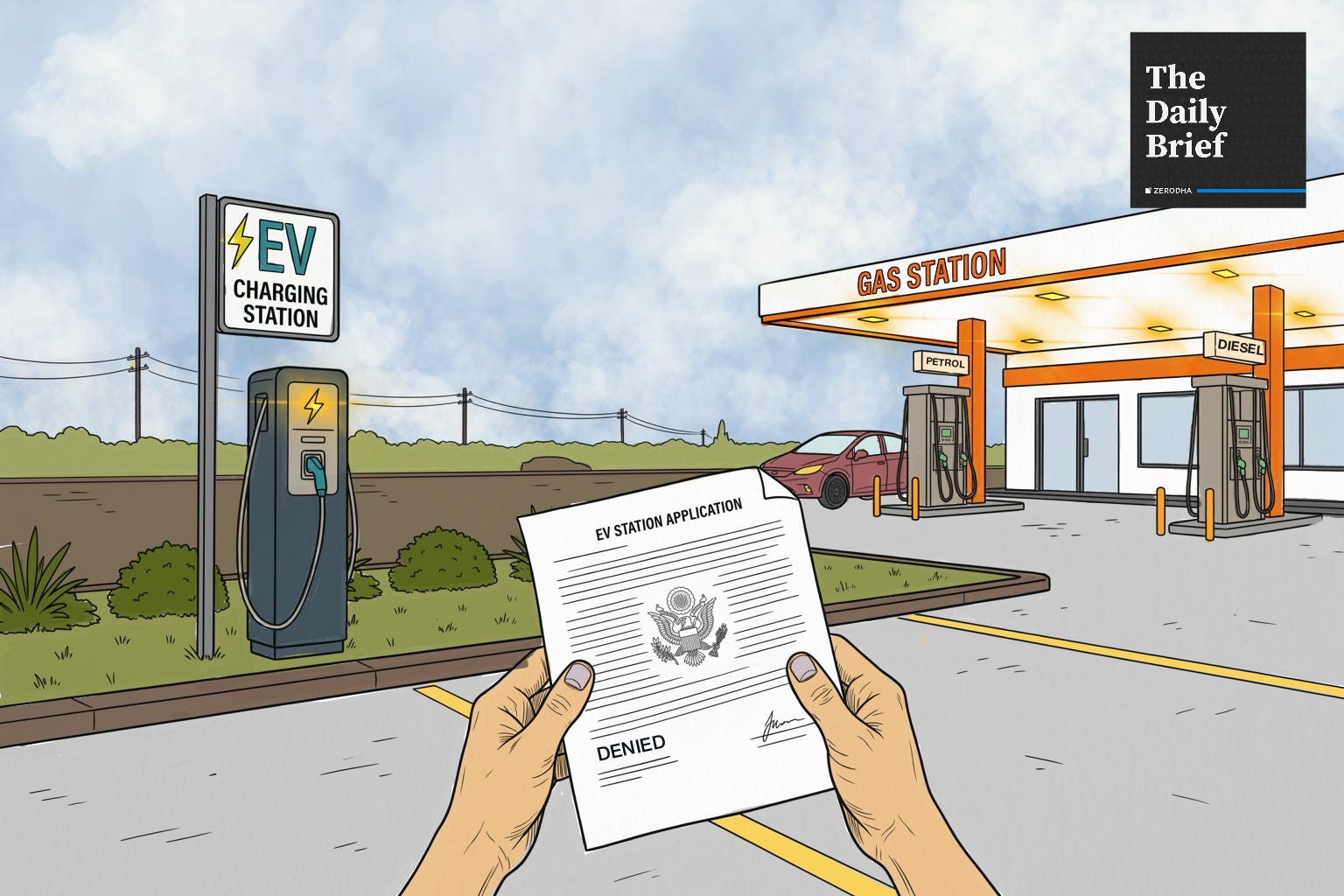
This story is about those frictions that exist between some of the crucial parts of India’s EV policy that don’t have much to do with EVs, but couldn’t be more important to our EV ambitions.
Fight or freight
Let’s first examine the state of electric freight.
You see, India’s EV push has overwhelmingly focused on passenger two-wheelers and three-wheelers — and understandably so, given that they make up the vast majority of vehicles on Indian roads.
But freight is just as important. Medium and heavy-duty trucks make up just 2% of India’s vehicle fleet, but they contribute around 40% of all road transport emissions. If we want the EV transition to matter to reducing emissions, electrifying freight has to be a priority. Yet, it is still a policy afterthought: of the nearly 1.8 lakh public charging stations India has, only about 9,000 of them can charge a heavy-duty truck.
But what makes freight a unique problem is that, unlike passenger vehicles that are mostly used within a city, a long-haul truck crosses multiple state borders in each trip. Its success depends fundamentally on coordination between states. But each additional crossing of a state border is emblematic of how difficult this is.
State finances
Start with the money.
Under India’s Constitution, transport is a State subject. That means EV incentives — purchase subsidies, registration fee waivers, motor vehicle tax exemptions — are set state by state. For instance, Maharashtra’s 2025 EV policy offers purchase subsidies of up to ₹20 lakh per electric truck for the first 1,000 heavy-duty goods carriers. Meanwhile, Madhya Pradesh offers 100% motor vehicle tax and registration exemptions.
But a poorer state will simply not have the same kind of freedom. Very few states have incentives for heavy-duty zero-emission trucks. Fleet operators in these states will face little reprieve compared to Maharashtra or Madhya Pradesh.
Moreover, the vast majority of India’s trucking sector is made up of small operators — about 75% own fewer than five trucks, and around 70% run on-demand without formal long-term contracts. These are cash-dependent businesses with paper-thin margins.
Charging infrastructure
On top of this, there’s the charging infrastructure itself.
Long-haul trucks can’t use the slow or moderate chargers that work for passenger cars. They need high-power DC chargers to avoid transit delays. But upgrading a single highway site to support 500 kW of charging capacity can cost a few crores in capex and grid infrastructure upgrades alone. As far as public chargers are concerned, only states with healthier finances can afford this at scale.
But beyond that, what also matters is the capacity of the state DISCOM to approve new charging points to be integrated into the grid.
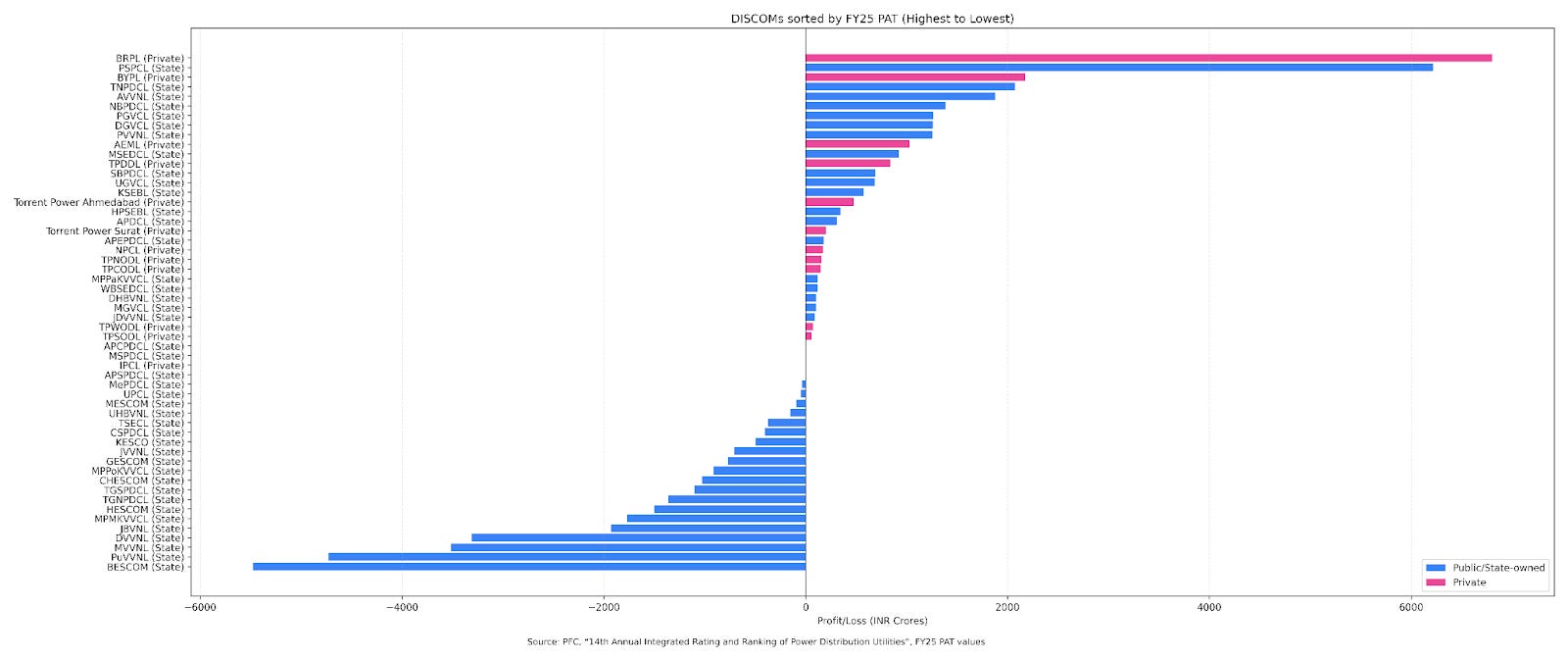
Each new charging point could stress India’s grid further unless the DISCOM upgrades the distribution network accordingly. But that requires capital, which, as we’ve covered before, India’s DISCOMs are notorious for burning, having accumulated losses worth ₹6.9 lakh crore.
What’s more, there is significant variation within DISCOMs, with certain states performing far better than others. If, on a popular long highway, a single state DISCOM hasn’t planned for surge loads, the truck will pass through a charging desert.
The grind of the grid
India is officially a power-surplus country. The amount of electricity we generate is more than enough to meet current demand.
Naturally, that means the failure isn’t in generation, but in transmission. In our Subtext episode, Zohra highlighted that in particular, the fault lies in the last mile of distribution — the 11 kV lines and neighbourhood distribution transformers that connect the grid to your building.
Last mile crashout
Most of these transformers, typically rated between 100-250 kVA and serving 20 to 30 flats, were engineered for the electrical loads of a decade ago. People come home in the evening, turn on the air conditioning, the lights, and the television. This summer, we’ve already seen that these transformers are unable to handle the crippling load of all these appliances, with transformer blasts becoming common in cities like Delhi and Chennai.
Now add EVs to the picture.

EV chargers use high-frequency switching to convert the grid’s AC power into DC for the vehicle battery. The rapid switching of high amounts of power distorts the grid’s smooth electrical waveform, injecting what engineers call “harmonic currents“ into the system. Harmonics are also generated by smartphones and TVs, which run on DC power too. But the magnitude of the same from EV charging is far bigger, generating excessive heat that can seriously damage the transformer.
As per TERI, uncontrolled EV charging can spike instances of transformer overload by 5-22%, In the current state, if charged at night, EVs would shorten the lifespan of our transformers significantly.
Solar power could help in theory. But the timing is often backwards. After all, vehicles are on the road when the sun is out, and plugged in when it sets. Without battery energy storage systems (BESS), EV charging simply piles onto an overloaded grid that will revert back to coal to meet rising demand. And, for now, India’s BESS adoption is still slow.
Connection upgrade
Now, a transformer’s primary job is to change the voltage of a stream of power, so it doesn’t directly affect how much power a home can consume. But each home also has a cap on how much power they can actually use.
Most Indian homes run on a single-phase connection, capped at about 5 kW of sanctioned load. A slow home charger for a two-wheeler draws about 3.3 kW, while a four-wheeler requires somewhere between 3.3-7.4 kW: these are manageable on their own. But if a household has multiple EVs, the load instantly exceeds the home’s entire electrical capacity.
The natural solution is for the household to upgrade to a three-phase connection. But that requires a formal application to the local DISCOM, a physical inspection of the neighbourhood feeder line, and an out-of-pocket cost of ₹10,000-30,000. The cost of it is significant bureaucracy and a sizable pinch in the pocket.
The grid-level risk is even larger. India’s electrical grid distributes power across three physical lines — Phases A, B, and C — and the load across them needs to stay roughly balanced. Single-phase chargers draw power from only one line. If a residential complex plugs in multiple chargers without distributing them evenly across all three phases, the grid suffers severe voltage and current imbalances.
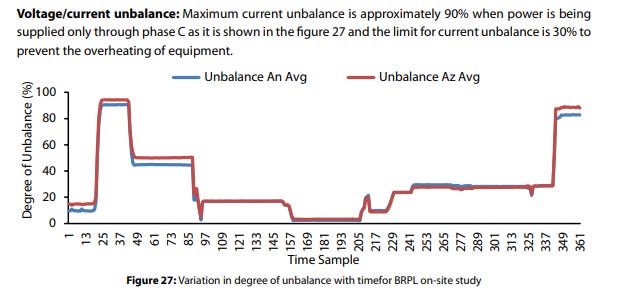
That kind of asymmetry forces heavy currents through the neutral wire, rapidly overheating local distribution equipment and accelerating transformer failure.
The land acquisition problem
Even if the grid were perfectly ready, there’s a simpler problem: where do you physically build the charging station?
The answer seems obvious: dense residential clusters, office complexes, tech parks, airports, wherever there is lots of parking.
But those are expensive pieces of land that make the economics of operating a charging hub. For charging point operators (CPOs), land rent combined with electricity tariffs can make up over 60% of a station’s total operating expenses.
So, what’s an alternative? One natural workaround is co-locating chargers at existing petrol pumps. They already sit on main roads, they already have customer traffic, and the land is already cleared for vehicle use.
But bringing high-voltage, high-current electrical infrastructure right next to underground fuel storage tanks is strictly governed by Indian law. The safety clearances required are exacting, and for good reason — but they add significant time and cost to what should be a straightforward site decision.
Since prime land is so hard to get, operators often settle for suboptimal solutions — kerbs with no footfall, residential side streets where nobody will use a public charger, and sites on weak feeder lines that can’t support the load. This helps explain the paradox of Indian EV charging: there are stations, but they’re often not where people need them, and when they are, they sometimes can’t deliver reliable power.
This may also partly explain why most public chargers in India suffer from very low utilisation rates of around 5%. However, contributing to this low utilization rate is a chicken-or-egg problem that has plagued EV adoption: people don’t buy EVs without charging infrastructure, and operators don’t build charging points without enough EVs being sold.
High fixed rents and near-empty stations make a terrible business model, which is also why financing for new stations is often hard to come by.
Even if the operator eyes a piece of land that could guarantee the economics, they face a clearance gauntlet.
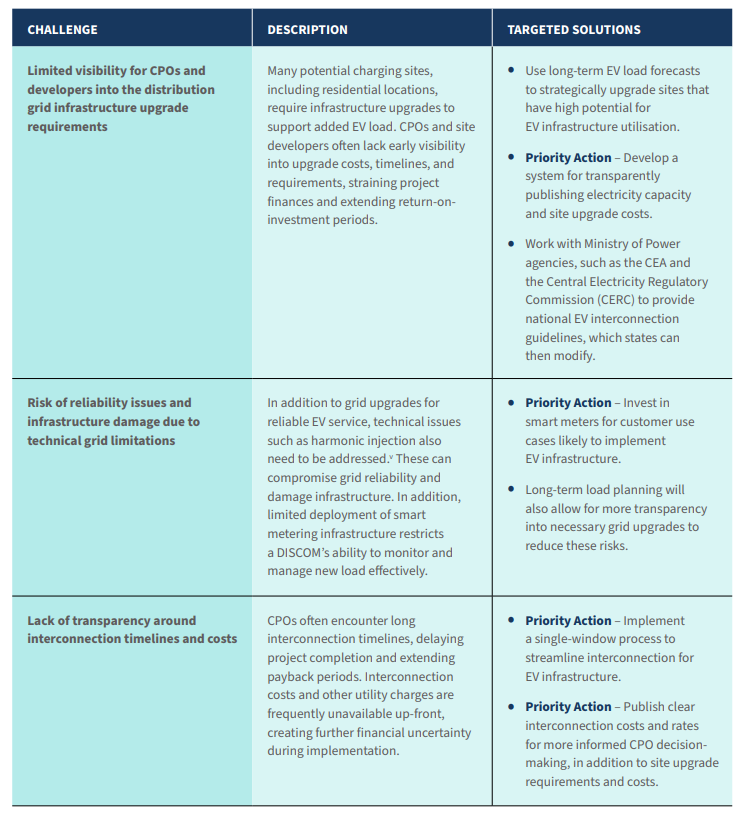
To set up a single charging station, a CPO needs DISCOM load sanctions, Chief Electrical Inspector safety clearances, local municipal zoning permissions, and No Objection Certificates from the fire department. Each of these comes from a different government body, with its own process and timeline. There is no unified single-window portal in most states. The result is that charging stations take far longer to set up than the demand-side policy assumes they will.
How does this get fixed?
At least in theory, solutions to most of these problems do exist.
For instance, in freight, the answer isn’t to wait for all 28 states to align, but to think in terms of corridors. The Delhi-Jaipur corridor is being used by the government as a pilot for zero-emission trucking. States along these corridors can jointly coordinate grid upgrades and enforce time-bound clearances without waiting for a nationwide consensus.
For the grid, smart meters and dynamic load management software can schedule and throttle charging to avoid blowing local transformers. Time-of-use tariffs can shift demand to when the grid can handle it. Bidirectional charging could eventually turn millions of parked EVs into a distributed storage network.
But none of these are simple. Together, all of these demand coordination across land policy, electricity regulation, highway planning, and federal politics. India’s EV transition is one of the hardest stress tests on whether we have the political and institutional capacity to pull it off before the vehicles outrun the infrastructure they need.

The second coming of Micromax
If you were looking for your first smartphone a decade ago, there’s a good chance you went for Micromax. For a brief stretch, around 2014-15, the Gurgaon-based brand was India’s highest-selling phone brand. Sadly, their reign wouldn’t last for long. A wave of cheaper, slicker Chinese phones — Xiaomi, Vivo, Oppo — soon washed over the market, more-or-less sweeping Micromax out of the picture.

That began Micromax’s long years in the wilderness. It pulled back from the smartphone race, pivoting wildly for a foothold to sustain the company. It tried its hand at software and services; it widened its range to other electronics; it dropped down to making entry-level feature-phones. Years passed before it finally found a second lease of life — this time as a contract manufacturer for the very same Chinese companies that had once dethroned it.
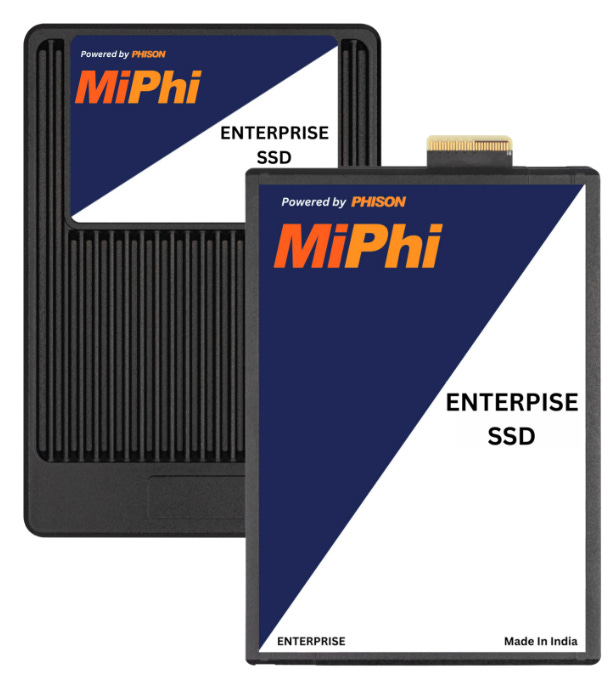
The company still isn’t short on ambition, though. It is now trying to break into one of the hardest, most tightly guarded businesses in all of technology: computer memory. In late 2024, it entered a joint venture with Taiwan’s Phison Electronics — MiPhi Semiconductors — taking majority control of this new enterprise. And now, the JV has become India’s first company to design and build enterprise-grade “solid state drives” (or SSDs).
Like its first foray into smartphones all those years ago, this too is a daring attempt. As the world races to build new data centres, memory is turning into a bottleneck. If Micromax manages a foothold in this business, there are strong tailwinds ahead. But can it actually make a dent?
The promise of SSDs
An SSD is a device meant to store data. The version you’re probably most familiar with sits inside your laptop — as a faster, more durable version of those old, spinning hard disks. The same technology, however, scales up all the way to “enterprise-grade“ devices — which sit in data centres, running non-stop to process its heavy load.
Until recently, India imported all the SSDs that sat in its data centres. But now, the fallen phone brand is making a bid to manufacture these locally.
A brain in a box
You can think of an SSD as having two parts.
Your data is physically stored in chips called “NAND flash memory”. These are a little like a giant warehouse full of empty filing cabinets. They contain billions of tiny microscopic cells which can store electrons — and whether a cell is full or empty tells you whether it’s a ‘0’ or a ‘1’ in binary terms.
Only, these chips are dumb. They can store things, but nothing else — they can’t read the data they store, or make decisions on where to put a new file, or how to find an old one.
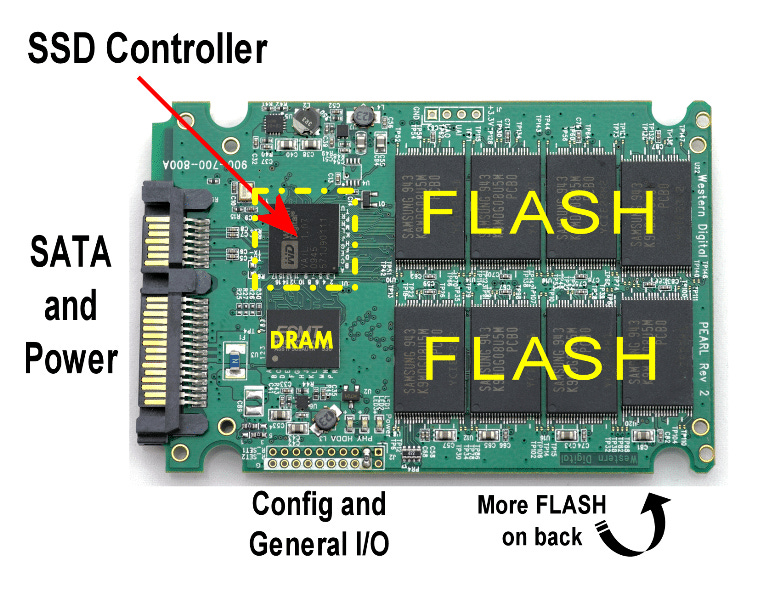
For that, you need a separate chip to act as its brain, called the “controller”. This chip has a more complex job. Within fractions of a second, it decides where any piece of data goes, and how to fetch it back. Moreover, NAND flash memory keeps degrading as electrons are pulled in and out of its little cells — so the controller shuffles files around, and runs constant error checks to catch and fix glitches. And if the power supply is suddenly cut, it uses a tiny built-in energy reserve to save whatever you were working on before everything goes dark. Without this little chip, any storage would slow down, corrupt data and burn out.
This is a harder chip to make. Which is why Micromax has pulled Phison into the loop.
Phison is one of the world’s best companies at making controllers. The $3 billion company comes with over 24 years of experience, and more than 2,000 patents to its name. By its own count, one in every five SSDs shipped anywhere on the planet uses a Phison controller.
The plan for MiPhi
The Micromax-Phison joint venture — MiPhi — is looking at a specific, and very interesting, niche of the SSD market. The drives they’re making solve a particular challenge that AI models face.
Any AI model works through a lot of data. More critically, that data must be fed to its processing core continuously. You can’t keep all that data in a separate memory drive which sits elsewhere. That would be too slow, and too far away, for the speed at which the model actually needs the data.
At the moment, all that data is fit inside a GPU’s built-in memory, called its VRAM, or “Video Random Access Memory”. This is fast, but it is also fixed in size, and extremely expensive. It’s built into the GPU itself, and you can’t expand it or top it up the way you can just slot an extra RAM into a PC.
For a big AI model — and modern ones are enormous — the usual fix is brute force. You buy a rack of graphics cards and chain them together, mainly to pool their combined memory rather than for the extra computing power. At any one moment, there might only be one GPU doing the math for one small slice of the model, while the rest sit there waiting their turn. This is wasteful, and it makes serious AI too expensive for a smaller company, lab, or university.
Phison, however, is trying to fix this, with a new design it calls aiDAPTIV+.
Instead of forcing a whole model into that scarce, costly memory, aiDAPTIV+ keeps only the active slice on the GPU, while parking the rest on a big, cheap SSD. As the card becomes ready for new data, it keeps passing slices up one at a time. Because an SSD costs a sliver of what a graphics-card does, this brings costs down enormously.
The old paradigm is a little like looking in an industrial kitchen — not because you need all its stoves, but because you need all the counter space to lay out your ingredients. Phison’s chip lets you swap that for a regular kitchen with a big, well-stocked pantry.
Naturally, this comes with trade-offs.
For one, even with this new design, fetching data from an SSD is slower than keeping it all on the card. For someone that would find a rack of GPUs too expensive to run, however, this might seem like a fair trade.
Moreover, as the chip continuously shuttles slices of data from the SSD to a processor, it keeps writing and wiping that memory relentlessly. All that activity would burn a regular NAND flash memory within weeks. So, this chip uses a much tougher kind of flash, called pseudo-SLC (or ‘single level cell’). Where regular memory can only be completely filled and wiped once a day, this can go through a 100 such cycles a day, every day, for five years.
This is what MiPhi is starting to build in India, the heavy-duty AI drives that plug into that system, for local buyers who want to run or fine-tune big models on their own machines instead of renting cloud servers, which also keeps sensitive data in-house.
A marriage of convenience
But why is Micromax attempting this newest pivot? Well, memory is the industry of the moment. India is in the middle of an AI and data-centre boom, and all those data centres need lots of storage.
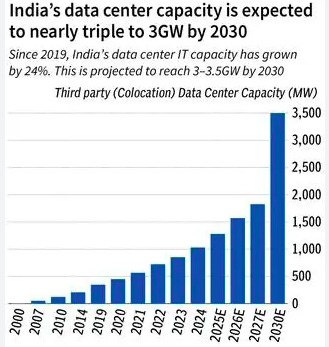
Phison has been looking for a way into this booming market. But there’s a huge disadvantage it comes with: it is a foreign company, with no manufacturing presence.
An Indian manufacturer would have natural advantages in this space. A significant slice of the new demand is expected to come from government-linked buyers — public-sector banks, state agencies, defence systems — the kind of customer that increasingly could want hardware made in India, by an Indian-controlled company. Phison wouldn’t automatically be shut out of this market, but as a Taiwanese firm selling imported drives, its positioning isn’t ideal.
Its best case would be an Indian partner that was already manufacturing on Indian soil, and was Indian-owned enough for the finished drives to count as homegrown.
Micromax had exactly that. Through its manufacturing arm, Bhagwati Products, it already ran surface-mount technology lines that place chips onto circuit boards.
The joint venture simply made sense. Phison gets a market, while Micromax ideally gets the tech transfer. Micromax owns 55%, Taiwan’s Phison Electronics owns 45%.
For now, MiPhi is making around 30,000 enterprise units a month and says it wants to hit 3 lakh — a tenfold jump within the year, chasing roughly ₹1,000 crore in revenue and planning another ₹1,000 crore of investment on top.
The risks
No joint venture comes without risks, and this has quite a few. The first major risk is one we’ve covered extensively before: the entire memory business, be it consumer or enterprise, is not a place for beginners. At any given time, it has always been an oligopoly of just 3-4 companies holding immense market share — today, that’s Samsung, SK Hynix and Micron.
But that’s not because of a lack of trying.
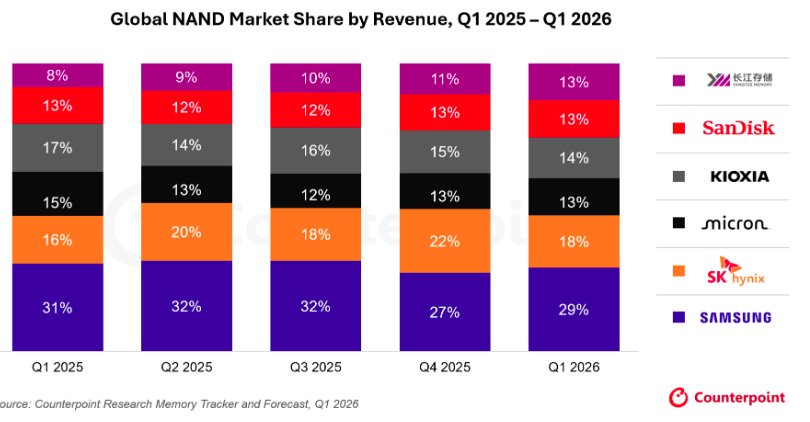
The reason is because the market is wildly cyclical. When demand is hot, memory makers earn enormous margins. When demand cools, or the world simply makes too much, prices crash almost overnight and companies book losses running into billions. To survive that rollercoaster, you need very deep pockets. Most newcomers just run out of money on the way down.
So when the world overproduces and prices crash, giants like Samsung and Micron can sit on billions in cash and ride out a price war until things recover. A small, young venture doesn’t have that cushion, and a bad downturn at the wrong moment could be fatal.
The second major risk is dependence. The circuit boards are assembled and programmed in India, but the two things that matter most — the controller silicon and the raw NAND wafers — are still fully imported, because nobody in India makes them yet. The controllers come out of Taiwan, so any flare-up around the Taiwan Strait could freeze that supply overnight; the NAND itself leans on Korean, Japanese and US giants. Either way, if those imports stop, the Indian assembly lines stop with them.
Then, there’s the trust problem. Convincing a cautious bank, or a data-centre manager, or someone who manages a hospital database to hand their most critical data to a brand famous for cheap phones is a long, uphill climb. It takes years of flawless performance to build that reputation, and a single high-profile failure could undo it and set the brand back by years.
Conclusion
In the end, this is a test more than a comeback for Micromax.
India has primarily been good at two things: writing software for the world, and, lately, assembling other people’s gadgets. But moving from putting together finished products to designing and building complex, failure-sensitive hardware like enterprise storage is a completely different league of engineering.
Whether MiPhi can actually win the trust of conservative corporate customers is still a far-fetched question to answer. But the attempt is a sign that India has serious ambitions to move up the ladder.
- This edition of the newsletter was written by Manie & Mridula.
Tidbits
Tata Motors wants its car business, along with JLR, to hit around ₹8.8 lakh crore in revenue by FY31, and is putting in ₹40,000 crore in India plus roughly ₹2.3 lakh crore at JLR to get there. The push is around new launches, EVs, and doubling India sales to 12 lakh units a year.
Source: The Hindu BusinessLineOla Electric is being dragged to NCLT by two parts suppliers, Sterling E-Mobility and Anevolve Mando, over ₹40 crore of unpaid dues. Ola says it’s a quality dispute they’d already taken to arbitration, and the insolvency route is just the suppliers trying to force payment.
Source: The Hindu BusinessLineSun Pharma’s roughly ₹1 lakh crore buyout of US drugmaker Organon just got its financing locked in, with SBI joining 10 global banks like Citi, JPMorgan, HSBC and MUFG, each chipping in around ₹8,800 crore. It’s also one of the first big overseas acquisition deals an Indian public sector bank is funding after the RBI opened this up in Feb.
Source: Business Standard
Our team at Markets is always reading, often much more than what might be considered healthy. So, we thought it would be nice to have an outlet to put out what we’re reading that isn’t part of our normal cycle of content.
So we’re kickstarting “What We’re Reading”, where every weekend, our team outlines the interesting things we’ve read in the past week. This will include articles and even books that really gave us food for thought.
Points & Figures by Zerodha
We’re always chasing the day’s biggest stories. But every now and then, we come across a dataset that deserves a closer look than a Daily Brief allows.
That’s what Points & Figures is for.
It’s where we step back from the news cycle and use data visualisations to tell stories about the Indian economy, financial markets, and investing. Stories that are difficult to tell in a ten-minute podcast or a daily newsletter.
Our latest edition traces how India’s digital economy got here, through the data buried in Jio’s IPO filings.

Join us on WhatsApp, where we share interesting soundbites from concalls, articles, and everything else we come across throughout the day. You’ll also get notified the moment a new video or article drops so that you can read or watch it right away.
Thank you for reading. Do share this with your friends and make them as smart as you are 😉
India’s opportunity is real, but the bottlenecks are boring: DISCOMs, land, approvals, financing, supply chains, and customer trust.