


Our goal with The Daily Brief is to simplify the biggest stories in the Indian markets and help you understand what they mean. We won’t just tell you what happened; we’ll tell you why and how too. We do this show in both formats: video and audio. This piece curates the stories that we talk about.
You can listen to the podcast on Spotify, Apple Podcasts, or wherever you get your podcasts and watch the videos on YouTube. You can also watch The Daily Brief in Hindi.
In today’s edition of The Daily Brief:
1. Can ₹84,000 crore get India drilling?
Despite solar and EV pushes, India imports ~89% of its crude oil as domestic output fell 27% since FY12. To counter a 6–7% annual natural field decline, the government launched the ₹84,084-crore Samudra Manthan offshore scheme through FY31, funding 50% of deepwater drilling costs and ₹28,534 crore in seismic mapping. Supported by the 2025 Oilfields amendment’s single leases and stabilisation clauses, the program de-risks deepwater exploration, though commercial output is unlikely before the 2030s.
2. Why is rice getting expensive when India has never had more of it?
Retail rice prices rose ~8% YoY to ₹46.92/kg despite FCI holding 38.8 million tonnes—nearly four times its buffer norm. Deficient monsoon rains from El Niño cut paddy acreage by 4% and sparked forecasts of a 10-million-tonne harvest drop, lifting open-market prices. Meanwhile, buffer stocks remain isolated from consumers as past FCI auctions saw low trader uptake due to quality mismatches, while millions of tonnes were diverted to discounted ethanol production.
Cash & Copium #8
In this episode of Cash & Copium, Abid, Bhuvan, and Aakanksha break down India’s rapidly expanding credit ecosystem, the illusion of “no-cost” EMIs, and the psychological traps driving lifestyle borrowing. They explore how household debt has surged to ~48% of GDP while net financial savings dropped to 5%, why comparing Indian floating-rate retail leverage to US fixed-rate mortgages is a dangerous fallacy, and how taking long-term EMIs for speculative city-outskirt apartments or financing short-term lifestyle consumption destroys financial flexibility and long-term wealth creation.
Check out the episode on YouTube.
Can ₹84,000 crore get India drilling?
For all our talk about solar panels, wind farms and electric vehicles, India still needs a lot of oil and natural gas. Trucks burn diesel, planes use jet fuel, and factories use hydrocarbons for heat and as ingredients for fertilisers and chemicals. The energy transition will reduce some of that demand, but it will take time.
Meanwhile, India relies heavily on imports, while its own oil production keeps falling. Imports met ~89% of its crude oil requirements in FY2025–26, according to provisional government figures. Domestic production has fallen 27% since 2011, declining in all but one of the past 14 years.
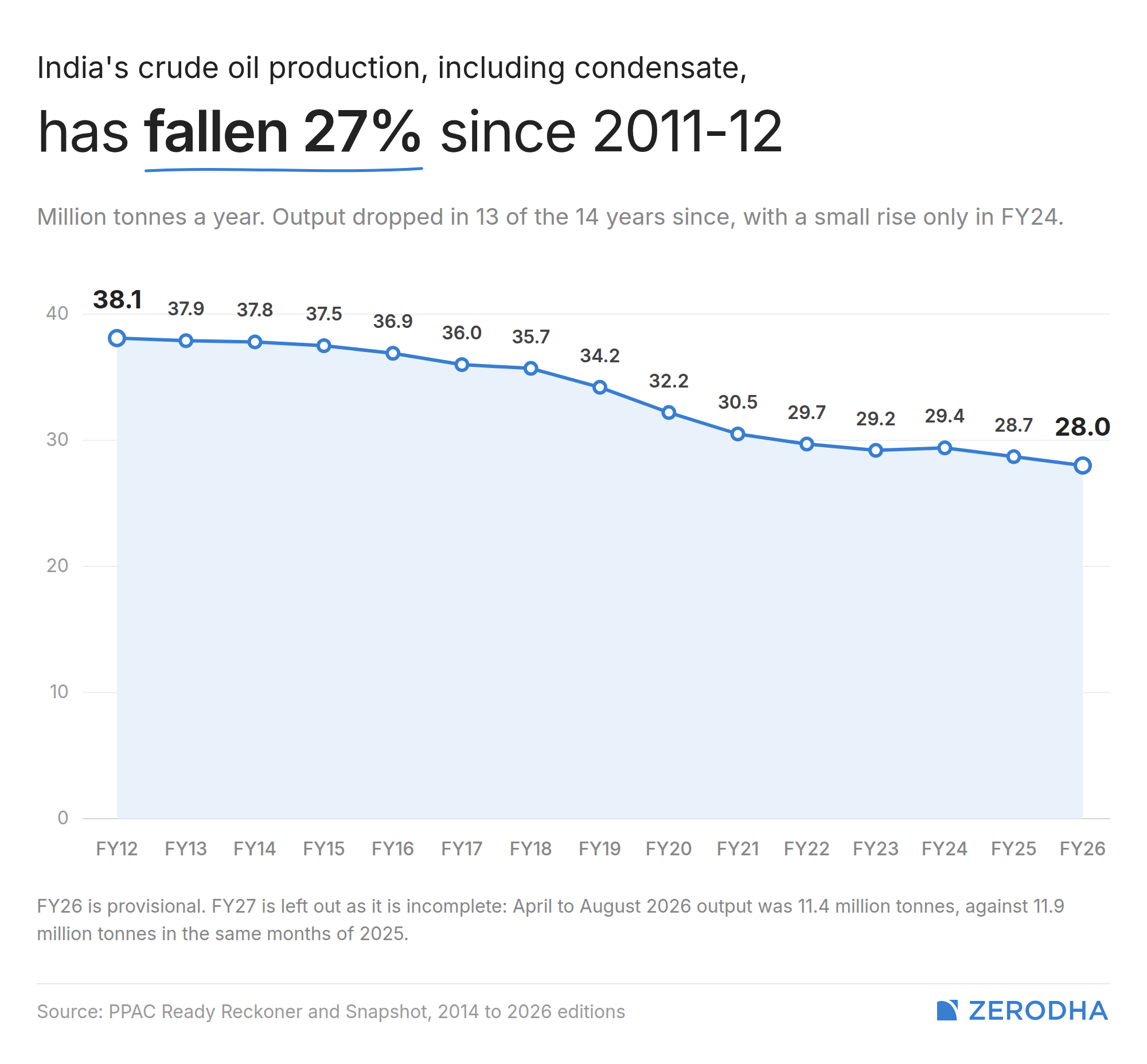
Existing fields also produce less as they age. The petroleum ministry estimates this natural decline at around 6–7% a year. Getting more out of old fields helps, but India needs new discoveries just to replace the production it would otherwise lose.
And there may be plenty left to find. In 2024, S&P Global estimated that four underexplored Indian basins held around 22 billion barrels of oil equivalent in undiscovered hydrocarbon potential. “Oil equivalent” includes gas measured in comparable energy terms. But these are estimates of what might exist. Only drilling can establish what is actually there and how much makes economic sense to extract.
So India has a reason to explore new fields, and potentially the resources to make it worthwhile.
That’s the backdrop to the Samudra Manthan scheme, which the government approved in July. It is an ₹84,084-crore offshore oil and gas programme running through FY2030–31.
The scheme follows changes to India’s petroleum laws and the opening of previously restricted offshore areas. Together, these measures aim to get more companies to invest in exploration. But a company deciding whether to drill a new well has plenty of sums to work through. The government’s announcement is only the beginning.
Licence to drill
As we explained in our earlier story on India’s oil laws, private companies entered an industry where the government had a heavy hand.
Under older production-sharing contracts, companies could recover eligible costs from production before sharing what was left with the government. Higher costs meant less left to share, so the government had a reason to question spending. A committee with government representatives reviewed or approved work plans and budgets. Under the model contract, companies needed government acceptance to recover costs that significantly exceeded initial exploration estimates. Just because a company spent the money didn’t mean it could recover it.
HELP, introduced in 2016, moved new licences to revenue sharing. The government’s share no longer depended on how much companies spent. That removed one source of friction for newly awarded blocks, though other approvals remained and older contracts continued under their existing terms.
But companies still had to worry about future policy changes. In 2022, when oil prices surged, the government introduced a windfall tax on domestically produced crude, taking a share of producers’ extra earnings. For an investor putting money in years before production begins, that creates a problem: which terms should it use to calculate its future returns?
The 2025 Oilfields Amendment and the final Petroleum and Natural Gas Rules address some of these concerns. They provide a single petroleum lease covering exploration through production. They also include stabilisation provisions, which let companies seek adjustments if certain changes in law hurt a project’s economics. But companies must follow a specified process to seek that relief. This isn’t a promise that taxes will never change.
The government also says it has removed more than 99% of the earlier offshore “no-go” restrictions, opening over one million square kilometres for exploration. Companies can bid for exploration areas through the Open Acreage Licensing Policy, or OALP.
But being allowed to explore an area doesn’t tell a company whether it’s worth spending money there.
What it takes to find oil
So, imagine a company considering an offshore block under OALP. It starts by studying the available data, including earlier surveys and any records of wells drilled in the area, through the government’s National Data Repository.
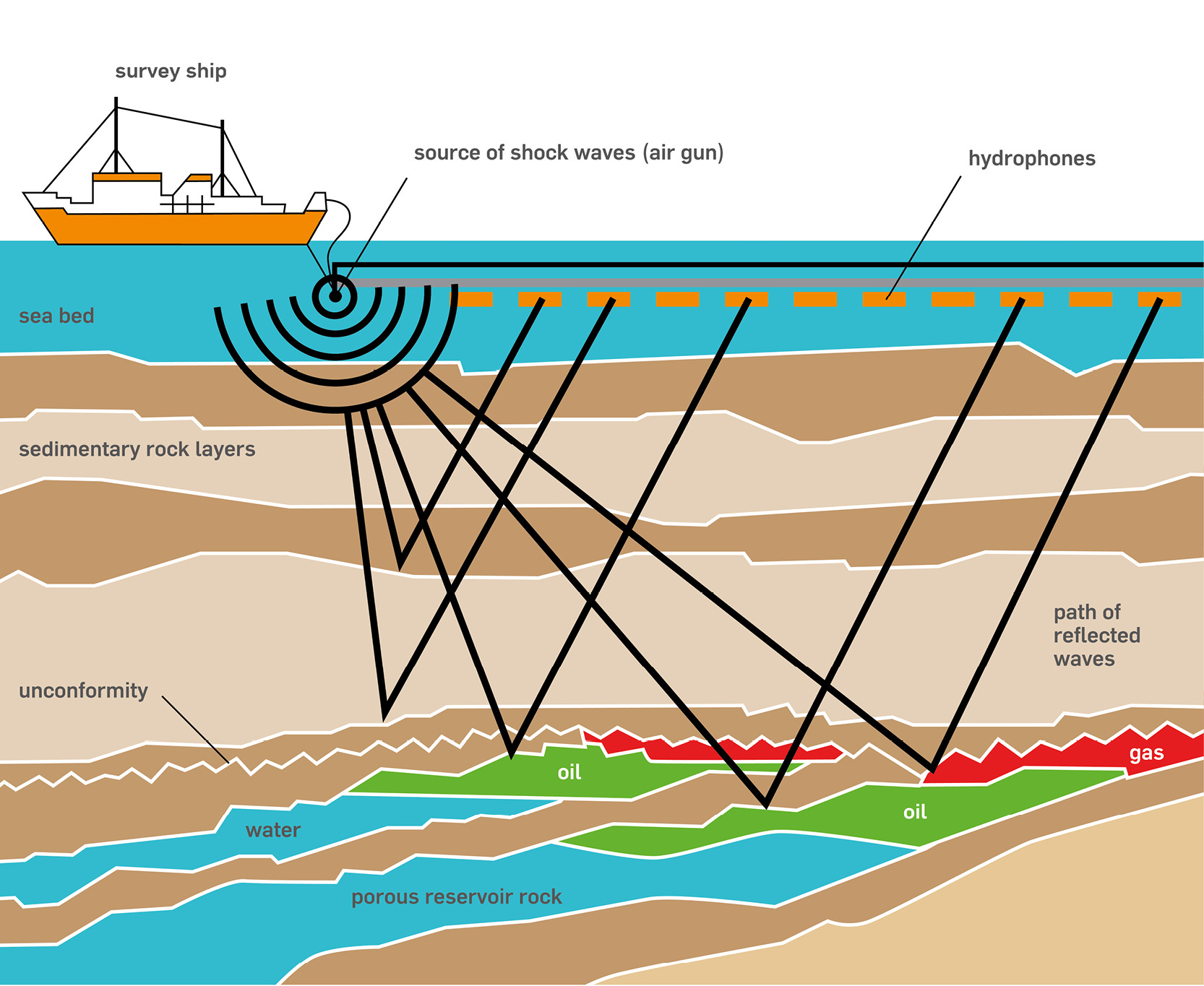
If it bids and wins, it needs to decide where to drill. Seismic surveys help here. They send sound waves through the rocks beneath the seabed and record the signals that bounce back to build a picture of what lies below. The company may study earlier surveys or carry out new ones to identify promising spots.
Say the company identifies a promising spot. It now needs to drill an exploratory well to test whether its geologists are right. In deep water, that means bringing specialised vessels, equipment and crews far offshore. Supplies and people need to reach the site, and if equipment fails, fixing it out at sea isn’t easy. The ministry estimates that a single deepwater exploratory well costs roughly $125–150 million.
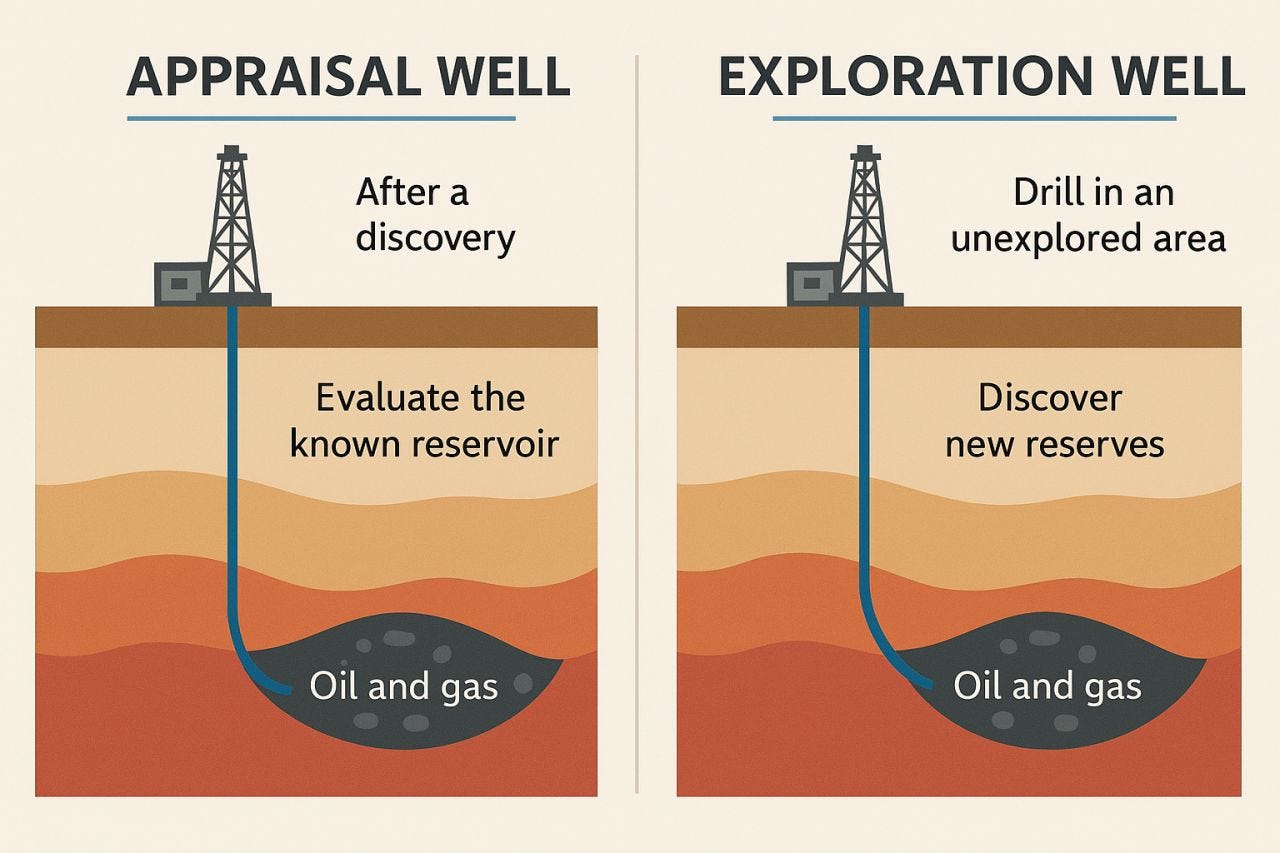
Now suppose the well finds oil or gas. The company still needs to establish how big the discovery is, how quickly the oil or gas can flow, and how much it can actually extract. Then it has to work out what bringing it into production would require. It could be more wells, equipment on the seabed, processing facilities and a way to get the output to buyers.
For oil, that could mean a pipeline or a ship carrying crude to a refinery. Gas generally needs treatment before it can reach fertiliser plants, factories or gas distributors. If the discovery is far from existing infrastructure, the company may need a long pipeline or more complicated processing and shipping arrangements.
The company now has to put all these costs together. Will sales cover construction, operations, transport, taxes, eventually closing the field, and still leave enough for investors? That depends on the prices it expects when production starts, and over the years the field operates.
This explains how a company can find a lot of oil and still decide to leave it in the ground. A smaller discovery near existing facilities might make more financial sense than a much larger one far offshore. And a global explorer considering India will compare the project with opportunities elsewhere. Even if it expects to make money here, it may choose another project with better returns or fewer uncertainties.
The ₹84,000-crore question
Samudra Manthan tries to help at several points along this journey. It sets aside ₹28,534 crore for offshore data, covering 2D and 3D seismic surveys and reprocessing older data in the National Data Repository using modern tools, including AI.
The idea is to give companies a clearer picture of what lies beneath the seabed. That can help them decide whether to bid for a block, while more detailed surveys can help them choose where to drill once they win it. By paying for data that multiple explorers can use, the government hopes to reduce some of the uncertainty holding investment back. But that depends on how good the data is and how easily companies can access it.
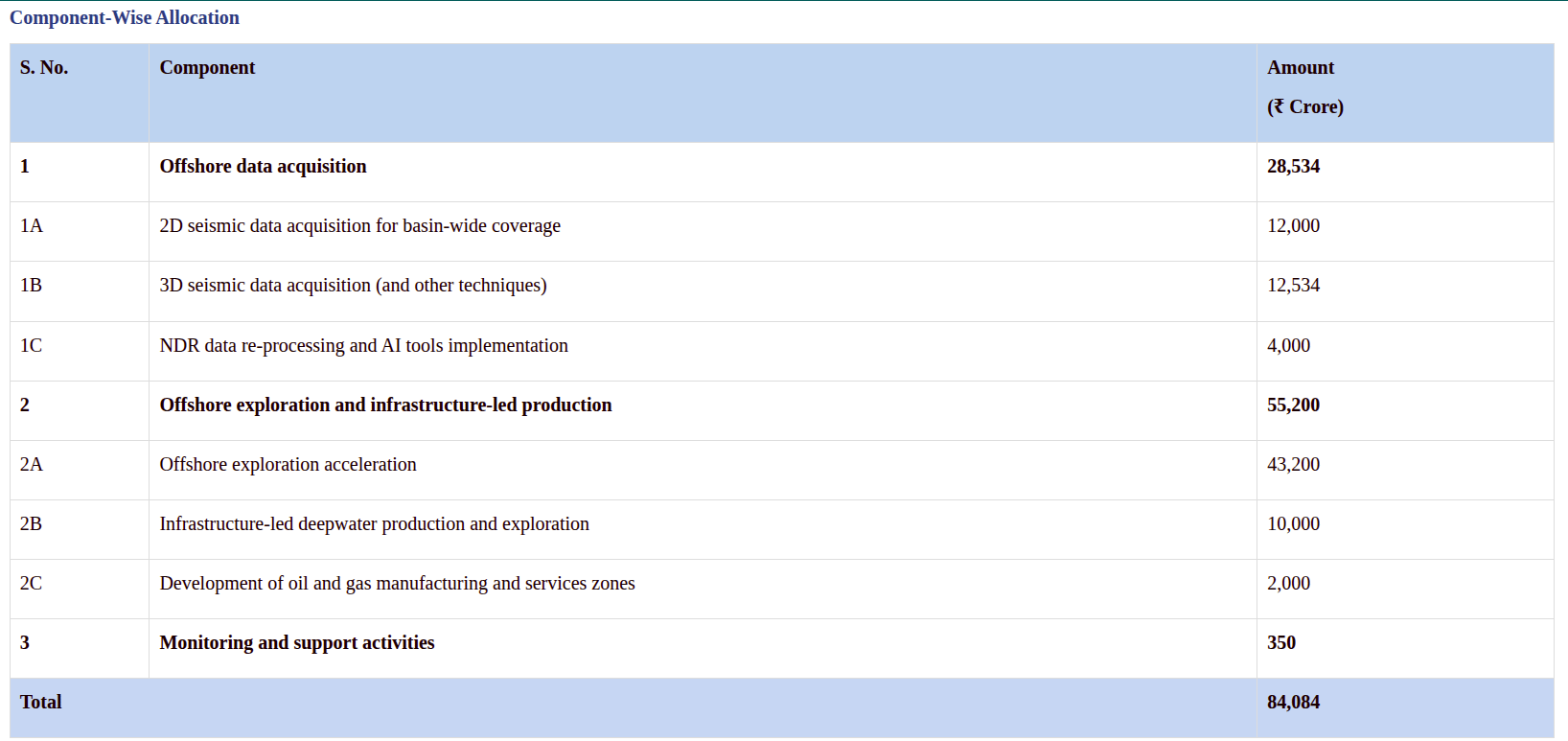
The largest allocation, ₹43,200 crore, supports offshore exploration, with a programme of 60 deepwater and ultra-deepwater wells. The government offers up to half the eligible drilling cost, capped at ₹675 crore per well.
Suppose an eligible well costs ₹1,000 crore. Under that formula, the government could cover ₹500 crore. A well the company previously decided against drilling could now become worth attempting.
The government is essentially sharing the financial risk.
But the terms matter. In August, The Economic Times reported that the government was considering recovering its support from commercially successful projects. It would do that only after seven years of production or after the explorer recovered half its development cost. Those proposals were still under consultation. Who qualifies, when the money arrives, and how much must eventually be repaid will determine what the support is actually worth to a company.
The mission also sets aside ₹10,000 crore for shared offshore infrastructure. Consider three nearby gas discoveries. Building separate processing and transport facilities for each could make all three too expensive to develop. Connecting them to a common system could spread those costs across more production.
This is where the funding and legal reforms work together. The 2025 rules provide for companies to share facilities and for the government to intervene if they cannot agree on access to spare capacity. The scheme can help pay for new shared infrastructure. Companies still need to agree on charges, how much capacity each can use and when the facilities will be ready.
Some companies are already moving in this direction. In January, ONGC and Reliance Industries signed an agreement to pursue resource sharing in their eastern offshore operations. It covers rigs, vessels, pipelines and processing facilities. The agreement came before Samudra Manthan’s approval and explicitly refers to the 2025 legal changes. It shows what those reforms were meant to make possible.
Another ₹2,000 crore is earmarked for oil and gas manufacturing and services zones, with ₹350 crore for monitoring and other supporting activities. This could bring business to equipment suppliers, fabrication yards, repair companies and engineering services firms.
Larsen & Toubro offers an example of the construction work involved. In September, it won an offshore development order from ONGC covering platforms, subsea pipelines and cables off India’s west coast. This is work on an existing field, not a confirmed Samudra Manthan award. But it shows where the money goes once a company decides to develop a field.
Building these capabilities in India will take time. Meanwhile, companies need vessels and people with the skills to carry out the planned drilling. ONGC is already exploring buying a drillship or forming a joint venture to secure drilling capacity for the programme.
And as we saw earlier, paying for drilling is only part of the calculation. Companies also care about the taxes they pay and the terms on which they can sell what they find.
In a July op-ed on Samudra Manthan, bp’s India chairman Kartikeya Dube called for relief from the Integrated GST burden and more freedom for companies to sell what they produce, including exports where they offered better returns.
Show us the bids
So where might we first see whether this package is changing investment decisions?
OALP is a good place to start. DGH’s bid records for Round IX show that 24 of the 28 blocks received two bids each; the remaining four received three. Private firms participated, but competition was limited to a small group of bidders.
Those contracts predate the scheme, giving us a starting point to compare future participation against.
The next opportunity is the deepwater acreage in OALP-X and XI. Together, the rounds offer 18 deepwater and ultra-deepwater blocks. Their bidding deadline has been extended to November 15, 2026. Samudra Manthan’s operational rules are still awaited, and industry sources have reportedly linked the extension to that uncertainty. The ministry hasn’t given an official reason. But a company deciding what to bid would want to know which costs qualify for support and what obligations come with it.
Meanwhile, there are signs of interest. Oil India has outlined around ₹15,000 crore of offshore investment over three years, with management explicitly expecting to use the scheme. ONGC and Shell have signed a non-binding agreement to assess opportunities, including OALP-X and XI.
Once bidding closes and the results are out, we can see whether more private and international firms have joined in, whether more blocks attract competing bids, and what exploration work the bidders commit to.
See you in the 2030s?
Winning a block is only the start. Companies then need to carry out surveys, hire drilling rigs and spend the money they committed. If they find oil or gas, they must establish how much can be extracted and decide whether to fund production facilities. The ministry estimates five to ten years from a block award to commercial production. So even successful projects in these largely unexplored areas may not start producing until well into the 2030s. Existing discoveries near infrastructure could move sooner.
That’s also how we should judge the public money: how much exploration and development it gets companies to undertake that they otherwise wouldn’t.

Why is rice getting expensive when India has never had more of it?
Rice is getting expensive again. On 9 October, the Department of Consumer Affairs put the all-India average retail price at ₹46.92 a kilo. According to ISignal’s analysis of the same data, rice in September cost about 8% more than a year ago.
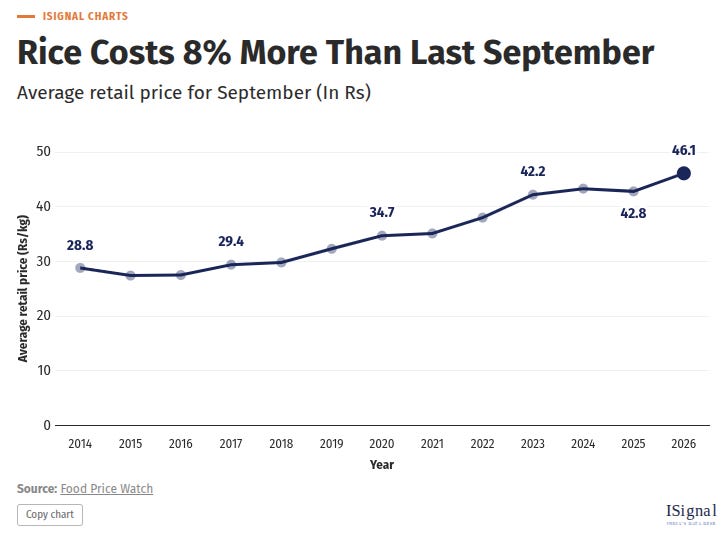
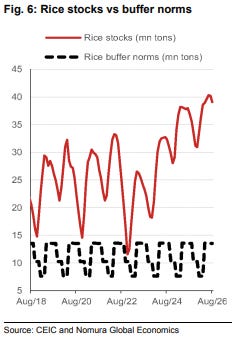
That wouldn’t be unusual on its own. What makes it odd is that the government is sitting on 38.8 million tonnes of rice, close to four times its required reserve, and selling millions of tonnes to distilleries to make fuel, at a loss.
So why isn’t all that rice keeping prices down?
Rice runs on the monsoon
The kharif crop, sown in June and July as the monsoon arrives, makes up more than 80% of India’s rice output. Its fortunes depend heavily on the rain.
Farmers first raise seedlings in a nursery while preparing the main field. That involves churning it into mud and flooding it with a few inches of water. Only then do they transplant the seedlings. Without enough water, this process stalls.
This year, that water didn’t come on time. According to IMD’s end-of-season summary, India received 87% of its normal monsoon rain between June and September, the weakest monsoon since 2015. Anything below 90% is officially “deficient”. The culprit is El Niño, an unusual warming of the Pacific that tends to weaken the winds carrying rain to India. We wrote about what a Super El Niño could mean for India back in June.
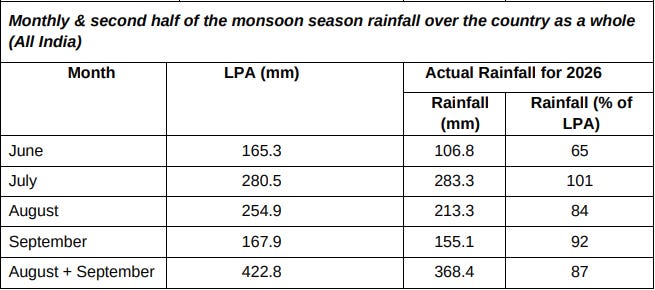
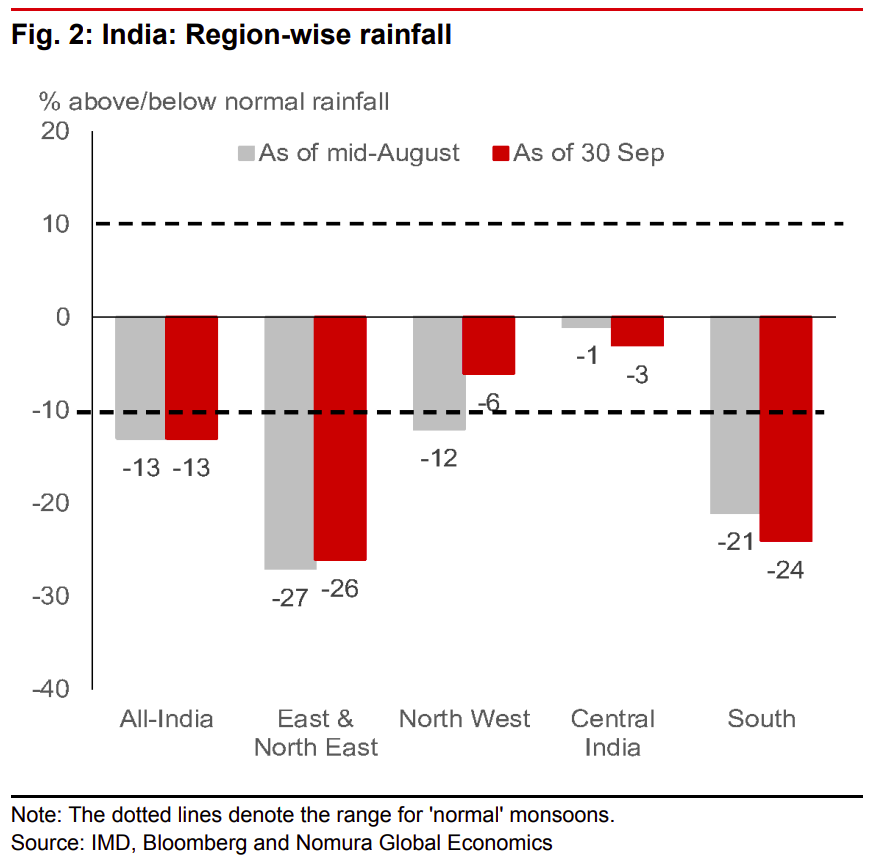
But the timing hurt more than the total. June received only 65% of its normal rain, right when farmers needed to sow. July recovered to 101%, before August fell to 84% and September to 92%. The shortfall was uneven too. According to Nomura’s analysis of IMD data, the East and North East were about 26% short and the South about 24%, while Central India was close to normal.
From a weak monsoon to a smaller harvest
A weak monsoon hurts rice in two ways.
First, fewer fields get planted. The dry June pushed some farmers towards crops that need less water. As of 11 September, Agriculture Ministry data showed paddy area down 4% from last year, with the biggest drops in Karnataka, Telangana and Andhra Pradesh. The area under pulses, meanwhile, went up.
Second, planted fields can yield less. Rice is particularly vulnerable to water shortages when it develops its grain-bearing head and during flowering. A dry August and September could hurt fields reaching these stages. Late planting adds to the risk: a rice variety takes roughly the same time to mature whenever it’s planted, pushing grain development further into the dry end of the season.
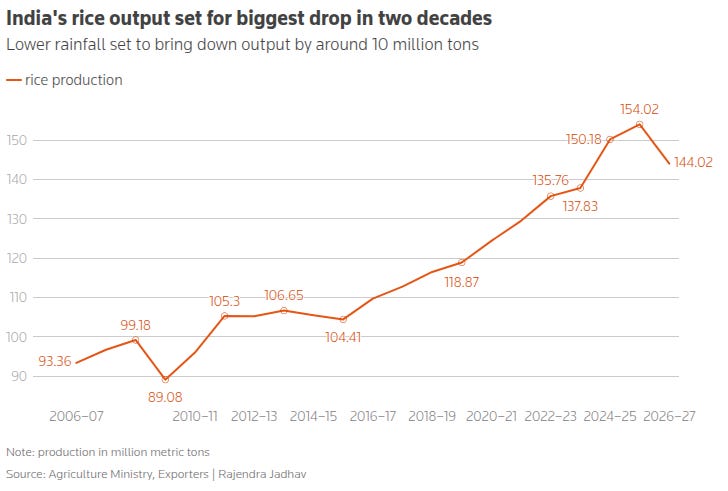
The Rice Exporter Association expects production to fall by about 10 million tonnes from last year’s record of 154 million tonnes. That would be a drop of nearly 6.5%, the biggest since the 2009–10 drought and the first decline in a decade. The government is yet to release its first harvest estimate.
Why prices move before the harvest does
The new crop is only now being harvested, but prices have been rising for months.
Rice prices reflect expectations about future supplies too. Millers, traders and exporters anticipating a smaller harvest may buy early, even at higher prices. Those holding stocks may wait for a better price. Both can push prices up before an actual shortage appears.
That helps explain the reversal since May, when the winter harvest and weak demand pushed Indian rice export prices to multi-year lows. By late September, they had reached their highest level since July 2025.
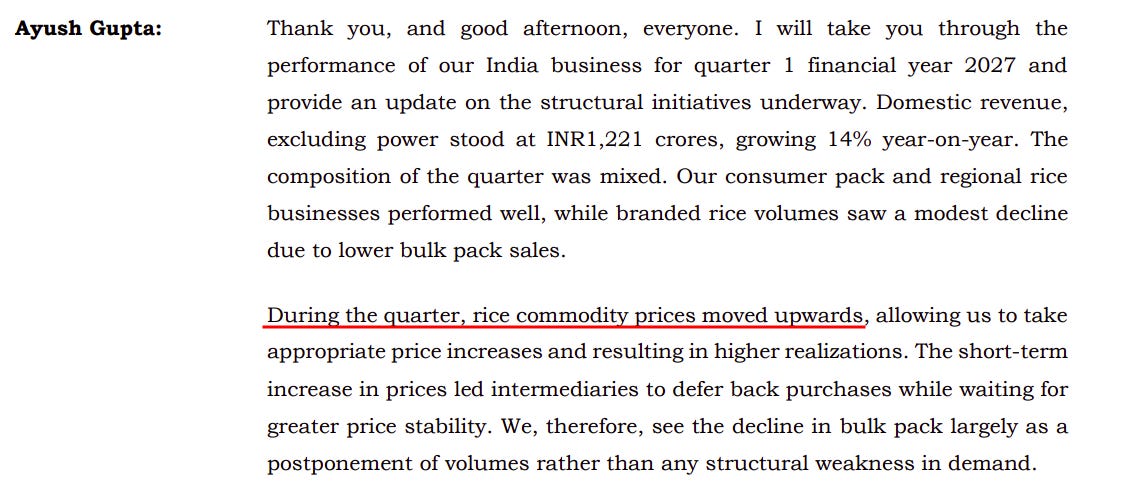
KRBL, which owns India Gate, also told investors on its August earnings call that “rice commodity prices moved upwards” in the April–June quarter. Wholesale buyers held off on bulk purchases as a result.
A mountain of rice that doesn’t reach your plate
To understand why government stocks haven’t prevented this, it helps to know how they accumulate.
The government promises farmers a minimum price for their paddy, called the minimum support price (MSP). The Food Corporation of India (FCI) and state agencies buy it, get it milled into rice, distribute much of it free through ration shops, and store the rest for emergencies.
The required reserve on 1 October is 10.25 million tonnes. Stocks have grown well beyond that as procurement continues. The US recently raised questions at the WTO about FCI buying nearly half of India’s rice production.
Storing this grain costs money, and it can deteriorate over time. So the government has been directing some of the surplus towards fuel.
Petrol in India is blended with ethanol, an alcohol made from crops containing sugar or starch. As we explained in India’s bittersweet conundrum, maize and surplus rice were brought in to reduce dependence on sugarcane. Today, 72.5% of the ethanol allocated to distilleries comes from grains.
According to a Rajya Sabha reply, FCI sold 6.35 million tonnes of rice to ethanol makers between June 2025 and June 2026, at nearly 40% below its procurement cost.
Back in June, we wrote that a failed monsoon might force the government to cut back on rice for ethanol. Instead, it has set aside more for next year than distilleries received last year.
The part that’s harder to answer
There’s a fair case for the government. Its stocks offer a substantial cushion even after the ethanol allocation. Free rice through ration shops shields the poorest households from open-market prices, while the sale policy says distilleries should get old or broken rice wherever possible.
But putting government rice up for sale doesn’t mean people will buy it. When prices rose in 2023, FCI offered rice to traders through auctions. The government even cut the starting price from ₹31 to ₹29 a kilo. Yet by January 2024, it had sold only about 1.66 lakh tonnes, a small share of its stocks.
One reason was simple: traders could get a better deal elsewhere. As Mint reported in May 2024, the same variety was available in the market for less than FCI’s ₹29 a kilo. FCI’s buying rules also allowed up to 25% broken grains. That rice is still edible, but buyers won’t necessarily pay the same price for it as rice with fewer broken grains. So even when rice prices rise overall, the particular rice FCI holds may struggle to find buyers.
The government therefore needs more than full warehouses. Its rice has to be something people want to buy, at a price that gives traders a reason to buy and sell it.
The ethanol allocation has also drawn criticism. One argument is that using maize and rice for fuel “should be severely restricted, if not stopped” until supplies return to normal next year.
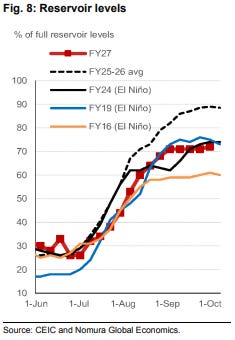
And the risk extends beyond this harvest. India’s winter rice crop depends heavily on stored water. According to Nomura, reservoirs were only 72% full on 1 October, compared with 89% last year, and farmers are reportedly likely to plant less winter rice. With IMD expecting a dry October and El Niño expected to peak in November, the next crop could face trouble too.
What to watch
September’s inflation numbers will arrive soon, after food prices rose 5.95% year-on-year in August. On 7 October, the RBI raised rates for the first time since 2023, with the weak monsoon among its worries. The government’s first harvest estimate, due within the next couple of months, should give us a clearer picture of the damage.
India built its grain reserves for difficult years. This year will test how effectively it can use them to ease food prices and how much it is willing to keep sending towards fuel.
- This edition of the newsletter was written by Kashish & Vignesh.
Tidbits
1. US suspends Microsoft and major IT firms from employment-linked green card program
The US administration has suspended Microsoft, Infosys, Tata, Wipro and several other technology companies from the Permanent Labour Certification Program (PERM), a key step in sponsoring workers for employment-based green cards. Officials alleged abuse of the system and said the suspensions would remain in place while federal investigations continue.
Source: Bloomberg
2. India and Singapore explore 2,000 MW cross-border power interconnection
India and Singapore are considering a proposal to develop a 2,000 MW cross-border power interconnection to enhance energy security and strengthen supply resilience. The potential power trade corridor could support deeper energy integration between the two countries.
Source: The Economic Times
3. Rolls-Royce seeks deeper India partnerships across defence, aerospace and energy
Rolls-Royce’s global board of directors visited India to deepen the company’s long-term commitments across the defence, civil aviation, and energy sectors. During the visit, CEO Tufan Erginbilgic met with Prime Minister Narendra Modi to discuss expanding partnerships aligned with India’s ambitions for self-reliance in defence and infrastructure development.
Source: The Hindu BusinessLine
4. Nokia plans Nvidia-backed AI radio access networks for India
Nokia is preparing to bring Nvidia-backed AI-radio access network (AI-RAN) technology to India, aiming for commercial deployments by 2028. The strategic pivot is intended to address the country’s surging 5G data consumption and rising demand from hyperscalers for advanced, AI-driven network infrastructure.
Source: Business Standard
5. Meta restricts ByteDance advertising across its apps in seven countries
Meta has begun blocking advertisements and paid marketing messages from ByteDance across its platforms in the US and six other countries, according to a Bloomberg report. The restriction also covers third-party campaigns linking to TikTok and other ByteDance properties, with Meta stating it does not have to provide promotional services to a direct competitor.
Source: Reuters
Want more tidbits? Catch up on last week’s recap!

Beyond Today’s Brief
There’s always more happening at Markets by Zerodha.
The Chatter: What strategic trends are leaders at TCS, Maruti Suzuki, and PB Fintech highlighting? How is TCS managing AI contract deflation, while Maruti Suzuki prioritises deep localisation and biogas, and PB Fintech navigates insurance commission rules?
Points & Figures: What brings Indians to court? From 6.5 lakh cheque-bounce cases in Delhi to motor vehicle accidents, excise enforcement, and conjugal rights, what does district court data reveal about the everyday legal disputes clogging India’s judicial backlog?
Aftermarket Report: How did Nifty break an eight-week losing streak with a modest 0.44% gain to close at 22,520? And what do persistent foreign portfolio outflows of ₹35,556 crore, extreme fear sentiment, and the 10-year G-Sec yield climbing to 7.37% signal as the broader market remains locked in a downtrend?
What We’re Reading: From the rise of omnipresent digital gambling and France’s tightrope between public welfare and bond market pressures, to 50-year social transformations in rural Tamil Nadu, Henry George’s land-tax economics, and why AI models adopt Kenyan writing patterns—here are ten curated reads from our fortnightly reading list.
Subtext by Zerodha: What does innovation in India really look like on the ground? Former IIM-A professor Rakesh Basant breaks down knowledge transfer, R&D spend, intellectual property, and how academia connects with industry.
Join us on WhatsApp, where we share interesting soundbites from concalls, articles, and everything else we come across throughout the day. You’ll also get notified the moment a new video or article drops so that you can read or watch it right away.
Thank you for reading. Do share this with your friends and make them as smart as you are 😉