

Our goal with The Daily Brief is to simplify the biggest stories in the Indian markets and help you understand what they mean. We won’t just tell you what happened, we’ll tell you why and how too. We do this show in both formats: video and audio. This piece curates the stories that we talk about.
You can listen to the podcast on Spotify, Apple Podcasts, or wherever you get your podcasts and watch the videos on YouTube. You can also watch The Daily Brief in Hindi.
In today’s edition of The Daily Brief:
The many lives of crude oil
Maruti’s tryst with EVs
The many lives of crude oil
Every time you might open Twitter or scroll through the news, you’d probably see reports of an LPG shortage, or that countries are releasing their oil reserves, or that naphtha prices are up, and so on. The easiest thing for most people is to skim past it and get on with their day.
This week, though, it got harder for all of us to look away, as this crisis arrived at our literal doorsteps. Restaurants across India are closing early due to a shortage of gas. As a replacement for gas, Indians are buying induction cookers at unforeseen levels. People are trying to stockpile LPG cylinders, and crude oil briefly touched $120 a barrel — a level the world hadn’t seen since 2022.
And just 2 days back, the IEA did something it has never done in its fifty-year history: it agreed to release 400 million barrels from its members’ strategic reserves, more than double what it released after Russia invaded Ukraine.
In the midst of this, we had to admit something to ourselves: there are so many terms and byproducts around oil that we didn’t fully understand. What has one thing got to do with another? What is oil, essentially, and where do all these other things like LPG and LNG even come from?
What crude oil actually is
Let’s start from the very beginning of life itself.
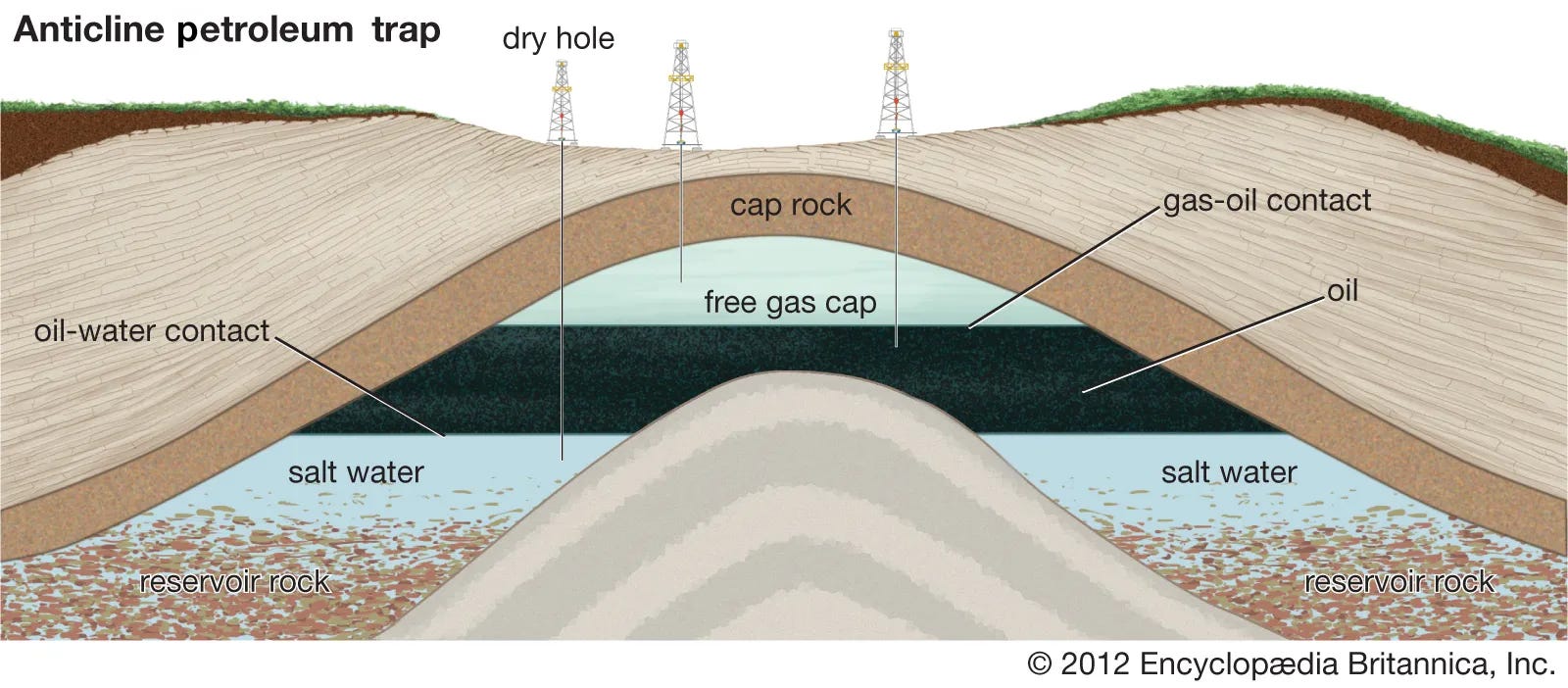
About 100 million years ago, vast quantities of tiny marine organisms like algae and bacteria died and sank to the ocean floor. Over millions of years, they were buried under layers of sediment and rock. The immense heat and pressure of the Earth slowly cooked these organic remains, transforming them into a thick liquid trapped inside rock formations that lay deep underground.
That liquid is crude oil. “Crude“ simply means raw and unprocessed — exactly as it came out of the ground. Petroleum is just another word for the same thing.
Not all crude is the same. It varies along two dimensions that matter enormously for how it’s priced and processed.
The first is weight — whether the crude is light or heavy. Light crude has more of the shorter, simpler hydrocarbon molecules — meaning refineries can extract more petrol and diesel from it with less effort. Heavy crude has more of the thick, complex molecules that are harder to work with.
The second is sulphur content — whether the crude is sweet or sour. Sweet crude has very little of it and requires less processing. Sour crude, though, is loaded with sulphur and needs to be treated before use. We covered this briefly in our story on Venezuelan oil.
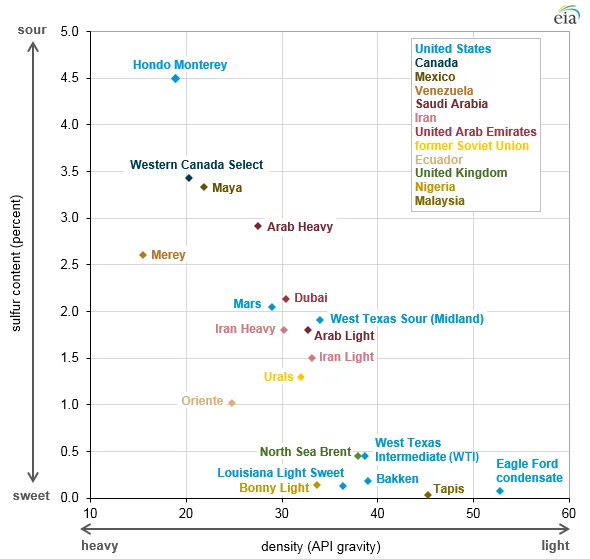
Most Middle Eastern crude: Saudi, Iraqi, Kuwaiti, Iranian — tends to be heavier and sourer. The Abqaiq facility in Saudi Arabia that we wrote about last week — the one that processes 7% of the world’s oil — exists primarily to remove sulphur from the region’s crude and make it sweet. In contrast, much of the US and Norwegian crude is lighter and sweeter, and commands a premium for that reason. It’s partly why they’re also the basis for WTI and Brent, the two global price benchmarks in oil.
Ultimately, the goal of every refinery in the world is the same: take whatever crude arrives and convert it into something useful.
The tower that makes everything
To make crude oil useful, you have to take it apart. For this, we go back to some good old chemistry lessons in school.
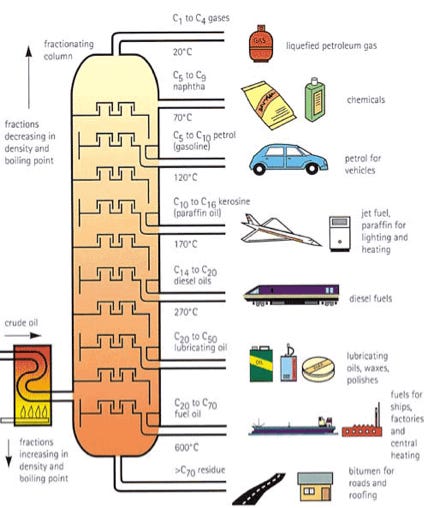
You see, crude is a mixture of hundreds of different molecules, all jumbled together. The technique for separating them is called fractional distillation. At its core, it works on a simple principle: different molecules boil at different temperatures.
Refineries heat crude oil in a furnace until it mostly vaporizes. Then, they push that vapour into a tall steel tower (called a distillation column) that is hot at the bottom and progressively cooler at the top — much like how hilly areas work. As the vapor rises and cools, different molecules condense back into liquid at different heights, depending on their boiling points. Each layer that collects from top to bottom is called a “fraction“, and each of it becomes a different product.
Layer cake
At the very top is LPG, or liquified petroleum gas, and is what’s used in your kitchen cylinder. These are the lightest molecules that condense only at very low temperatures. At normal temperature and pressure, LPG is a gas, and it only becomes liquid when compressed. That’s why it can be stored in a metal cylinder.
The next fraction is naphtha, one of the most important industrial raw materials in the world. It goes into making plastics, synthetic fibres, fertilizers, and pharmaceuticals. Almost everything made of plastic has naphtha somewhere in its origin story.
Petrol (or gasoline), the basic fuel for most passenger cars comes after naphtha. Kerosene sits below petrol, and its most important use is as aviation fuel — every commercial flight runs on a high-grade version of kerosene.
Then, there’s diesel, which is heavier than petrol and kerosene. Trucks, buses, trains, and ships prefer diesel because it contains more energy per litre than petrol, making it better suited for heavy loads. Most of India’s freight, for instance, moves on diesel.
Lastly, at the very bottom of the column are the heaviest residues. One is fuel oil, which is used by large cargo ships and power plants. And ultimately, there’s bitumen, which is the black, tar-like substance used to pave roads.
Knowing what we know now, it’s clear we often underestimate how ever-present oil is in the world — and we don’t just mean in terms of vehicle fuel or kitchen use. Your nearest street road, plastic garbage bags, nylon clothes, toys, and even phone covers — all of these depend on some or the other fraction of crude oil.
Perhaps, that’s why people still say that oil (and not data) is the new oil.

Where natural gas fits in
Now, crude oil isn’t the only thing hiding underground. In many of the same reservoirs, sitting above the oil layer, there’s a gas. Since gas is usually lighter than liquid, it floats on top, like air above water. That’s natural gas, and it’s a separate thing from crude oil, even though the two are neighbours underground and often discovered together.
Natural gas mostly takes the form of methane — the simplest, lightest hydrocarbon molecule there is. But when it comes out of the ground, it’s not pure methane. It arrives as a mixture of mostly methane mixed with heavier gases like propane, butane, and ethane. Before that gas can travel through a pipeline into your city, those heavier components have to be separated out. After all, city pipelines are only designed to carry methane, and the heavier stuff would condense into liquid inside the pipes and cause problems.
Interestingly, the separated-out propane and butane form LPG — the very same gas found in your kitchen cylinder. So LPG doesn’t just come from refining crude oil; it also comes from cleaning up natural gas before it enters a pipeline. In fact, globally, more LPG is produced this way than from refineries.
Once cleaned up, the methane travels through pipelines to power plants, factories, and homes. It heats buildings, generates electricity, and — perhaps most critically — feeds the world. The chemical process that makes nitrogen fertilizers, which in turn feed roughly half the global population, runs on natural gas. Disrupt natural gas supply and you don’t just turn off the lights; eventually, you affect food production.
You may also have heard of CNG and LNG, and wondered how they’re different. They’re actually the same molecule — methane — just stored differently.
CNG, or Compressed Natural Gas, is methane squeezed under very high pressure into a tank. It stays a gas, just a very densely packed one. It powers many auto-rickshaws and buses.
LNG, or Liquefied Natural Gas, is methane that’s been chilled to -162°C — cold enough to turn into liquid and shrink to about one six-hundredth of its original volume. That makes it practical to load onto ships and transport across oceans, to countries that don’t have pipeline connections. Qatar, for instance, exports most of its natural gas as LNG, and India imports it.
India’s impossible position
India’s position in this entire chain is tricky, to say the least.
India is the world’s third-largest oil consumer, and we import more than 83% of every barrel it consumes. To put that another way: India produces enough oil to cover only about six weeks of its own needs. The rest comes from ships, mostly from the Middle East, mostly passing through or around the Strait of Hormuz.
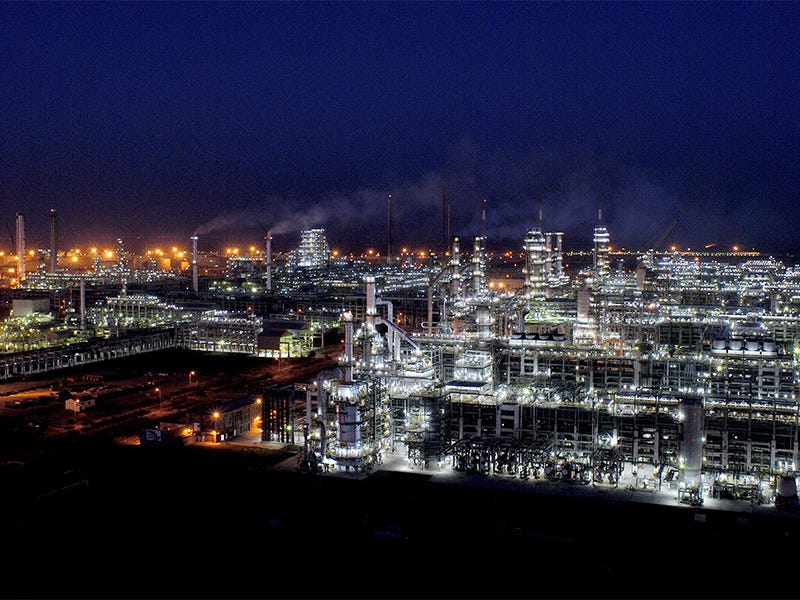
India is not, however, helpless in the oil story. Despite its limited domestic production, we have built the world’s fourth-largest refining capacity — 258 million metric tonnes per year as of early 2025, spread across 23 refineries. In itself, Reliance’s Jamnagar complex in Gujarat — the largest refinery in the world — can process around 1.4 million barrels a day at a single site. India imports crude, processes it, and actually exports refined products — petrol, diesel, jet fuel — to global markets.
Which brings us back to this week. The Strait of Hormuz, the narrow chokepoint through which roughly 20% of the world’s oil normally flows, has effectively closed. India has scrambled to expand its crude sourcing from 27 countries to about 40.
India holds roughly 100 million barrels of crude and petroleum product stockpiles in storage tanks, underground caverns, and in ships currently at sea. That’s enough for 40-45 days if Gulf flows don’t resume. The IEA, however, recommends 90 days as the minimum buffer — quite far from where we are.
The next time you see a headline about naphtha prices, or LPG shortages, or countries tapping their reserves, you’ll know it’s all the same story, playing out across different parts of the same supply chain. And it’s a stark reminder of all the myriad daily-use objects we use that fundamentally depend on rock formations from millions of years ago.
Maruti’s tryst with EVs
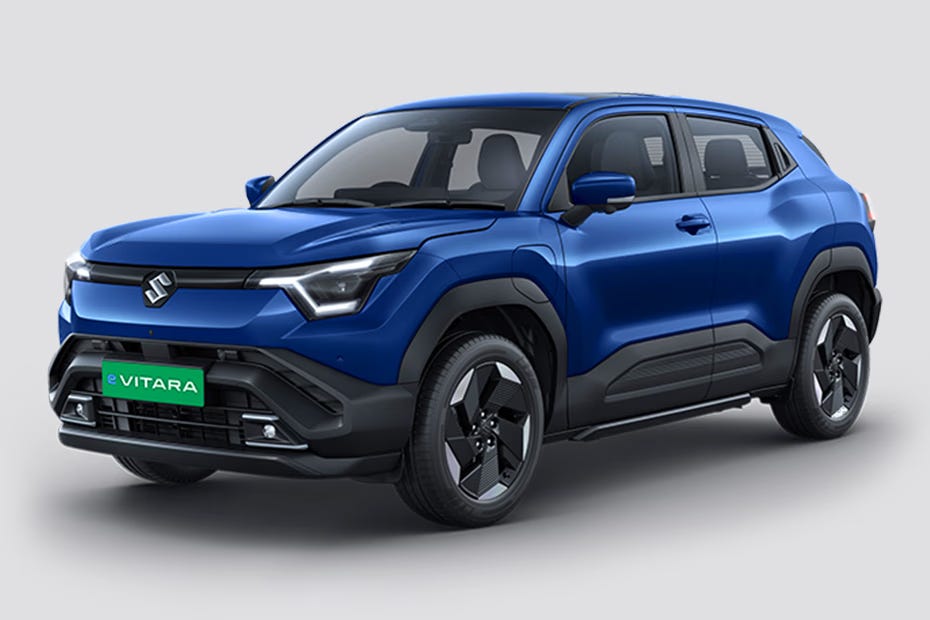
Last month, Maruti Suzuki launched the eVitara, its first electric car. From the outside, it’s a sleek-looking SUV with a 543-km range. And, true to Maruti’s promise to offer value-for-money, it’s priced aggressively, starting at ₹10.99 lakh.
The market noticed the low prices. But it also noticed the possibility that this price could squeeze Maruti’s profitability — perhaps, like no other car Maruti has ever made.
Last financial year, Maruti posted an 11.7% EBITDA margin, beating the global auto industry average by a significant margin. Maruti has never really had to sell a car it couldn’t make money on. The company has always followed its Japanese parent company Suzuki’s manufacturing philosophy, called “Sho-Sho-Kei-Tan-Bi“, which prioritizes smaller, lighter cars. If any company could figure out how to make an affordable EV profitably, you’d think it was Maruti.
But, EVs are a whole different field from what Maruti is used to.
Losing home ground advantage
First, let’s try to understand what made Maruti so dominant in the first place. Back in 2015, RS Kalsi, Maruti’s then Executive Director for Sales, had said:
“Any model which the company has launched in India has 95 per cent localisation.“
This was what Maruti always did.
Maruti built an entire ecosystem of vendors around its factories. 78% of their supplier base, by value, sits within 100 km of its plants. For cars based on petrol engines, which have thousands of components — like steering systems, brake pads, wiring harnesses, fuel injectors, seat fabrics, and so on — such strong geographical clustering is extremely valuable to have. Every car can go from design to mass-production extremely quickly.
Each of those suppliers, meanwhile, would compete fiercely for Maruti’s business. If one vendor won’t meet the price, there was always another one waiting. This created immense competition among vendors, keeping costs low for the company.
But EVs changed the game completely.
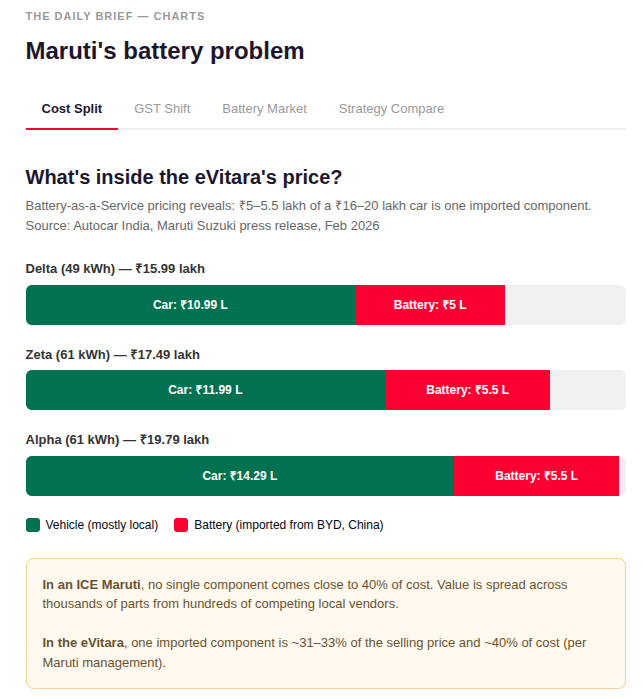
See, EVs need far fewer mechanical parts. They have no engine, no multi-gear transmission, no exhaust system, no fuel injection. Many of the product lines that Indian suppliers built their businesses around simply don’t exist in an EV. What replaces them is electronics, software, and above all, the battery — a single part which, alone, makes up over 30% of an EV’s cost.
For its newest launch, the company introduced a “Battery-as-a-Service” model, or BaaS. Under BaaS, the customer buys the car without the battery upfront, and instead pays a per-kilometre rental for battery usage. It is like separating the cost of fuel from the cost of the car. This makes the sticker price look lower and eases the buyer into EV ownership.
But it also splits the car into two visible prices. The eVitara without a battery: ₹10.99 lakh. The eVitara with a battery: ₹15.99 lakh. The battery alone costs ₹5 lakh for the base variant, and ₹5.5 lakh for the larger 61 kWh pack.
The squeeze
What does this mean for Maruti, which is known for its cost-cutting?
In a petrol car, the entire powertrain, engine, gearbox, fuel system, exhaust, accounts for roughly 18% of the car’s cost. But this flips completely in the case of EVs. Maruti imports the core finished battery from one single vendor — BYD. Its old playbook doesn’t help it here.
Meanwhile, Maruti has priced the car below every competitor to gain market share from those who are ahead in the EV race. For instance, the Mahindra BE 6 costs ₹18.9 lakh, the Hyundai Creta EV is at ₹18 lakh, and the Tata Curvv EV at ₹18 lakh.
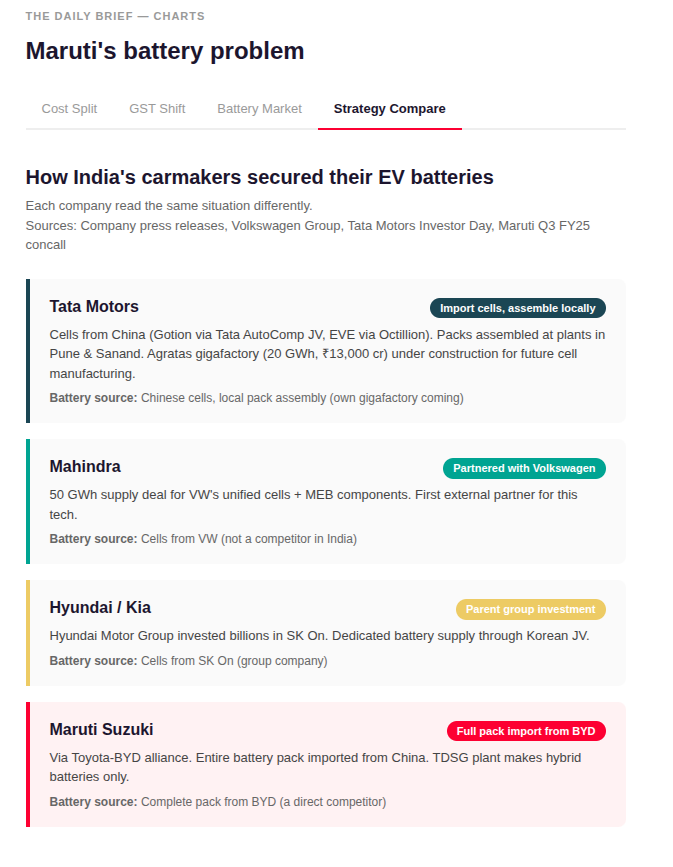
These competitors have more control over their battery costs by virtue of having their own local battery-pack assembly or stronger battery integration. While importing battery cells from Chinese suppliers Gotion and EVE, Tata assembles finished packs at local plants in Pune and Sanand. Mahindra will build packs in India using Volkswagen’s cells. While these players themselves are also fairly late to EVs, these moves still help them capture more of the value of an EV — which Maruti is losing right now.
This makes the road steep enough for Maruti, already. But it gets harder. You see, in September 2025, the government overhauled India’s GST structure. Small petrol-based cars saw their GST drop from 28% to a flat 18%. On a ₹8 lakh hatchback, this meant savings of roughly ₹1.5-2 lakh for the buyer. Meanwhile, EVs didn’t enjoy any such rate cut and stayed at 5% GST. Their price advantage had come down.
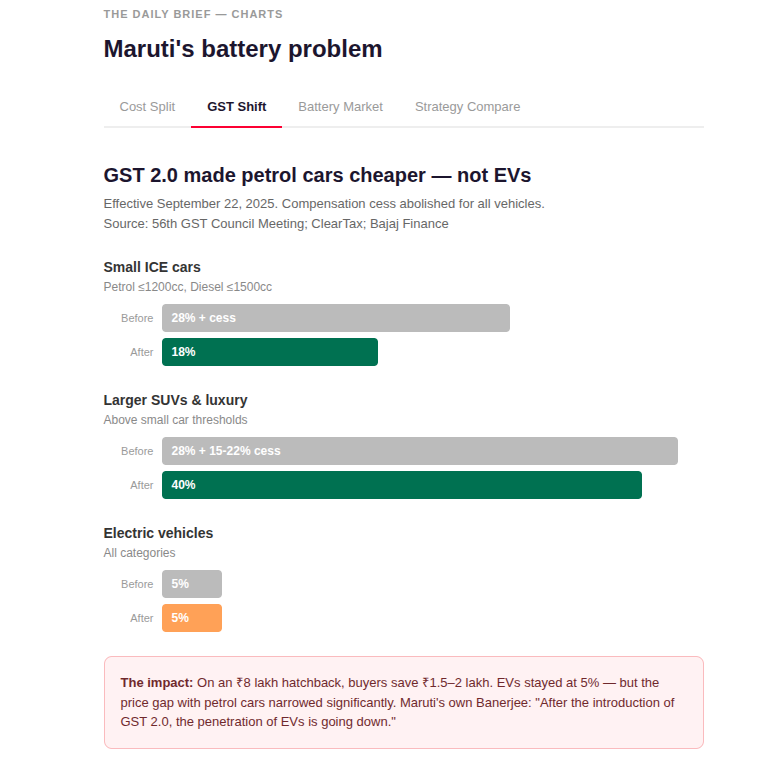
So Maruti was juggling multiple things that hit its profitability at once: it was importing expensive batteries, it was pricing its cars aggressively to undercut rivals, and a tax reform had just made petrol cars significantly cheaper. Meanwhile, its customer base still mostly treats EVs as a second vehicle.
It’s entering a very different business from selling Swifts at 12% margins.
Strategy? Or mistiming?
So, how did Maruti end up here?
Part of the answer is timing. The eVitara isn’t just Maruti’s first EV, it’s Suzuki’s first mass-produced EV anywhere in the world.
Back when the rest of the auto ecosystem had started shifting to electric vehicles, Suzuki bet on a different path. While Toyota was partnering with Panasonic on batteries, while Hyundai was pouring billions into SK On, and while Volkswagen was locking in long-term cell supply agreements, Maruti bet on hybrids and CNG.
In the short term, this was a good idea. At least for the Indian market, that bet paid off handsomely. On the Q3 FY25 earnings call, Bharti noted that “every 1 in 3 cars sold by the Company in the domestic market was a CNG vehicle“. Maruti offers 14 CNG models, the industry’s most comprehensive lineup.
But over that time, Maruti Suzuki — like many other carmakers — didn’t see a lot of reason to build an EV battery supply chain.
This caution wasn’t irrational. Globally, the conviction that EVs would rapidly replace petrol cars has taken a beating. Ford recorded $19.5 billion in charges to unwind its EV strategy, cancelled the F-150 Lightning, and is pivoting to hybrids. GM took a $6 billion writedown on EV investments. Even Toyota, which has the deepest EV partnerships of any Japanese automaker, slashed its 2026 global BEV production target by roughly a third. As CNBC put it: “Many have admitted that policies, not consumers, were driving the charge for EVs“.
In fact, Maruti’s management themselves said:
“After the introduction of GST 2.0, the penetration of EVs is going down. The EV industry is not keeping pace with the auto industry …. About 99% of customers who buy an EV use it as a secondary car. It’s not the primary car.“
There was another reason for why Maruti did not see a good reason to double down on EVs. China’s dominance in the supply of lithium presents a huge risk to anyone in the battery business. Maruti’s Chairman, RC Bhargava even said that this is “one of the reasons investors are not investing in battery cells manufacturing in India on a significant scale.“
In fact, in the first half of the year, Maruti reportedly cut eVitara production from 26,500 to just 8,200 units, due to a global shortage of rare earth elements linked to China tightening export controls.
So, to some degree, Maruti’s rationale for not investing in EVs made sense. However, this also meant that when the time came to build an EV, the company had no battery supply chain of its own.
Now, Suzuki does have a battery operation in India in TDSG — a joint venture between Toshiba, Denso, and Suzuki, set up in 2017 right next to Maruti’s Gujarat plant. It produces 18 million cells annually, and has received ₹4,267 crore in investment.
But there’s a catch. TDSG makes batteries for mild and strong hybrid vehicles like Maruti’s Grand Vitara model. It uses Toshiba’s cell chemistry, which are designed for smaller packs. But the eVitara uses far more powerful batteries — 49 and 61 kWh battery packs, which the facility does not manufacture. They are much larger and require a different chemistry.
Hence, they’re imported from China instead.
There are other such teething problems that Maruti is currently facing, in making such a shift. For instance, Maruti had reportedly hit bottlenecks in software development, which is a key part of EVs today. Evidently, to enter the EV business, you need to go back to the drawing board often.
Light at the end of the tunnel?
On the Q3 FY25 earnings call, an analyst from Nuvama asked Maruti’s management when EV profitability per vehicle would match ICE cars. The response was blunt:
“We have to be slightly realistic here. If the profit of an EV was equal to that of an ICE, why would the government support so much at the centre level and the state level... So, for a long time, it’s not going to happen. Our effort is to minimize cost so that we are able to satisfy all stakeholders... cost reduction is the way.“
In December 2025, Banerjee added, “Right now we are importing the batteries but yes we have a plan for localisation. It is very much on the cards in a phased manner over the next few years.“
Perhaps we’ll see that plan unfold over time.
The eVitara is being manufactured exclusively at the Gujarat plant for over 100 countries. That kind of concentrated global production, along with Maruti’s omnipresent dealer and service network, gives them economies of scale that no Indian EV rival can match. It’s why Maruti claims that it:
Maruti Suzuki also understands how important having the capability to make their own batteries is. Suzuki announced ₹70,000 crore in India investment over five to six years. Its FY2030 growth strategy commits ¥500 billion (₹29,000 crore) specifically to batteries. Suzuki also acquired Kanadevia Corporation’s solid-state battery division.
But, for all intents and purposes, Maruti has a hard road ahead of itself if it wants to build strong EV capabilities. Building back the kind of cost control it enjoyed for petrol cars is Maruti’s most important project right now. It’s also its most uncertain one.
Tidbits
[1] US launches unfair trade probe into India and 15 others
The US has launched a Section 301 investigation into what it calls “unfair” trade practices by 16 major trading partners, including India. The probe focuses on excess industrial capacity and could lead to new tariffs if violations are found. The move signals a tougher US trade stance amid rising global tensions.
Source: The Economic Times
[2] Private credit tightens grip on corporate lending
Private credit funds are rapidly expanding in global corporate lending, stepping into areas once dominated by banks. Companies are increasingly turning to these funds for large loans as regulations and capital rules limit banks. The shift is reshaping credit markets, with private lenders now handling bigger and riskier deals.
Source: Financial Times
[3] India warns drugmakers against weight-loss drug ads
India’s drug regulator has warned pharmaceutical companies against directly or indirectly advertising weight-loss and anti-obesity medicines. Authorities said such promotions violate drug advertising rules and can mislead consumers. The warning comes as demand for new obesity drugs surges across the country.
Source: The Economic Times
- This edition of the newsletter was written by Krishna and Aakanksha.
What we’re reading
Our team at Markets is always reading, often much more than what might be considered healthy. So, we thought it would be nice to have an outlet to put out what we’re reading that isn’t part of our normal cycle of content.
So we’re kickstarting “What We’re Reading”, where every weekend, our team outlines the interesting things we’ve read in the past week. This will include articles and even books that really gave us food for thought.

We’re now on WhatsApp!
We’ve started a WhatsApp channel for The Daily Brief where we’ll share interesting soundbites from concalls, articles, and everything else we come across throughout the day. You’ll also get notified the moment a new video or article drops, so you can read or watch it right away. Here’s the link.
See you there!
Thank you for reading. Do share this with your friends and make them as smart as you are 😉
hi , so wanted to highlight one key point about WTI and Brent crudes, even though WTI is lighter than Brent, internationally WTI istill trades at a discount to Brent , mainly to the energy infrastructure and ease of trainspotting the brent crude variants. WTI is mostly landlocked in the US and far for most eastern customers ..
Hi,
Mahindra's current EVs have cells from different vendors but not VW. Yes, there is a deal between VW and Mahindra, but we haven't seen their battery packs in cars yet.
Mahindra sources the cells from BYD and assembles the pack themselves, whereas Maruti imports the entire battery pack from BYD. Mahindra had no native ability to assemble battery packs, whereas TDSG has been assembling for more than a year.
I've made a list of the major Indian car OEM models and their cell suppliers here - https://www.expwithevs.in/i/173414503/lifetime-warranty
Another point to note - Maruti's top model with 61kWh battery is priced at 19.79L. Mahindra's BE6 with similar battery capacity of 59kWh starts at around 18-19L.
Mahindra's BE6 has better features than Maruti's. Feature appreciation might be subjective, but a base model BE6 can charge almost 2 times faster than the top model Maruti.
My point here is, Maruti is not being Maruti in producing cheap cars because it doesn't have the technology for EVs.
Maruti's management says that there's government support for EVs, but refuses to acknowledge that there's government PLI support even for manufacturing advanced ICE components too.
Another reinforcing point is - when critical minerals shortage happened, some Indian OEMs like Ather put in the RnD efforts to develop a Heavy Rare Earths Free motor, but Maruti decided that it is better to cut down their production. It didn't look for alternates or invest more in RnD.
All of this goes to show that Maruti - given the giant it is - doesn't like to move much, or rather go back to the drawing board and start something fresh.
The eVitara is a product based on 2020 technology, launched in 2025 for the world.