


Hi everyone, I’m Mridula, and welcome to the fourteenth edition of Weekly Tidbits.
We spend a lot of time reading interesting stories that never make it into a full Daily Brief piece. So, once a week, we pick some of the best ones and add a little context.
We sort them into GEIC: Global, Economy, Industry and Company.
Let’s get started!
If you prefer watching the video instead, here’s the link:
G — Global
[1] Anthropic raises $81.3 billion in a record IPO
AI company Anthropic went public on November 19 in the world’s largest IPO. It raised about $81 billion by selling shares, including nearly $2 billion that went to its seven founders. The company also raised money from private investors, taking the total to over $100 billion.
Anthropic makes Claude, an AI assistant. Running it needs powerful chips and large data centres, which cost a lot of money. We wrote earlier about Anthropic’s business. It has promised to spend huge sums on computing power, even though customers can stop using its services at any time.
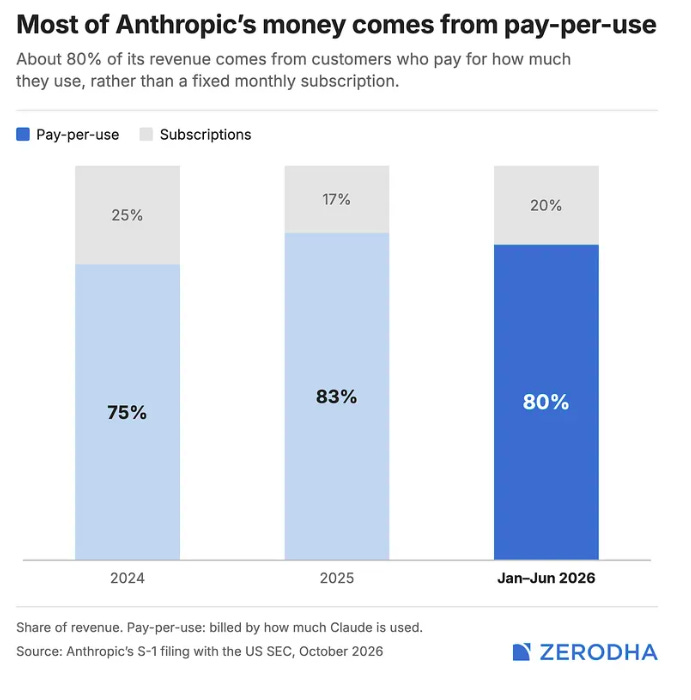
The IPO gives Anthropic more money to cover these costs and grow its business. Investors are willing to spend billions on its future. Anthropic now needs to turn that demand into enough revenue to pay for its costly AI systems.
[2] South Korea’s exports cross $1 trillion
South Korea’s exports crossed $1 trillion on November 19 for the first time. Only China, the US and Germany had reached that mark before. Strong demand for AI chips helped South Korea join them.
The country makes memory chips that help computers store and move data. AI systems need large amounts of this memory. As firms build more data centres, they buy more chips from South Korean firms like Samsung and SK Hynix. Higher chip prices have also helped lift the value of exports.
South Korea sold over $700 billion worth of goods abroad in all of 2025. It has now crossed $1 trillion with six weeks of 2026 still to go.
That growth is good news for its chipmakers, but it also leaves the country more exposed to the AI boom. If tech firms slow their spending, chip orders could fall and hurt South Korea’s exports.
[3] Trump, Xi and Putin hold their first three-way meeting
US President Donald Trump, Chinese President Xi Jinping and Russian President Vladimir Putin met in Shenzhen on November 19, during the APEC summit. It was their first meeting together. They released a joint peace declaration covering nuclear weapons, oil supplies, changes to the United Nations and limits on the powers of the International Criminal Court.
The nuclear issue is especially important. The last treaty limiting US and Russian nuclear weapons expired in February. Trump wants China to join a new deal, but China has resisted because its nuclear arsenal is much smaller. The three leaders agreed to hold talks, though they set no targets or dates.
They also promised to increase fuel supplies, which could help lower prices for oil importers like India. But they gave no details on how they would do this. The declaration also left out the wars in Ukraine and Iran, despite Trump’s hopes of discussing them.
For now, the meeting has opened talks between the three powers without settling their major disputes.
E — Economy
[4] India makes it easier for small firms to export
India has eased the rules for firms seeking help to sell goods abroad. More exporters can now get support for trade fairs, shipping and product checks.
Take trade fairs. These are events where Indian firms meet buyers from other countries. The government helps pay for such trips. Earlier, only firms with annual exports of up to ₹75 lakh could get airfare support. That limit has now risen to ₹50 crore. Micro and small firms can also claim back up to 95% of eligible airfare costs, within set limits.
The government has widened support for product tests and certificates too. These help firms prove their goods meet the rules of other countries. For small exporters, such costs can eat into profits before they win their first order.
The new rules could help more Indian firms enter foreign markets. Their success will still depend on whether they can make goods at prices and quality that buyers want.
[5] SEBI wants to make fundraising easier
The Securities and Exchange Board of India (SEBI) has set up a panel to review how firms raise money from investors. It will study share sale rules, pricing and the details firms must share with the public.
A company can raise money by selling shares for the first time through an IPO. Firms already listed on the stock market can also sell more shares. SEBI sets rules for these sales so investors know what they are buying.
Following these rules takes time and money. Some steps may ask firms for details they have already shared. The panel will look for ways to cut such work while keeping the checks that protect investors.
It will send its ideas to SEBI’s main advisory group before the regulator decides what to change. The aim is to make fundraising less costly without leaving investors in the dark.
[6] India wants to count its entire textile industry
India is preparing its first census covering the whole textile industry. It will study 15 parts of the sector, from workers who weave cloth at home to large mills and garment factories.
India has counted parts of this sector before. Yet it still lacks one clear picture of the whole industry. Some firms use modern machines, while others work from small shops or homes.
We wrote earlier about why India’s textile firms struggle to compete. Many are too small to take large orders. A single garment may also pass through several factories before it is ready. This adds time and cost.
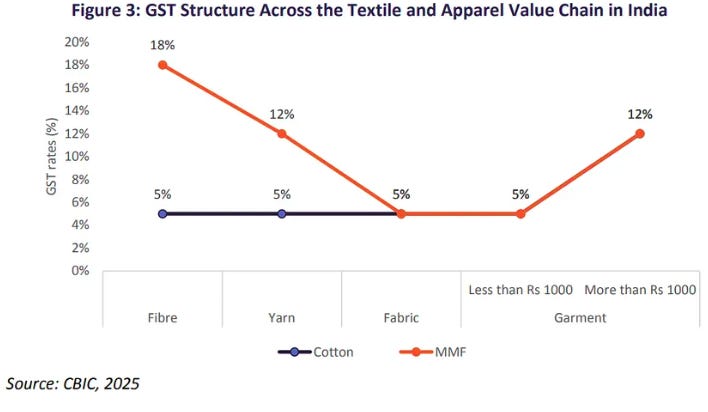
The census will count workers, machines, output and sales. It will also look at why some machines sit unused. That could help the government find where firms need better tools, more work or help reaching buyers.
I — Industry
[7] India’s battery auctions are drawing unusual firms
India’s battery storage projects are drawing bids from firms that make tiles and Ayurvedic medicines. These firms have little past work in batteries, but they now want to enter the market.
India has added a lot of solar and wind power. Solar panels, though, stop making power after sunset. Large batteries can store extra power during the day and supply it at night.
We wrote about India’s push for batteries that store power for longer. Firms have already won far more projects than they have built. New players are now joining the race by offering low prices in government auctions.
Winning a bid is only the first step. A firm must then buy batteries, build the site and run it for years. If it offers a price that is too low, it may struggle to cover its costs. The worry is that India could end up with more project awards than working batteries.
[8] IRDAI wants clearer health insurance claim rules
India’s insurance regulator, IRDAI, plans to form two groups to make health insurance claims easier to track. One will study how customers can follow a claim from start to end. The other will work on common ways to explain why insurers reject claims.
Today, people may not know why an insurer has delayed a claim or paid less than they asked for. Insurers also report claims in different ways, which makes it hard to compare them.
We wrote about the hidden rules that can lead to claim cuts. Some policies limit room charges or payments for certain treatments. Customers may learn about these limits only when the insurer pays less than they expected.
Clear reasons for each cut could help people spot errors and compare plans. The groups will first study these problems and suggest changes to IRDAI. Their work could lead to new rules for how insurers handle claims.
[9] India may stop blood tests at centres that fail quality checks
India may bring in tougher rules for blood centres. A panel has proposed that centres which fail outside quality checks must stop routine testing until they fix the problem.
Blood centres check donated blood for infections such as HIV and hepatitis. They also check blood groups so patients get the right blood. A wrong result can put someone’s life at risk.
Under the plan, outside labs would send test samples to blood centres without telling them the answers. The centres would test them as usual. The outside labs would then check if they got the results right.
This could help catch mistakes before they harm patients. Yet stopping tests at some centres could also slow the supply of safe blood to hospitals. The government will need a plan to keep blood services running while centres fix errors. A panel has sent the proposal to India’s drug-regulatory advisers for review.
C — Company
[10] Urban Company raises ₹2,500 crore
Urban Company has raised ₹2,500 crore through a Qualified Institutions Placement, or QIP. This lets listed firms sell shares to large investors. The sale drew bids worth over ₹15,000 crore, six times what Urban Company wanted to raise.
Urban Company helps people book home services such as cleaning, repairs and beauty treatments. It also runs InstaHelp, which lets users book help for daily housework. Growing these services costs money. The firm must hire and train workers and make sure enough are free when customers need them.
Urban Company plans to use part of the money to grow InstaHelp. It will also spend on marketing and technology. Rivals such as Snabbit and Pronto are trying to win the same customers. The share sale gives Urban Company more funds to grow at a time when the race for home services is heating up. It now needs to show that more bookings can lead to better profits.
[11] Paytm plans to invest in Singapore’s Funding Societies group
Paytm has announced a deal with Singapore-based Funding Societies. It plans to invest up to ₹200 crore in the group’s firms. This includes about ₹162 crore for a 19.1% stake in CardUp, a payments company.
CardUp helps businesses make payments and manage money. Paytm will bring its payment software to the deal. Funding Societies will help sell these tools in Singapore, where it already works with local firms. This gives Paytm a way to enter a new market without building everything on its own. It can use its partner’s customer base while earning fees from its software.
The plan still needs final agreements and other approvals. Paytm will then have to win enough business to make the investment pay off.
[12] Coal India gets the nod to make rare-earth magnets
A group led by Coal India has received a letter of intent from the Ministry of Heavy Industries on November 19. The group plans to build a plant that can make 1,200 tonnes of rare-earth magnets a year.
Coal India has joined hands with the Non-Ferrous Materials Technology Development Centre (NFTDC) for this project. The group won a place under a ₹7,280 crore government scheme to help India make these magnets at home.
Rare-earth magnets help run motors in electric cars, wind turbines and other machines. India buys most of them from abroad, mainly China. We looked at India’s plans to make these magnets when 20 firms were bidding for government support. Coal India has now moved past that stage.
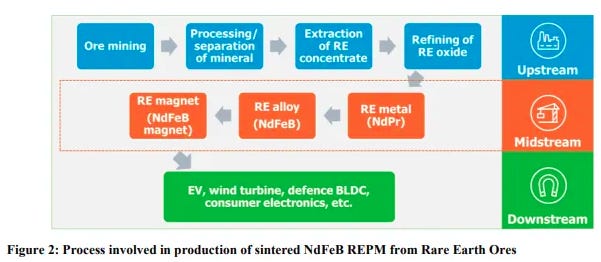
The group still needs to build the plant and find a steady supply of rare-earth metals. Coal India has spent decades mining coal. Making magnets will call for new skills and tools. Its letter of intent marks the start of that work, not the end.
That’s it for this week.
A few of these stories are still developing, so we’ll be keeping an eye on them. But if there’s one you’d like us to write about properly, let us know in the comments.
See you next edition :)
The Anthropic item is the one I keep thinking about. An $81 billion IPO that is really a funding round for computing power, and the money still may not be enough if customers do not keep paying for the capacity. That is the same tension as the battery auction story: firms with no background in batteries are winning bids, and winning the bid is only the first step. In both cases the headline number looks like the story, but the real question is who can actually build and pay for what they promised. The South Korea export number ties it together for me. Crossing $1 trillion on memory chips is a strength, but it also leaves the country more exposed to the AI cycle than most people admit.