


Our goal with The Daily Brief is to simplify the biggest stories in the Indian markets and help you understand what they mean. We won’t just tell you what happened; we’ll tell you why and how too. We do this show in both formats: video and audio. This piece curates the stories that we talk about.
You can listen to the podcast on Spotify, Apple Podcasts, or wherever you get your podcasts and watch the videos on YouTube. You can also watch The Daily Brief in Hindi.
In today’s edition of The Daily Brief:
1. Do government incentives to produce babies work?
With global fertility rates falling well below the 2.1 replacement threshold, governments from Singapore to Japan and Indian states like Andhra Pradesh are rolling out massive cash bonuses, child credits, and dating initiatives to avert demographic decline. However, historical policies and modern economic evidence show that one-off baby cheques merely alter the timing of births rather than total family size, failing to overcome structural obstacles like high housing costs, long work hours, and the steep opportunity costs of motherhood.
2. Can solar beat coal at its own game?
In a landmark auction by SECI, renewable developers agreed to supply firm, dispatchable clean power that mimics coal’s daily load profile—guaranteeing 90% peak-evening availability—at a flat ₹5.25 per unit for 25 years. By overbuilding solar capacity and combining it with wind and massive battery storage, firm renewable tariffs have undercut the generation costs of brand-new coal plants, challenging the long-standing belief that fossil fuels are indispensable for baseload power.
We recently published our 100th edition of The Chatter. Every week, we read and listen to what the people running India’s biggest companies are saying, along with the regulators who oversee them, and pull out the parts that matter to you.
Check out the 100th edition here.
Do government incentives to produce babies work?
Have you seen Children of Men?
It’s a great movie in which the world is wrecked by war, economic depression, and closed borders. We’re certainly glad that this isn’t happening in our world….yet.
But its most unmistakable feature is none of this. It’s that childbirth is extinct. Nobody can (or will) produce newborn babies anymore.
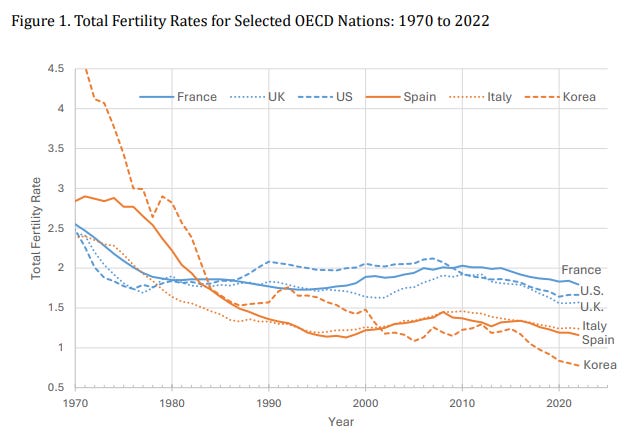
In The Daily Brief, the possibility of demographic decline has often been a subject of multiple stories, be it Japan, more advanced Western nations, or lately, India. To keep a population stable without immigration, the total fertility rate (TFR) must stay near 2.1. But over half of the world’s economies sit below that mark. Some, like Japan, China, Taiwan and South Korea, sit dangerously low.
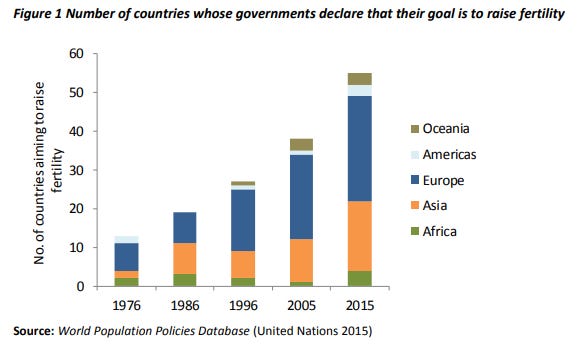
But what we didn’t talk about in those stories was what governments were trying to do to reverse it. And the number of countries with announcements to raise fertility rates only goes up every year.
In August this year, Singapore’s Prime Minister Lawrence Wong made a startling offer: have a baby and the state will hand you a package worth ~$55,000 in US dollar terms. That includes a one-time cash gift worth ~$7,900, annual child credits worth nearly $1,600, healthcare and school top-ups, paid leave and more. All in all, Singapore’s broader marriage and parenthood program will cost $5.5 billion (₹46,000 crore) this year.
Similarly, last year, China offered $500 each year for each child under the age of three. Japan has started to offer full coverage for standard childbirth deliveries; it recently took this one step further by spending over $1 million on a government dating app as more people choose to stay out of marriage.
If you think this isn’t happening in India yet, you might be mistaken. A few months ago, Andhra Pradesh unveiled a policy offering ₹30,000 for a third child and ₹40,000 for a fourth.
But the million-dollar question that plagues us in this respect is: do these incentives even work? If they don’t, what does it say about how families make childbirth decisions?
Social engineering gone haywire
Some history may first be instructive to understand this. And this history isn’t always littered with incentives. More often than not, they used coercive measures.
You see, rulers viewed population as the measure of military and fiscal power. More births meant more soldiers and people to provide efforts to state industrialisation. Reproduction was deemed by one important figure of the French Revolution as “the power and splendour of empires”.
To that end, procreation was considered the patriotic duty of women, just as a man owed the republic his life. Women’s own choice was an afterthought. Another figure who shared this vision was Adolf Hitler, who said that “there is nothing nobler for a woman than to be a mother of the sons and daughters of the people”.

This sentiment easily translated into force, and yet again, Nazi Germany illustrates this best. It offered interest-free “marriage loans” to couples where the bride left the job to be a full-time mother. This was funded using a “bachelor tax” on unmarried men and women. Of course, this was only applicable to people who Hitler considered “racially pure”; non-Aryan people were brutally and forcefully sterilised.
But this didn’t work.
There was a short-term spike in births, but that was mostly owed to better economic conditions right after the Great Depression of 1929 (which actually forced people to delay births). In the long term, researchers Thomas Baudin and Robert Stelter tracked the lifetime fertility of Germany through 1970, and found that women who married under the loan regime had 0.093 fewer children over their lives than prior cohorts.
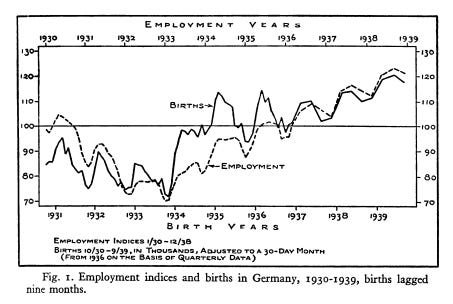
The authors argue that this was because young women, who were penalised for staying single, had little choice but to rush into marriage without much thought. This often ended in divorce after World War II. Far from creating larger German families, the policy left them smaller.
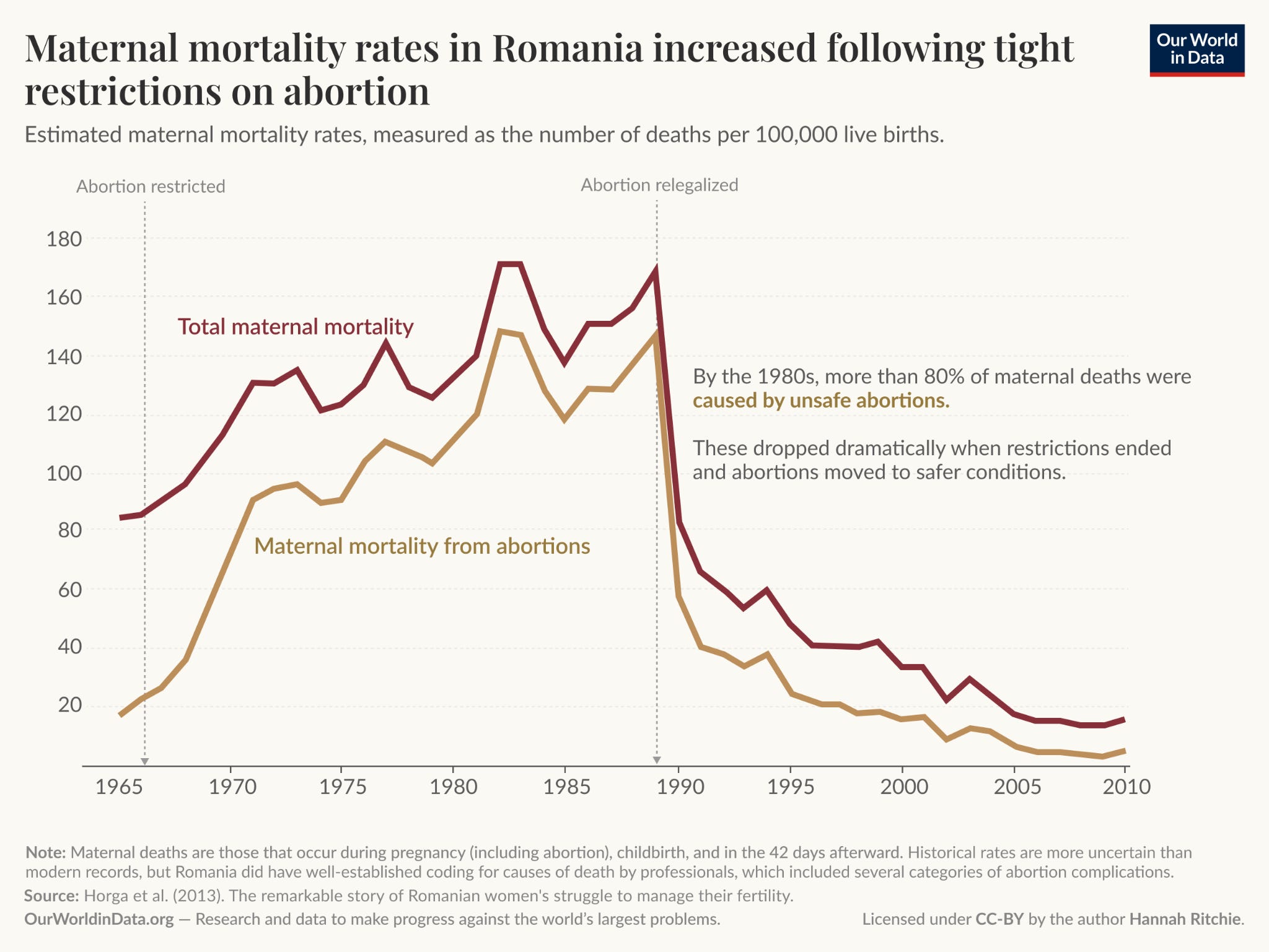
Another such dark experiment unfolded in Romania. To push Romania’s population from 23 million to 30 million, dictator Nicolae Ceaușescu issued Decree 770 in 1966, banning abortion and contraception altogether. Women faced monthly bodily exams at work, agents policed maternity wards, and childless adults over 25 paid a 30% income tax. The objective of this policy was to industrialise as quickly as possible.
Due to this policy, in the short term, births did explode, so one might deem it a success at first glance. But its direct aftermath was disastrous.
With so many young people, schools were forced into three daily shifts and underfunded orphanages were filled. People frequently went through unwarranted pregnancies, and even abandoned their babies. The worst of it manifested with families trying to avoid the ban through smuggled contraceptives and illegal terminations.
These black market solutions, in turn, were very unsafe, which actually spiked deaths among birthgiving women and infants. In fact, Romania had the highest maternal mortality in all of Europe in the 1980s.
The mirage of baby cheques
Modern day policies, in contrast, rely far less on coercion and dis-incentives like taxes, and much more on a carrot approach.
There are two kinds of incentives in that regard: those that offer cash upfront, and non-cash incentives. We’ll first tackle the former.
It could seem like the easiest move to boost births is a cheque. Yet one-time lump-sum amounts confuse tempo with quantum. Tempo is birth timing, while quantum is the complete family size by age 40. A one-off bonus mostly persuades couples who already planned a child in two years to have it sooner. Births spike briefly, then dip back down.
Take the case of Spain. In July 2007, Madrid launched the “Cheque Bebé”, a €2,500 (₹2.25 lakh) birth payment. Annual births rose 6% at first, before the bonus was scrapped in 2011 due to a fiscal crisis. Yet when researchers simulated the journeys of those mothers over 15 years, lifetime fertility rose by just 2.96% (from 1.502 to 1.546 children per woman).
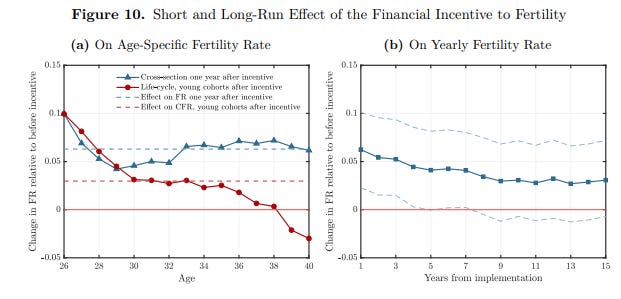
Similarly, studies on a baby bonus that Australia introduced in 2004 also found that one-off bonuses generated temporary birth surges that faded as the payments had become the norm, or were phased out. Interestingly, most of those people would have had a baby even without the incentive. However, they manipulated the timing of the birth to a later date that would help them qualify for the incentive.
One-time cheques fall flat so often because they are dwarfed by the opportunity cost lost due to motherhood duties. Think lost wages, promotions, and on top of all that, unpaid housework. As per Claudia Goldin, who won the Economics Nobel Prize in 2023, fertility crashed hardest where, besides women entering modern careers, men resisted sharing chores. In Japan, where women do 3.1 more hours of daily housework than men, TFR sits below 1.4; in Sweden, where that gap is under an hour, it is near 1.7.
What about recurring monthly allowances, then? As per an NBER study on Israel’s policies, regular transfers lifted births because parents could predictably rely on them for years. However, this policy depends on a government having a very large fiscal capacity, which not everyone (including many advanced nations) can afford.
The price of family time
What about policies that don’t merely offer cash upfront, but help buy-back a mother’s time and protect her job? This is where other incentives like paid parental leave and subsidised childcare come into play.
Sweden, for instance, had an innovative policy that tied parental leave pay to prior salary with job protection. It also introduced a “father quota” in the 1990s, where 90 paid days were strictly reserved for fathers on a “use-it-or-lose-it” basis so that employers treated parental leave as normal for men too. Moreover, Swedish parents with preschool children have the legal right to reduce their working hours by 25% without losing their job or employment contract. All of this helped Sweden reduce its motherhood penalty significantly.
By contrast, while offering highly generous paid leaves, Japan’s uptake lagged for decades because workplace norms penalised men who took leave.
Even when leave works, it ends after year one. What happens in month thirteen, when both parents must be at work at 9 a.m.?
That is where public crèches and daycare become decisive. A review of 61 global studies conducted by the Tokyo Foundation found that childcare coverage was consistently found to be among the most effective childbirth incentives. In Norway, where municipalities rolled out subsidised full-day toddler daycare from the 1970s, every 10 percentage-point rise in daycare coverage added 0.1-0.12 children per woman. Notably, Norway relied far less on baby cheques.
The best success cases come from packages that include all of this into a long-term bundle.
Take France, whose TFR has consistently hovered around 1.8 for decades, and is one of the highest in Europe. Its centrepiece is the “Family Quotient” system, under which a family’s taxable income base reduces with more childbirths. It works alongside a 35-hour work week and free preschools. France’s bundle has a strong causal effect on births and also narrows fertility gaps across income classes.
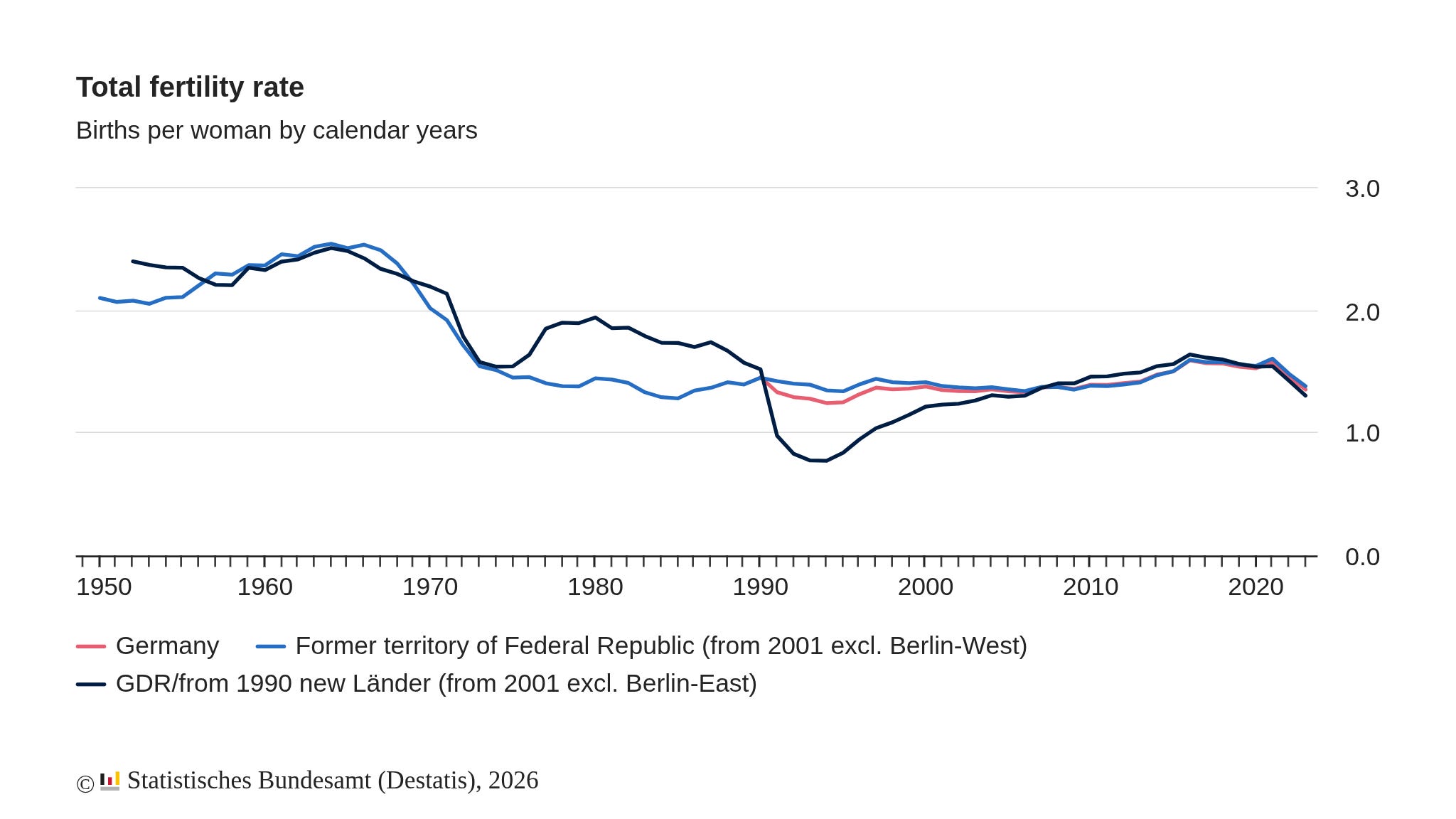
Even more instructive is (non-Nazi) Germany. In the mid-2000s, Germany’s TFR sat at 1.33 and nearly a third of university-educated West German women remained childless. In 2007, Berlin replaced its flat €300 stipend with a policy called Elterngeld, which paid 67% of pre-birth net income for 12 months (up to €1,800 monthly), plus a father quota, a daycare build-out and a legal right to a crèche spot from age one.
As per economist Anna Raute, as a result of Elterngeld, fertility among university-educated German women surged by 23%. More broadly, a combination of similar policies helped take Germany’s TFR from 1.33 to a peak of 1.59 by 2016.
The catch, again, is cost. France and the Nordics spend 3-4% of GDP on family policy annually. By contrast, Japan spends less than 1% of GDP on family cash benefits. Closing Spain’s fertility gap via cash alone is projected to require 8% of its GDP. And when states cut benefits during crises, broken trust depresses births further.
Can you beat the economy?
Even a generous bundle hits a wall when the wider economy feels precarious, and we don’t just mean whether people feel secure in their jobs. Germany’s TFR slipped back to 1.35 recently amid inflation and housing shortages, while South Korea, which offers massive cash support over a child’s first eight years, still stays stuck at a TFR of 0.7-0.8.
Four forces explain why.
First is overwork. It’s well-known that workdays in China and Japan have historically stretched for much, much longer than 9-5. This leaves men with virtually no time for childcare or chores, while women are only further forced into staying out of employment themselves.
Second is an unequal domestic burden paired with a marriage bottleneck. As per the OECD, women in Japan and South Korea do 88% of unpaid housework.
Third is educational competition. East Asian economies like South Korea, Singapore and China face hyper-competitive academic environments. To succeed in school, one child requires a lot of time and investment, which only pushes the cost of raising a child, more so if one needs to rely on private tutoring services. This prompts parents to stop at just giving birth to one child, if any at all.
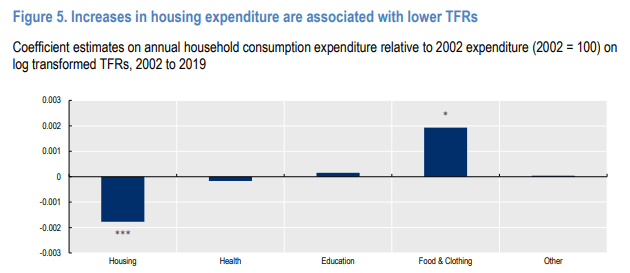
Lastly, there’s housing. High rents and even higher housing prices only delay the decision to give birth, and this is statistically proven by the OECD as well.
Ultimately, a child is not a consumer purchase nudged by a mere discount code. It is a twenty-year bet on a family’s future, and policy has to reflect that. Without this, socially engineering a baby boom will only remain a fever dream for countries.
Nothing captures this better than Singapore itself. Days before Singapore unveiled its huge package, a poll found nearly one-third of Singaporeans aged 18-44 said that no government policy would make them have more children. There couldn’t be a better expression of the limits of fertility incentives.

Can solar beat coal at its own game?
On 9 September, India’s grid came up 7.72 GW short.
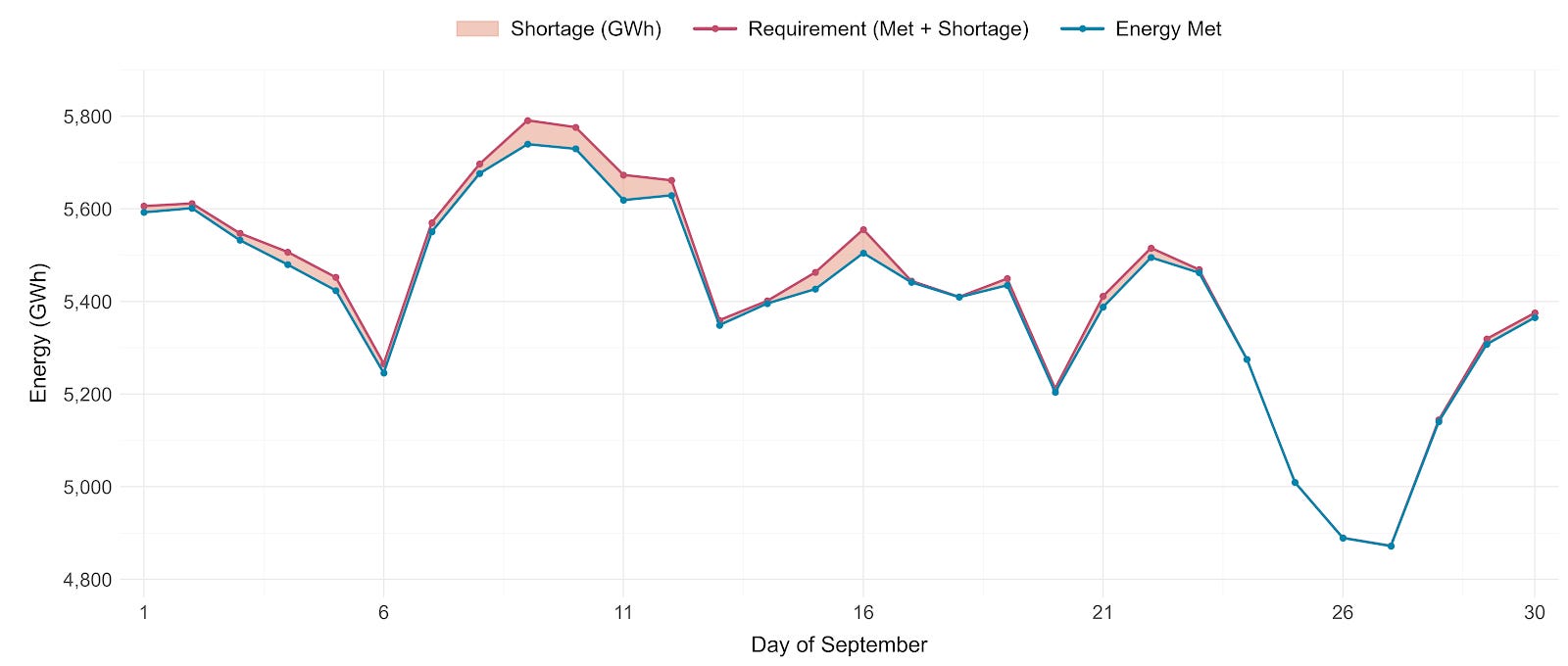
It wasn’t a one-off. Through September, shortages showed up almost daily, clustered in the evenings as the sun went down. On the power exchanges, buyers bid for four to five times more electricity than was on offer, and prices sat at the ₹10 ceiling for most of the day. Coal plants were left with just a week of fuel.
That evening gap is the oldest argument for more coal plants. Solar is cheap, but the sun sets. If you want the lights on at 7 pm, you need coal.
Which is why an August auction deserves more attention than it got. The Solar Energy Corporation of India (SECI) asked developers for renewable power that behaves like a coal plant, available through the evening and the night. Seven developers said they’d do it for ₹5.25–5.26 per unit, fixed for 25 years. That’s cheaper than the new coal plants Indian states signed up for last year.
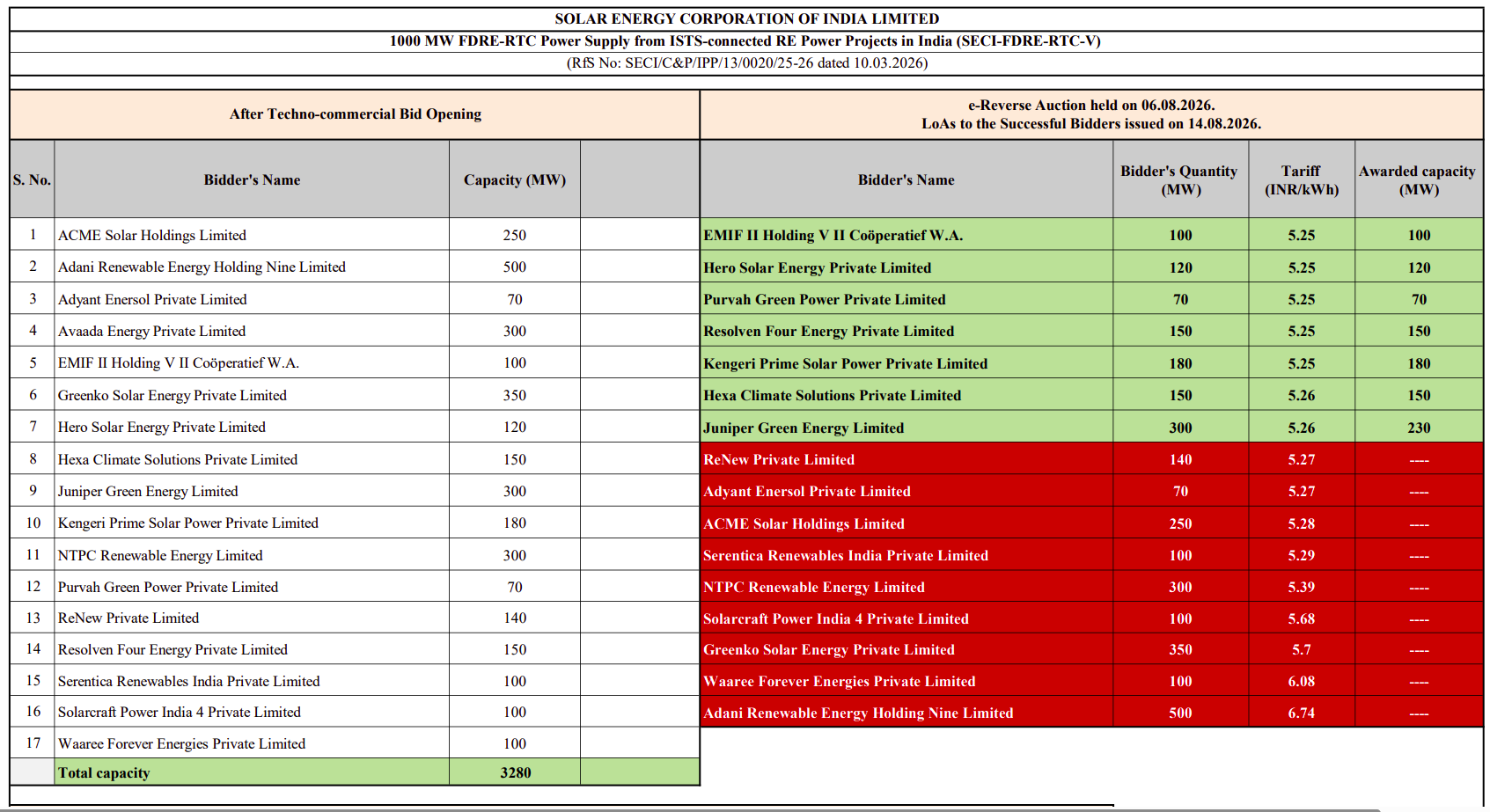
Economist Ajay Shah calls it a tipping point. He may be right. But an auction price isn’t a working power plant, and India has seen record tariffs turn into stalled projects before, including in the battery auctions we wrote about last year.
Teaching solar to work the night shift
India’s coal plants no longer run flat out all day. They carry the evening and night, then throttle down at midday as solar floods the grid.
SECI’s tender asked developers to copy that exact shape. The grid doesn’t think in hours. It thinks in 15-minute chunks, called time blocks, and in each one, the winners have to supply a set share of the power they’ve promised. How big that share is depends on the time of day.
The toughest test is the evening rush, when the sun is gone but homes are switching on lights, fans and ACs all at once. For six hours of the buyer’s choosing, anywhere between 6 pm and 10 am, the developer has to deliver at least 90%. Late at night and in the early morning, that can drop to 70%. And when the sun is high and solar is doing the heavy lifting anyway, 50–60% will do.
Over a whole day, those floors add up to about 70% of the promised capacity. That number isn’t an accident: it’s close to how India’s coal plants run today, easing off at noon to let solar in. Miss the floor in any time block, and the developer pays 1.5 times the tariff for every unit it didn’t deliver. In return, it gets a fixed price for 25 years.
How do you get intermittent renewables to do that? The trick is to build far more than you promise.
If you’ve promised power through the night, a solar plant’s daylight hours have to do three jobs at once. They meet the daytime obligation, fill a large bank of batteries, and cover the energy lost going in and out of storage. The batteries then carry the evening peak and much of the night, often helped by wind, which tends to blow harder after dark.
Take Juniper Green Energy, the auction’s biggest winner. To supply 230 MW in Rajasthan, it plans 795 MW of solar, 75 MW of wind and 2,200 MWh of batteries. That’s about 3.5 times the solar it has promised, plus nearly 10 hours of storage.
And that’s just to mimic coal’s shape, which asks for 70–90% at night. What if you want power 24/7, at the same level? To deliver a steady 1 GW, Abu Dhabi’s 24/7 solar project needs 5.2 GW of solar and 19 GWh of batteries, at a cost of about $6.1 billion.
All that hardware has a price, and India’s auctions now let us see it.
Plain daytime solar costs about ₹2.5 per unit. Add four hours of storage, enough to shift some power into the evening, and it has been bid as low as ₹2.9. Make it behave like a coal plant, checked every 15 minutes, and it’s ₹5.25. Push it to the extreme, with power guaranteed in every hour of the year, and CSEP estimates it could cost ₹8.3–11.8.
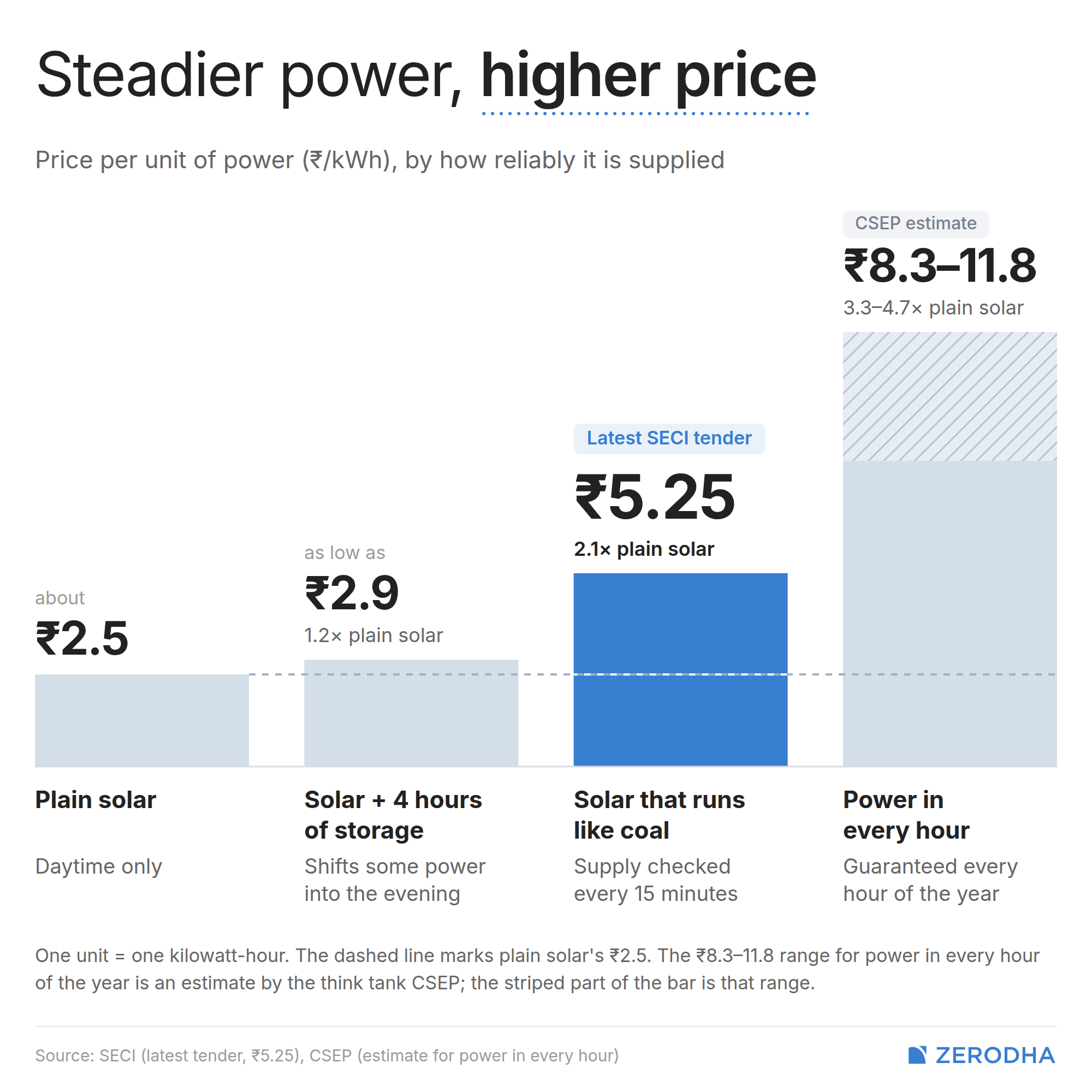
The gap between ₹2.5 and ₹5.25 is, quite literally, the price of making the sun shine at night. The surprise is that even after paying for all those extra panels and batteries, it still undercuts a new coal plant.
Is it a fair fight with coal?
“Cheaper than coal” needs one qualifier: cheaper than new coal.
Older coal plants are paid on a regulated cost-plus formula. There is a fixed charge that repays the cost of building the plant, plus a fuel charge passed straight to the buyer. As plants age, their loans get repaid and construction costs written off, so the fixed charge shrinks. Many were also built cheaply, at ₹5–7 crore per megawatt before 2017. That’s why NTPC, India’s biggest coal generator, earns an average of just ₹4.8 per unit. Old coal is still cheaper than ₹5.25.
But those plants are already spoken for. New demand needs new plants, and new coal costs far more. ICRA estimates new plants will generate power at over ₹6 per unit. The seven new coal contracts that states signed last year opened at ₹5.38–6.30.
The gap also widens over time. Coal’s fuel charge rises with coal prices, and that risk sits with the buyer. So as coal gets pricier, the discom pays more every year. The thermal-mimic price never changes. If fuel costs rise 2.6% a year, the Berkeley researchers estimate new coal could cost ₹7.4 per unit by 2050. Meanwhile, after 4% inflation, the fixed ₹5.25 is worth only about ₹3.79 in today’s money.
Then there’s reliability, where coal’s reputation is better than its record. Over two decades, coal plants have suffered 5–7% unscheduled outages, often in peak seasons. On 12 October this year, 22 GW of coal went down without warning. In September, 77 plants were critically short of coal.
Coal is also judged more gently. A coal plant that can’t run loses part of its fixed-cost payment, while a thermal-mimic developer will pay 1.5 times the tariff for every missing unit. The Berkeley researchers claim roughly 80% of existing coal plants would themselves fail this tender’s test.
That penalty protects the buyer’s wallet, though, not the grid. Facing a shortfall, a discom saves the ₹5.25 and collects roughly ₹7.9 in penalty. That’s enough to buy replacement power even at the exchange’s ₹10 ceiling. But on September’s evenings, there was barely anything to buy.
Still, on price, on risk, and arguably on reliability, solar has beaten new coal on coal’s own terms.
Why this is a big deal
For two decades, India’s case for renewables rested on cleaner air, climate targets and energy security. It needed pushing to work: purchase mandates for discoms, waivers on transmission charges, plenty of government nudging. As Ajay Shah points out, coal’s emissions never really moved Indian policy on their own.
This auction changes the pitch. Firm solar is no longer just the good thing to do. It’s the cheaper thing, even at the one job coal was supposed to own.
That matters because India is still betting big on coal. As of June, about 47.5 GW of thermal capacity was under construction and another 16 GW had been awarded, and the government projects a need for around 315 GW of thermal power by 2035-36. Adani Power alone has committed about ₹2 lakh crore to more than double its capacity by FY32. Each of these bets assumes only coal can keep the lights on after sunset. That assumption has now failed a market test.
Existing plants won’t become worthless overnight; old, paid-off plants will keep running for years. But the next coal plant now has a public number to beat.
Discoms may start choosing renewables because it saves them money, not because a mandate says so. The catch is that this only applies to new demand: discoms still pay fixed charges on their existing coal contracts whether they use the power or not. Big factories, which can build or co-own their own plants, will likely move first; households, stuck with their discom, will feel it last.
Cheap, firm clean power also changes the maths for energy-hungry industries. Green steel, made with electricity instead of coal, is now at rough parity with conventional steel in India.
For investors, generators with big new coal pipelines, like NTPC, Adani Power and JSW Energy, and coal-boiler makers like BHEL, are making 25-year bets on an assumption that just got weaker. On the other side sit renewable developers and the makers of panels, batteries and inverters.
Will it actually get built?
Here’s where we slow down. An auction tariff is a promise, and India’s power sector has a long history of promises that looked brilliant on auction day.
Last year, we wrote about India’s battery storage auctions, where bids fell to roughly a third of what the industry considered healthy. They even drew real estate and food-processing firms while established players like Adani sat out. Also, some winners seemed to treat these contracts as something to flip rather than build themselves. By the end of FY26, India had commissioned only about 1 GWh of battery storage, and 47 GWh of storage tenders had been cancelled.
This auction looks different. Its 16 bidders were mostly established power developers, and the bids were tightly bunched. That suggests it wasn’t a blind race to the bottom, but it doesn’t settle things, for three reasons.
First, the auction design. SECI picks winners on an “L1” basis: among bidders who clear basic eligibility checks, the lowest price wins. The final round is a live reverse auction, where bidders undercut each other in real time. Here, the winning bids ended about 16% below where bidding started. Live auctions push bidders past their spreadsheets, and the winner is, by definition, the most optimistic person in the room.
Economists call this the winner’s curse, and India has lived it before, with coal of all things. In the mid-2000s, Tata Power won the Mundra mega power plant at ₹2.26 per unit, betting on cheap Indonesian coal. Then Indonesia tied its coal export prices to international rates in 2010–11. Tata expected to lose about ₹500 crore in Mundra’s first year, and spent years in court seeking a higher tariff. Another mega plant, at Krishnapatnam, stopped work over the same issue.
That’s why there’s a growing case for designing auctions for delivery, not headlines. One option is QCBS, or quality-and-cost-based selection, which scores bids on technical strength as well as price. Think a developer’s record of delivering storage, its balance sheet, and whether its battery supplies are locked in. India already uses QCBS to hire consultants. Scoring can be subjective, and prices may come in higher. But for 25-year contracts where failure means a dark grid, paying a little more for a much better chance of delivery may be worth it. Even under L1, procurers could tighten entry requirements, or scrutinise bids that fall far below a benchmark price.
Second, the assumptions. A flat 25-year price is a bet on everything that could change over 25 years. As one analysis of India’s battery tenders notes, these bids rely on falling battery prices, a stable rupee, cheap loans, and being able to top up batteries midway through the contract. Some of that is already wobbling.
China’s mainstream storage cells rose about 22% in price between October 2025 and April 2026, and Crisil warns that hardening battery prices have put 8–9 GWh of awarded storage at risk of delay. China has cut its export tax rebate on batteries and will scrap it entirely from January, and its suspended export controls on battery materials are due to lapse on 10 November, though Washington says the pause has been extended. One cushion: the Berkeley researchers estimate imported cells make up only about ₹0.5 of the ₹5.25 tariff, so battery prices might not make or break the case alone.
Third, the buyer. SECI is only a middleman. The developers’ contracts kick in once it signs a matching agreement with a discom, and we couldn’t find any report of one signing up yet. As of last September, 44 GW of awarded renewable capacity sat without buyers, partly because discoms were holding out for lower prices. And India’s first round-the-clock project, auctioned in 2020 and due by late 2023, was still being commissioned years later.
Conclusion
So, is it time to celebrate? Partly. The price is real: for the first time, the market has put a number on solar that behaves like coal, and it beats new coal.
But the price isn’t a running power plant powering homes. The test is whether a discom signs on, whether these projects reach financial close, and whether they deliver around 2028. And even if they do, the bigger question is whether anyone can make money at ₹5.25. If they can, others will follow. If they can’t, this becomes another record tariff that never turned into power.
- This edition of the newsletter was written by Manie & Kashish.
Tidbits:
1. India’s urea imports rise 40% even as domestic sales fall
India’s urea imports rose nearly 40% year-on-year to 5.59 million tonnes in April-September, even as domestic sales fell 4.1%. The divergence highlights India’s continued dependence on imported urea despite efforts to curb chemical-fertiliser use and expand alternatives.
Source: The Economic Times
2. HPCL’s quarterly profit falls 9% as crude costs and taxes rise
HPCL’s standalone net profit fell 9% year-on-year to ₹3,483 crore in the September quarter as higher crude prices squeezed marketing margins and tax expenses more than doubled. Total expenses rose nearly 26%, led by a sharp increase in raw-material costs.
Source: Reuters
3. Meta’s credit-risk indicator hits record high following quarterly results
A key market indicator of Meta Platforms’ credit risk jumped to a record high following the company’s latest earnings report. The spike in the credit default swap spreads reflects growing investor unease over the tech giant’s surging capital expenditures, particularly its AI spending.
Source: Reuters
4. Government proposes raising driving tutorial pass marks to 75%
The central government has proposed amending motor vehicle rules to raise the passing threshold for online driving tutorials to 75%. The draft notification also suggests waiving fees for certain driving licence services in an effort to streamline the application process and enhance road safety awareness.
Source: Hindu Businessline
5. Pirelli and Balkrishna Industries sign tyre-manufacturing partnership in India
Pirelli and Balkrishna Industries have signed a strategic agreement under which BKT will manufacture up to 8 lakh Pirelli-branded tyres annually at its upcoming Bhuj facility. The companies also plan a second-phase 50:50 joint venture to produce premium passenger-car tyres for domestic and export markets.
Source: The Economic Times
Want more tidbits? Catch up on last week’s recap!

Beyond Today’s Brief
The Chatter: What strategic priorities are leaders across internet consumer platforms, hospitality, and banking highlighting for Q2 FY27? How is Eternal re-accelerating Blinkit dark store expansion into tier-two cities, while Swiggy drives toward EBITDA break-even and HDFC Bank navigates net interest margin headwinds?
Points & Figures: Where did India's international flyers go? From a 9% drop in total international passenger traffic to Indian airlines losing a decade of market share gains to foreign rivals, what does flight data reveal about post-conflict travel demand and carrier resilience?
Aftermarket Report: How did surging crude oil prices drag Nifty down 2.36% to settle at 22,600 as broader markets took a steeper hit? And what do 748 stocks hitting fresh 52-week lows, India VIX spiking near 17, and the Fear & Greed Index plunging into extreme fear at 11 signal about market trend strength?
Join us on WhatsApp, where we share interesting soundbites from concalls, articles, and everything else we come across throughout the day. You’ll also get notified the moment a new video or article drops so that you can read or watch it right away.
Thank you for reading. Do share this with your friends and make them as smart as you are 😉
With the fear of bad marriages, false cases by spouses, paying large sums as alimony, and spouses getting murdered by spouses, i am personally choosing not to get married (or more accurately re-married), much peaceful to stay alone than regret decision to marry. Unless there is a significant improvements to the law that protects people againt false cases, and years and dacade long court proceedings for divorce cases even with false cases i think marriage and fertility rates are going to be 0ow and in decline for sure. Just my thoughts i do not know anything beyond my personal bubble.