


Hi everyone, I’m Mridula, and welcome to the fifteenth edition of Weekly Tidbits.
We spend a lot of time reading interesting stories that never make it into a full Daily Brief piece. So, once a week, we pick some of the best ones and add a little context.
We sort them into GEIC: Global, Economy, Industry and Company.
Let’s get started!
If you prefer watching the video instead, here’s the link:
G — Global
[1] The US threatens new tariffs on Indian goods
The US government has proposed new import duties on goods from India and 13 other economies. Indian goods could face tariffs of up to 25%, with some exemptions, and the final rate could be lower if India signs a new trade deal with the US.
Washington argues that these countries subsidise their factories in ways that push them to produce more than their home markets can absorb. Producers then sell the surplus abroad, often at low prices. American manufacturers say they can’t compete with these imports, particularly when foreign governments are backing the producers.
Higher tariffs would make Indian products costlier for American buyers. Exporters of textiles, machinery and chemicals could be hit, depending on which products the final list covers. The US has completed its investigation, but the tariffs aren’t final yet, which leaves India some room to negotiate before Washington decides what to impose.
[2] Copper prices rebound after a sharp fall
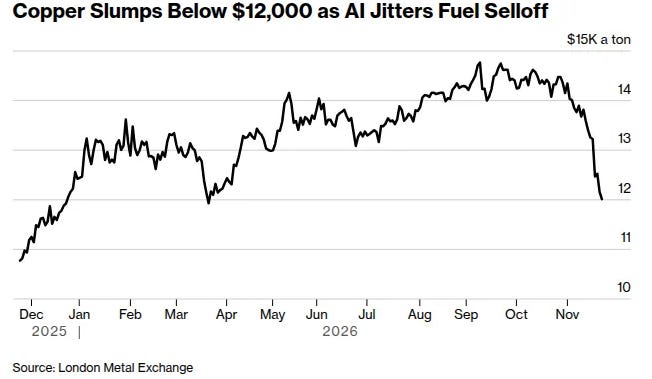
Copper prices jumped more than 4% on November 27, bouncing back from an 11-month low. The metal climbed above $12,300 a tonne, roughly ₹11.7 lakh,as technology stocks recovered and investors grew more willing to take risks.
We wrote about copper’s sharp fall. Copper hit a record high in September, partly because investors expected AI data centres to need huge amounts of it for power cables and cooling systems. Prices then slid as investors began to doubt how long tech companies would keep spending so heavily on AI. The rebound came as that mood lifted, and it was helped by a supply squeeze in parts of China, where copper available for immediate delivery has run short.
Indian wire and cable makers feel these swings directly, since copper is one of their biggest raw materials. They usually pass price changes on to customers, but often with a delay, so a sharp move in either direction can squeeze or swell their margins for a while. Demand for copper is still rising over the long run. In the short run, its price is moving as much with investor mood as with actual need.
[3] Huawei wants to challenge South Korea’s AI memory makers
Huawei has revealed plans for a type of memory chip used in AI systems, and intends to present the technology in February. If it can make the chips at scale, it would compete with South Korea’s Samsung and SK Hynix.
AI processors need memory that can feed them huge amounts of data very quickly. This is called high-bandwidth memory, or HBM. Without it, even a powerful AI processor sits idle, waiting for data. South Korean firms dominate this market, and AI memory demand is a big reason South Korea’s exports crossed $1 trillion this year.
China wants to make these chips at home because US restrictions have made it harder to buy advanced chip technology from abroad. A working Huawei design would reduce that dependence. So far, though, Huawei has shown only a design. It still has to prove that the chips work reliably and that it can make them in large numbers.
E — Economy
[4] The Finance Ministry wants answers on costly overruns
The Finance Ministry is tightening its checks on government projects that cost more than planned. Ministries must now explain cost increases of more than 10% on capital projects worth over ₹5 crore before they can seek more money.
Suppose the government approves a road project for ₹100 crore. Construction runs late, material prices rise, and the bill grows to ₹120 crore. The ministry in charge would now have to explain why costs rose and give a new completion date. Delays are a common problem with public infrastructure. Every month of delay can push up labour, land and material costs, and can hold up other projects that depend on the first one.
Closer questioning could make departments more careful with their budgets, though it can’t prevent every delay. The timing matters too. The government is preparing its next Union Budget, when ministries will ask for money for both ongoing and new projects.
[5] SEBI may ease disclosure rules for some foreign funds
SEBI has proposed scrapping an extra set of disclosure rules for certain foreign investors, namely funds that hold large or concentrated stakes in Indian companies.
SEBI brought in these rules to find out who ultimately controls such funds. A single foreign fund might hold shares in an Indian company on behalf of many investors. The regulator wanted to make sure no single person or group was quietly building a large stake behind that fund. SEBI now says its other ownership checks already cover much of this risk, so the extra layer may no longer be needed.
Fewer reporting requirements could make India easier to invest in, especially for funds with complex ownership structures. The regulator will still need to be able to see who controls large stakes. SEBI has invited public comments before it decides.
[6] The RBI is bringing more of India’s gold home
The Reserve Bank of India (RBI) moved 60 tonnes of gold from overseas vaults back to India between April and September 2026. It now stores 84% of the country’s gold reserves at home, up from 77% in March.
Central banks hold gold as part of their reserves, a buffer they can draw on in a financial crisis. Many store some of it abroad, often in London, where it is easier to sell or pledge in international markets. The trade-off is that another country controls the vault, and access depends on its cooperation. That risk became much harder to ignore after Western governments froze Russia’s foreign reserves following its invasion of Ukraine.
The RBI hasn’t said whether this is why it is moving gold home, but the shift has been under way for a few years, including about 100 tonnes brought back from the UK in 2024. Its total holdings stayed close to 880 tonnes, so India is changing where it stores its gold rather than buying more.
I — Industry
[7] NSE gets approval to launch corporate bond futures
The National Stock Exchange (NSE) has received approval from the Reserve Bank of India (RBI) to launch futures contracts linked to corporate bonds. SEBI had already cleared the plan in October.
Companies issue bonds to borrow money from investors. In return, they pay interest. But bond prices can fall when interest rates rise or investors worry about a company’s ability to repay its debt.
The new futures contracts would help investors manage this risk. They would track an index made up of corporate bonds. For example, a fund that owns bonds could use these contracts to protect itself against a fall in their value.
This could make it easier for large investors to manage bond portfolios and take on more investments. NSE still needs to finalise the contract rules and launch date. The bigger test will be whether enough investors trade these contracts to make them useful.
[8] Rooftop solar users may have to pay more for the grid
The Power Ministry has proposed changing how rooftop solar users pay for electricity. Under the draft rules, state regulators could charge some users for sending power to the grid, and require larger systems to include batteries.
Today, many rooftop solar users export spare electricity to the grid during the day and use the credit against power they draw later. This is called net metering. These users still rely on the grid at night, though. Electricity distribution companies have to maintain wires and equipment for them, even as they buy less power and pay smaller bills. We wrote earlier about India’s rooftop solar problem, and this draft tries to address one part of it: who pays to keep the grid running.
States would decide the system size above which charges or batteries apply. The draft suggests a default threshold of 10 kilowatts for batteries, possibly from April 2028. That could help distribution companies manage the grid, but it would also make larger rooftop systems costlier to install.
[9] India’s gas regulator proposes new pipeline tariff rules
India’s gas regulator, PNGRB, has proposed changing how it sets the fees companies can charge for moving natural gas through pipelines. The draft uses a 14% post-tax return on the equity invested in eligible project costs to calculate those fees.
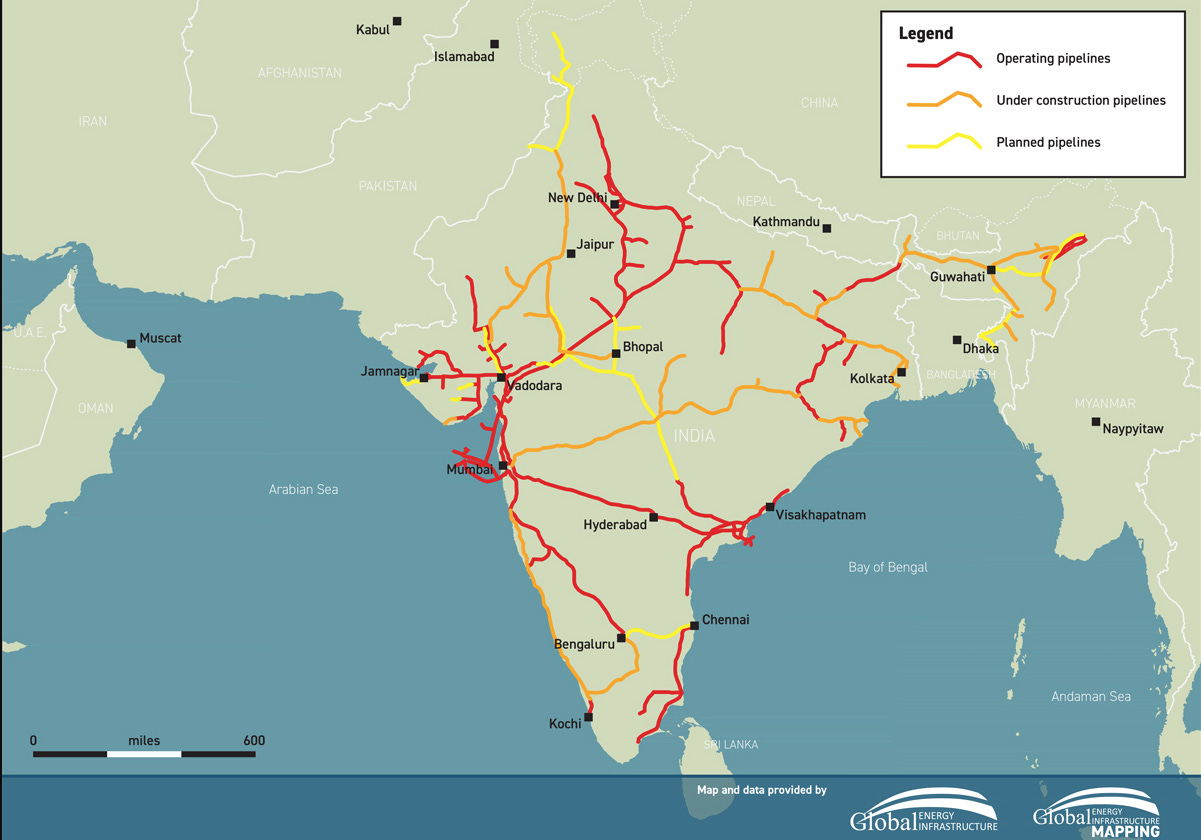
Pipelines are expensive to build. Developers have to buy land, lay pipes and build compressor stations long before customers start using the network. If fewer customers sign up than expected, the developer may struggle to recover its investment. A clearer formula for what developers can earn could make new pipelines easier to finance, because companies and their lenders would know in advance how tariffs will be set.
A regulated return isn’t a guarantee, though. Actual earnings will still depend on costs and on how much gas flows through each pipeline. Higher transport fees would also make gas costlier for factories and other users, so the regulator has to balance the need for new pipelines against what customers pay to use them.
C — Company
[10] Hetero begins shipping a cheaper HIV prevention drug to Africa
Hetero has started shipping a generic version of lenacapavir, a drug that prevents HIV infection, to Zambia, Uganda and Zimbabwe. Its first rollout covers 3 lakh vials.
Most HIV prevention drugs are pills that have to be taken every day, which many people find hard to keep up. Lenacapavir is an injection given just twice a year. American drugmaker Gilead Sciences developed it and has licensed six generic manufacturers, including Hetero, to make cheaper versions for selected lower-income countries. More manufacturers usually mean more supply and lower prices, which matters most in the countries with the highest HIV rates and the smallest health budgets.
Hetero plans to supply ten more African countries next year. It also wants to launch the drug in India once it receives regulatory approval.
[11] NSEL pays ₹1,950 crore to settle around 13-year-old default
The National Spot Exchange (NSEL) has released ₹1,950 crore to about 5,700 investors under a one-time settlement. The payout comes more than 13 years after a payment crisis shut the exchange down.
NSEL was meant to be a spot market where buyers and sellers traded physical commodities. Many trades on it worked more like loans, though. Investors bought commodities for quick delivery and agreed to sell them back weeks later at a higher price, effectively lending money to the trading firms on the other side. In 2013, those firms stopped paying, and when investors went looking for the goods that were supposed to back the trades, much of it wasn’t in the warehouses. Around ₹5,600 crore went unpaid, and the case has been in the courts ever since.
NSEL’s parent company, 63 Moons Technologies, funded the settlement. Under a court-approved plan, eligible investors accept a smaller sum now instead of waiting for the full amount. The payout closes a large part of the dispute, but these investors waited more than a decade and are taking less than they were owed. Other legal cases linked to the crisis can still go on.
[12] Adani firms plan to raise ₹2,000 crore through public bonds
Adani Enterprises and Adani Power are planning public bond sales to raise at least ₹2,000 crore, according to Bloomberg. The two companies are working with banks on separate issues that could launch over the next few months.
A bond is a loan from investors. The company pays them interest and returns their money when the bond matures. Most Indian companies sell bonds privately to banks and large institutions. A public issue lets ordinary investors take part too, which widens the pool of lenders a company can tap. Adani Enterprises has done this before: its ₹1,000 crore public bond issue in January sold out within an hour.
India’s public bond market has been fairly quiet lately, so the two issues would stand out. Neither company has formally announced them yet, and the size, interest rates and dates could still change.
That’s it for this week.
A few of these stories are still developing, so we’ll be keeping an eye on them. But if there’s one you’d like us to write about properly, let us know in the comments.
See you next edition :)