


Our goal with The Daily Brief is to simplify the biggest stories in the Indian markets and help you understand what they mean. We won’t just tell you what happened; we’ll tell you why and how too. We do this show in both formats: video and audio. This piece curates the stories that we talk about.
You can listen to the podcast on Spotify, Apple Podcasts, or wherever you get your podcasts and watch the videos on YouTube. You can also watch The Daily Brief in Hindi.
In today’s edition of The Daily Brief:
SEBI finds another plot-hole in the Zee script
SEBI’s latest order details how Zee’s promoters allegedly used company assets to secure loans for promoter-linked entities and concealed the transaction, reinforcing stricter standards for corporate governance and disclosures.
Can India dig up hydrogen instead of making it?
India’s green hydrogen ambitions face cost and scaling challenges, prompting interest in naturally occurring white hydrogen. While promising, commercial reserves remain unproven, making exploration an opportunity rather than a solution, for now.
SEBI finds another plot-hole in the Zee script
Last Friday, July 31, was a particularly headline-grabbing day for Zee Entertainment.
That day, its shareholders gathered for an Extraordinary General Meeting. The agenda was to approve a ₹3,143 crore fundraise by issuing convertible warrants to a Mauritius-based entity linked to the Goenkas, the promoter family that founded Zee and its parent, Essel Group. It was exactly the kind of lifeline the family had been trying to secure for months. The resolution passed.
But later in the same day, SEBI published a 150-page order that found the company and its two most prominent figures — founder-chairman Subhash Chandra, and his son, former MD and CEO Punit Goenka — guilty of fraud as per the PFTUP Regulations. Zee itself is also part of the list of notices.
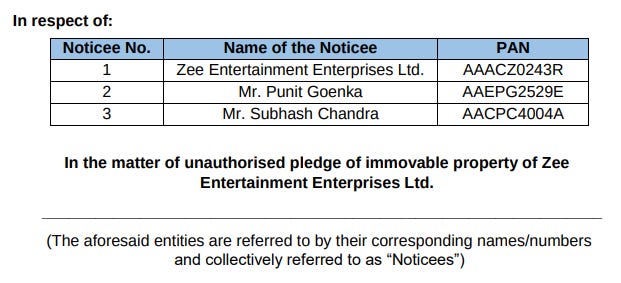
The penalties aren’t enormous, but the findings are scathing. SEBI’s order is a meticulous dismantling of how two promoters used a listed company’s assets to bail out their own family entities, and then buried the evidence in an annual report.
We covered the broader Zee saga a year ago. The Essel Group has been struggling with overleverage. Until then, the Goenka family had been continuously selling its stake in Essel to clear their debt burden. In a 2023 interim order, SEBI had also found that the promoter family may have illicitly diverted resources from Zee to other Essel Group entities.
Now, SEBI has released the final version of the 2023 order, filling in important gaps in the saga. And it goes back to a deal from nearly 10 years ago.
The Hyderabad land
In December 2016, four Essel Group entities — Gnex Projects, Vivek Infracon, Gnex Infrabuild, and Renu Realtech — borrowed ₹726 crore from Indiabulls Housing Finance. These weren’t Zee companies per se, but privately held entities buried several layers deep in the Essel Group’s corporate structure, which was ultimately controlled by the Goenka family.
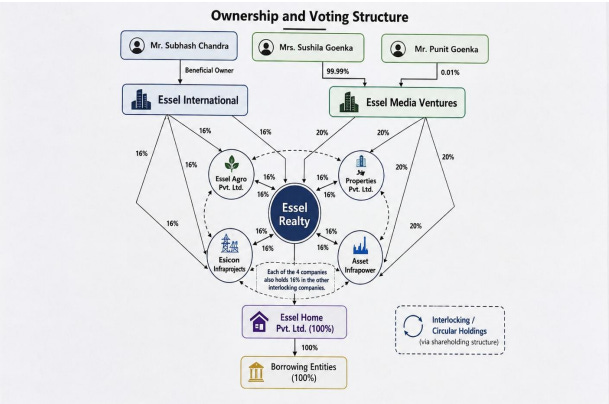
The four borrowers were wholly owned by Essel Home, which in turn was wholly owned by Essel Realty. So whoever controlled Essel Realty controlled the whole chain. Essel Realty had six shareholders, and two were directly traceable to the Goenka family. Subhash Chandra held the beneficial interest in one of them, while his wife Sushila Goenka and son Punit Goenka held the other. The other four shareholders collectively held 64%.
But, their own shareholders turned out to be Essel Realty, Essel International, Essel Media Ventures, and each other. The ownership was circular. The votes that represented the 64% block just looped back to the same family. A 36% direct holding was, in effect, total control.
By late 2018, these borrowers were in trouble. In November, Indiabulls issued notices demanding additional security as the existing collateral wasn’t enough to cover the loans anymore. The borrowers promised to prepay ₹100 crore by the end of December, but they failed to. Instead, on December 5, 2018, Subhash Chandra himself signed a personal guarantee for the loans.
But then, on December 27, he did something far more consequential. He executed a “Declaration and Acknowledgement“ (D&A): a formal document in which he, signing as an “authorised signatory“ of Zee Entertainment, deposited the original title deeds of a 17,600-square-metre plot of company-owned land in Hyderabad with Indiabulls. The document ensured that in the event of a default, Indiabulls would have the first claim over this land.
But remember, this was Zee’s land, not Subhash Chandra’s. It belonged to a listed company with hundreds of thousands of public shareholders. And it was being offered as collateral for loans that had nothing to do with Zee’s business.
Most importantly, the Board of Zee had not even approved of this. In fact, this was never tabled for discussion.
The cover-up
The juiciest layer of this shaky cake was how the D&A transaction was covered up.
In May 2019, Deloitte, Zee’s statutory auditor, noted something odd in the annual report for FY 2018-19: the original title deeds of the Hyderabad land were “not available with the company”. That’s all the auditors could say, and what could they say? They didn’t know why the documents were missing because no one told them.
On the very same day in 2019, Punit Goenka signed a management representation letter addressed to the auditors. In it, he stated that Zee had “satisfactory title to all its assets“ and that there were “no liens or encumbrances“ on any of them. He acknowledged the title deeds were not available on-demand, but he did not mention the D&A his father had executed.
SEBI’s order is precise about what this concealment achieved. An investor reading the annual report would have understood, at most, that some property documents had been misplaced — perhaps just an administrative hiccup. But they would not have known that a company asset that, at the time, was worth ₹57.3 crore, had been effectively pledged away.
This, SEBI concluded, was the nexus to the securities market. The fraud wasn’t contained to the private dealings between the Goenkas and Indiabulls. It reached investors through the humble annual report that every publicly-listed company in India has to publish every year.
Intentions and outcomes
Subhash Chandra and Punit Goenka’s defence rested on a seemingly clever argument: the mortgage was never legally valid and Zee wasn’t a party to the loan agreements. Therefore, they argued, no enforceable mortgage ever came into existence. And if there was no mortgage, there could be no fraud.
SEBI rejected this comprehensively. The adjudicating officer, N. Murugan, drew a distinction that runs through the entire order. There is, in his view, a difference between the enforceability of a transaction and the character of the conduct.
What does that mean? A document could be legally defective, yes, but there was a conscious intention or purpose behind its execution. The fact that the mortgage wouldn’t have held up in a civil court doesn’t erase the acts that were undertaken to create it: from signing over the title deeds, to the false representation to auditors.
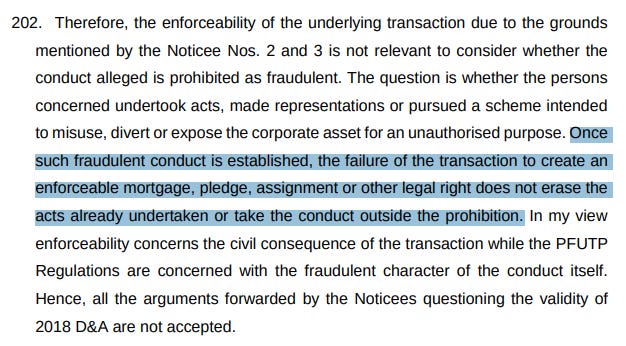
As per Murugan, if the legal failure of the pledge could absolve the people who attempted it, then the penalty would depend not on whether the conduct itself was illegal or not, but on the how well (or not well) the scheme was executed. Meaning, the worse someone is at their job, the safer they are. That, the order concludes, cannot be the law.
This reasoning matters beyond Zee. Indian corporate governance cases frequently run into what’s called the “no valid transaction“ defence, which simply refers to the argument that if the paperwork didn’t hold up, no violation occurred. SEBI’s order essentially says: the attempt, not the outcome, is the offence.
The (un)knowing
SEBI found both father and son culpable, but through different routes.
For Subhash Chandra, the case was straightforward. The declaration bore his signature. He represented himself as Zee’s authorised signatory, and he did not claim forgery.
Chandra’s only defence was that he did not remember signing the document, but, as the order notes, that’s not the same as denying that he signed it. The document described the Hyderabad property in precise detail, referenced the exact loan agreements, and restricted Zee’s ability to sell or lease the property without Indiabulls’ written permission. It was not a document anyone could sign without understanding its contents.
For Punit Goenka, the evidence was more circumstantial, but they added up on top of each other. He wasn’t a signatory to the declaration, but he was the MD and CEO of the company whose land was being used. He was a member of the same promoter family that controlled the borrowing entities.
His conduct after the transaction came to light was even more telling. Neither did he refute the document’s existence, nor did he demand the return of the title deeds. He also did not place the matter before the board, and, most importantly, he did not initiate any inquiry into how the company’s property had been used without authorisation. That was, as chief representative of the Board, his prerogative.
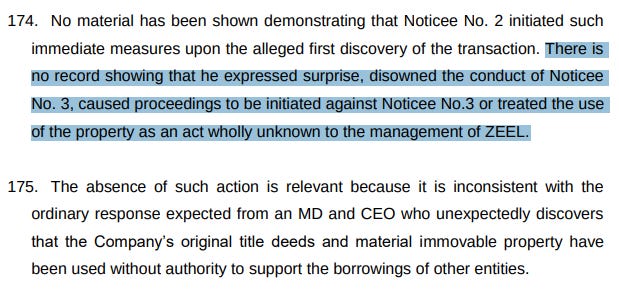
Most damningly, Goenka signed the management representation letter to the auditors. That means that it is very likely that not only did he know that the title deeds were with Indiabulls, but also why. When questioned on why the deeds didn’t exist, he simply chalked it up to a “physical availability of documents“.
SEBI concluded that the two men’s acts were complementary. Subhash Chandra created the appearance of corporate authority, while Punit Goenka preserved it by not repudiating it.
Can the company claim ignorance?
One of the more interesting legal questions the order tackles is whether Zee itself can escape liability by saying it never authorised the transaction.
Technically, Zee was also found to have violated the SEBI Listing Obligations and Disclosure Requirements (LODR) regulations. After all, it didn’t get audit committee approval for a related-party transaction, didn’t disclose the borrowing entities as related parties, didn’t report the contingent liability created by the pledge, and didn’t inform the stock exchanges about any of it.
Zee’s defence was intuitive: the company itself was the victim. Its chairman used its property without permission. How can the company be penalised for something done to it?
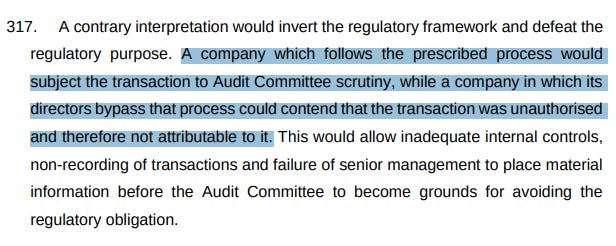
But in SEBI’s view, a company’s knowledge is the knowledge of the people who control its affairs, even if those people acted without formal corporate approval. If a company could avoid its disclosure obligations simply because its senior management chose not to tell the board, the entire regulatory framework would be inverted. It could set a precedent where companies that follow proper governance would be subject to scrutiny, while companies whose directors bypass internal processes could claim immunity.
Zee’s Hyderabad land title deeds were eventually returned in June 2020, after the company paid ₹225 crore to Indiabulls.
Where things stand
The penalties are relatively modest: ₹30 lakh on Zee, ₹58 lakh on Punit Goenka, and ₹60 lakh on Subhash Chandra, totalling ₹1.48 crore. The market bans are more significant: twelve months for both individuals, and two months for the company.
The timing is what makes this complicated. Zee’s shareholders had, just hours before the order was published, approved the ₹3,143 crore fundraise. The company has said the SEBI order has “no direct bearing” on the fundraise and that it will proceed as planned, while seeking legal advice on the order itself.
That’s the corporate position. But the order lands on a company that has already been through a great deal. The promoters’ stake has been diluted from 43% to 4%. Then, a $10 billion merger with Sony collapsed, partly because of these very investigations. An earlier warrant issue was rejected by shareholders in July 2025, and Punit Goenka was voted off the board entirely in November 2024.
Whether the fundraise proceeds smoothly while its promoters are barred from the market is an open question, and a particularly big one, given all of what has transpired for the Essel Group. But beyond Zee’s own story, SEBI’s order establishes a principle that when promoters treat a listed company’s assets as their own, neither the failure of the underlying transaction nor the passage of time can wash it clean.

Can India dig up hydrogen instead of making it?
Most coverage on hydrogen treats it as the fuel of the future. And it may well be. It’s one of the only ways to cut emissions in sectors that are hard to electrify, like long-haul transport, or manufacturing steel and cement.
But that’s the future. India’s hydrogen story today is very different.
Hydrogen isn’t a transport fuel here, yet. It’s an industrial feedstock. The country already uses roughly 6 million tonnes of it every year.
Most of that demand comes from just two industries. Refineries use hydrogen to remove sulphur from petrol and diesel, making BS-VI fuels possible. Fertiliser plants use it to make ammonia, which then becomes urea and DAP. In other words, hydrogen quietly sits upstream of India’s fuel and food supply.
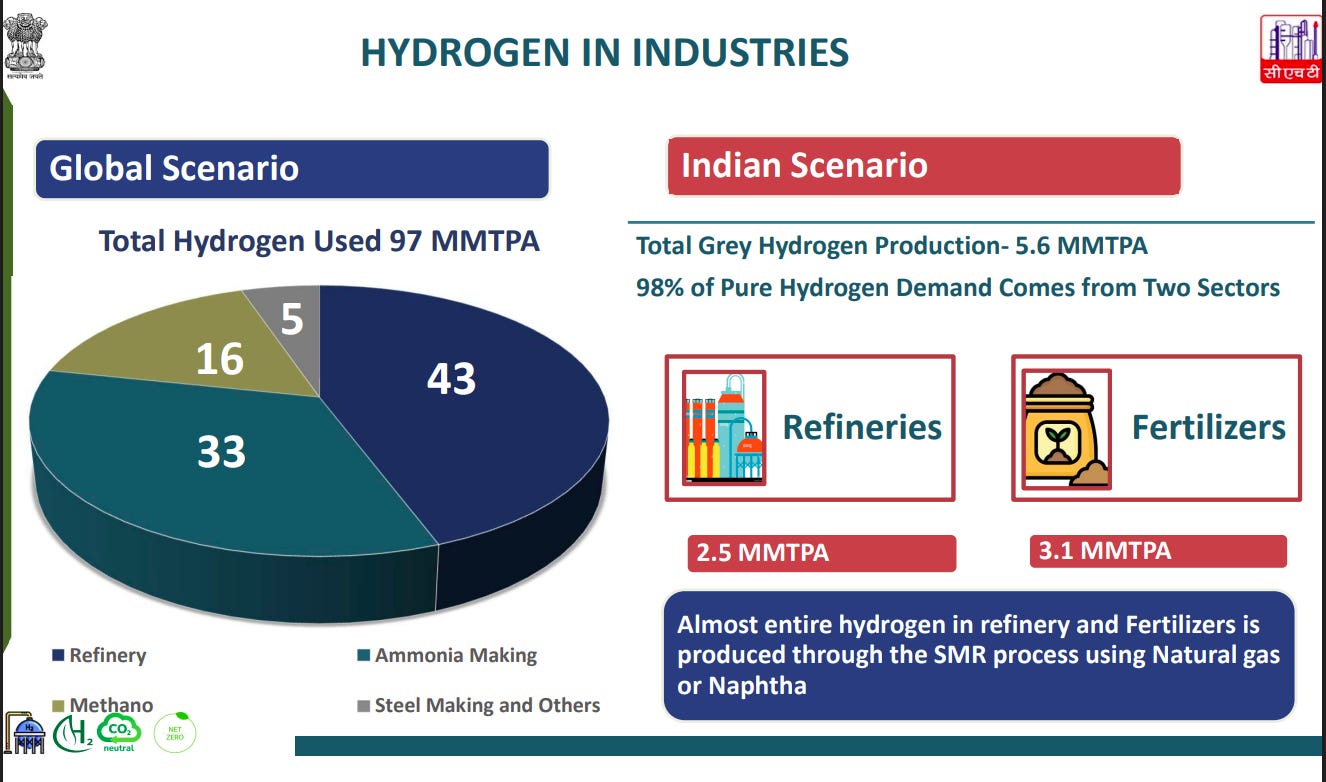
Around 90% of this hydrogen is never bought or sold in a market. It’s made right where it’s needed. A refinery, for instance, produces its own hydrogen from natural gas, pipes it a few hundred metres, and consumes it on-site. This is what’s called grey hydrogen.
The problem is that making grey hydrogen releases a lot of CO₂. It also ties us to imported natural gas. India’s import dependence on gas has climbed from 27.8% in FY12 to 50.1% in FY26. So this molecule, upstream of our fuel and food supply, increasingly depends on imports.
“Green hydrogen” was supposed to change that. Instead of using natural gas, it uses renewable electricity to split water into hydrogen and oxygen. It cuts emissions and reduces dependence on imported gas. With abundant sunshine and rapidly expanding solar capacity, India looked well placed to make that transition.
But, it looks like we got lost on the way.
Aimed too high?
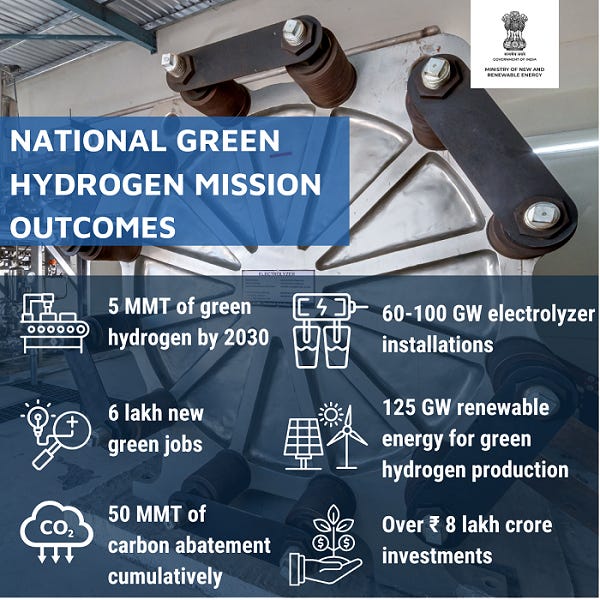
The National Green Hydrogen Mission, launched in January 2023, was ambitious. It set aside ~₹19,700 crore with the aim of achieving 5 million tonnes of annual green hydrogen production by 2030.
Companies bought into the vision. Reliance announced plans to produce 3 million tonnes a year by 2032 from its Jamnagar complex. Fifteen states rolled out hydrogen policies, with several more working on them. The government projected ₹8 lakh crore of investment and 6 lakh jobs.
The reality has been very different.
As of February this year, India had commissioned just about 8,000 tonnes of annual green hydrogen capacity. That’s barely 0.16% of the 5 million tonne target. As of August last year, India had announced 158 green hydrogen projects, but 94% of the planned capacity hadn’t moved beyond announcements. Just 0.1% was actually under construction.
So, what went wrong?
The biggest problem is cost. Grey hydrogen costs roughly ₹150–200 per kg. Green hydrogen costs around ₹400–560 per kg. Producing the same molecule, that is, costs two-and-a-half to three times as much.
Most of that comes down to electricity. Renewable power makes up roughly 50–70% of green hydrogen’s production cost. Then there’s the electrolyser—the machine that splits water into hydrogen and oxygen. It’s expensive equipment, as it is. If it runs only when the sun is shining or the wind is blowing, it spends much of its time sitting idle. That pushes up the cost of every kilogram produced. Grey hydrogen doesn’t have this problem. A gas-based plant can run almost around the clock, spreading its fixed costs over far more output.
These high prices create a commercial deadlock. Building a green hydrogen plant costs thousands of crores, so lenders want long-term purchase agreements before financing it. But refineries and fertiliser companies don’t want to lock themselves into hydrogen that costs nearly three times what they pay today. Producers can’t raise money without buyers, and buyers won’t commit until prices fall.
The government tried to break that deadlock through the SIGHT scheme, the biggest component of the National Green Hydrogen Mission. It tried breaking both sides of the deadlock. At one end, it subsidises electrolyser manufacturing to bring down costs over time.
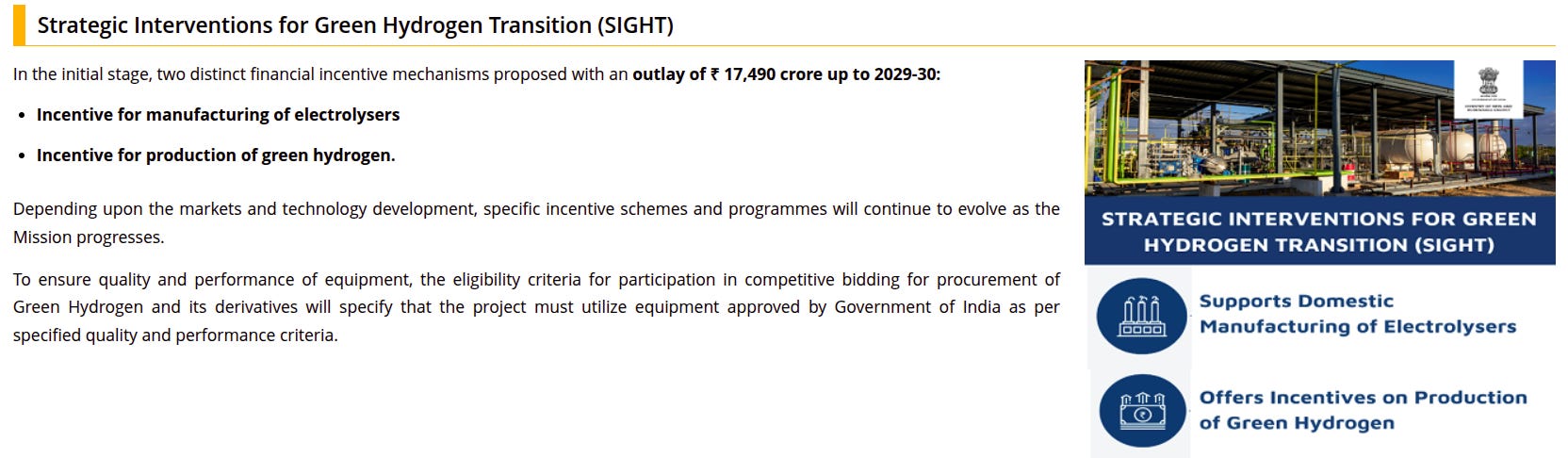
At the other end, it tackles demand. Instead of asking developers to find customers themselves, SECI aggregated demand from fertiliser companies and oil refiners and auctioned long-term supply contracts. Winners got both a guaranteed buyer and a government subsidy, making projects easier to finance.
The auctions have worked surprisingly well. In the latest green ammonia auction, every bid came in below the government’s ceiling price, with the lowest among the cheapest discovered anywhere in the world. Similar auctions for green hydrogen also saw prices fall sharply within a year.
But cheaper isn’t the same as cheap. Even those record-low green ammonia bids remain roughly 40% costlier than imported grey ammonia. Someone still has to absorb that premium.
And the scale, so far, remains tiny. The green hydrogen contracted by state-owned refiners so far amounts to just 0.4% of the hydrogen they already consume. SBI Capital Markets argues that, unless auctions accelerate significantly, the current pipeline is nowhere close to meeting the 2030 target.
Meanwhile, demand for hydrogen isn’t waiting. Nuvama expects India’s hydrogen consumption to double to around 12 million tonnes by 2030. At the current pace, most of that additional demand will still be met by grey hydrogen made from imported natural gas—the very dependence the mission was meant to reduce.
Hydrogen that was already there
This is where white hydrogen enters the picture.
Unlike grey or green hydrogen, white hydrogen isn’t manufactured. It already exists underground. The idea is simple: instead of making hydrogen in a plant, you drill for it, much like natural gas.
That sounds attractive for a country like India because we may have the right geology. Ancient rock formations across parts of Karnataka, Maharashtra, Madhya Pradesh, Uttar Pradesh, Odisha, Jharkhand, Chhattisgarh and the Andaman Islands are considered promising for natural hydrogen. Earlier this year, the Geological Survey of India reported the country’s first natural hydrogen discovery in South Andaman.
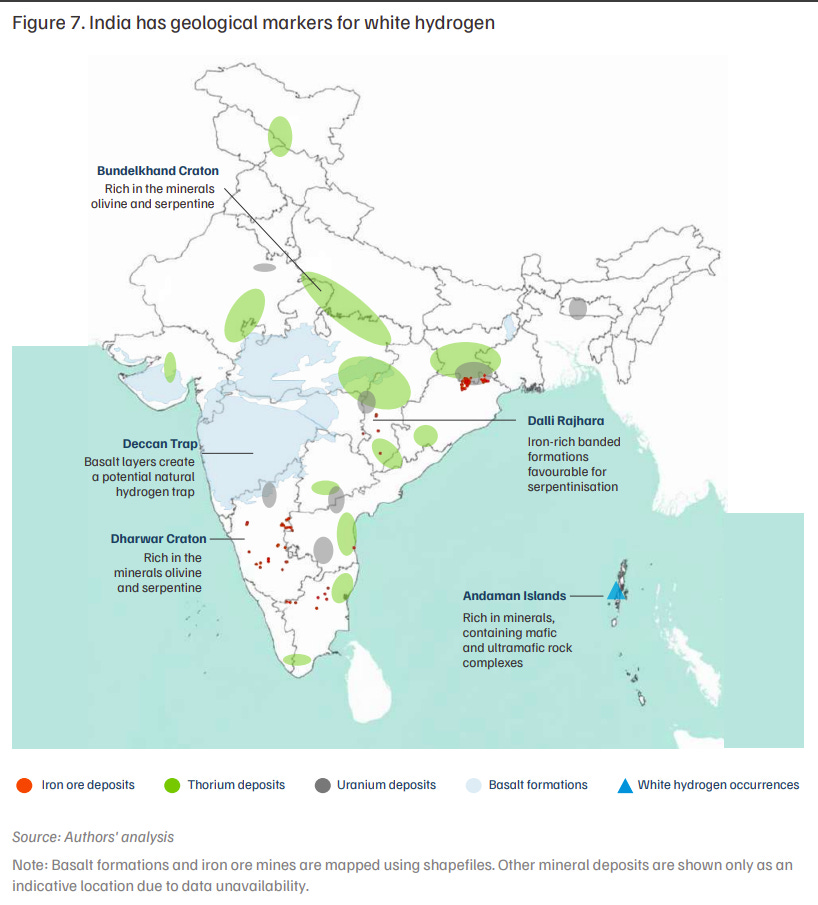
The geography is interesting for another reason. Odisha, Jharkhand and Chhattisgarh are also at the heart of India’s steel industry. CEEW has previously pointed out that these states have relatively little wind and solar capacity, making green hydrogen harder to produce locally. If white hydrogen exists in commercial quantities, it could emerge right where one of India’s biggest future hydrogen consumers already is.
On paper, white hydrogen solves many of green hydrogen’s biggest challenges.
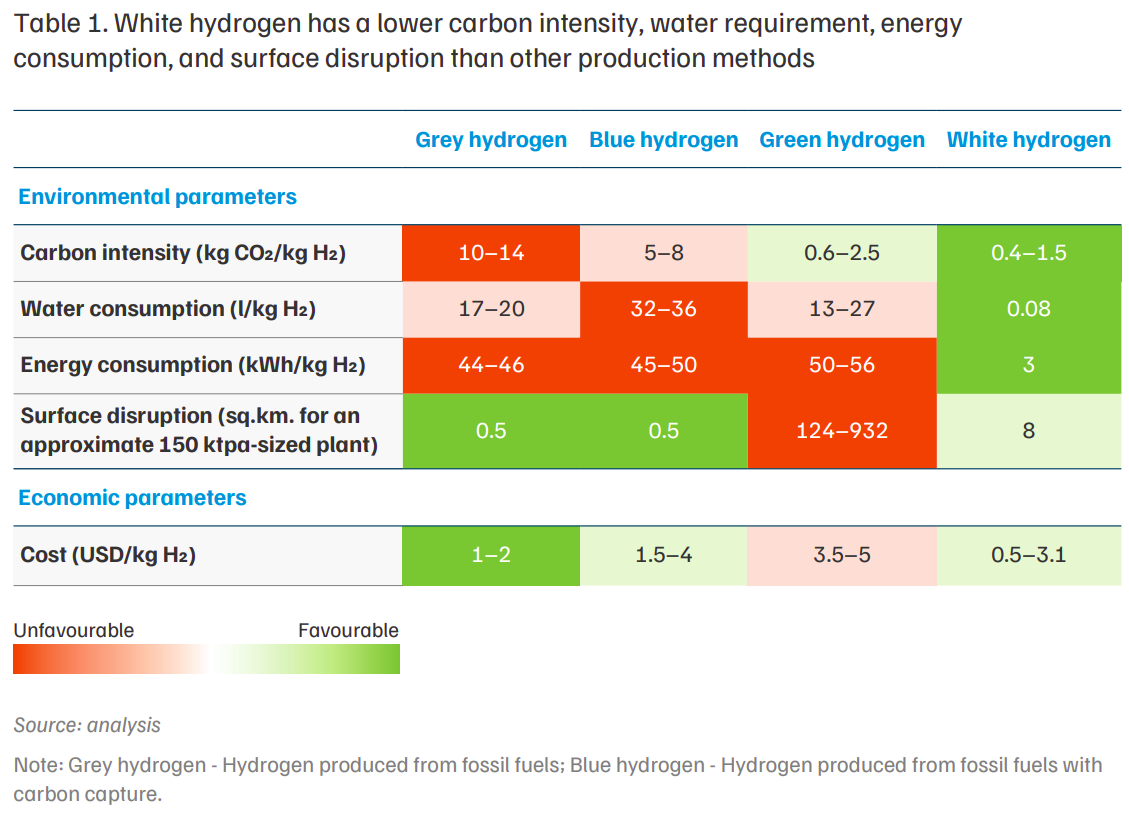
That translates into some striking numbers. CEEW estimates that producing white hydrogen could require only 3 kWh of energy per kilogram, compared with 50–56 kWh for green hydrogen. Water use is also a fraction of green hydrogen’s.
It also has a simpler supply chain. Green hydrogen first needs electricity and electrolysers to split water into hydrogen and oxygen. Those electrolysers depend on critical minerals like iridium, platinum and nickel. White hydrogen needs none of that. If the gas is already underground, you simply extract it.
It could also use much less land. A white hydrogen project producing around 150,000 tonnes a year would occupy roughly 8 sq km, compared with 124–932 sq km for a similarly sized green hydrogen project and its associated solar or wind farms.
On paper, it looks like a remarkable alternative.
The problem is that almost all of those advantages assume one thing: commercially viable hydrogen reservoirs actually exist. And that’s the part nobody has proved yet.
The number nobody can produce
Despite all the excitement, there is only one commercially operating white hydrogen well in the world. It’s in Bourakébougou, Mali. It was discovered by accident in 1987 after a water well caught fire, and since 2012 it has generated electricity for a nearby village.
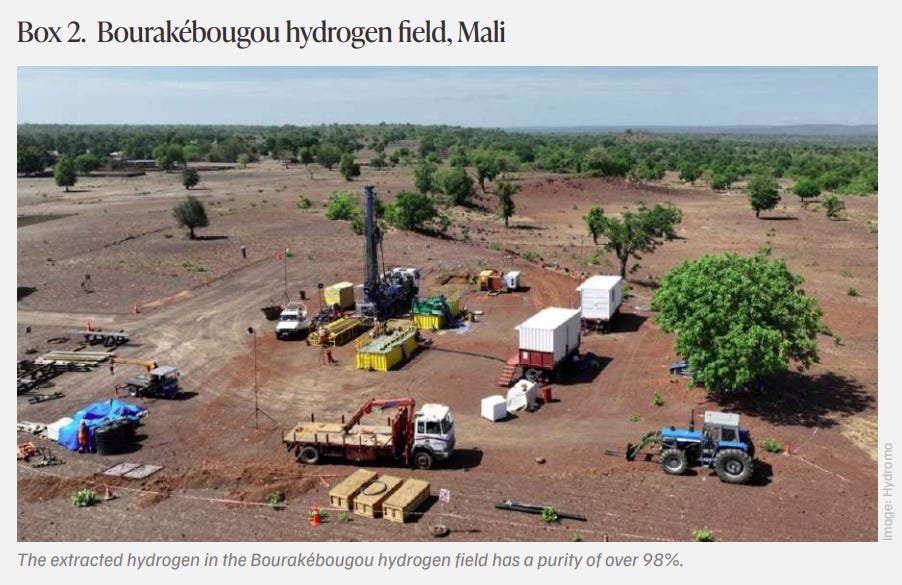
This has been a tiny experiment. The well produces about 0.5 tonnes of hydrogen a day. Over an entire year, that’s roughly what Indian industry consumes in about 15 minutes.
Everything else is still in exploration.
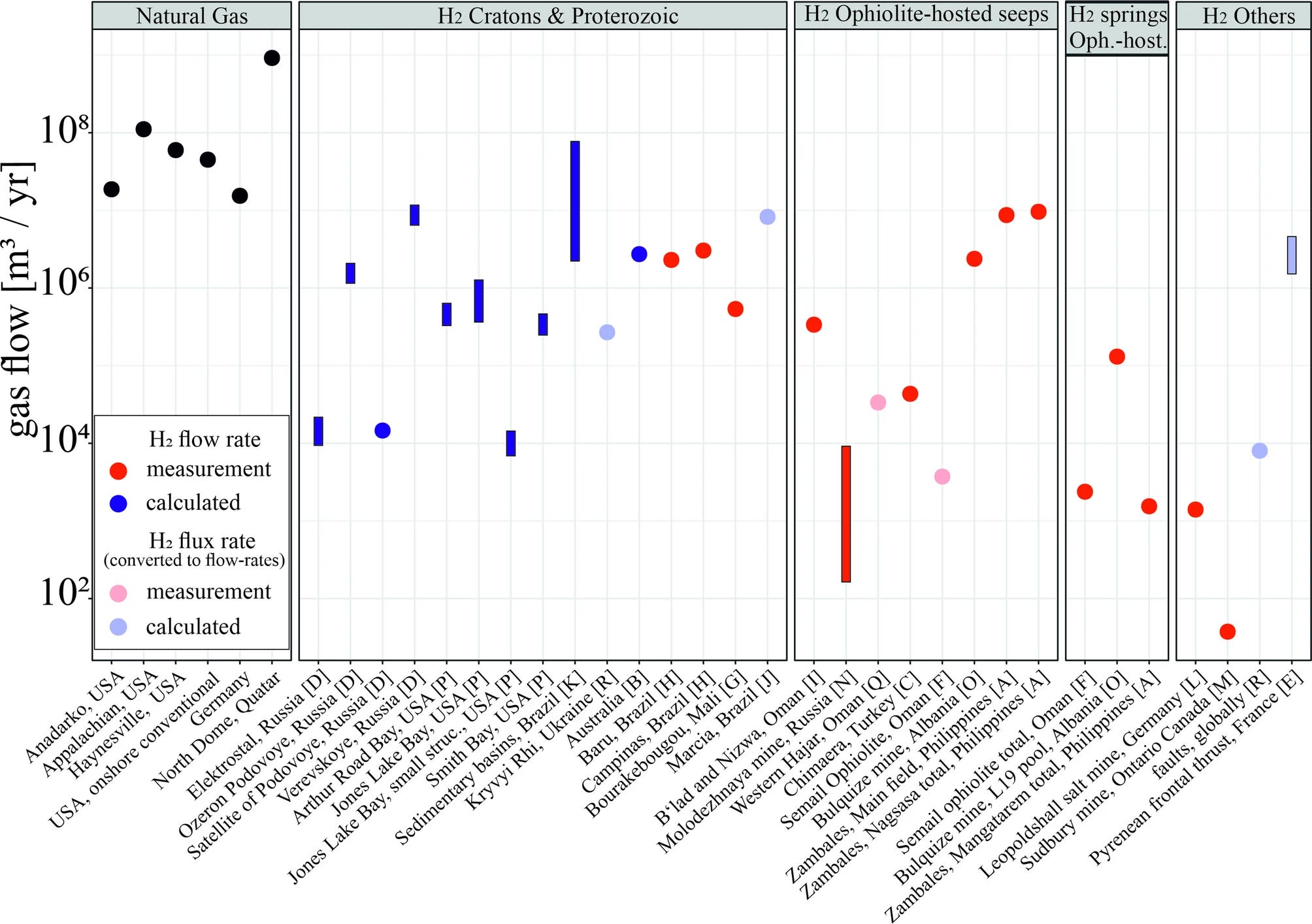
Researchers have found hydrogen in wells across the US, Australia and Albania, sometimes in very high concentrations. But finding hydrogen isn’t the same as producing it commercially. A gas sample only tells you hydrogen is there. It says nothing about whether there’s enough of it underground to keep producing at commercial rates for years.
One recent study tried to put numbers on that gap. It found that the largest natural hydrogen flows measured so far are typically 10 lac to 10 crore cubic metres a year. A commercially viable project would likely need at least 10 crore cubic metres annually, and possibly as much as 100 crore. In other words, the best reservoirs discovered so far are only just reaching the flow rates needed to become a real business.
That uncertainty carries over to the cost estimates.
White hydrogen is often quoted as costing $0.5–3.1 per kg, making it look cheaper than green hydrogen. But those numbers assume large, productive reservoirs that keep flowing for many years.
The problem is that nobody has demonstrated such a field yet. One techno-economic study found that costs fall sharply only when production scales up significantly. But, if their output declines over time, as oil and gas wells often do, the cost can actually rise by almost 70%, making it far more expensive than green hydrogen.
So the claim that white hydrogen will be cheaper than green hydrogen isn’t a proven fact but actually a best-case projection.
There’s another challenge too. Hydrogen is difficult and expensive to transport, so even a large discovery may not be worth much if it’s far from refineries, fertiliser plants or steel mills.
One thing that could improve the economics is helium. Several exploration wells have found helium alongside hydrogen, and helium is far more valuable. That means a project that isn’t profitable on hydrogen alone could still make commercial sense if it can also produce and sell helium.
So, what should India do?
CEEW isn’t asking India to launch another hydrogen mission. In fact, it argues for the opposite.
Its recommendations are modest: map India’s geological potential, clarify the regulatory framework, and start looking for hydrogen in places we’ve already explored. One of its simplest suggestions is to recalibrate the gas-analysis equipment used by ONGC and Oil India so it records hydrogen alongside hydrocarbons. These companies are already drilling wells across the country. The idea is simply to start looking for hydrogen at the same time, using infrastructure and data that already exist.
That’s really the state of white hydrogen today. It’s not a replacement for green hydrogen or a proven answer to India’s hydrogen needs. It’s simply another possibility worth exploring.
Until we know whether commercially viable reserves exist, grey hydrogen—and the imported natural gas that feeds it—will continue to dominate India’s hydrogen economy.
Tidbits
[1] RBI’s forex swap window attracts over $40 billion in inflows
The RBI’s special forex swap facility has attracted over $40.8 billion in foreign currency inflows in less than two months, mainly through NRI FCNR(B) deposits. The scheme was launched to support the rupee and boost foreign exchange liquidity, with experts expecting total inflows of $70–80 billion before it closes.
Source: The Indian Express
[2] Centre reviews aviation rules to make it easier for new airlines
The government is reviewing pilot hiring rules, airport slot allocation, staffing norms and regulatory approvals to reduce entry barriers for new airlines. The reforms aim to make it easier for new carriers to launch operations while improving competition in the aviation sector.
Source: The Hindu BusinessLine
[3] Centre releases extra ₹1.09 lakh crore to states
The Centre has released an additional ₹1.09 lakh crore as tax devolution to states, over and above the regular monthly transfer. The advance release is expected to give states more funds for capital spending and other development needs.
Source: The Hindu
[4] India bans sale of some Diageo and Inbrew liquor products
India’s food safety regulator has barred the sale of some whisky and rum brands made by Diageo India and Inbrew after finding the use of artificial flavouring that allegedly violated food standards. The move is part of tighter regulatory scrutiny of the food and beverage industry.
Source: Reuters
[5] Odisha clears law to create economic region development authorities
Odisha has approved a Bill to create Economic Region Development Authorities (ERDAs) to plan and manage large urban-industrial corridors across multiple districts. The Bhubaneswar-Cuttack-Puri-Paradeep region will become the first such economic region under the new framework.
Source: Business Standard
- This edition of the newsletter was written by Manie & Kashish
Beyond Today’s Brief
There’s always more happening at Markets by Zerodha.
The Chatter: What is driving the latest strategic moves at Indian Oil? How is Muthoot Finance navigating the shifting gold loan market? And what is the real story behind Maruti Suzuki’s latest numbers?
Aftermarket Report: What triggered the sudden, late surge during the first closing auction? And which heavyweight stocks actually drove this last-minute market volatility?
What We’re Reading: Everything from why book clubs often reward identity more than curiosity to the economics of the AI bubble to the hidden history of the Swiss watch industry.
Subtext: Former trade negotiator Ajay Srivastava breaks down India’s manufacturing blind spot, the product-depth gap, and what it will actually take to build true industrial scale beyond simple assembly.
Points & Figures: How is India rewriting its global trade story? Why is the balance between booming service exports and stubborn merchandise imports more critical than ever right now?
Join us on WhatsApp, where we share interesting soundbites from concalls, articles, and everything else we come across throughout the day. You’ll also get notified the moment a new video or article drops so that you can read or watch it right away.
Thank you for reading. Do share this with your friends and make them as smart as you are 😉
Thanks manie and kashish!!