


Our goal with The Daily Brief is to simplify the biggest stories in the Indian markets and help you understand what they mean. We won’t just tell you what happened; we’ll tell you why and how too. We do this show in both formats: video and audio. This piece curates the stories that we talk about.
You can listen to the podcast on Spotify, Apple Podcasts, or wherever you get your podcasts and watch the videos on YouTube. You can also watch The Daily Brief in Hindi.
In today’s edition of The Daily Brief:
1. Inox Clean’s second attempt at a first impression
Renewable energy developer Inox Clean Energy has filed draft papers for a ₹10,000 crore IPO to fund acquisitions and repay debt. Driven by acquisitions, its operating power capacity expanded 22-fold to 2.38 GW, while its solar manufacturing arm operates 6 GW of annual module capacity. However, the company faces structural risks: its growth relies heavily on acquisition debt, its cell factories remain under construction, and module profitability depends on domestic sourcing rules and US subsidies.
2. Why sanctioned tankers are taking Russia’s flag
Western sanctions and pressure from open registries have forced international shadow-fleet oil tankers to register under the Russian flag to avoid becoming legally “stateless”. Between January 2025 and June 2026, 107 vessels joined Russia’s registry—93 of which were already sanctioned—to secure legal recognition and keep exports flowing. While the Russian flag prevents high-seas naval interceptions, it exposes shipowners to Western port bans and deepens their reliance on alternative trade routes.
Inox Clean’s second attempt at a first impression
We keep returning to a few themes in The Daily Brief: AI, data centres, electrification and the infrastructure supporting them. Most lead us back to electricity: producing more of it, making it cleaner, and delivering it when needed.
For businesses, this creates several opportunities. They can generate electricity, manufacture the equipment, build the projects or maintain them. For investors, an expanding list of companies offers exposure to different parts of that spending.
The latest IPO hopeful is Inox Clean Energy, which has filed draft papers for a ₹10,000 crore offering. This is its second attempt. It first filed confidentially in July 2025, then withdrew that December after reportedly raising around ₹5,000 crore privately, with plans to update its filing.
And the business has changed considerably.
It returns with a much larger business. Operating renewable capacity grew roughly 22-fold, from 107 MW in March 2025 to 2,375 MW in August 2026, largely through acquisitions. It also entered solar manufacturing in India and the US.
First, untangle the Inox names
Inox Clean belongs to the wider INOXGFL Group. It is a different company from Inox Wind and the recently listed Inox Green.
Its business has two main parts.
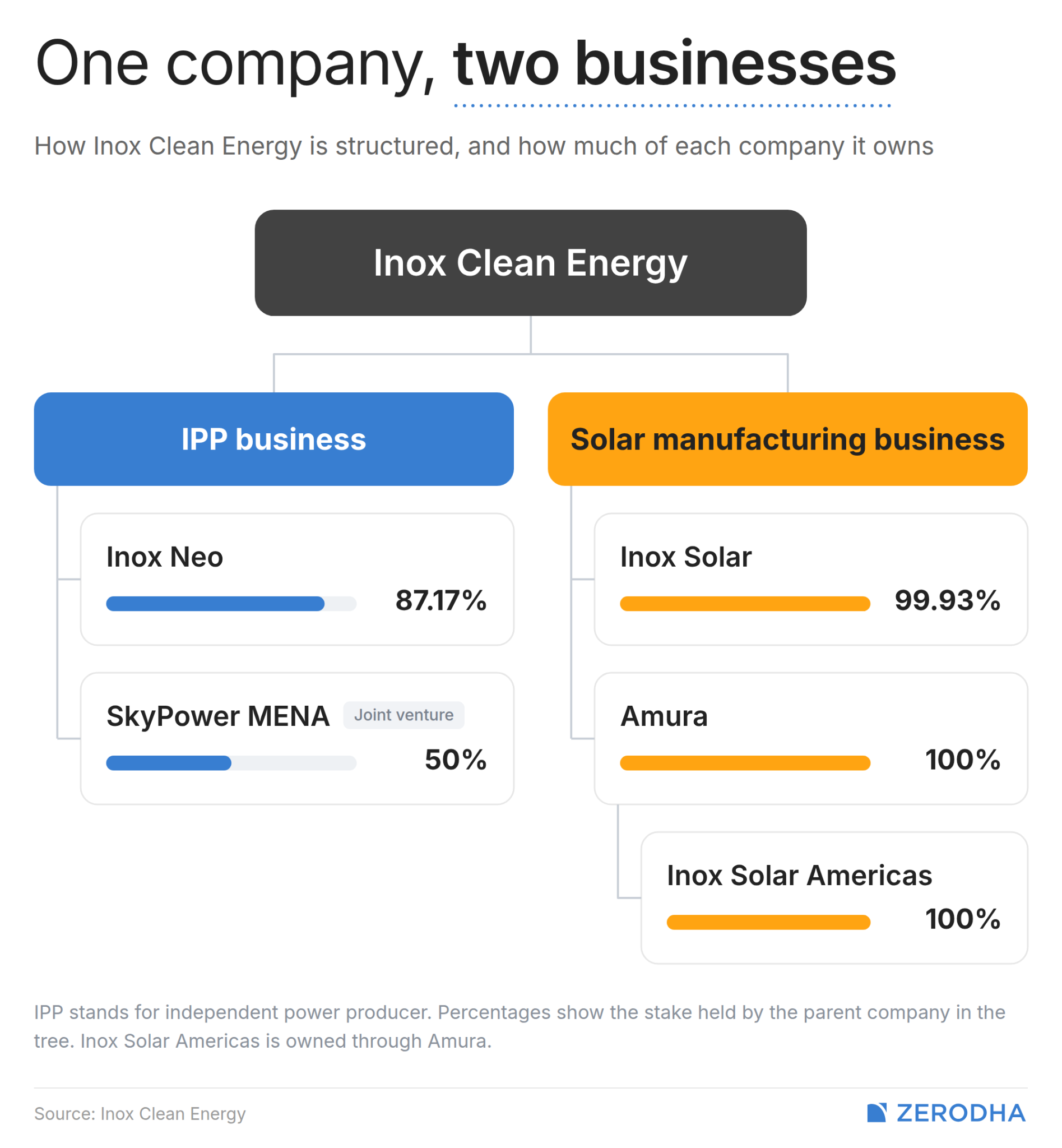
The first is independent power production, or IPP. It owns solar and wind plants and sells electricity, with batteries providing storage. In India, this operates through Inox Neo Energies, supplying utilities and commercial and industrial customers. ReNew, CleanMax and ACME Solar are useful comparisons.
The second is solar manufacturing. Through Inox Solar and its American operations, it manufactures the solar modules that solar projects use. Waaree Energies and Premier Energies are a more relevant comparison here. Modules are sold to outside customers or supplied to Inox’s own generation projects.
The wider INOX group can also help put those projects together. Inox Wind manufactures the wind turbines. Inox Renewable Solutions handles land aggregation, engineering, procurement and construction of turning equipment into functioning power plants. Inox Green provides ongoing operations and maintenance to keep renewable assets running.
The group also supplies a customer. Gujarat Fluorochemicals, its chemicals business, accounted for about one-third of Inox Clean’s electricity revenue in FY26, before several recent acquisitions expanded the portfolio.
The logic is straightforward. A developer needs equipment, construction, maintenance and customers. Having established relationships within the group can make coordinating those things easier.
But how much economic value each company captures depends on the prices they charge one another. A higher turbine price leaves more with Inox Wind and less with Inox Clean; a lower electricity tariff benefits Gujarat Fluorochemicals but reduces Inox Clean’s earnings.
These transactions are not inherently good or bad. But each company has its own shareholders, which is why related-party transactions matter and creating value for the group does not necessarily mean sharing it fairly across its companies.
With that distinction made, we should ask two questions about each business: Can this industry earn durable profits? And what gives Inox the ability to capture them?
Owning the electricity bill
The appeal of renewable power generation is reasonably straightforward.
Spend money upfront on land, equipment and construction. Sign a power purchase agreement, or PPA, with a customer. Generate electricity and collect payments over many years. Solar and wind projects also avoid the recurring fuel purchases that coal or gas plants require.
As decarbonisation gathers pace, renewables stand to meet a growing share of additional electricity demand and even replace some of the fossil-fuel generation serving existing demand.
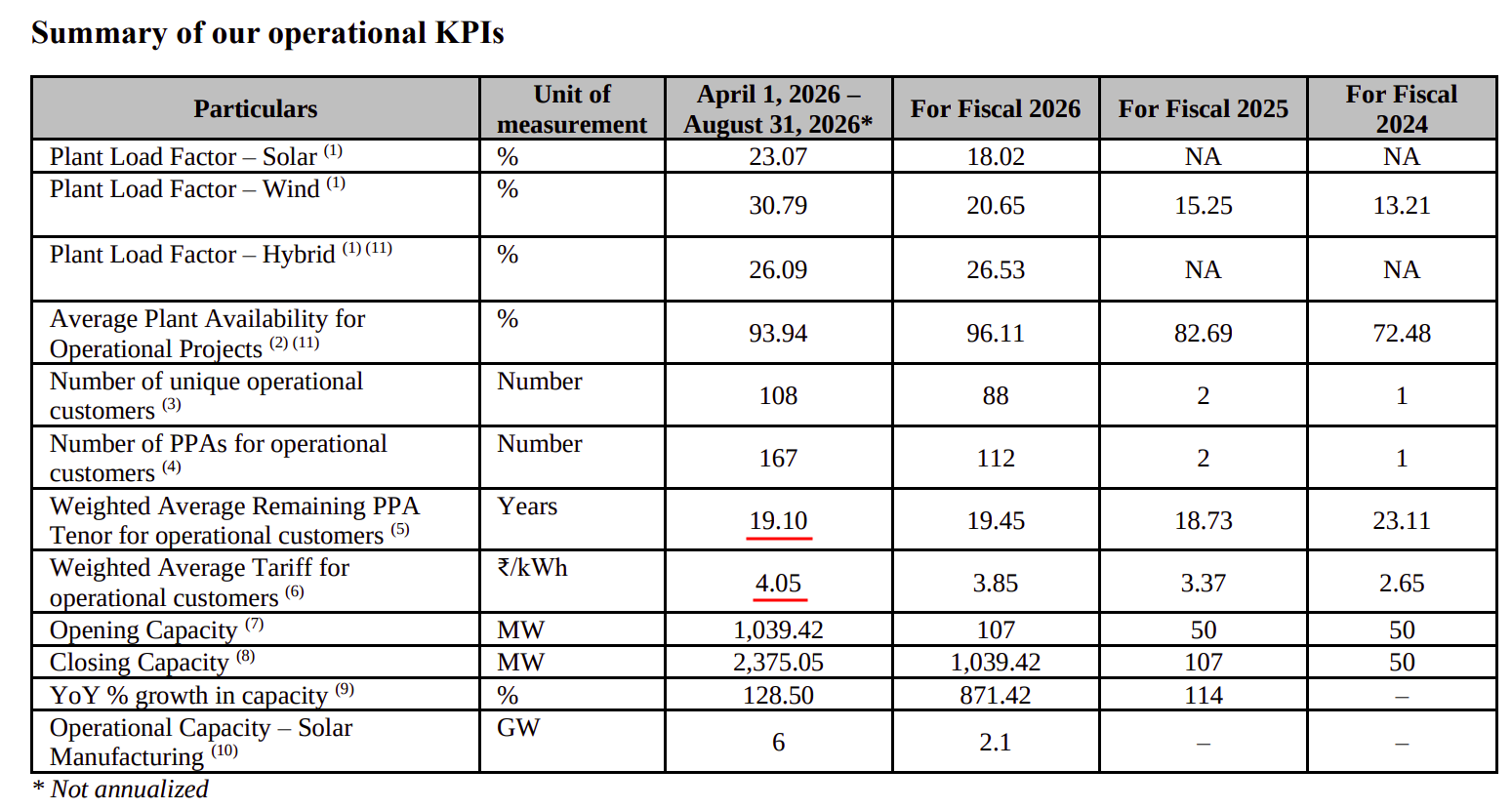
Inox’s portfolio shows that long-term character. As of August 2026, its customer contracts had a weighted-average remaining life of about 19 years, at a weighted-average contracted tariff of ₹4.05 per unit.
But a long contract does not guarantee an attractive return.
Developers when competing for these tenders compete on price. If everyone expects cheaper panels, better turbines and easier financing, those expected savings can get passed to the electricity buyer through lower tariffs. A growing market can therefore produce plenty of new projects without leaving developers unusually profitable.
The economics depend on what happens between the bid and the final cash collection. Can the developer secure land and grid access, build within budget, borrow cheaply and generate as much electricity as expected? A fixed tariff offers revenue visibility, but leaves less room to recover unexpected costs.
Who buys the electricity also matters.
Utility tenders offer large projects and long-term contracts that can help developers secure financing. But developers compete aggressively on tariffs, leaving less room for error. Payment security also varies: selling through a central intermediary such as SECI is different from selling directly to a financially stretched state DISCOM.
Commercial and industrial customers offer another route. A factory buying renewable power compares its total delivered cost with its existing electricity bill. That can leave room for the developer to charge a higher tariff while still saving the customer money. A creditworthy corporate buyer can also offer dependable payments.
But a higher tariff does not automatically mean a higher return. Delivering power through the grid involves charges and regulatory conditions that affect those savings. Corporate contracts may also allow early exits or volume adjustments, so their duration and terms matter as much as the price.
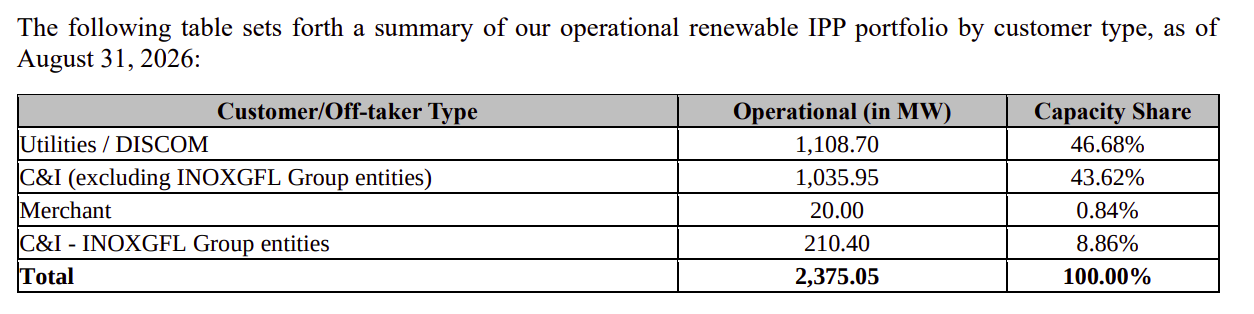
For Inox, 52.5% of operating capacity was contracted with commercial and industrial customers, including group entities, as of August 2026. Its customers include data-centre operators Sify Infinit Spaces and CtrlS. While most of its C&I contracts typically run for 25 years, some last only five to ten years.
Buying capacity is one thing. Building it is another.
For Inox, the next question is how it built its IPP business and how much growth is still ahead.
Inox had about 2.38 GW of operating capacity as of August 2026, with about 89% in acquired businesses and assets, including SunSource, Vibrant Energy and Vena Energy India. Acquisitions explain much of its rapid growth.
Buying operating plants has advantages. Someone else has already secured the land, connected the plant to the grid and handled construction. Inox gets electricity-generating assets, customer contracts and experienced teams. But even a reliable plant can deliver poor returns if the buyer pays too much or borrows too heavily.
How well do these plants perform? During April–August 2026, Inox reported plant load factors of 23.1% for solar and 30.8% for wind. These measure electricity generated as a share of what the plants could theoretically produce at full capacity continuously. Weather, location and season affect these figures, so comparisons with other IPPs need to account for those differences before drawing conclusions about Inox’s operating performance.
The bigger test lies ahead. Its total portfolio is 9.29 GW, but beyond the operating plants, only 0.80 GW was under construction. The rest was classified as pipeline or future capacity, at different stages of development.
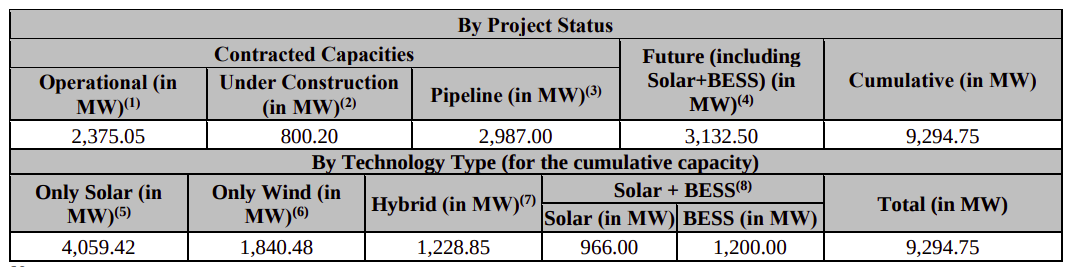
Much of this future portfolio also came through acquisitions. Inox therefore bought both an existing business and opportunities to expand it.
But buying a development project does not finish it. Inox must still arrange finance, secure equipment and complete construction.
Equipment sourcing comes with another complication. Projects covered by domestic-content requirements need Indian-made cells and modules. Separately, the government’s ALMM List-II rules require approved solar cells for covered projects, subject to exemptions. Having Inox Solar’s module factories helps, but the cells inside those modules must also qualify wherever these requirements apply.
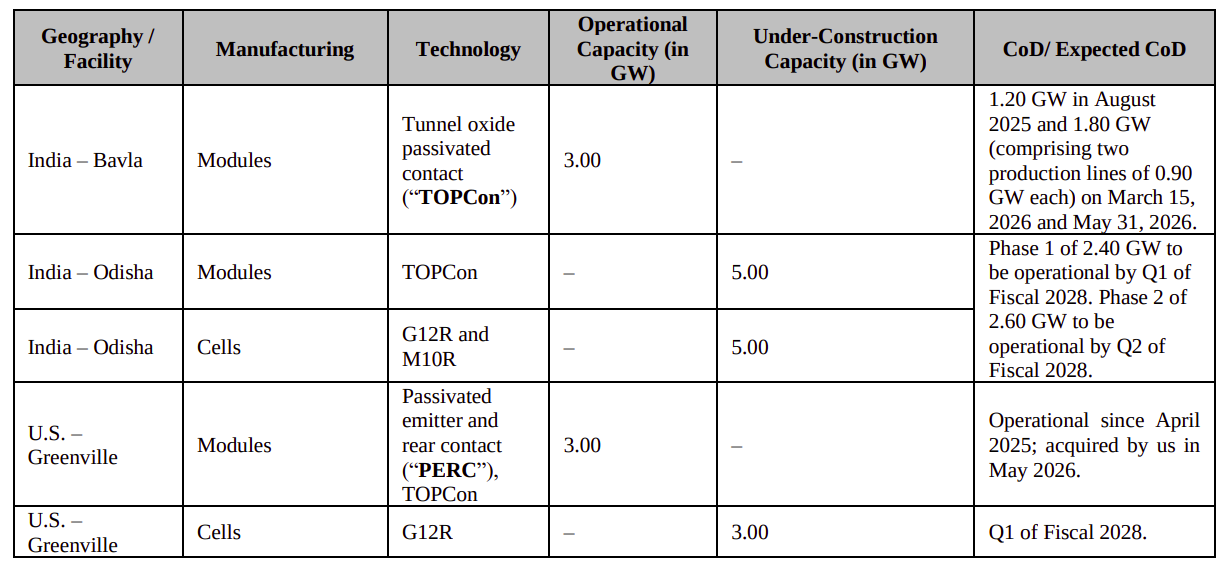
Inox’s Indian cell factory is still under construction. Until it starts producing and obtains the necessary approvals, compliant cells must come from other suppliers. If supplies are tight, Inox could have to wait for equipment or pay a premium to secure it. Delays postpone electricity revenue; higher equipment costs can squeeze returns when tariffs are already fixed.
Acquired teams, group capabilities and contractors can help with these challenges. But Inox’s acquisition-led growth gives us limited historical evidence of its ability to deliver this much construction on time and within budget.
Selling panels is a different business
Solar manufacturing serves the same energy transition, but its economics are different. A power plant can sell electricity under a decades-long contract. A manufacturer must keep winning orders on price, quality and delivery while keeping pace with technology.
Growing solar demand does not guarantee growing profits. If factories expand faster than installations, panel prices can fall even as sales volumes rise. The IEA PVPS’s 2026 market report describes exactly this: strong deployment alongside manufacturing overcapacity and pressure on profitability.
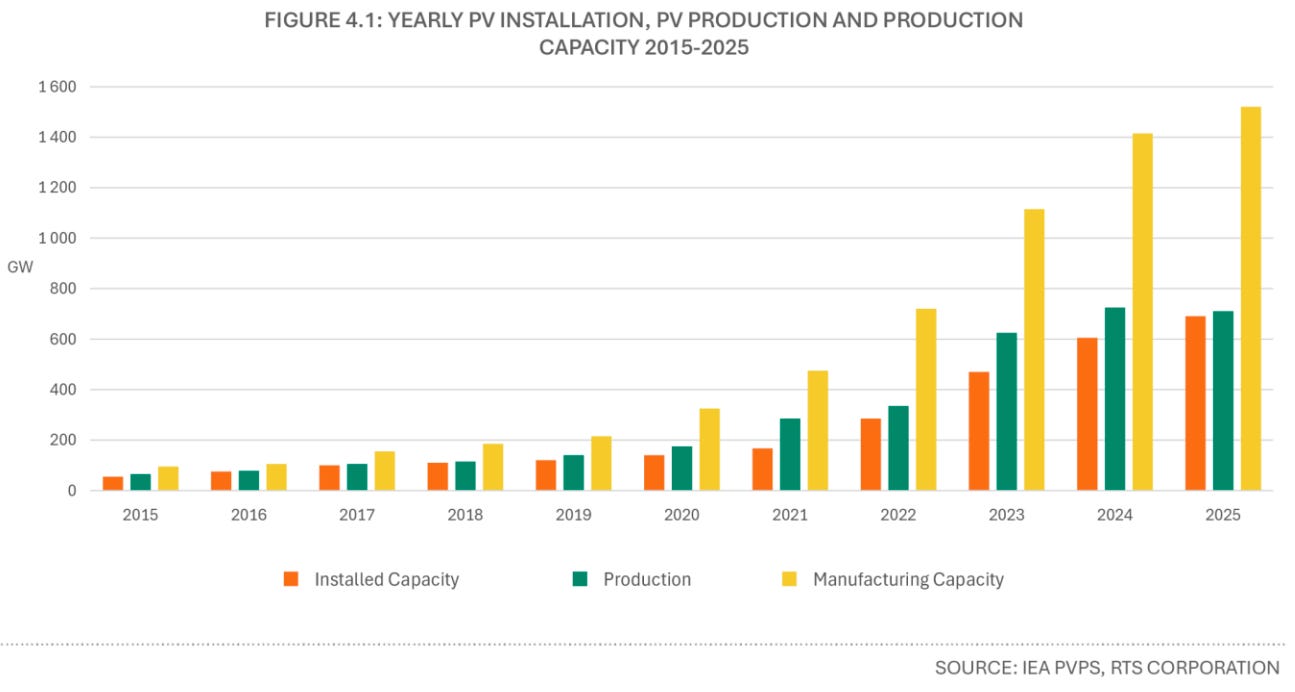
For a manufacturer, the question is how much it retains from each watt sold and how much capital it needs to earn that margin.
A well-used factory spreads its fixed costs across more output. Efficient production reduces wasted materials and defective products. Reliable modules and credible warranties help win customers, who need those panels to perform for decades.
Where the factory operates matters too. Domestic sourcing requirements, import restrictions and incentives can change which suppliers qualify for orders and at what price. Those policies form part of the economics, but they can also change.
Manufacturers therefore need to keep factories busy and production costs low. Domestic sourcing rules and incentives can help, but they also make profitability dependent on policy.
Inox has 6 GW of annual module manufacturing capacity, split equally between India and the US. It is also building 8 GW of cell capacity: 5 GW in India and 3 GW in the US. Cells are the electricity-producing components assembled into modules. Making the finished panel does not mean making what goes inside it.
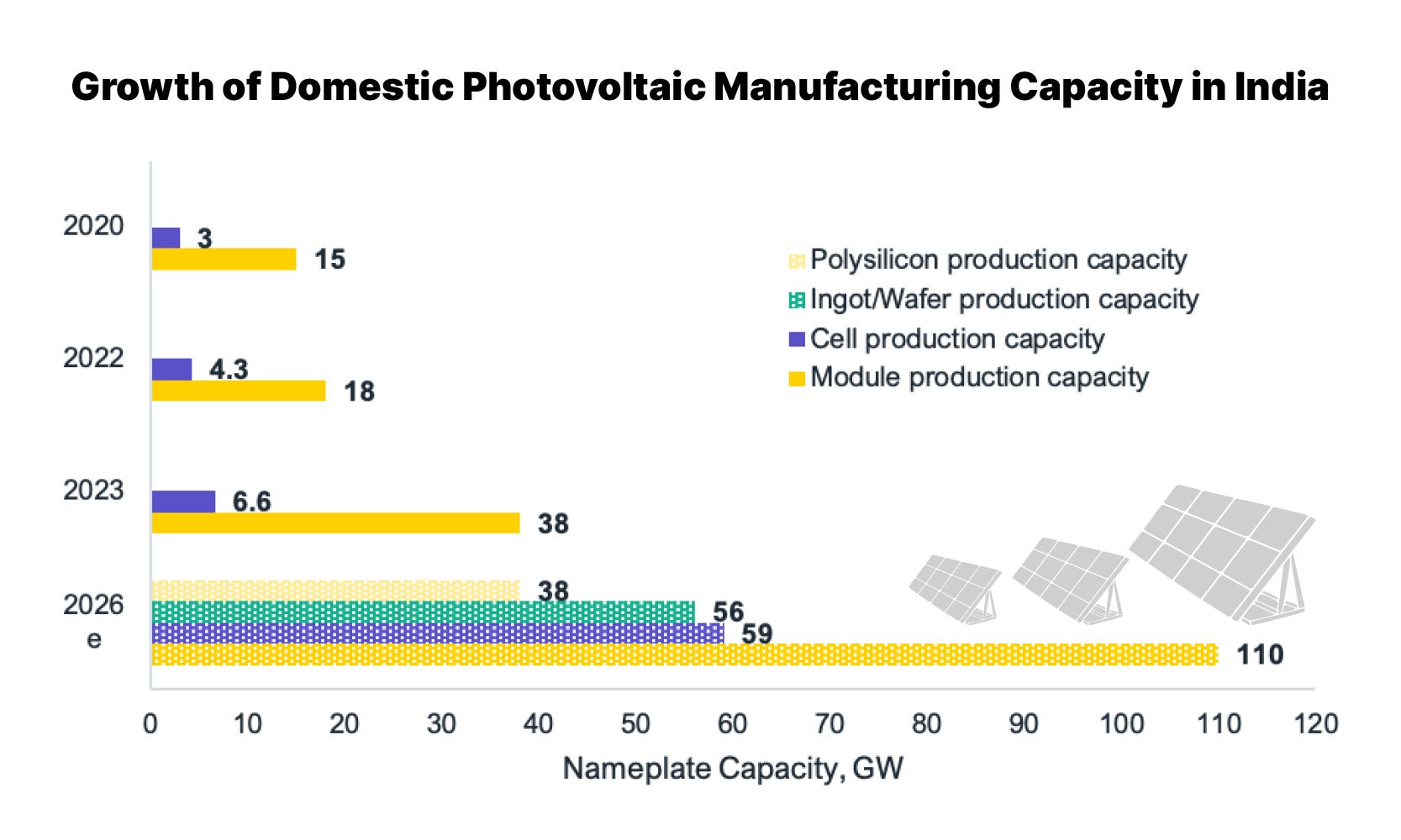
India’s manufacturing expansion has been stronger in modules than in upstream components such as cells, wafers and polysilicon, leaving manufacturers dependent on imports. Producing cells could help Inox retain margins currently paid to suppliers, although it would still need wafers. The additional earnings must justify the factory investment.
And getting production right takes time. Waaree’s earlier filings outlined its cell expansion; its 5.4 GW facility began commercial operations in March 2025. Inox’s cell plants are still under construction, so it has yet to demonstrate that capability at scale.
The advantage to prove here is manufacturing know-how: repeatedly producing efficient cells with fewer defects and at a competitive cost. Inox’s filing says it has no registered intellectual property in India, but that is not the same as having no technical expertise. The investment case rests on whether it can build that production capability and keep improving it as competitors do the same.
There is an early module-manufacturing record. Inox’s first 1.2 GW Gujarat line reported 70% utilisation between commissioning in August 2025 and March 2026. This covers only that line; the others are newer, and the US factory was acquired in May 2026.
Policy support matters too. Inox describes US incentives as important to its projected returns. Its Odisha cell factory is eligible for a subsidy covering 30% of qualifying machinery investment, paid over five years after production begins. These benefits help, but introduce dependence on eligibility and policy continuity.
Its own power projects provide potential customers. Yet internal sales alone do not create profit for Inox Clean as a whole. Owning factories helps if it lowers costs, improves quality or secures timely supply.
Two businesses, one demand for cash
The financial numbers reflect a business still taking shape.
In FY26, revenue rose nearly fourfold to ₹178 crore, while net profit increased from ₹1.6 crore to ₹31 crore. Reported EBITDA margins were about 43.5% in power generation and 0.9% in manufacturing, before group-level adjustments. But ₹164 crore of investment valuation gains helped lift profit and the underlying businesses were loss-making. Recent acquisitions also contributed for different periods, so these accounts do not capture a full year of today’s business.
The next stage will need more cash: the IPP arm to buy and build power plants, and manufacturing to expand factories and upgrade equipment.
Inox reportedly raised around ₹5,000 crore privately, while also borrowing to fund its expansion. Now, its ₹10,000 crore IPO includes ₹2,000 crore of promoter share sales and ₹8,000 crore of fresh capital. Of that fresh capital, ₹6,000 crore will repay borrowings, including debt used to finance acquisitions.
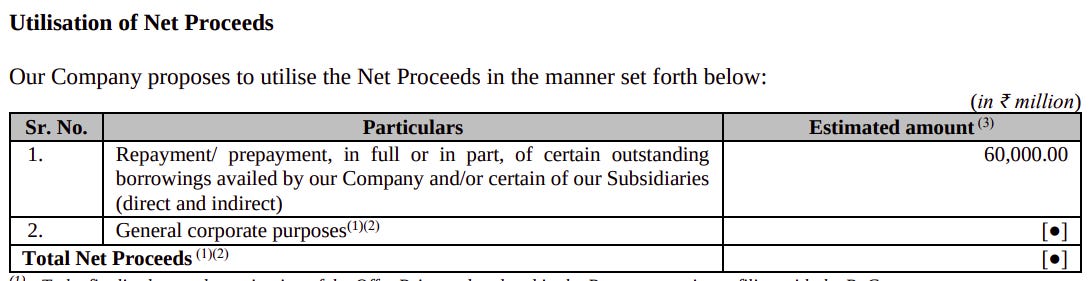
It is a familiar playbook: borrow to grow, then raise equity to reduce the debt. Investor appetite for renewable energy can help. But equity is expensive capital too: new shareholders expect returns, and issuing more shares dilutes existing ownership.
So how much more capital will the next stage need, and will the returns justify it? That requires examining acquisition prices, project costs and future cash flows. And we have not even reached valuation—what investors should pay for this business is a separate question altogether.

Why sanctioned tankers are taking Russia’s flag
Imagine a tanker carrying Venezuelan oil to China. The oil has a seller and a buyer. The ship has an owner, who may be separate from both. And it has the flag of the country where it is registered, which can also be different from Venezuela or China.
That flag gives the ship its legal nationality. A tanker can belong to a foreign company and employ an international crew, but its flag identifies the country responsible for overseeing it.
Now, imagine that the tanker is sanctioned and its flag country has no choice to remove it from its register. Without another valid registration, it risks becoming stateless, exposing it to boarding and checks at sea. It might still have customers willing to hire it, but it also needs a country willing to recognise it.
Russia has been providing that recognition. A new report from the Centre for Research on Energy and Clean Air (CREA) finds that 107 vessels joined Russia’s registry between January 2025 and June 2026. Of those, 93 were already sanctioned when they changed flags.
But, as you might be wondering, isn’t Russia facing the brunt of Western sanctions itself? How does having their flag help a ship?
We previously explored how Russia assembled alternative ships, insurers and traders to keep its oil moving after Western sanctions. Registration has become another vulnerable part of that system.
How the shadow fleet grew
Before we get into these questions, let’s first understand how the shadow fleet grew.
The original problem was that Western governments wanted to reduce Russia’s oil earnings without removing so much supply that global prices would soar. The price cap addressed that balance: companies in participating countries could provide services such as shipping and insurance for Russian oil sold within the cap, subject to other applicable sanctions. India and China could therefore continue buying Russian oil, and qualifying shipments could still use Western services.
For trade outside those conditions, though, Russia increasingly relied on alternative providers. Many vessels associated with this less transparent network became known as the shadow fleet.
These tankers often have owners hidden behind layers of companies, insurance that is difficult to verify, and frequent changes of name or flag. Some manipulate their tracking signals or transfer cargo between ships to obscure its journey. Older vessels feature prominently, raising concerns about maintenance and accidents.
But “shadow fleet” describes a pattern of operations rather than a formal category. A shadow tanker can have a valid flag and may not be individually sanctioned. Nor does carrying Russian oil or using non-Western insurance automatically make a voyage illegal.
In July, S&P Global estimated that tankers associated with shadow-fleet activity represented around 22% of the global tanker fleet. Estimates vary with the definition, but this is no longer a marginal part of shipping. This trade also extends beyond Russia. CREA found that 16 of the 107 ships joining Russia’s registry had previously carried Iranian or Venezuelan oil; both nations face their own sanctions. It’s possible that the same vessel can serve different sanctioned trades over its working life.
As these networks grew, governments only targeted their individual participants more. In January 2025, the US sanctioned 183 vessels alongside major Russian oil producers and other businesses.
A buyer might still be able to purchase Russian oil, yet be unwilling or unable to use a particular sanctioned tanker. Banks could refuse payments, insurers could withdraw cover, and ports could turn ships away. Meeting the price cap alone is not a sufficient condition.
The countries providing their flags also faced a decision: did they want to continue registering these ships?
What a flag country signs up for
A shipowner applies to a country’s registry with the required ownership details and documents. If accepted, the vessel receives registration documents authorising it to fly that country’s flag. Simply raising the flag does not establish registration.
The country, known as the flag state, takes on continuing responsibilities, like overseeing seaworthiness, safety equipment and crew qualifications. It can authorise specialist organisations to conduct checks, but remains responsible for all consequences.
These responsibilities come with authority, too. On the high seas, ships are generally under their flag state’s jurisdiction, subject to specific exceptions in international law. They can regulate a vessel even when it is far from their own coasts.
Countries set different conditions for accepting ships. Some require ties through ownership or crewing, while others operate open registries, accepting foreign-owned or controlled vessels. Owners can choose between their costs, requirements and services without moving their business to the flag country. Open registration is common in ordinary shipping.
This flexibility gave vessels carrying Russian oil several possible registries. But as sanctioning governments increased pressure, some countries began removing sanctioned ships. For instance, Barbados and Palau removed the sanctioned shadow vessels they tracked. Panama also sharply reduced its count. The owner of the vessel will now be pressed to find another country willing to register it.
Some ships continued claiming flags they no longer held. Of 38 shadow tankers expelled from Cameroon’s registry in May 2026, 24 were found to be still broadcasting the Cameroon flag.
Stateless ships run very high risks. Under international maritime law, a warship can board a vessel on the high seas to verify its status when there are reasonable grounds to suspect statelessness. This does not directly mean they can confiscate goods on the ship, but it still allows for interventions that aren’t driven by national law.
Russia’s registry addresses that vulnerability. CREA found that 60 of the 107 vessels joining it had flown at least one false flag between being sanctioned and registering in Russia.
What changes under Russia’s flag?
Now, registration does not necessarily mean Russia has bought the ship or owns its cargo.
Nor does it remove sanctions. Each vessel has an identification number that follows it through changes of name, ownership and flag. So in theory, you don’t need the flag to enforce a sanction, the ID number is enough.
Plus, the Russian flag itself is considered a stain by Western nations, especially since their invasion of Ukraine. For instance, the EU bars Russian-flagged vessels from its ports, often even when their cargo has nothing to do with Russia. Many of these ships were already individually sanctioned, but a Russian flag adds another constraint that, in today’s tense geopolitical context, is very hard to shed.
Somehow, owners still have a commercial reason to persist. After all, there is an established market for transporting these cargoes, with its own price and cost benchmarks. Some platforms execute shadow-fleet freight assessments, including for routes from Russian ports to India.
Russia also has a corresponding interest in keeping ships available. CREA says 72 of the newly registered vessels delivered €7.5 billion worth of Russian fossil fuels by June 2026. That is cargo value, rather than profits or government receipts, but it shows the scale of trade they supported.
When you zoom out, the sequence is revealing. First, restrictions encouraged alternative shipping arrangements; further sanctions targeted the vessels serving them. Then, pressure on registries threatened those ships’ nationality.
Russia has stepped in at this last stage for now. But the value of their own flag, both from the perspective of Western nations sanctioning it, and from that of the private market assessing the risk of potential sanctions, is loaded with uncertainty.
- This edition of the newsletter was written by Kashish.
Tidbits
1. Red Bull gets relief over its ‘energy drink’ label
The Delhi High Court has set aside FSSAI’s order asking Red Bull to drop the term “energy drink”, saying the company wasn’t given a chance to respond. Brands fear losing the description could hurt their identity and sales. The dispute remains unresolved, with a government official telling Reuters that FSSAI plans to appeal.
Source: Reuters
2. India considers a larger tax-refund budget for exporters
The government is considering nearly ₹2 lakh crore over five years for the RoDTEP and RoSCTL export-refund schemes. These reimburse taxes built into production costs, including fuel and electricity. A predictable budget could help exporters price overseas orders more confidently and avoid sudden cuts in refund rates. The proposal still needs Cabinet approval.
Source: Mint
3. High gold prices push some purchases off the books
High gold prices, 15% import duty and 3% GST are encouraging some buyers to purchase jewellery without invoices. Bloomberg reporting cited by the Times of India found discounts of up to 6% on bulk cash purchases. Higher duties, intended to discourage imports, are also making unofficial supplies more attractive and hurting jewellers who follow the rules.
Source: Times of India, citing Bloomberg
4. India’s protein bill depends on what’s on the plate
ThePrint estimates that 100 grams of protein costs roughly ₹37 through masoor dal, ₹252 through paneer and ₹362 through whey, though these aren’t nutritionally identical substitutes. Different supply pressures explain part of the gap: dal depends on harvests, dairy faces rising costs, and whey relies on cheese production and imports.
Source: ThePrint
5. Supreme Court clarifies limits of Fortis audit
The Supreme Court has upheld a forensic audit in the Daiichi Sankyo arbitration case, while limiting it to disputed transactions involving Fortis, its holding company and former promoters Malvinder and Shivinder Singh. Auditors can examine related bank records, but cannot investigate the entire operations of the 17 banks involved. The ruling allows scrutiny of the Fortis share transactions to continue while setting clear boundaries for lenders.
Source: Economic Times
Want more tidbits? Catch up on last week’s recap!

Beyond Today’s Brief
There’s always more happening at Markets by Zerodha.
The Chatter: What do corporate leaders across energy, finance, mobility, telecom, and real estate see shaping their industries? How are Adani Power, Motilal Oswal, Ather Energy, HFCL, and Lodha Developers executing multi-year expansions while navigating AI data-centre demand, EV capacity constraints, and shift toward annuity-led revenues?
Points & Figures: What is driving India’s record vehicle registrations across two-wheelers, cars, and commercial fleets? How are recent tax cuts and surging rural RTO demand reshaping auto sales, and where does EV adoption stand across different vehicle segments?
Aftermarket Report: How did Nifty erase its morning gains to close near 22,620 after a sharp second-half sell-off? And what do heavy FII selling, new 52-week lows outnumbering highs 29 to 4, and options positioning reveal as large caps remain stuck below key moving averages?
Join us on WhatsApp, where we share interesting soundbites from concalls, articles, and everything else we come across throughout the day. You’ll also get notified the moment a new video or article drops so that you can read or watch it right away.
Thank you for reading. Do share this with your friends and make them as smart as you are 😉