

Our goal with The Daily Brief is to simplify the biggest stories in the Indian markets and help you understand what they mean. We won’t just tell you what happened, we’ll tell you why and how too. We do this show in both formats: video and audio. This piece curates the stories that we talk about.
You can listen to the podcast on Spotify, Apple Podcasts, or wherever you get your podcasts and watch the videos on YouTube. You can also watch The Daily Brief in Hindi.
In today’s edition of The Daily Brief:
India’s SEZs: islands that never became bridges
Meet the new tariffs; same as the old tariffs
India’s SEZs: islands that never became bridges
Recently, the government constituted a new committee to evaluate the performance of India’s Special Economic Zones (SEZs), and propose a fresh “SEZ 2.0” framework.
That’s when it dawned on us that strangely, we’ve never really looked at how India has approached SEZs. After all, it’s the foundation of everything we talk about when we discuss investments from Foxconn, Amazon, or any major global name.
The pitch is: we carve out a designated zone, give companies inside it world-class infrastructure, generous tax breaks, cheap power and land, and let them operate somewhat free from India’s complicated regulatory environment. The hope is that these zones become self-sustaining industrial clusters that pull in suppliers, create jobs, and upgrade the broader economy around them.
However, for India, the clustering reality has been more complicated. And for that, we’ll be taking a dive into the evolution of India’s SEZ policy.
A brief history
The story starts with, perhaps, one of the most surprising facts we’ve encountered in a while. Asia’s first Export Processing Zone — which was a precursor to SEZs — was actually set up in India!
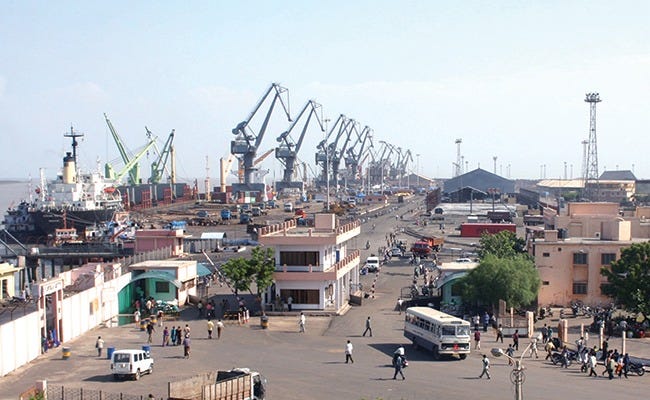
In 1965, India created an industrial enclave in Kandla, Gujarat. The idea was that, within India’s broader, closed-off economy, we would create a fenced-off area where export-oriented manufacturers operate under relaxed customs and trade rules. Before countries like South Korea, China, and Taiwan, which made their name by becoming export powerhouses through such zones, India was there first.
But Kandla’s early start didn’t translate into large-scale success.
The reasons, though, were fairly obvious. In that time, India ran an economy that was quite heavily centrally-planned and inward-looking. It was fiercely protective of domestic industry, and deeply suspicious of foreign capital and trade. EPZs, however, are fundamentally export-oriented instruments: they work best when the country around them is also trying to integrate into global trade. Back then, India was not.
Kandla, and many other attempts at EPZs, did well. The Santacruz Electronics Export Processing Zone (SEEPZ) in Mumbai, for instance, massively transformed Indian jewellery and became an export success in its own right.
But these were isolated successes that were only confined to those areas. The investments in those EPZs didn’t lead to the creation of broader supplier networks, or the diffusion of technology and know-how beyond the EPZ itself. So, the country as a whole did not undergo a structural transformation.
Then, from 1991 on, India’s liberalised economy was exploring integration into the global economy. Accordingly, the EPZ model was upgraded — gradually at first, then comprehensively with a new SEZ scheme in 2000, followed by the SEZ Act of 2005.
An SEZ is just the evolved version of an EPZ. While an EPZ just contains the factory floor, and SEZ is designed to be a whole township, with residential zones, logistics infrastructure, financial services etc.
The SEZ Act of 2005 was genuinely ambitious and aimed to make India a force in manufacturing. Zones were designated as duty-free enclaves, treated as foreign territory for trade purposes. Units inside could import without licenses and export without routine customs examination. Developers got a 100% income tax exemption for any ten years within a fifteen-year block. The legislation promised single-window clearances, fast-track courts, and world-class infrastructure.
Ironically, India adopted this policy after seeing the success of Shenzhen in China, as well as in Taiwan and South Korea. Yet, India seemed to have the right tool sitting in Kandla — we just never truly treated it as a central development strategy.
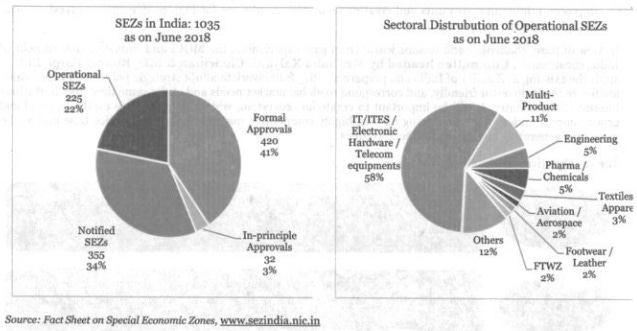
By mid-2018, India had 225 operational SEZs, up from merely 18 in 2005. Exports from SEZs jumped from 5% of India’s total exports in FY2005 to over 25% in FY2018 — roughly worth ₹5.8 lakh crore. The SEZs had, by 2018, attracted a cumulative investment of ~₹4.74 lakh crore, and had created nearly 20 lakh jobs. And these zones were fundamentally formalizing sections of manufacturing that were largely informal.
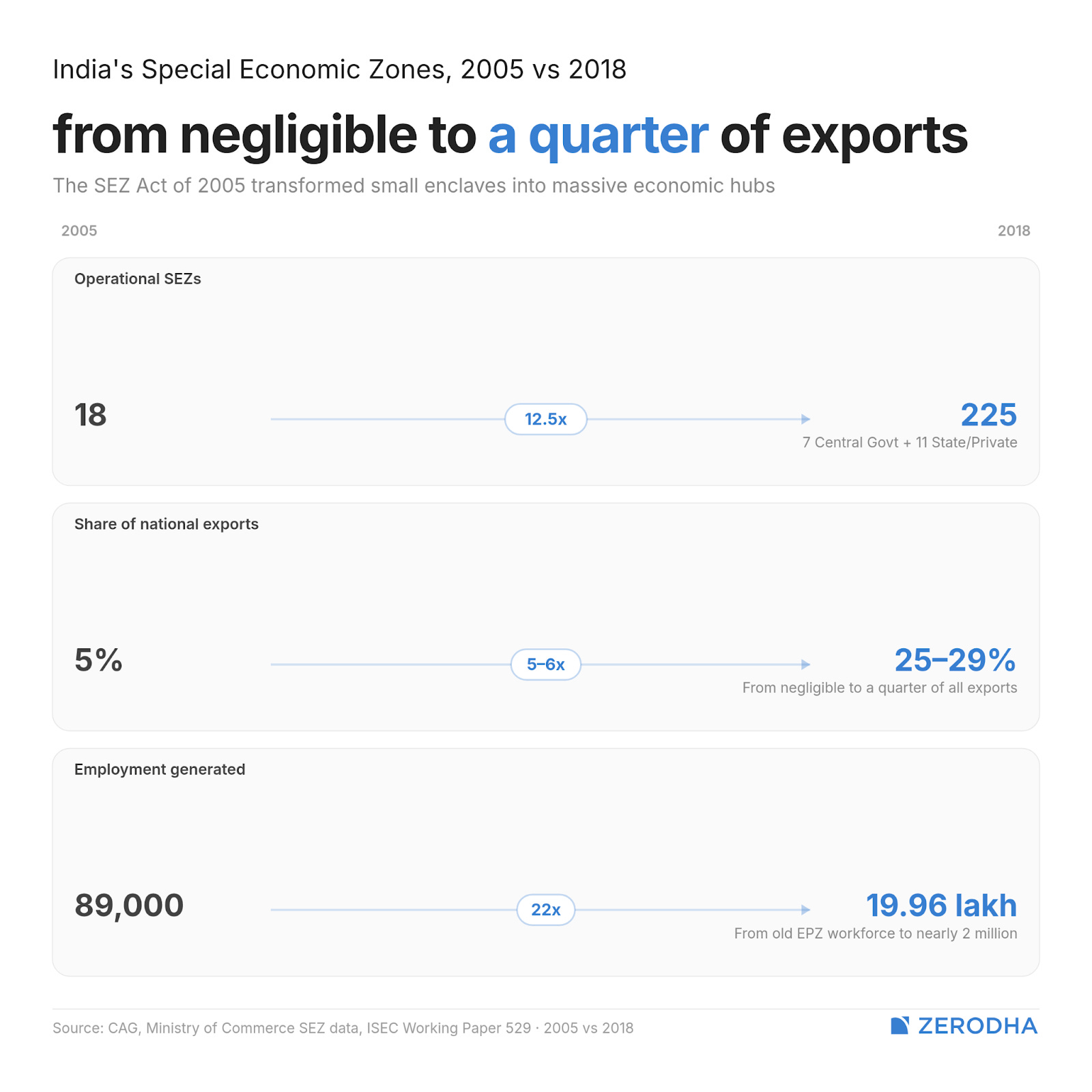
Going by these facts, India’s SEZ policy seemed to be a success. But the devil, of course, lies in the details.
Reality check
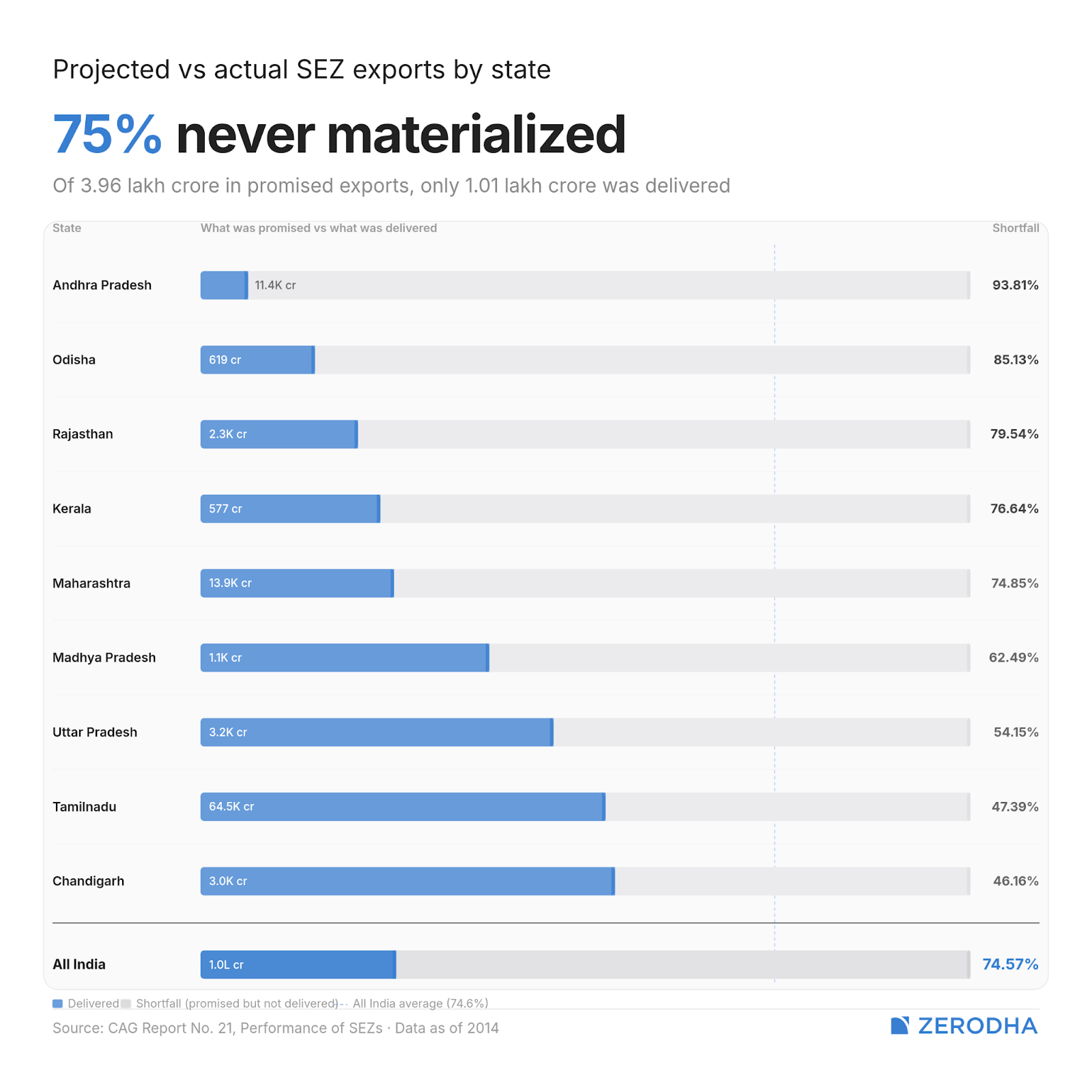
A CAG evaluation found that actual SEZ performance fell woefully short of the targets the government had set to justify the policy in the first place.
Exports came in 75% below projected levels — states like Andhra Pradesh and Odisha saw shortfalls of over 80%. Investments missed projections by 59%, with the highest failures in the states that had been most enthusiastic, like Andhra Pradesh, Maharashtra, and Gujarat.
And then, employment suffered a 92.7% shortfall. For all the jobs that were created, nearly ten times as many were promised and never delivered.
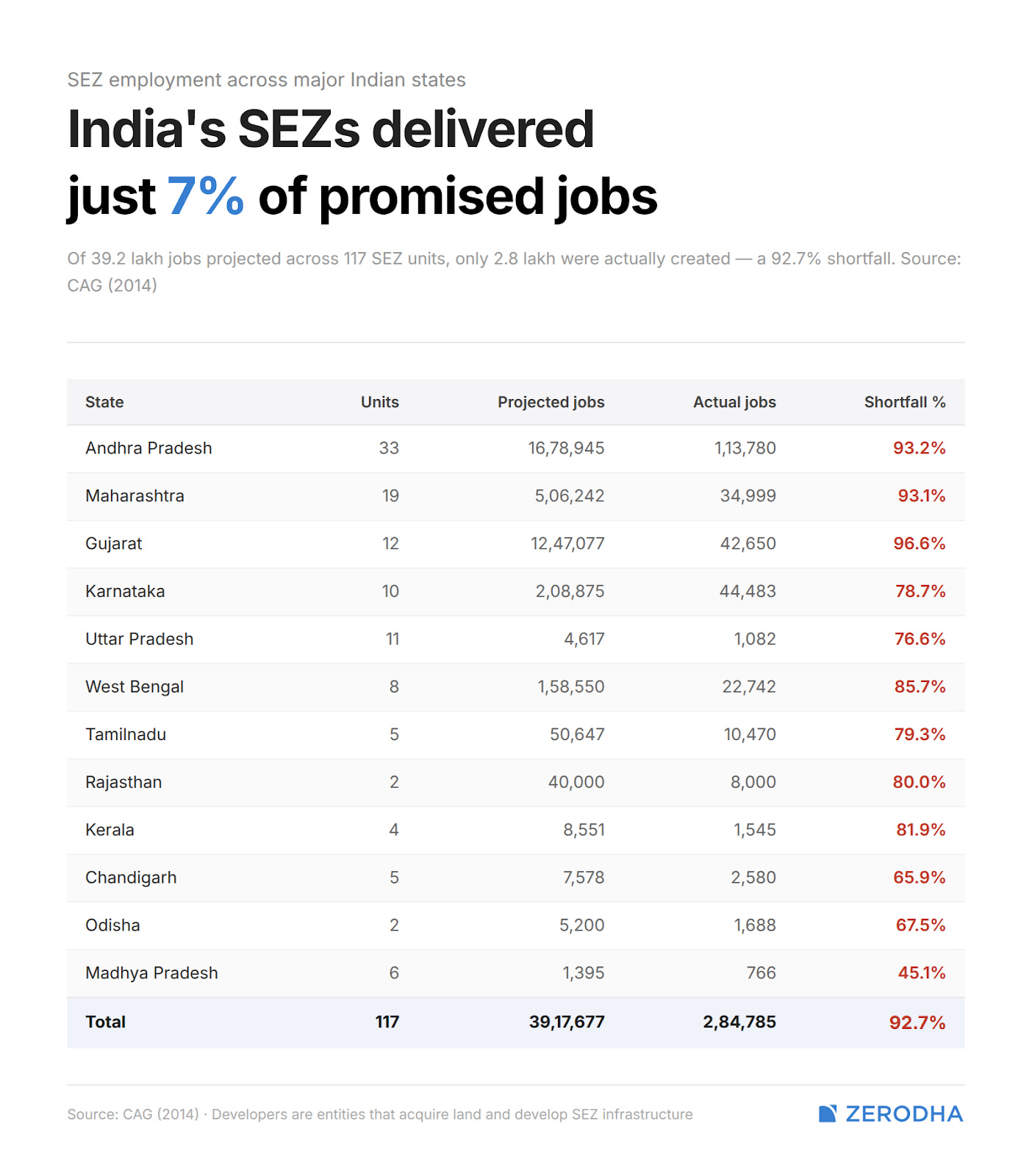
Moreover, SEZs also widened wage inequality. A paper by Boston University researchers found that the gains from SEZs went largely to skilled workers, while those at the bottom of the distribution saw little benefit. This, perhaps, was also a function of IT services doing much better than labor-intensive manufacturing.
The biggest criticism of India’s SEZ policy, though, lies in the costs — an estimated ₹83,000 crore was spent in tax concessions between 2006-2013. Additionally, SEZs suffered from a land speculation problem, as developers hoarded agricultural land cheaply and converted them into exorbitantly-priced real estate.
Half-measures
So, what went wrong?
In 2018, the government constituted a high-level committee headed by Baba Kalyani — chairman of Bharat Forge — to diagnose India’s SEZ policy and recommend a path forward. The committee’s landmark report identified many different reasons for the disappointing outcomes — we’ll address the three biggest ones.
The enclave problem
The deepest issue was one of design philosophy.
See, India’s SEZs were conceived as export islands which operated largely separate from the domestic economy around them. Nobody designed a mechanism to connect them to it. There was no deliberate plan to use the zone as a launching pad for the wider economy; the zone was the goal, not the means.
In fact, we covered this issue briefly in our story on Apple’s progress in India. SEZs only work transformatively when they’re integrated into a country’s broader development strategy. The foreign investments that India brings in should ideally be connected to India’s indigenous economic activity. India’s relatively-lackluster outcomes were the result of SEZs being set up as isolated pockets disconnected from our economy.
In contrast, East Asian countries succeeded because they avoided this trap. China, for instance, made SEZs like Shenzhen the centerpiece of its entire development model. Its SEZs were testbeds for experimental policies — if they worked, they would be made part of national policy.
Their SEZs may have started off as isolated experiments, but that was never their endgame. They constantly upgraded their SEZ policies with time, moving away from being merely standalone economic experiments. Those countries had a clear answer to the question: what does the zone do for the rest of us? But India didn’t.
One way this problem manifested in India was that firms inside SEZs did not get preferential access to the Domestic Tariff Area (DTA) — which refers to the Indian market outside the zone. An SEZ manufacturer looking to supply Indian companies faced similar customs procedures as any foreign exporter and got slapped with an import tax.
This meant that the supply chain relationships that should have developed between SEZ anchor firms and Indian component makers never fully materialized.
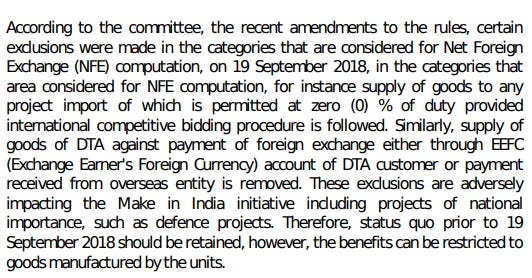
Another visible sign of this problem was the Net Foreign Exchange (NFE) requirement. Every unit inside an SEZ was legally required to maintain a positive net foreign exchange position: Cumulatively, over five years, a unit had to earn more forex than it spent. It might sound sensible, but in practice, it was extremely rigid, and discouraged the integration of SEZs into India’s economy.
The NFE rule locked SEZ units into export-oriented operations even when domestic demand would make more commercial sense. A manufacturer that wants to sell a significant portion of its output to Indian buyers can’t easily do so without jeopardizing its NFE position. Moreover, certain goods that were important for national security were excluded from NFE calculation, disincentivizing manufacturers from making them.
The zones were good at generating the metrics they were designed to generate — exports, forex, FDI inflows. But such a narrow focus on these metrics missed the forest for the trees. These SEZs did not, at scale, generate the linkages that would have actually structurally changed India’s economy.
The sectoral mismatch
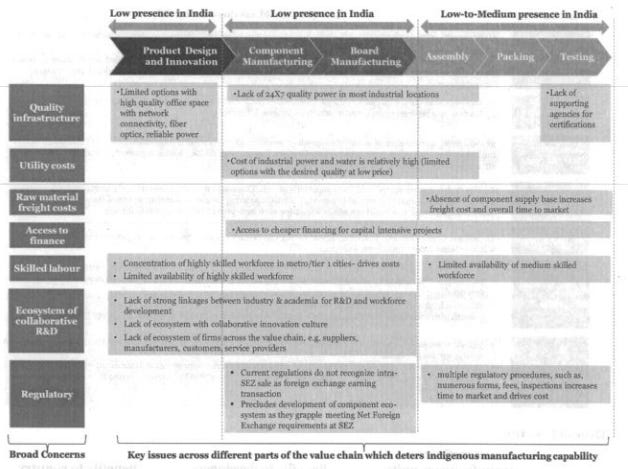
The second major failure was that our SEZ framework treated manufacturing and services as essentially the same thing, and designed rules accordingly. And because of this, our SEZs, which were primarily aimed at revolutionizing Indian manufacturing, fell short of it.
To be successful, a manufacturing SEZ needs large land parcels, heavy logistics infrastructure, proximity to ports and highways, and a supplier ecosystem. An IT services SEZ, though, will only need office space, reliable internet, and good engineering colleges nearby. The 2005 SEZ rules gave both the same basic framework — which meant, in practice, that the rules were far better suited to IT parks than to industrial clusters.
It’s not a coincidence, then, that 58% of SEZs that were operational by 2018 ended up being IT parks, and generated most of the total SEZ exports. Manufacturing, meanwhile, accounted for only about 15% of total SEZ exports in 2017 — please note that this figure excludes Reliance’s Jamnagar refinery and jewellery SEZs. In a cruel twist of irony, a policy intended to bolster Indian manufacturing helped services far more.
Perhaps, this was well in line with the trajectory of India’s services-heavy economy. But the entire point of an SEZ was to experiment in a nascent industry that, hopefully, would grow beyond its own confines. And that didn’t happen.
Policy uncertainty
The third problem was policy unpredictability for SEZ investors.
Until 2011, firms in SEZs were exempt from the Dividend Distribution Tax (DDT), which was charged on a company’s dividends (if declared). This was used as a sweetener to attract and retain them, but the exemption was revoked in 2011, reducing dividends for investors. Similarly, until 2012, SEZ firms were exempt from the Minimum Alternate Tax (MAT), but then that was also reversed.
Now, investors who had made multi-year capital commitments based on a specific tax regime found the rules had changed mid-game with little warning. It set a poor precedent — that the government might arbitrarily alter the terms of its own industrial policy. This perception lingered for years, hurting investor trust.
Other problems — like infrastructure gaps, dispute resolution, slower clearance, etc — were real, but largely downstream of these three strategic failures.
What’s changed since, and what hasn’t
The Baba Kalyani Report got the government to admit shortcomings when it came to setting up our SEZs. Then, the real question is: what has changed since then?
In 2022, the government proposed a Development of Enterprise and Service Hubs (or DESH) Bill, which aimed to address several of the Kalyani Report’s core recommendations. That included easing the NFE requirement and allowing greater domestic sales. This bill was shelved, though.
Perhaps, the most notable change is GIFT City. India’s international financial services centre represents a partial implementation of the specialized “services enclave” concept the Kalyani committee envisioned. Furthermore, since 2023, various amendments have been made to the rules. For instance, the minimum land requirement for semiconductor-focused zones was shortened.
However, all the changes so far have been piecemeal. The core architecture of the 2005 rules — the export-linked incentives, the NFE straitjacket, the absence of a strategic integration plan — largely remains intact. Clearly, the gap between acknowledging the problem and fixing it are different things.
And that’s where this new committee fits in.
India’s manufacturing story is genuinely improving. Electronics clusters around Tamil Nadu, Karnataka and Andhra Pradesh are real successes. Additionally, the PLI scheme has complemented our SEZ policy. But it still remains structurally incomplete.
The new SEZ 2.0 committee has the same diagnosis in front of it that the government has had for a while. India’s export zones have largely just been islands that didn’t strongly connect to the wider economy. They’ve raised India’s export numbers, but haven’t helped create industrial ecosystems. And it remains to be seen whether SEZ 2.0 can break with the ghosts of implementation past.
Meet the new tariffs; same as the old tariffs
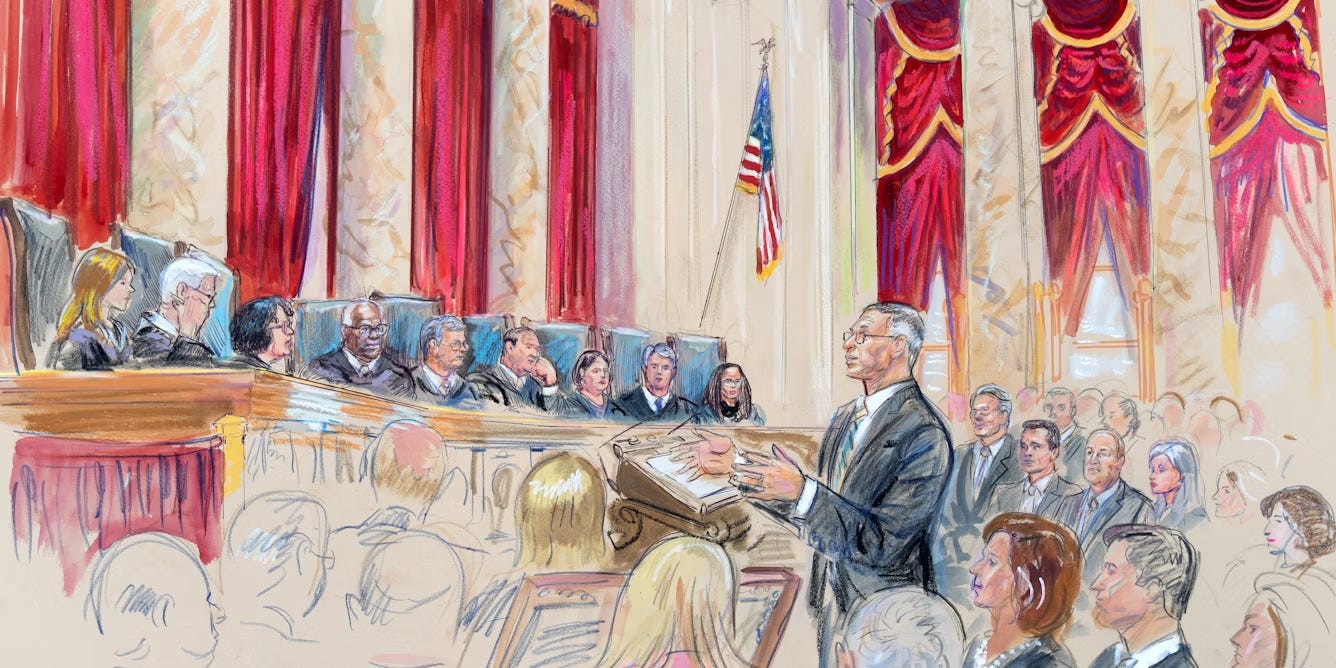
A few weeks ago, we covered how the US Supreme Court struck down Trump’s Liberation Day tariffs.
Trump had used an emergency law, called the IEEPA, to impose tariffs on the entire world, claiming that there were practically no checks on his power. The Supreme Court ruled, by a 6-3 majority, that the IEEPA simply didn’t give him those powers — that power belonged to the American Congress alone. The tariffs were struck down.
We wrote, back then, that Trump wasn’t out of options; only, the alternatives were narrower and procedurally heavier. We’re now beginning to see those alternatives kick in.
Within hours of the ruling, in fact, Trump imposed a temporary 10% surcharge on all imports under a different law: Section 122 of the Trade Act. Legally, these new tariffs are shaky as well. They’re meant for balance-of-payments emergencies: an idea that belongs to an older era, back when there were fixed exchange rates, and there was a genuine fear that one could simply run out of foreign exchange. They’ve already been challenged in court. And more to Trump’s dislike, perhaps, they come with a clear cap, of 15%, and a clear time limit, of 150 days.
But that round, arguably, was only a placeholder.
Now, three weeks hence, we’re seeing the beginnings of something more permanent. On March 11 and 12, the US Trade Representative announced two sweeping sets of investigations. Both were under Section 301 of the Trade Act of 1974. The first targets 16 economies, including India, for what it calls “structural excess capacity and production” in their manufacturing. The second targets 60 economies, again including India, for failing to ban imports of goods made with forced labour. Together, the two investigations cover virtually every major US trading partner, with India caught in both nets.
This isn’t random bureaucratic noise. This is an explicit attempt to rebuild the tariff architecture the Court had just torn down. It’s a much better pathway, legally — one with a clear legal history. But it’s also a very different sort of path: one with reams of procedure to get through, without the room for surprise Rose Garden announcements.
Understanding Section 301
Under American trade law, Section 301 allows the US Trade Representative — the office that handles America’s trade disputes — to look into what foreign governments are doing, check if they’re “fair”, and impose tariffs if needed.
This isn’t like the first statute Trump used. It’s a trade-related statute through-and-through, created specifically to give tariffing authority to the government. There’s no legal ambiguity here. Section 301 exists to impose tariffs.
What Section 301 does
There are three ways this law can kick in. One, if another country does something “unjustifiable“ — that is, they violate international law or trade agreements — then retaliation is mandatory. Two, it can also kick in when another country does something “discriminatory“, that is, they favour a country’s own products over American ones.
But they can also kick in when another country is “unreasonable“. This category does the heavy lifting. In effect, it can mean anything at all.
There are barely any standards for what is unreasonable. A country doesn’t have to violate any international laws for this. They just need to do something that looks unfair or inequitable — to the United States. The US Congress created a broad, open-ended list for what this could mean: denying worker rights, tolerating forced labour, targeting exports, denying market opportunities, favouring government enterprises, and more. This is just a list of illustrations. The United States can allege any grievance at all, and act as its own judge.
So, what if the United States has a grievance?
Well, the US Trade Representative can retaliate against any sector of the other country, regardless of what the dispute is about. It could complain about a digital tax, and then slap tariffs on that country’s textiles.
In short, this power reaches incredibly far. The United States can impose tariffs of any rate, for any duration, on any product, in response to anything it considers unfair. It is also a power that Congress clearly intended. It has none of the legal defects the liberation day tariffs came with.
A history of Section 301
For the first two decades of its life, the US used Section 301 aggressively. Major economies — Japan, the European Union, Canada, India, and others — found themselves falling afoul of it.
The economist Jagdish Bhagwati once called this “aggressive unilateralism”. Back then, America would declare any country as being an “unfair trader”, start an investigation, and hang the threat of retaliation down its neck, forcing it to give concessions. India, too, would regularly find itself in America’s cross-hairs, in those days.
In those days, India bitterly argued that this approach threatened to “emasculate the multilateral trading system.“ Japan, similarly, insisted that it was inappropriate for the United States to “be judge, jury and executioner at the same time.”
Slowly, however, the system wound down — not because the United States became sensitive to its trading partners’ complaints, but because it created a new way of dealing with trade disputes: the World Trade Organisation.
The WTO had its own built-in mechanism for dealing with disputes. At least in theory, America’s unilateral enforcement became unnecessary. Over the next two decades, Section 301 slowly receded into the background. In fact, the United States even promised that it would go through the WTO for settling disputes, rather than acting unilaterally. If it broke that promise, the WTO noted, it would fall against international law.
That bargain held good for nearly twenty years. And then, Trump was voted into power.
In August 2017, he launched a Section 301 investigation into China’s technology-transfer and IP practices. America then imposed tariffs on roughly $370 billion of Chinese imports, without waiting for the WTO to chime in. This was what happened in the famous “trade war” from Trump’s first term. Those tariffs are still in place. In fact, Biden raised a few — on electric vehicles, solar cells, steel and semiconductors.
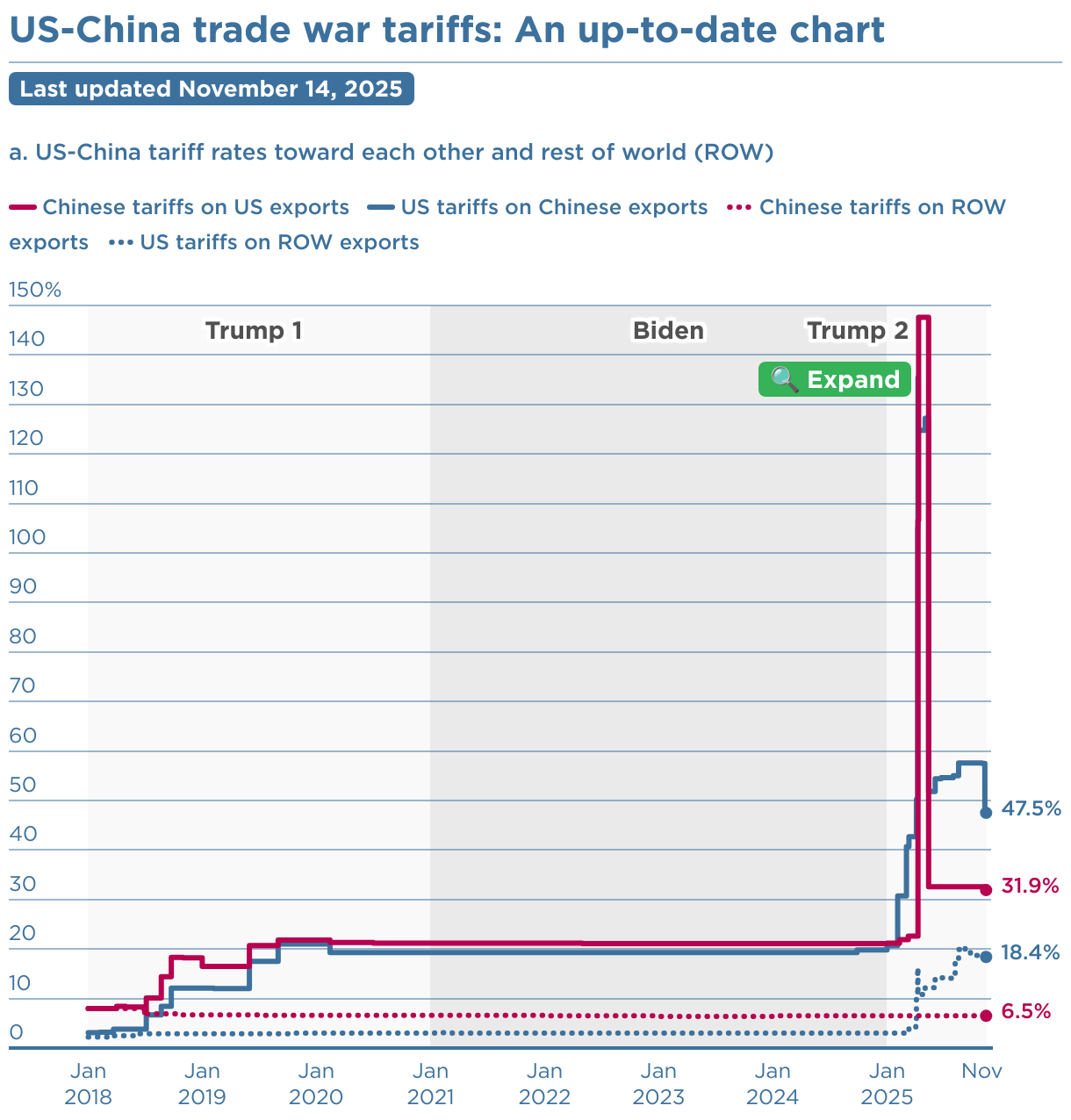
In other words, once Section 301 tariffs go up, they tend to stay up.
The new avatar of Section 301
When Trump brought Section 301 back, though, he wasn’t just bringing back a new tool. Now, the tool expanded.
In 2019, for instance, India — along with several other countries — was hit by investigations into its digital services taxes. This was the first time Section 301 was used to challenge tax policy as discriminatory — a big departure from its role in market access disputes. We eventually withdrew the levy. Others, too, were seeing investigations of a sort they no longer expected. In 2020, for instance, Vietnam suddenly found investigations into its currency manipulation.
It didn’t stop with Trump. If anything, the Biden administration widened the tool much further, pushing it well beyond its role in trade disputes.
In 2024, for instance, Biden’s US Trade Representative opened the first-ever Section 301 investigation based on labour and human rights — when it claimed that Nicaragua was systematically repressing its workers, jailing dissidents, and dismantling its judiciary. This, the US government declared, was “unreasonable”, and oddly enough, it responded with tariffs.
That widening only continued with Trump back in office. Last year, for instance, Brazil was hit with a probe that included everything from weak anti-corruption enforcement to illegal deforestation.
It isn’t that these powers weren’t always available to the American government. The US Congress had listed things like forced labour or the denial of worker rights as “unreasonable“ practices back in 1988. But most governments had held back from using that authority to its full breadth.
Until now, that is. We’ll soon see what that means in practice.
The new tariff foray
There’s a new sort of broadening, right now, as the United States prepares for a fresh round of tariffs.
Until recently, the United States had overwhelmingly used Section 301 to investigate a single country, for a single, well-documented issue. 2020 was the first break from that past, when it went after ten countries at once for taxing digital services.
The numbers now, in comparison, are wild.
The allegations
One, the United States is going after 16 different economies, examining whether their industrial production exceeds what their domestic economies need, in a way that could kill American production. India is one of those, and the investigation focuses on our PLI schemes, and our broader attempt to promote manufacturing.
Two, it’s going after sixty different countries, or 99% of American imports, supposedly because they do not do enough to stop importing products made using forced labour. Yes, not even because they’re using forced labour. Because they aren’t doing enough to stop importing products made with forced labour.

Here, too, India is one of the countries under scrutiny.
What lies ahead
What separates Section 301 from Trump’s liberation day tariffs is the process that surrounds it.
Last year’s tariffs were imposed by presidential decree. They came out of nowhere, with no documents justifying the measure. There was no investigation, no public comment period, no hearing, no published analysis, no administrative record.
Section 301 works differently. Every major step involves a public document or proceeding. When an investigation starts, it is noted in a Federal Register, specifying the target countries and the legal questions involved. There’s a public docket where anyone — companies, trade associations, unions, foreign governments, academics — can submit written comments. The government holds a public hearing, where witnesses testify and face questions from the investigating committee. Transcripts are published. Post-hearing rebuttals are invited. The US Trade Representative publishes an investigation report laying out the evidence.
If tariffs follow, they’re detailed, with granular product lists. This comes with the option of an exclusion process, where individual companies may petition for relief. And every four years, the tariffs face a statutory review — with another round of comments, analysis, and a comprehensive report on whether the tariffs are working.
The sheer amount of public scrutiny, perhaps, is why Trump didn’t start with this tool. The process also makes Section 301 slower.
In both investigations, India will get formal opportunities to respond. We will be able to make written submissions, and participate in public hearings and consultations. And if things seem to be going wrong, we’ll have the time to negotiate a settlement.
But if tariffs do come into force, this also makes them stickier.
Heading into political theatre?
The days to come will look nothing like the first round of tariffs.
Last year’s tariffs were, really, a one-man show. They routinely came out of the blue, making their first appearance on social media, and they would change on a whim.
This time around, they’ll be wrapped in process. There will be many submissions, and many hearings. There will be many points where affected parties will try to intervene, lobby, or negotiate. They might be less arbitrary, but they’ll be more visible. Expect these to create a constant barrage of headlines, as the political theatre around this new round of tariffs plays itself out.
That procedural weight is the point. The Supreme Court told the executive it can’t just decree tariffs into existence. But Section 301 allows something different: tariffs that come with receipts.
Tidbits
[1] Govt plans ₹1 lakh crore Economic Stabilisation Fund
The government plans to set up a ₹1 lakh crore Economic Stabilisation Fund to protect the economy from global shocks such as the West Asia conflict. Finance Minister Nirmala Sitharaman said the fund will give fiscal headroom to respond quickly to crises. About ₹57,000 crore will come from fresh approvals and the rest from savings.
Source: The Hindu BusinessLine
[2] upGrad to acquire Unacademy in all-stock deal
Edtech firm upGrad has signed a term sheet to acquire rival Unacademy in a 100% share-swap deal. Unacademy founder Gaurav Munjal will continue as CEO after the merger. The deal aims to consolidate India’s edtech sector and focus on building AI-driven learning products.
Source: ET Now
[3] IDBI Bank stake sale may be cancelled
The government’s plan to sell a majority stake in IDBI Bank may be scrapped after both bids came in below the reserve price. Fairfax Financial and Emirates NBD were the two bidders for the 60.7% stake. The sale process has been ongoing for nearly three years.
Source: ET BFSI
- This edition of the newsletter was written by Manie and Pranav.
What we’re reading
Our team at Markets is always reading, often much more than what might be considered healthy. So, we thought it would be nice to have an outlet to put out what we’re reading that isn’t part of our normal cycle of content.
So we’re kickstarting “What We’re Reading”, where every weekend, our team outlines the interesting things we’ve read in the past week. This will include articles and even books that really gave us food for thought.

We’re now on WhatsApp!
We’ve started a WhatsApp channel for The Daily Brief where we’ll share interesting soundbites from concalls, articles, and everything else we come across throughout the day. You’ll also get notified the moment a new video or article drops, so you can read or watch it right away. Here’s the link.
See you there!
Thank you for reading. Do share this with your friends and make them as smart as you are 😉
Why everything is so cluttered in Substack? Or it’s intentional because if I only want to read the daily brief now I have to go through every heading being published by Zerodha under various channels. Such clutter is irritating.
The central problem is (inadvertently, probably) captured in your sentence: "The Santacruz Electronics Export Processing Zone (SEEPZ) in Mumbai, for instance, massively transformed Indian jewellery and became an export success in its own right." An Electronics Export Promotion Zone succeeds not by exporting electronic products but "jewellery"! It succeeds because jewellery and diamond processing are some of the labour-intensive skills where Indian output is internationally competitive. Here too the output, especially jewellery, is not West-orientated but caters to similar tastes in the Middle East and those of the Indian diaspora. The reason why SEZs fail is that Indian manufacturing has low productivity and is not price-competitive (even with subsidies) in its ex-India landed price for a whole spectrum of goods. High labour and energy costs are part of the reason. So, for many industrial products, even if you give frictionless access via SEZs, you are still unable to compete globally. That's the question to address, and it won't be solved via SEZs: deep structural changes in workers' physical health and skills, less onerous labour laws, ease of exit of zombie firms, etc. On the other hand, institutional changes that encourage productive entrepreneurship rather than unproductive or destructive activities encouraged by high, less-risk, riskless returns from rent-seeking in various forms.