



Our goal with The Daily Brief is to simplify the biggest stories in the Indian markets and help you understand what they mean. We won’t just tell you what happened; we’ll tell you why and how too. We do this show in both formats: video and audio. This piece curates the stories that we talk about.
You can listen to the podcast on Spotify, Apple Podcasts, or wherever you get your podcasts and watch the videos on YouTube. You can also watch The Daily Brief in Hindi.
In today’s edition of The Daily Brief:
1. Sunday joys, Monday blues for the hotel business
Why are major Indian hotel chains suddenly acquiring boutique weekend villas and heritage resorts instead of building new ones? Driven by a surge in premium domestic travel, hospitality giants are aggressively snapping up existing properties to capture the lucrative Friday-to-Sunday getaway market. But they now face a massive operational hurdle: filling those expensive rooms during the Monday-to-Thursday slump just to protect their razor-thin profit margins.
2. The telecom industry has an unbundling problem
Why is it nearly impossible to save money by dropping data from your mobile recharge? Even as TRAI forces telecom operators to offer short-duration, voice-only plans for lower-income users, companies are actively resisting deep price cuts—fearing that genuinely affordable calling packs will cannibalize their lucrative data bundles and derail their long-term push to increase revenue per user.
Sunday joys, Monday blues for the hotel business
The other day, we noticed an interesting quote from Devendra Parulekar, who’s the CEO of SaffronStays, a company that runs around 500 privately owned villas as holiday rentals. He told BusinessLine that it plans to grow its South India portfolio from around 25 homes to 200 over the next two years, and its overall portfolio to about 900.
What caught our eye, though, was how he described the business:
“I am not a holiday product, I am a weekend getaway product.”
SaffronStays only wants homes within two to four hours of a big city, the kind of place you drive to on a Friday evening and leave on Sunday.
And it isn’t the only one chasing this. Many of India’s biggest hotel chains have caught the drift of this wave.
IHCL, the company behind Taj, completed its purchase of a 51% stake in the boutique leisure chain Brij for about ₹222 crore. Meanwhile, The Leela paid ₹560 crore for a 71-villa resort in Coorg, which is just a road trip from Bengaluru. Chalet, which owns the JW Marriott at Mumbai’s Sahar and the Westin in Powai, paid ₹171 crore for a resort in Udaipur. SAMHI, which owns city hotels known as Courtyard, Fairfield and Sheraton, bought 70% of RARE India, a network of heritage and boutique hotels.
The logic seems obvious. Short weekend getaways have only become more popular over time. If you’re in Bengaluru and you see a long weekend (like the upcoming Gandhi Jayanti), you’re probably thinking of a quick fun time at Pondicherry, Goa, Coorg or Ooty. It’s easier than planning trains or flights to a far-flung destination.
But that’s only half the puzzle. A leisure room does earn more on the nights where there’s a lot of demand, which is mostly weekends. But what about weekdays, when there’s a slump? What does that mean for the operational risks behind this trend? That’s what we’ll be diving into today.
Side note: If you want a refresher on how hotel companies make money, we covered it here.
Why leisure rooms sell for more
First, let’s start with the prices — specifically, why leisure rooms sell for much more than business ones.
In the case of Chalet, for instance, between April and June, its resorts charged an average of ₹18,250 a night, while its business hotels charged ₹12,657. At the luxury end, the gap is even wider. The Leela’s average room rate across FY26 was about ₹25,000, and SAMHI told analysts that over 70% of RARE’s hotels charge more than ₹25,000 a night.
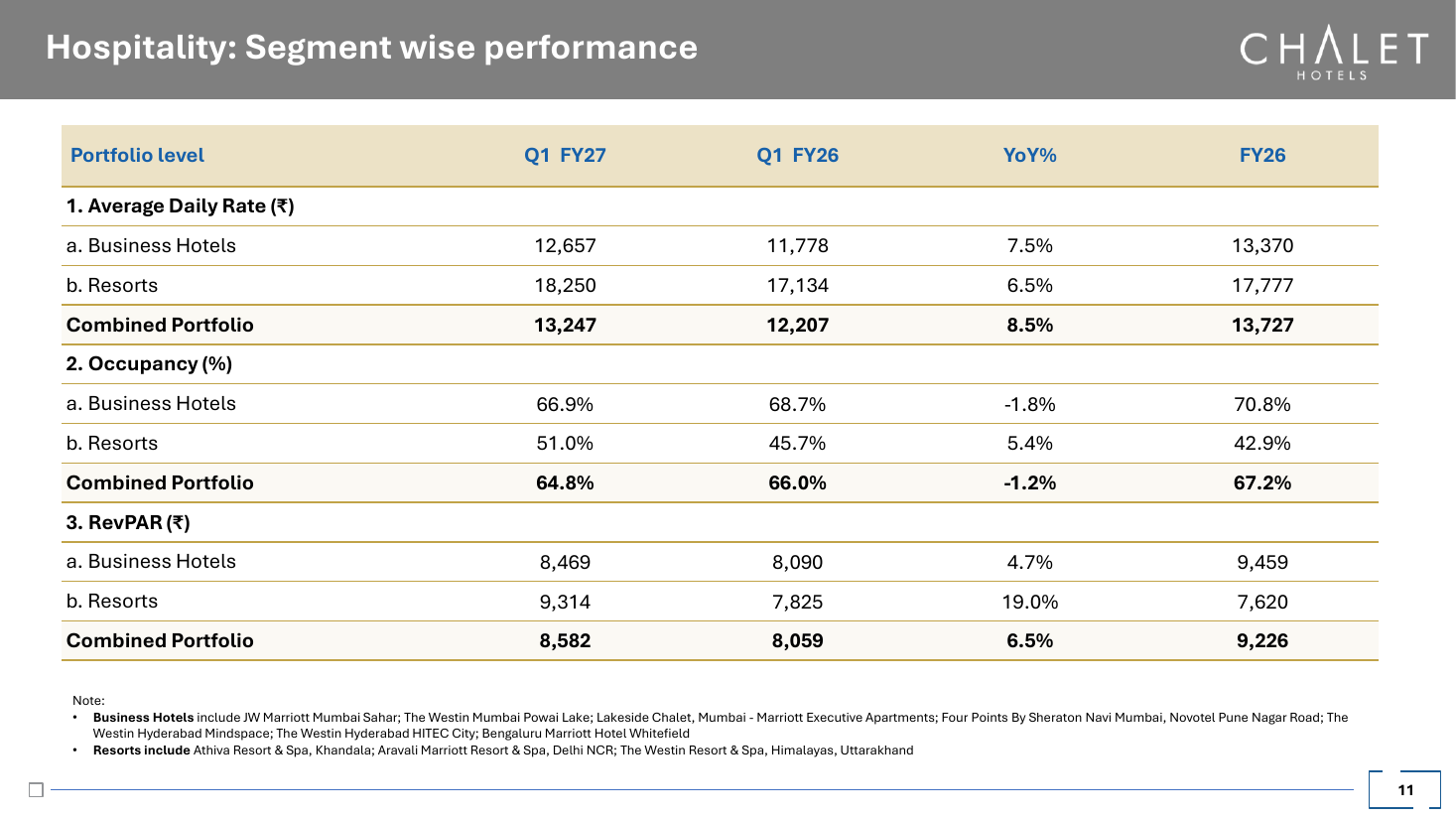
It’s not hard to guess why. A business traveller is usually on a company budget, often at a rate the employer has negotiated in advance. A family on holiday is paying for something they’ve looked forward to all year, and will happily pay extra for a pool or a whole villa to themselves.
At ₹18,000-₹25,000 for a night, we can comfortably conclude that only the top slice of Indian households is buying these nights. They’re the same people we discussed in our conversation with SOIC on premiumisation, trading up from hatchbacks to SUVs and from regular whisky to single malts.
The rise of premiumisation ft. @SOICfinance
The rest of India is in a different mood. In the RBI’s latest consumer confidence survey, urban households’ view of current conditions fell for a third straight round, to 90.7. Anything below 100 means more people think things are getting worse than better. The RBI said the decline was driven by weaker sentiment on discretionary spending.
In a sense, this broadly reflects the K-shaped nature of India’s consumption economy, where the upper-income bracket sees surging wealth and spends aggressively on premium goods and lifestyle upgrades, while the lower- and middle-income segments face stagnant incomes.
Why this year gave leisure a push
That has translated to a massive leisure travel bonanza among Indians.
Indians have been travelling abroad in record numbers. According to the Ministry of Tourism, we made 32.7 million trips abroad in 2025, and ~44% of those were for leisure.
But more than a third of all those trips went to just two countries: the UAE and Saudi Arabia. So when war broke out in West Asia this year, a big chunk of India’s usual holiday routes suddenly looked risky.
In March, outbound travel fell 27% from a year earlier. In May, quite famously, Prime Minister Modi personally addressed Indians to put off foreign travel in an attempt to save foreign exchange. You could see that in the air traffic numbers; this was best expressed Chalet’s July earnings call, where the CEO said:
“Air traffic stayed flat for April to June, indicating some recovery in sentiment post the peak disruption in March.”
That means some of the money that would have gone abroad was spent at home instead. On its July call, Indian Hotels said revenue per available room grew 27% in Rajasthan and 29% in Goa. Its big-city hotels grew in the low-to-mid teens.
Why they’re buying instead of building
We started the story with a slew of announcements that big hotel chains have been making to cash in on the weekend getaway boom. But if you notice, almost all of those announcements were not of new properties being built, but old ones being acquired. That’s weird, considering how lucrative the business seems now.
But the reason is as simple as the fact that building a new hotel is extremely slow. ICRA expects premium hotel supply in Goa to grow just 3% a year until FY28.
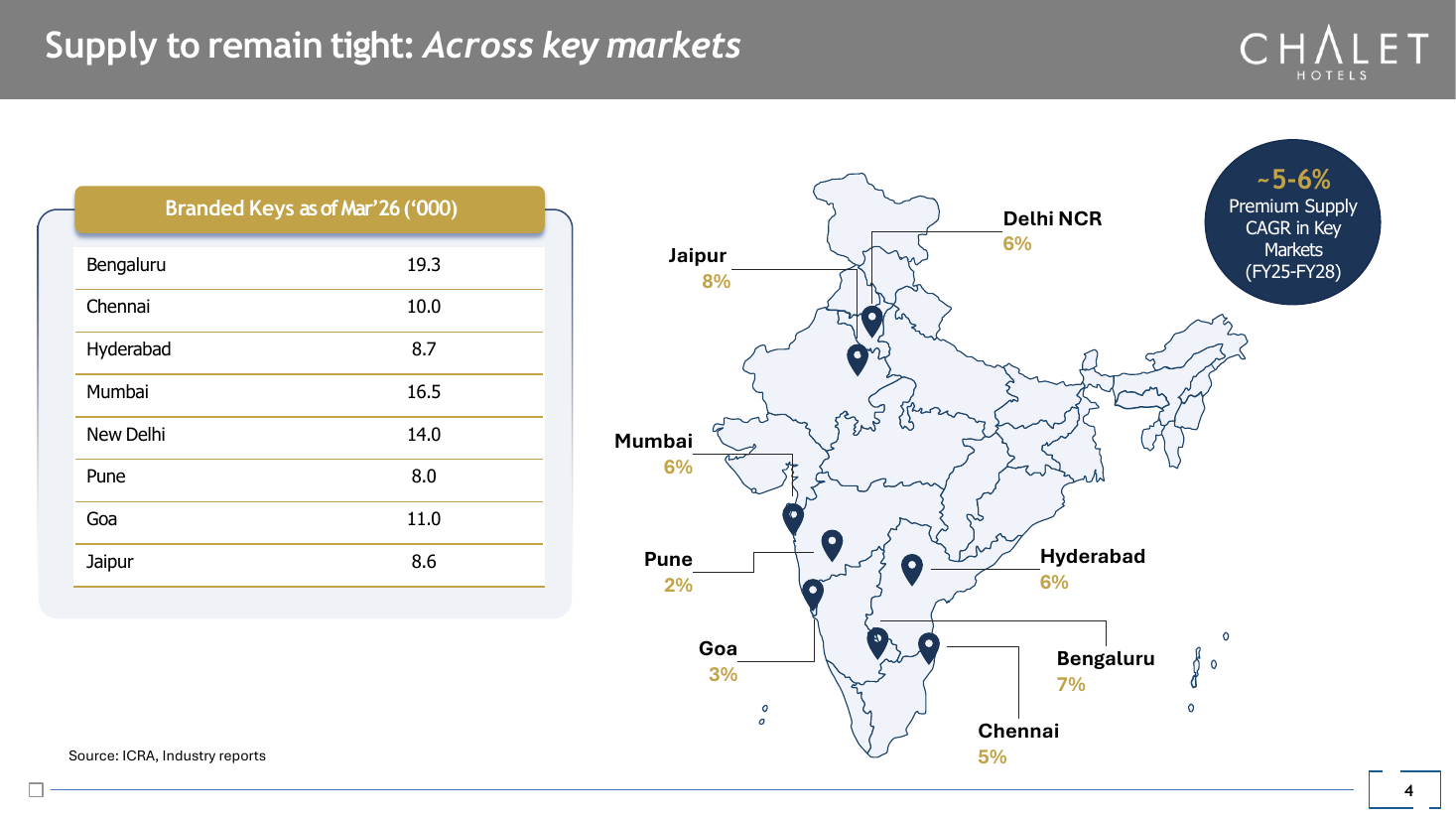
Chalet knows this first-hand. It has been trying to build a 205-room Athiva resort in South Goa, and money isn’t the biggest problem at hand. On the July call, its CEO said:
“South Goa is a hotel that has continued to elude us. It is notoriously hard to start pouring concrete in Goa. But what we have done in the interim is that we are ready from a design perspective, we are ready from a contracting perspective to hit the ground as soon as we get the approvals.”

So instead, almost everyone is going after rooms that already exist. These are holiday homes, old bungalows and small family-run hotels, most of which are empty most of the time.
This is where a business like SaffronStays enters. Plenty of well-off families own a holiday home in places like Karjat or Lonavala, but use it only a few weekends a year. The house still needs a caretaker and repairs all year round. Back in 2017, its founder described these owners as “money rich and time poor“.
SaffronStays takes the house off their hands. It lists the property online, staffs it, handles the guests and repairs, and pays the owner a share of the rent. As per Mint, across the industry, platforms keep between 20% and 50%, depending on how much of the running they do. The owner earns from a house that was costing them money, and the platform gets a villa without buying one.
The big hotel companies have their own versions of this. Taj runs amã Stays & Trails, which manages bungalows owned by others, and had 196 of them operating as of the June quarter. RARE is lighter still; it doesn’t run its hotels at all, but just markets them for their owners. SAMHI valued the entire RARE business at ₹49 crore and plans to sell its rooms through Marriott. The Leela and Chalet went the other way, buying whole resorts outright.
Monday left me broken
There’s certainly a lot riding on the weekend getaway business. But, funnily enough, this business has a Monday blues problem.
See, the hotel business is primarily judged by a metric called revenue per available room, or RevPAR. It’s the average room rate multiplied by the share of rooms that are actually filled. Now, say a room sells for ₹10,000 a night but is full only half the time. On average, it earns ₹5,000 a night. Another room sells for ₹7,000 a night but is full 80% of the time, so it earns ₹5,600. The cheaper room makes more money only because it sits empty less often.
And the cheaper room makes more money for the same distinction we outlined above. A city hotel fills up from Monday to Thursday with people travelling for work. A resort fills up on Friday and Saturday nights, and then goes quiet. If it were full only on those two nights, its occupancy would be under 30%, however much it charged.
The real challenge, then, is finding guests for Monday to Thursday.
One option is weddings and corporate events, which book big blocks of rooms, often midweek. That’s why Chalet has launched a wedding offering called Vivaah by Athiva, and is pitching its resorts to companies for offsites.
Another is longer stays. Since COVID, more people have been working remotely from the hills or Goa for weeks at a time. Lohono, a villa operator, told Business Standard that 15–20% of its revenue now comes from long stays.
The third is density, which matters most for villas. Twenty villas in the same area can share cooks, supervisors and repair crews, so an empty weekday costs far less. That’s why about 300 of SaffronStays’ 500 villas are clustered near Mumbai and Pune. Taj is doing the same with amã. When it signed a group of bungalows in Rishikesh and Goa, it said clustering them “allows us to build scale and operational synergies“.
The bottom line
For villa operators, getting this right matters a great deal, because there’s very little margin to fall back on. SaffronStays expects about ₹150 crore of revenue this year at a 3% EBITDA margin. That means out of every ₹100 a guest pays, only about ₹3 is left after running the business. StayVista made ₹3.6 crore of profit on ₹181 crore of revenue in FY25, according to Entrackr’s reading of its filings.
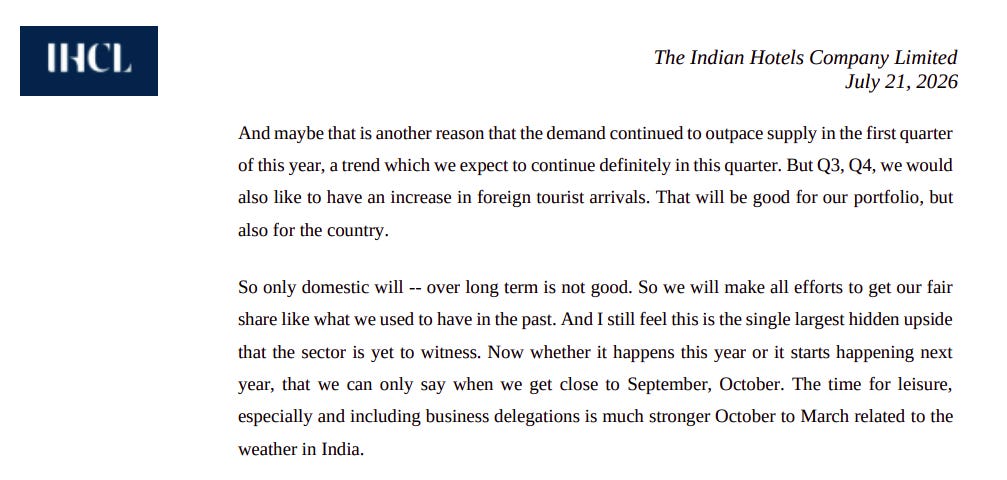
The big hotel companies, meanwhile, are moving in carefully. Even after a record quarter, Indian Hotels’ CEO Puneet Chhatwal said: “So only domestic will -- over long term is not good“.
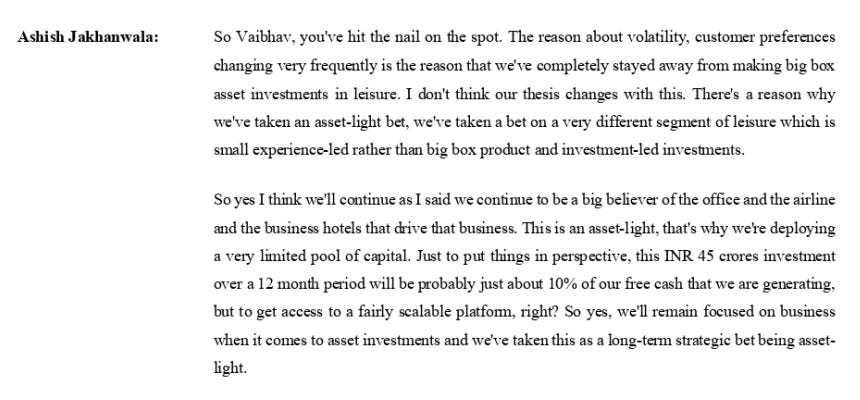
SAMHI said it has “completely stayed away from making big box asset investments in leisure“, even as it bought RARE.
So what everyone is really buying is the weekends of a fairly small, well-off group of Indians, at a time when that group had fewer reasons to fly to Dubai. In all fairness, those reasons don’t have much reason to expand as of late. But even without that, the short leisure travel business has a long, bumpy road ahead of it.
The telecom industry has an unbundling problem
Today’s telecom plans are primarily bundles that offer voice, SMS and data altogether. So if you hardly use mobile internet, removing data from your recharge sounds like an obvious way to save money.
But that’s much easier said than done. When telecom companies were first forced to sell plans without data, those schemes cost almost as much as the bundles they replaced.
This week, the Telecom Regulatory Authority of India (TRAI) stepped in again on this matter. Its new rules require operators to offer more voice-and-SMS-only recharges (including shorter packs) at lower prices.
Why TRAI had to return tells us something deeper about what we actually pay for when we recharge.
A rule followed in letter, not in spirit
Let’s go back to the first time TRAI tried to enforce this rule.
In December 2024, TRAI required every operator to offer at least one voucher with only voice and SMS, so people who do not need mobile internet would not have to buy data just to make calls. Telecom operators complied in theory, but a look at their non-data offerings might question their intent.
For instance, Jio launched voice-only plans at around ₹450 for 84 days and around ₹1,900 for a year, while withdrawing its ₹479 and ₹1,899 plans that had included some data. Despite the removal of data, the difference in prices was somehow very low.
Meanwhile, Airtel’s 84-day voice-only option cost ₹499. Just before that, it had sold an 84-day pack with calling plus 6GB of data for ₹509. Giving up data saved just ₹10.
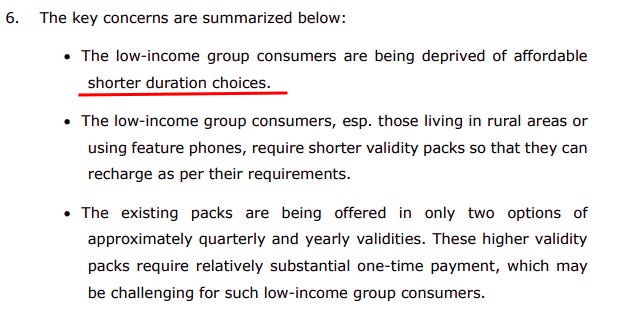
So, not only did the value-for-money proposition for voice-only packs worsen for consumers, but also, there were only two duration types of voice-only plans: three months, or a full-year plan. TRAI’s concern was that there were no shorter duration packs that lower-income consumers could make use of.
In fact, when Jio and Airtel both cut prices for their non-data plans further in response to the public outcry over this issue, it didn’t solve the problem completely since the durations remained unchanged.
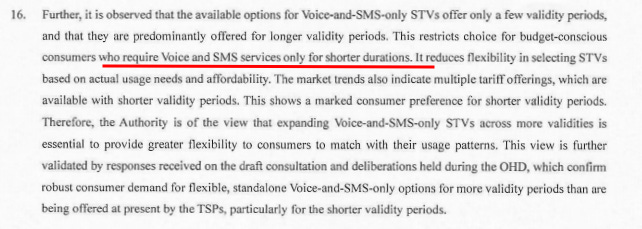
So, after receiving repeated requests for shorter options, TRAI reopened the rules in April.
One network, no clean price for data
So, how hard could removing data be? Is it really greed driving this?
It turns out that part of the answer lies in the fact that telcos spent years turning voice, SMS and data into one monthly product. That is as much a question of technology as it is of business.
You see, Jio was foundationally built as an all-4G, all-IP network, where even ordinary calls travel as packets. That does not make voice and data economically identical, but it means they increasingly rely on the same underlying infrastructure. A phone call does not cost the same as a gigabyte of video, but both run across the same spectrum, towers, backhaul and fibre. Most of those fixed costs do not disappear when an individual customer stops using data, but continues to use calls.
The revenue telecom companies earn for every gigabyte of wireless data fell to ₹7.51 by March 2026 from ₹9.11 a year earlier. But this figure can be misleading. It is what operators earn per gigabyte, but not what one additional gigabyte costs them to carry. You don’t get 2 GB of data or a certain amount of talktime, but you get allocated some capacity on a tower that handles all of them.
This also explains why prepaid plans are structured the way they are. Long ago, a prepaid SIM worked like a wallet. You loaded talktime, calls ate into it, and a light user could spend very little.
But operators gradually changed that model. You might be familiar with the terms of today’s prepaid plans: a limit of 2 GB data per day, 3 months, unlimited voice and calls. Unused data does not get carried over to the next month. These are take-or-pay subscription plans, where you pay for a fixed capacity no matter how much you use it.
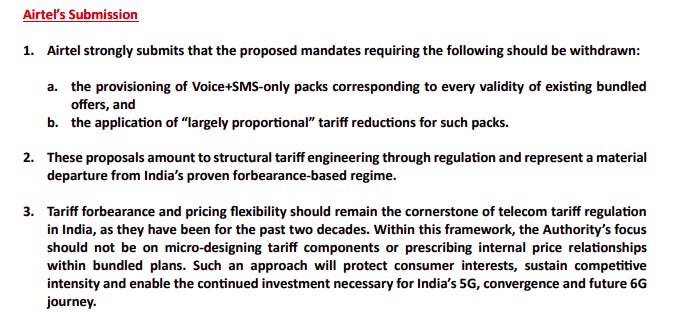
Accordingly, TRAI has had a hard time figuring out how much cheaper a voice-only pack should be. TRAI therefore stopped short of prescribing one universal formula for stripping data out of every bundle. There is no obvious number to subtract.
Where’s the money?
There was another problem that we’ve also covered before: telcos didn’t earn enough per Indian user despite all these changes in the business model.
In its FY19 annual report, Airtel explained that it introduced a minimum recharge commitment of ₹23 a month for customers who had previously enjoyed incoming services without regularly recharging. The aim was to improve average revenue per user (ARPU), the metric telcos live and die by.
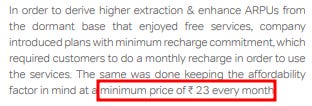
Over the next few years, that floor kept rising. It went to ₹45 in December 2019, and in November 2021, Airtel raised its entry voice plan from ₹79 to ₹99. It stated that mobile ARPU needed to reach ₹200 and ultimately ₹300 to earn an adequate return.
A year later, Airtel began replacing that per-second ₹99 plan, first in select circles, with a ₹155 pack offering unlimited calls, 1GB of data and 300 SMS . Following the July 2024 tariff hikes, entry plans reached ₹189 at Jio and ₹199 at Airtel. This saga was covered extensively by The Ken’s episode on Airtel.
Low ARPU is an industry-wide problem that every telco is trying to solve. And finding out prices for voice-only plans doesn’t help there.
The cannibalization risk
Imagine two subscribers. One uses a basic feature phone and has no interest in data. The other carries a smartphone, spends most of their day on Wi-Fi, and buys a regular bundle simply to keep the SIM active.
Now introduce a hypothetical ₹150 monthly voice-only pack.
The feature-phone user switches, which achieves TRAI’s objective. But the Wi-Fi smartphone user might switch too, cutting monthly spend by fifty rupees while still using the network for calls and incoming alerts.
This isn’t an imaginary risk, either. During consultation proceedings with TRAI, one stakeholder warned of precisely this: cheaper voice-only plans could pull customers off data bundles, cutting operator revenue without producing any matching drop in network costs. That gives carriers an incentive to keep the cheapest tier relatively unappealing.
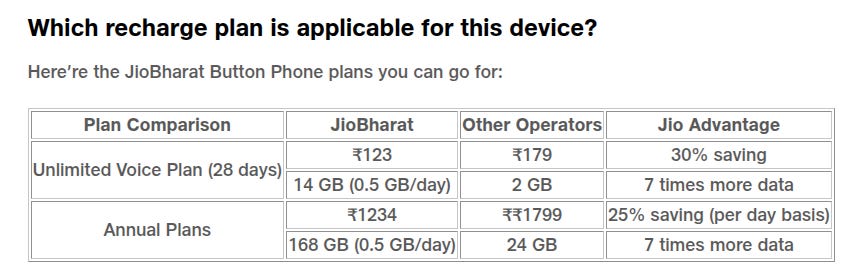
It also cuts against the commercial direction of the whole industry. Airtel’s smartphone data users now make up 80% of its customer base, helping drive mobile ARPU to ₹264. Jio built an all-4G network around data from day one. Vi still has about a third of its 193 million subscribers off 4G and 5G, and says its ARPU growth (which is lowest of the three) is being driven by customer upgrades. A cheap voice-only tier gives those users a reason to stay put.
No real option?
Another deep disagreement between the industry and the regulator is about consumer demand.
In its submission, Reliance Jio argued that existing tariffs already reflect consumer preferences. Jio noted that the proposed mandate would multiply its required voice-only offerings from one or two packs to between eight and twelve distinct vouchers. Jio also stated it had received thousands of queries about its voice-only packs from elderly subscribers who were confused to discover they lacked enough data even to complete basic UPI transactions.
TRAI remained unconvinced. The regulator observed that modest uptake reflects a lack of meaningful choice rather than an absence of genuine demand, noting that voice-only plans were rarely displayed prominently on recharge portals. TRAI also pointed out that feature-phone users can complete certain UPI transactions through USSD without mobile internet.
Telcos look at low take-up and see little consumer interest. TRAI looks at the same take-up and says the product itself was badly designed. If the only cheap voice-only option requires three months of cash upfront, weak sales do not necessarily mean weak demand. The duration of the initial plans was central to TRAI’s position.
In a way, this reflects the logic of India’s sachet economy. Spending two rupees today on a shampoo sachet is manageable for a low-income household in a way that committing hundreds of rupees for a whole bottle upfront structurally can’t be.
Conclusion
The new rules try to systematically resolve that availability barrier.
For every bundled plan of 30 days or less, operators must offer an equivalent voice-and-SMS-only voucher. They must also provide a plan that renews on the same calendar date each month, while preserving at least one longer-term voice-only option.
It’s worth noting that if duration was easy to tackle, pricing itself wasn’t. In April, TRAI proposed that voice-only plans should get a price cut roughly in line with the data removed. After telcos pushed back, the final rule simply says the price should be reduced by an “appropriate“ amount. TRAI has left operators some flexibility in deciding what that discount should be.
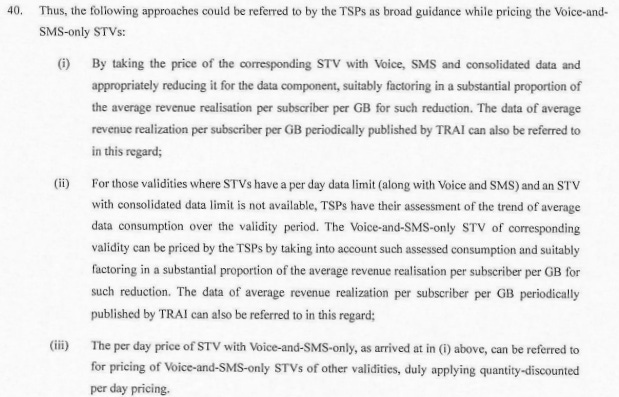
If the voice-only plan is barely cheaper, the choice exists mostly on paper. But if TRAI pushes the price too low, it starts deciding how much of a bundled recharge belongs to voice and how much belongs to data.
As the industry gears towards increasing its ARPU, unbundling this tussle is not going to get any easier.
Tidbits
[1] Centre signs MoUs with 21 states and UTs for next phase of UDAN
The central government has signed Memoranda of Understanding with 21 states and Union Territories to implement the next phase of the UDAN regional connectivity scheme. The agreements are aimed at coordinating aviation infrastructure development and expanding regional air connectivity to underserved and unserved locations.
Source: The Hindu BusinessLine
[2] Spinny confidentially files for up to ₹3,000-crore IPO
Used-car marketplace Spinny has confidentially filed draft IPO papers with SEBI and is targeting an issue size of roughly ₹2,500–3,000 crore. The offering is expected to combine a fresh issue of shares with an offer for sale by existing investors to support platform expansion and facilitate early investor exits.
Source: Reuters
[3] Snapdeal parent targets ₹1,741-crore valuation in upcoming IPO
AceVector Ltd, the parent company of Snapdeal, is seeking a valuation of about ₹1,741 crore as it launches a ₹420-crore initial public offering. The issue includes a ₹287-crore fresh issue alongside an offer for sale, with Snapdeal increasingly focused on value fashion and younger, price-conscious shoppers.
Source: Livemint
[4] Government mandates BIS quality norms for smartphone screen protectors
The government has brought smartphone screen protectors under mandatory BIS certification, with compliance required from April 1, 2027. The move is aimed at curbing sub-standard products and supporting domestic manufacturing across the consumer electronics ecosystem.
Source: The Economic Times
[5] Alternative-fuel passenger vehicles overtake petrol share in August
Passenger vehicles powered by alternative fuels (including electric, hybrid, and CNG) accounted for 41.95% of retail sales in August, surpassing the share of petrol and ethanol-blended vehicles for the first time. Data from the Federation of Automobile Dealers Associations also showed electric two-wheeler penetration crossing the 10% mark in a non-festive month.
Source: Business Standard
Beyond Today’s Brief
There’s always more happening at Markets by Zerodha.
The Chatter: How is Maruti Suzuki managing cost pressures and shifting demand in its push towards electric vehicles? And what key priorities is veteran banker Uday Kotak flagging for India's economy—from fiscal discipline to manufacturing focus?
Aftermarket Report: How did easing global tensions help Nifty stage a recovery to close higher near the 23,450 mark? And how are sectors performing as broader market sentiment stabilizes?
Subtext: How do developing nations navigate the impossible balance between industrialisation and decarbonisation? In our conversation with Avantika Goswami and Trishant Dev from CSE, we explore the power dynamics behind Western climate mandates and what a truly just green transition looks like. Watch the full episode here.
Join us on WhatsApp, where we share interesting soundbites from concalls, articles, and everything else we come across throughout the day. You’ll also get notified the moment a new video or article drops so that you can read or watch it right away.
Thank you for reading. Do share this with your friends and make them as smart as you are 😉