


Hi everyone, I’m Kulsum, and welcome to the seventh edition of Weekly Tidbits. Mridula has been recovering from fever this week, so I’m filling in for her.
We spend a lot of time reading interesting stories that never make it into a full Daily Brief piece. So, once a week, we pick some of the best ones and add a little context.
We sort them into GEIC: Global, Economy, Industry and Company.
With that said, let’s get started!
If you prefer watching the video, here’s the link:
G — Global
[1] Asia’s factories get a boost from AI demand
Demand for chips and AI-related equipment helped manufacturing expand in Japan, South Korea and Taiwan in September. South Korea’s manufacturing Purchasing Managers’ Index rose to 53.9, while Taiwan’s reached 56.7. A reading above 50 signals expansion.
AI spending is showing up in factory orders across these economies. But the improvement was uneven: Malaysia and the Philippines recorded contractions, while higher energy costs continued to put pressure on manufacturers.
[2] Russia extends its diesel export ban
Russia has extended its ban on diesel exports by fuel producers until the end of October. It has repeatedly restricted exports to contain domestic fuel prices and address shortages following Ukrainian attacks on its refineries.
Russia is usually the world’s second-largest diesel exporter, so the restrictions matter beyond its borders. Keeping more fuel at home leaves less available for international buyers when supplies are already under pressure. Some shipments under government-to-government agreements have been allowed.
[3] Some Indian speciality drugs escape US tariffs
The US has exempted certain speciality medicines and their ingredients from pharmaceutical tariffs when imported from India and other eligible markets. The exemption covers categories such as rare-disease medicines, infertility treatments, and cell and gene therapies.
This is not a blanket exemption for every Indian drug. The 100% tariff applies to specified patented pharmaceuticals, while generic medicines and their ingredients are separately outside these pharmaceutical tariffs. For exporters, the treatment depends on the products they sell.
E — Economy
[4] India’s registered factory workforce crosses two crore
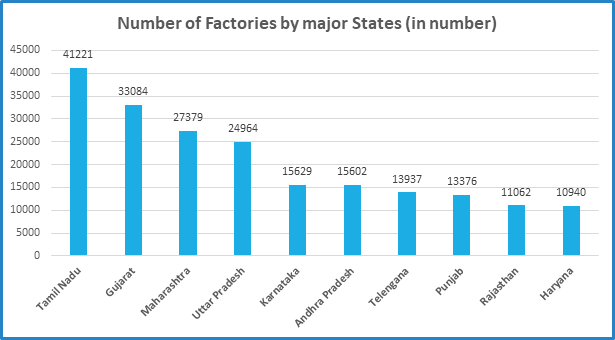
Employment in India’s registered manufacturing sector rose about 7.2% in FY25, adding roughly 14.1 lakh people and taking the total to around 2.1 crore. The figures come from the Annual Survey of Industries, released on September 30.
The survey covers the registered factory sector, so this is not a count of everyone working in Indian manufacturing. Small, unregistered businesses are outside its coverage. Within the surveyed sector, however, employment expanded alongside production, with industrial output rising about 7.8% during the year.
[5] Exporters get three more months of tax refunds
The government has extended the Remission of Duties and Taxes on Exported Products, or RoDTEP, scheme until December 31, 2026. It was due to expire on September 30. The scheme refunds certain taxes and levies that exporters pay but cannot recover through other mechanisms.
These include electricity duties and taxes on fuel used to transport goods. Such costs get built into an exported product’s price, making it more expensive for overseas buyers. Refunding them helps Indian exporters compete, while the extension gives businesses more certainty about support for their upcoming shipments.
[6] India’s deep-tech funding push needs private money too
India could mobilise around $25 billion for deep-tech investment, according to a Mint report citing industry body IVCA. The estimate combines roughly $11 billion in government support with matching investment from private fund managers and additional capital. It is a potential combined funding pool, rather than a single newly announced government fund.
Deep-tech businesses work in areas such as semiconductors, space technology and advanced manufacturing. Turning their research into products can take years and substantial investment. The challenge is finding enough investors willing to finance that wait, particularly when a company needs to move from an early prototype to commercial production.
I — Industry
[7] Cheaper pump diesel attracts industrial buyers
Private fuel retailers Jio-bp and Nayara Energy have restricted diesel purchases at their outlets as industrial buyers turn to petrol pumps for cheaper fuel. According to Business Standard, Jio-bp outlets have capped purchases at 50 litres per customer per day, while limits at Nayara outlets range from 70 to 200 litres per transaction.
The reason is a gap between two prices for the same fuel. Retail prices have stayed unchanged since May, while prices charged to bulk buyers have moved more closely with international rates. That gives industrial customers a reason to buy at petrol pumps, putting pressure on supplies meant for regular retail customers.
[8] Airlines resist a forced shift to Navi Mumbai
Global airline body IATA has opposed a proposal to shift around one-third of each airline’s international passenger and cargo operations from Mumbai airport to Navi Mumbai. It says airlines were not adequately consulted and has raised questions about maintenance, catering, ground handling and other facilities.
Mumbai airport’s operator links the transition to Terminal 1’s redevelopment, scheduled to begin in January 2027. But moving flights requires airlines to reorganise schedules, aircraft, staff and supporting services months ahead. IATA supports the new airport, but wants airlines involved in deciding how and when their operations move.
[9] Government funding will support early-stage drug discovery
The Department of Pharmaceuticals is opening a new funding track for startups and smaller businesses developing new drugs. Under the ₹5,000 crore PRIP scheme, eligible companies or projects can receive assistance of up to ₹50 crore, provided institutional investors contribute at least 25% of the project cost.
The support targets early research, when a possible treatment is still far from clinical testing or commercial sales. By sharing some of that risk, the government hopes to attract private investment earlier and help more Indian discoveries progress towards clinical development.
C — Company
[10] Tata Trusts proposes a merger to keep Tata Sons unlisted
Tata Trusts has proposed merging Tata Electronics Systems Solutions and Tata Consulting Engineers into Tata Sons. The idea is to give the group’s holding company a larger operating business, with its own revenue, and change the financial ratios that determine its regulatory classification.
The Trusts argue that the combined business would no longer qualify as a non-banking financial company or a core investment company. That could provide a route to keeping Tata Sons privately held. The proposal still needs the necessary approvals, including from the RBI, before it can proceed.
[11] An Indian drugmaker borrows from private funds for a Japanese purchase
Gujarat Themis Biosyn has secured about $58 million from Orion Capital Asia to help finance its acquisition of MicroBiopharm Japan, according to Bloomberg. It also raised ₹585 crore through rupee debt securities to support the acquisition and other corporate needs.
Private credit involves borrowing directly from investment funds. Such lenders can offer quicker or more tailored financing for acquisitions, but the terms matter. Gujarat Themis’ rupee borrowing included five-year debentures carrying a 10% coupon and shorter 18-month notes paying 17.75%, showing how different parts of an acquisition can come with different financing costs.
[12] Radico takes Indian whisky to UK airport shelves
Radico Khaitan’s Rampur and Sangam whiskies are now available at duty-free shops in Heathrow, Gatwick, Manchester and Birmingham airports. The company already has a presence across more than 65 duty-free locations globally and plans to expand to over 100.
Airport shops give Radico a way to introduce its brands to international travellers. The expansion also fits its growing focus on higher-priced spirits: its Prestige & Above portfolio contributed 70.3% of its Indian-made foreign liquor sales value in FY26. The UK listings give these brands another route to build recognition overseas.
See you next edition :)