


Hi everyone, I’m Kulsum, and welcome to the fifth edition of Weekly Tidbits. Mridula is away collecting her degree at her convocation, so I’m filling in for her this week.
We spend a lot of time reading interesting stories that never make it into a full Daily Brief piece. So, once a week, we pick some of the best ones and add a little context.
We sort them into GEIC: Global, Economy, Industry and Company.
You asked for a global section last week, so we’ve added one. Let us know if it works or makes the edition too long.
With that said, let’s get started!
If you prefer watching the video, here’s the link:
G — Global
[1] US regulator eases rules for trading tokenised stocks
The US securities regulator has introduced a five-year exemption that will make it easier for platforms to trade “tokenised stocks”. These are digital tokens recorded on a blockchain, with each token representing ownership in a real company. To qualify, they must give investors the same basic rights as ordinary shares, including voting rights and dividends. Products that merely copy a stock’s price will not count.
Supporters say tokenisation could allow shares to trade around the clock, settle faster and be divided into smaller pieces. It could also bring crypto platforms such as Coinbase and Robinhood into closer competition with traditional exchanges and brokers.
But the experiment still has to answer basic questions: who holds the underlying share, what happens if a platform fails and whether investors can move their assets elsewhere.
[2] EU’s first full-scale carbon storage project begins operations
The European Union’s first full-scale carbon-storage project has started operating. Under the Greensand project, carbon dioxide from Danish biomethane plants will be captured, turned into liquid and transported to the Port of Esbjerg. Ships will then carry it to a depleted oilfield in the North Sea and inject it around 1,800 metres below the seabed.
The project can initially store up to 400,000 tonnes of carbon dioxide a year, with plans to expand this to between 4 million and 8 million tonnes.
Carbon storage is meant for industries such as cement, steel and chemicals, where cutting emissions is especially difficult. The technology remains expensive and controversial, but Greensand will test whether it can move beyond pilot projects and work on an industrial scale.
[3] Gulf disruptions are pushing up South Asia’s energy costs
Disruptions to oil and gas shipments through the Strait of Hormuz and the Red Sea have pushed Asian spot LNG prices towards $30 per million BTU, from around $10 before the war. Bangladesh generates more than 40% of its electricity using imported LNG, so the price shock has led to power cuts and gas shortages that are forcing factories to slow or stop production.
A survey of Bangladeshi knitwear factories found that 55% had seen buyers reduce or cancel orders because of unreliable power and gas, while 78% had partially stopped production. Pakistan is facing the same price shock and has introduced fuel subsidies for motorcycles, rickshaws and small cars. A disruption thousands of kilometres away is now reaching factory floors and transport costs across countries that depend heavily on imported energy.
E - Economy
[4] India’s retail and wholesale inflation rose in August
India’s retail inflation rose to 4.82% in August, from 4.45% in July. Food inflation climbed to 5.95%, while rural inflation remained higher than urban inflation. Wholesale inflation, which measures prices before goods reach consumers, also rose to 9.92%, largely because fuel, food and manufactured products became more expensive.
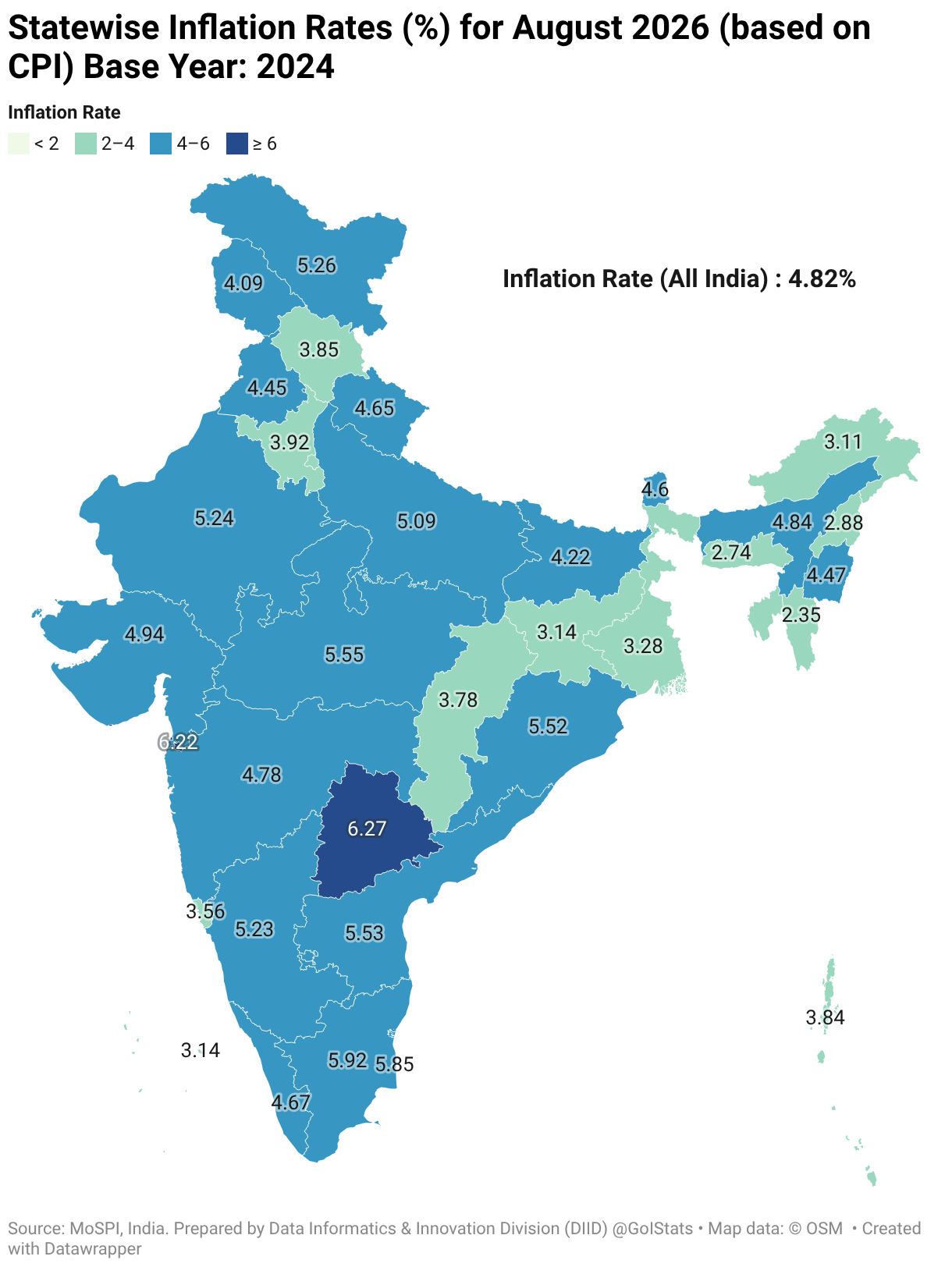
Retail inflation remains within the RBI’s tolerance range of 2–6%, so this is not yet an inflation crisis. But the direction matters. Higher food prices squeeze household budgets, while rising fuel and wholesale prices can eventually increase costs for businesses and consumers.
If inflation keeps climbing, the RBI may have to hold interest rates higher for longer or consider raising them, making loans more expensive.
[5] RBI absorbs ₹2.23 lakh crore of surplus bank liquidity
The RBI has absorbed ₹2.23 lakh crore from the banking system through a three-day variable rate reverse repo auction. Banks offered to park ₹2.226 lakh crore with the RBI against a notified amount of ₹2.25 lakh crore. The central bank accepted all the bids at a weighted average rate of 5.24%.
In plain English, banks currently have more cash than they need for day-to-day lending and payments. The RBI is borrowing some of that surplus for three days and paying banks interest on it. This temporarily removes money from circulation.
That matters because too much surplus cash can push short-term market interest rates below the RBI’s policy rate, making its monetary policy less effective. The auction lets the RBI drain the excess quickly without locking banks’ money away for long.
[6] India’s electronics production still relies on Chinese components
India’s trade deficit with China in electrical and electronic goods reached $43.1 billion in FY26, up from around $20 billion in FY19. China supplied at least 80% of India’s imports across 636 product categories, compared with 461 categories in FY19. These include integrated circuits, semiconductors, batteries, smartphone parts and display modules.
This exposes a gap in India’s manufacturing story. The country is assembling and exporting more phones and electronic products, but still imports many of the parts inside them. Domestic production can therefore grow without reducing dependence on China.
Replacing those imports will be difficult because China has spent decades building a dense supplier network. India needs more than factories that assemble finished products; it also needs companies that make the chips, batteries, displays and other components they use.
I — Industry
[7] Climate risks are raising insurance costs for Himalayan infrastructure
Roads, bridges and hydropower projects in the Himalayas have always been difficult to build. The terrain is steep, the weather can change quickly and materials often travel through narrow mountain routes.
Repeated floods, landslides and glacial-lake disasters are now making these projects costlier to insure. After the Sikkim glacial-lake flood, insurance rates for some roads and bridges reportedly rose by around 21%.
Insurance is a basic cost of building large infrastructure because banks and investors are unlikely to fund an unprotected project. As insurers treat the Himalayas as riskier, developers may have to pay higher premiums, accept more exclusions or bear a larger share of potential losses. Those costs eventually become part of the project’s total bill. Climate change is making infrastructure more expensive to finance even before anything is damaged.
[8] Counterfeit medicines are becoming harder to identify
Counterfeit medicines were once easier to spot through poor printing, spelling mistakes or unusual packaging. That is changing. Counterfeiters are getting better at copying boxes, batch numbers, holograms and QR codes. A packet can now look genuine even when the medicine inside contains the wrong ingredients, too little of the active ingredient or none at all.
India’s pharmaceutical supply chain is enormous. A medicine can pass through a distributor, stockist, wholesaler and pharmacy before reaching the patient, creating several points where a fake can enter. Factory inspections alone cannot cover the entire chain. Regulators also need ways to track medicines and verify that each packet came from an authorised source. As packaging becomes easier to copy, its appearance becomes weaker proof that the medicine is genuine.
[9] Organic farming is greener on some measures, not all
Organic farming is often seen as the obvious environmental choice because it avoids most synthetic fertilisers and pesticides. But an Our World in Data analysis shows that the comparison is more complicated. Organic farms generally cause less pesticide-related damage and support more insects, birds and plant life on the land being farmed.
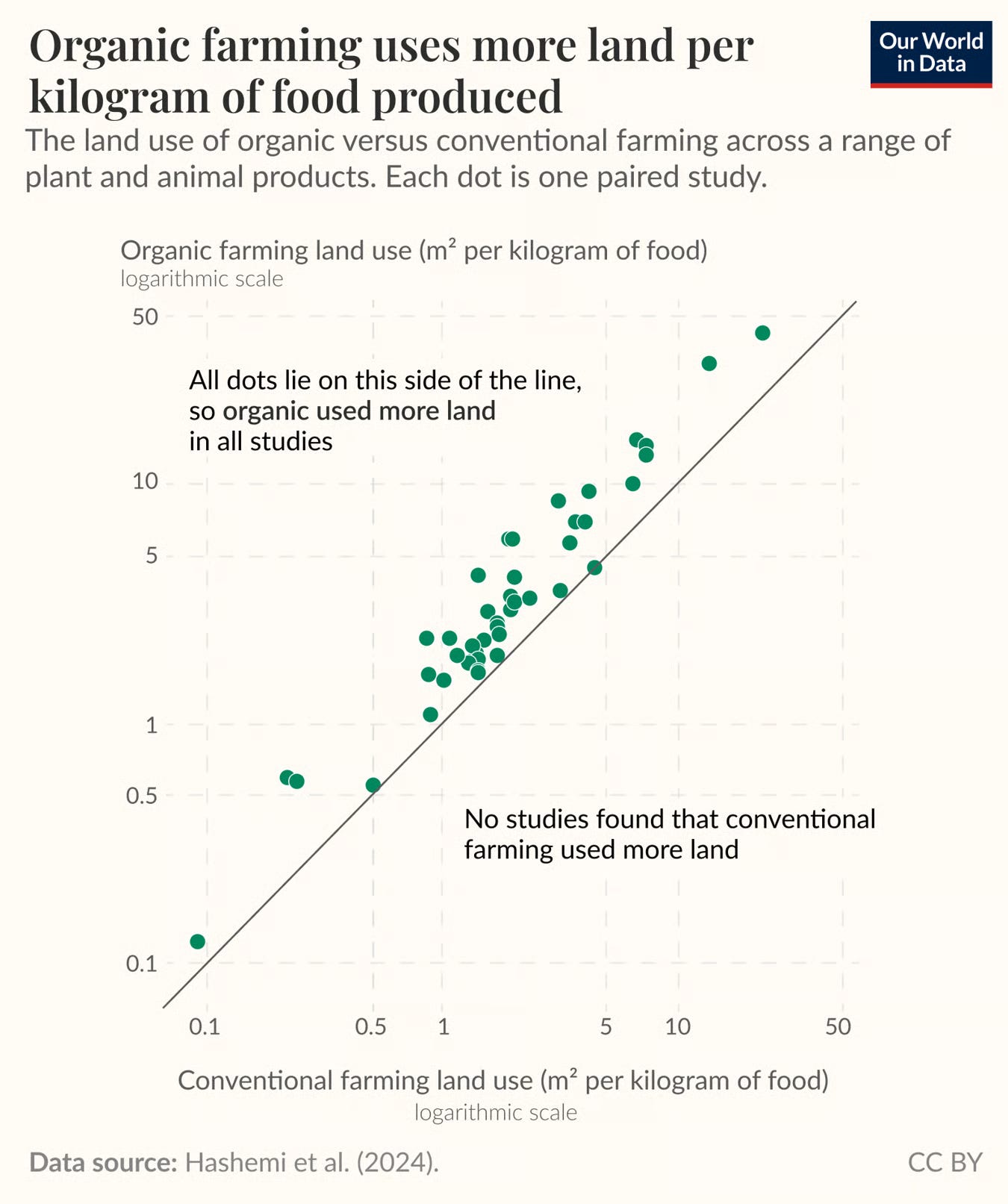
The problem is yield. Organic farms usually produce less food from the same area, so making one kilogram of food can require substantially more land. When researchers measure emissions and water pollution per kilogram rather than per hectare, the environmental advantage often shrinks. Organic farming performs better on some measures, while conventional farming uses less land. What people eat, how much food they waste and how efficiently it is produced may matter more than the organic label alone.
C – Company
[10] Tata, Adani and Reliance now operate 19,000 EV charging points
Tata Power, Adani and Reliance Industries operated 19,000 EV charging points at the end of FY26. The network has more than tripled from 5,438 points in FY23. It also grew 21% over FY25 and 67% over FY24. Tata Power leads with 7,700 points, followed by Reliance with 6,200 and Adani with 5,100.
These chargers serve cars, buses and trucks across public, semi-public and private locations such as malls, offices, hotels and hospitals. A wider network can make EV ownership easier by reducing the fear of running out of charge.
But the three conglomerates do not dominate public charging yet. They operated around 24% of the public chargers tracked in FY26, while state-run oil companies held 37%. Their expansion is making the market larger, but public-sector fuel retailers still have the bigger footprint.
[11] PwC plans a joint venture for parts of its US and India businesses
PwC plans to combine large parts of its separately owned US and India operations in a new joint venture. The firm operates through a network of member businesses rather than as one centrally owned global company. That allows offices in different countries to operate independently, but can make it harder to share staff, technology and revenue across borders.
The venture would make India a bigger base for work done for PwC’s international clients. It comes as consulting firms are working out what AI means for their business. Research, documentation, data analysis and presentation-building can increasingly be assisted by AI, the same tasks that have traditionally supported large offshore teams. PwC is still betting on India, but the work done here could become more specialised.
[12] Semicon 2.0 attracts $11–12 billion in investment proposals
Electronics minister Ashwini Vaishnaw says Semicon 2.0 has attracted investment proposals worth $11–12 billion across semiconductor equipment, materials, gases, chemicals and substrates.
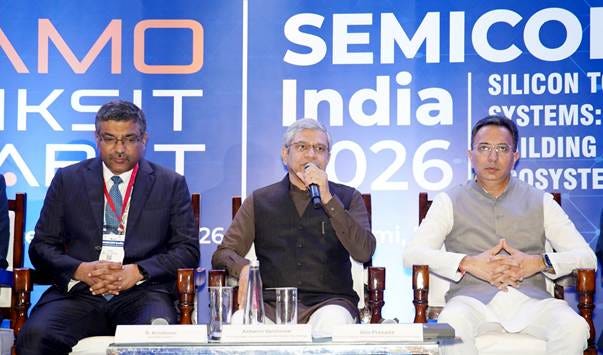
Applied Materials has announced a $5 billion India investment plan through 2035 to expand supply-chain capacity, research and talent. Tata Electronics announced seven partnerships on the first day of Semicon India and planned nine more, including agreements with Nexperia, Besi and Fujifilm across the chipmaking value chain. Kaynes Semicon is also considering a $1 billion OSAT project in Gujarat. OSAT facilities assemble, package and test chips after they are manufactured.
The announcements suggest India’s focus is expanding beyond large chip factories to the suppliers and services around them. But the $11–12 billion figure represents proposals, not money already spent. Some projects still need approvals and execution. The real test is how many announcements turn into operating facilities.
See you next edition :)
It felt good to be reading bite sized articles rather than consuming over stimulating short videos