

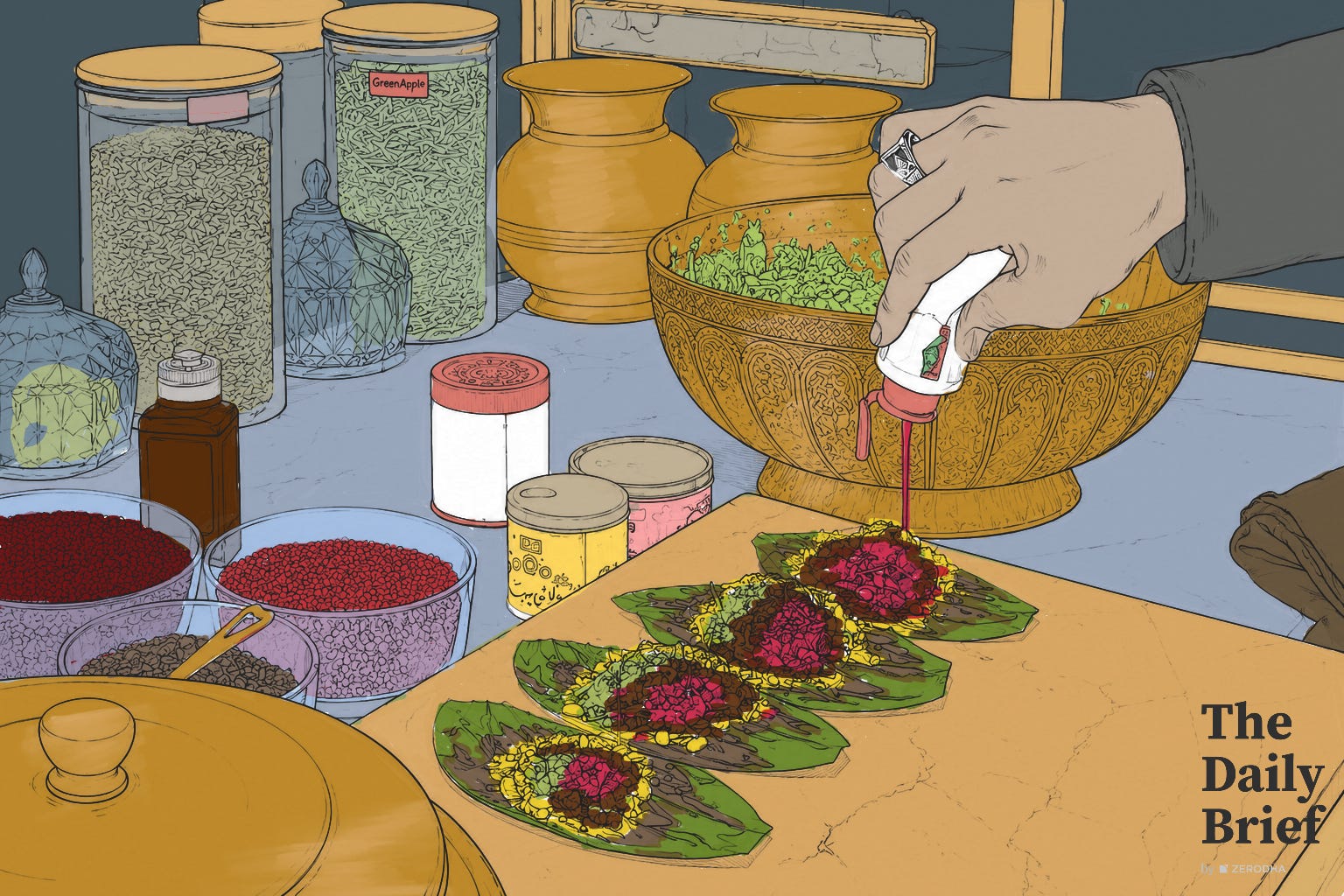
Our goal with The Daily Brief is to simplify the biggest stories in the Indian markets and help you understand what they mean. We won’t just tell you what happened; we’ll tell you why and how too. We do this show in both formats: video and audio. This piece curates the stories that we talk about.
You can listen to the podcast on Spotify, Apple Podcasts, or wherever you get your podcasts and watch the videos on YouTube. You can also watch The Daily Brief in Hindi.
Points & Figures
India’s markets are growing beyond stocks
Beyond equity trading, how are new investors and alternative assets reshaping India’s financial ecosystem? Drawing from SEBI’s latest report, Points & Figures tracks key shifts: Tier-II cities surpassing Tier-I in mutual funds, net SIP inflows surging 26%, and rapid expansion across AIFs, REITs, SME IPOs, and municipal bonds.
Read the full edition here.
In today’s edition of The Daily Brief:
Story: The areca nut with an identity crisis.
Why is India's humble supari causing a massive customs headache? To protect millions of domestic farmers, India imposes steep 100% import duties on foreign areca nuts, inadvertently creating a massive incentive for smuggling. By routing cheap Southeast Asian supplies through neighbouring countries like Bangladesh and using fraudulent free-trade paperwork, importers allegedly evaded over ₹2,500 crore in customs duties. As regulators constantly redraw classification rules, uncovering the true origin of these nuts remains a highly complex, high-stakes game of cat and mouse.
Chart: Who gives out the most personal loans in India?
Why are Non-Banking Financial Companies (NBFCs) completely dominating the personal loan space? While traditional banks focus on a smaller number of large, high-value loans, NBFCs now account for a staggering 91% of all personal loans by volume, largely driven by digital disbursements under ₹1 lakh. As technology and fintech partnerships automate the lending process, handing out thousands of micro-loans has become highly efficient—though this fast-growing segment is now flashing warning signs of higher repayment stress and delinquencies.
Cash & Copium #3
Fixed Deposits, tax hacks, and other ways to sleep at night
Cash & Copium Episode 3 decodes fixed income and safe cash parking. It explains why chasing higher Fixed Deposit yields introduces credit risk, how liquid funds avoid lock-ins, the fate of long-term government bonds, and why equity arbitrage funds are the ultimate tax-efficient hack.
Watch the full episode on YouTube.
The areca nut with an identity crisis
Areca nut sits at the centre of paan, gutkha and a whole family of chewing products. India also protects its domestic areca growers with steep import duties. And that has created a big incentive to find ways around them.
Recently, the Directorate of Revenue Intelligence (DRI) uncovered one such scheme. According to the agency, areca sourced from Indonesia, Thailand and Malaysia was first shipped to Bangladesh. There, it was allegedly repacked and given fraudulent certificates showing Bangladesh as its country of origin.
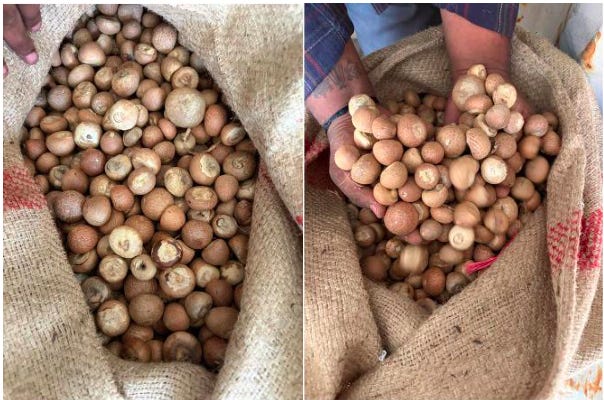
The DRI says this helped importers evade more than ₹2,500 crore in customs duty over the past few years.
So what made the Bangladesh label so valuable? Start with why India imports areca at all.
Why is India importing foreign areca at all?
The obvious guess is that the country doesn’t grow enough of it.
But India is actually the world’s largest producer of areca nuts, accounting for about 63% of global output. Karnataka alone produces about 10 lakh tonnes. More importantly, a lot of livelihoods sit behind this crop. The Agriculture Ministry estimates that roughly 60 lakh people depend on areca farming for work
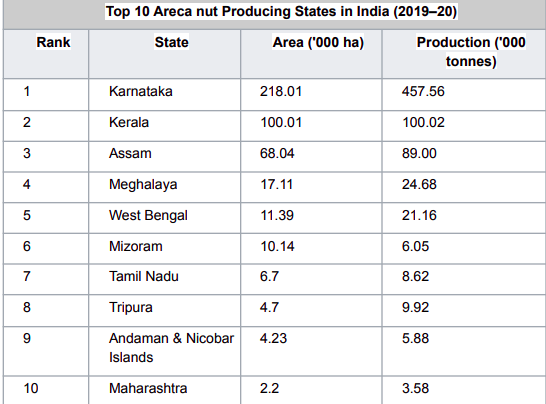
India grows so much areca because it also consumes a lot of it. Areca is chewed as plain supari and goes into paan, pan masala and gutkha. Pan-masala manufacturers are major buyers, and their demand can move prices in producing markets.
There is also an uncomfortable wrinkle here. Areca is associated with serious health risks, including oral cancer. So the same crop that supports millions of livelihoods also feeds products that create a public-health problem.
Imports add another pressure point. Areca grown in countries such as Indonesia can be cheaper than the domestic crop because production costs and local prices differ across countries. If those cheaper nuts entered India freely, they could undercut Indian growers.
So India has built a fairly high wall around the market. For most countries, imported areca normally faces a 100% basic customs duty. Most imports also cannot come in below a minimum import price of ₹351 per kilogram.
But there is an important exception. A genuinely Bangladeshi areca nut can avoid the normal 100% customs duty. It still has to satisfy the ₹351 minimum import price, but the duty saving alone is enormous.
That is what made the alleged fraud attractive. Cheaper supply existed outside India, demand was strong inside it, and a Bangladesh label offered a way around the most expensive part of India’s import wall.
So what actually makes a Bangladeshi nut ?
The exception comes from the South Asian Free Trade Area, or SAFTA. It is a trade agreement between India, Bangladesh, Pakistan, Sri Lanka, Nepal, Bhutan, the Maldives and Afghanistan that lowers or removes duties on eligible trade between these countries. For qualifying areca nuts from Bangladesh, the basic customs duty can be 0%.
Bangladesh does grow areca. But cheaper and more plentiful supplies are available elsewhere in Southeast Asia.
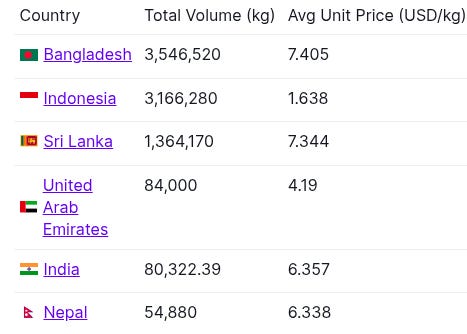
So the incentive was obvious: source the nut from one place, and somehow make it qualify as if it came from another. Take a look at what happened in the Bangladesh case. The nuts were first routed through an export-processing zone(EPZs) in Bangladesh. Investigators say the containers and bags were changed there, which helped make the cargo look less like the same shipment that had arrived from Southeast Asia.
After that came the paperwork. Fraudulent SAFTA Certificates of Origin were allegedly arranged, allowing the nuts to be presented to Indian Customs as Bangladeshi-origin goods.
This is where Rules of Origin come in.
They exist because shipping a product through a country does not automatically make it a product of that country. To claim the trade benefit, the product has to satisfy specific origin rules. Either because it was produced there, or because enough qualifying production happened there.
Imagine an areca nut grown in Indonesia and shipped raw to Bangladesh. If Bangladesh simply changes the bag and sends it on to India, the nut does not suddenly become Bangladeshi. It is still an Indonesian nut that happened to pass through Bangladesh.
But now imagine that something actually happens to it there. It is processed, value is added, and it is then exported to India. This is where the rules start asking harder questions. Was what happened in Bangladesh substantial enough? Did enough local value get added? Did the processing satisfy the particular origin rule that applies to that product?
Only if those conditions are met can the nut genuinely claim Bangladeshi origin and the SAFTA benefit.
That is why a Certificate of Origin matters. But also why the certificate cannot always be the end of the story. In 2020, India introduced CAROTAR, which gives Customs a way to ask what sits behind that certificate. If something does not add up, the importer can be asked to show how the goods actually satisfy the origin rule.
And that is what makes the Bangladesh case more than a forged-certificate story. The paperwork said Bangladesh. DRI’s case is that the nuts themselves had begun their journey in Indonesia, Thailand, and Malaysia. But there is another complication in our example.
Suppose that Indonesian nut was not merely repacked in Bangladesh. Suppose it was roasted there. Customs now has two different questions to answer. The first is about origin. Did enough happen in Bangladesh for the nut to become Bangladeshi under SAFTA?
The second is about classification. Did roasting change the nut enough for Customs to treat it as roasted areca rather than raw areca? Those are separate tests. A nut could be roasted in Bangladesh for classification purposes without automatically qualifying as Bangladeshi-origin.
And that distinction mattered because, until April 2025, roasted areca could receive easier import treatment than raw areca. Importers therefore had a reason to argue that their nuts belonged in the roasted category.
Then the government changed the rule. Roasted areca was brought under the same ₹351-per-kilogram minimum import price. Its classification later changed again, but the restriction stayed.
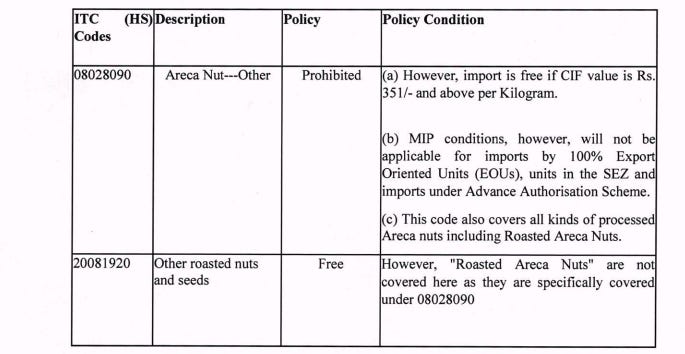
This is the strange game customs rules can create. Governments put products into legal boxes and give those boxes different treatment. Once one box becomes more attractive, businesses have every reason to argue that their product belongs inside it. Regulators, in turn, keep redrawing the boxes.
Areca has seen a more blatant version of this too. In one DRI case, containers carrying areca were allegedly misdeclared as products such as compounded animal feed and barley.
But defining the nut is only half the problem
So far, we have been talking about the rules Customs uses to decide what an imported nut is. Rules of Origin decide whether it can legally count as Bangladeshi. Customs classification decides whether it is raw, roasted or something else.
But those rules only help once Customs knows where the nut actually came from. And that can be surprisingly hard to prove.
Imagine a truck is stopped at a checkpoint deep inside India, hundreds of kilometres from any border, carrying sacks of dried areca. Open one, and you know you are looking at supari. What you may not know is whether it was grown in Karnataka, Myanmar, or somewhere else. Once the nuts have been dried, packed, and moved around, appearance alone may tell you very little about their origin.
That matters because areca is not covered by the special burden-of-proof rule under Section 123 of the Customs Act, 1962. For certain notified goods, such as gold, the person holding the goods may have to prove that they were legally imported. Areca works differently. Customs generally has to prove that the nuts are of foreign origin and were smuggled into India.
So if a trader produces invoices, e-way bills and other records showing the nuts as domestic, Customs cannot simply point at the sacks and say they look foreign. It has to build the trail: where the nuts supposedly came from, how they travelled, whether production actually happened there, and whether the paperwork matches the physical movement of the goods.
Courts have pushed Customs on exactly this point. The Patna High Court has set aside areca seizures where foreign origin could not be established with strong enough evidence. A customs tribunal has done the same where the report used to establish origin was itself unreliable. The trader does not automatically have to prove that every document is genuine. Customs still has to prove its case.
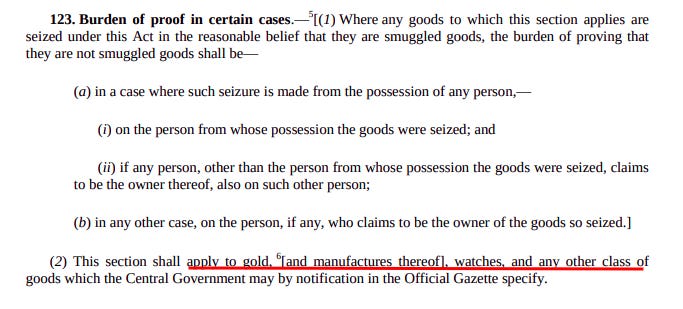
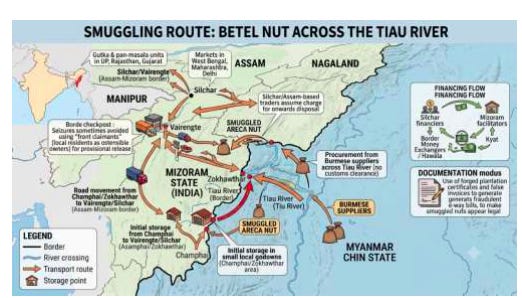
This is what makes the Champhai case interesting.
The alleged trick there was different from the Bangladesh case. In Bangladesh, Southeast Asian nuts were allegedly being given a Bangladeshi identity so they could claim better import treatment. In Champhai, Myanmar-origin nuts were allegedly being given an Indian identity so they could appear not to have been imported at all.
The Enforcement Directorate says the nuts were shown as locally grown produce from Champhai, backed by paperwork that created a domestic trail. But production data obtained from central and state agencies allegedly showed that the district had produced no areca in the relevant years.
That gave investigators something much more useful than the appearance of the nuts. They could test the story against the surrounding facts. If the paperwork says these nuts were grown in Champhai, but official data says Champhai produced none, the claimed domestic origin starts to fall apart.
That is really the second half of the areca problem. The law can tell Customs what counts as Bangladeshi, Indian or imported. Enforcement still has to prove which of those stories is actually true.
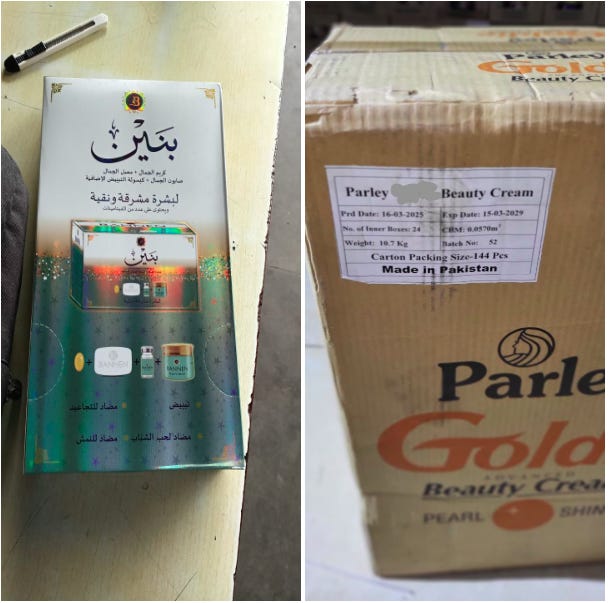
And this is where it stops being about areca
With areca, faking origin can mean the difference between paying the normal import duty and getting preferential treatment under a trade agreement. That is essentially what the alleged Bangladesh route was trying to achieve.
But there are more extreme versions of the same game, where origin decides whether a product can enter the country at all.
After the Pahalgam attack, India prohibited the direct and indirect import of Pakistani-origin goods. Investigators later alleged a familiar workaround. Pakistani dry dates were shipped from Karachi, transshipped through Dubai’s Jebel Ali port, where containers and vessels were changed, and then declared as UAE-origin. The trick was much the same. Only the stakes had changed. Faking origin was no longer about paying less duty. It was about getting around an outright ban.
DRI has found similar patterns elsewhere. In one case, Chinese steel products were routed through Malaysia using allegedly forged Malaysian Certificates of Origin. That changed which trade rules applied to the shipment and allowed importers to claim benefits they would not have received if the goods had been declared as Chinese-origin.
And that is why these seizures are a slightly uncomfortable kind of success.
Yes, stopping a shipment matters. But every seizure also tells you that somebody believed the system could be gamed in the first place. The law may draw a neat line between Indian, Bangladeshi, Malaysian or Pakistani goods. Real trade is messier. Goods can move through multiple ports, change containers, pick up new paperwork, and acquire an entirely different identity before they reach Customs.
Enforcement then has to reconstruct that journey after the fact. Sometimes it succeeds. Sometimes proving origin is much harder than writing the rule itself.
For areca farmers, that gap matters. Import restrictions and duties are partly meant to protect domestic growers from much cheaper foreign supply. If imported nuts can still enter by changing their identity on paper, the farmer ends up competing with supply that was never supposed to reach the market on those terms.
So an areca seizure is not simply a story about Customs catching smugglers. It is also a reminder of how difficult it is to make trade policy work once the incentive to get around it becomes large enough.

Who gives out the most personal loans in India?
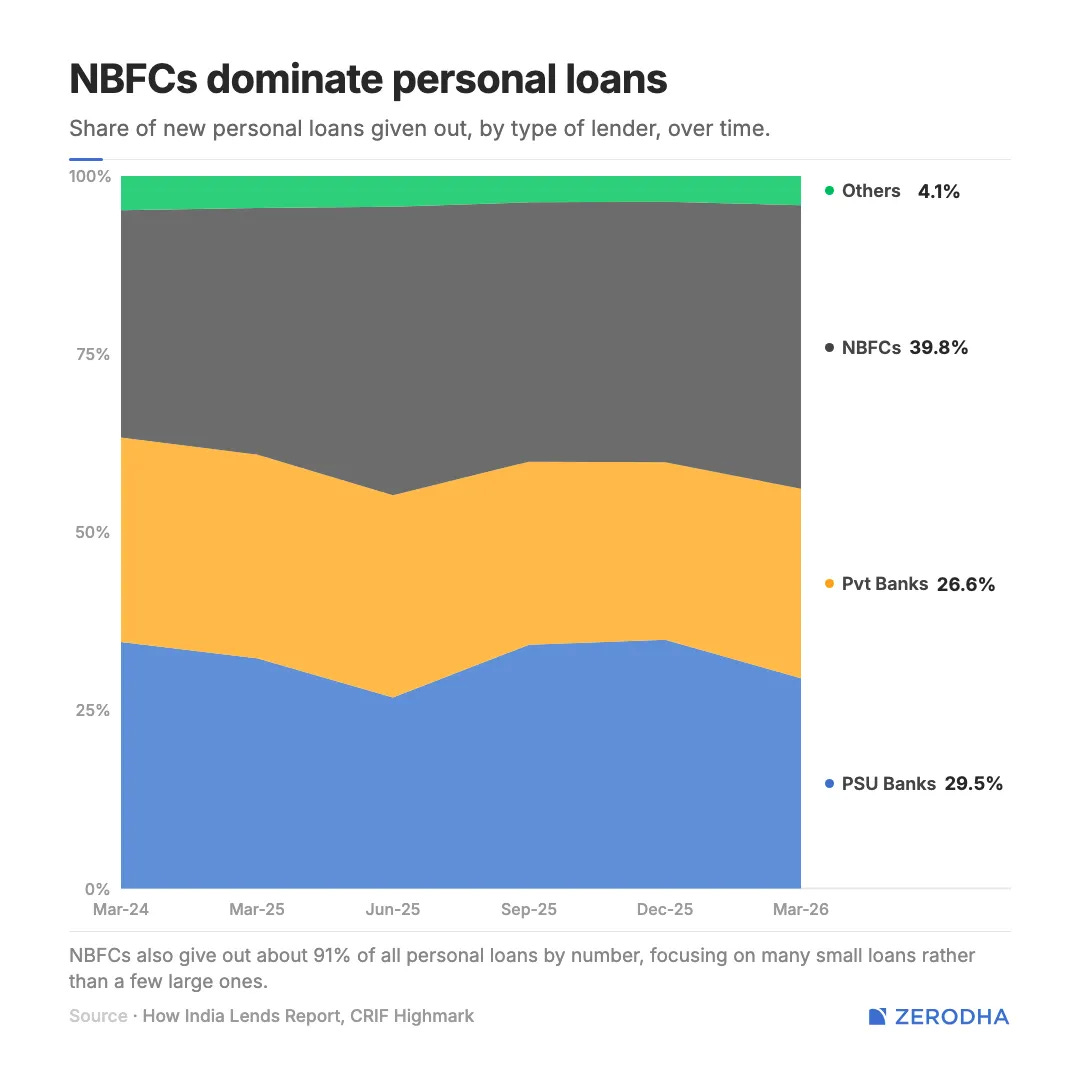
In the quarter ending March 2026, NBFCs made up about 40% of the value of new personal loans. But they accounted for a massive 91% of all loans by number. Banks made far fewer loans, but each loan was much bigger.
That gives us a pretty clear picture of how the market has split. Banks matter more for larger personal loans. NBFCs dominate the smaller end. In fact, nearly 89% of all personal loans given out during the quarter were for less than ₹1 lakh.
Technology has made this business much easier to run. Many NBFCs lend online or work with fintech platforms. They can find customers, do KYC, check credit histories and disburse loans digitally. Once you automate most of this, handing out thousands of small loans starts making a lot more sense.
That does not mean every NBFC borrower is someone a bank would reject. Some may be new to credit or harder to serve through traditional banking. Others may simply need ₹20,000 or ₹50,000 quickly. The bigger point is that NBFCs have built their systems around exactly these kinds of loans.
But this is also where things get messy. CRIF High Mark’s data shows that smaller personal loans have much higher delinquencies than larger ones. The very segment growing the fastest is also the one showing more repayment stress.
So NBFCs have pushed formal credit much deeper into the small-loan market. That is useful. But there is an obvious catch: the same system that makes a ₹20,000 loan easy to get also makes it very easy to take one loan too many.
- This edition of the newsletter was written by Mridula & Kulsum.
Tidbits:
1. Domestic Air Traffic Falls 4.8% to 12 Million in July
Domestic air passenger traffic in India fell 4.8% year-on-year to 12 million in July, weighed down by high airfares and a seasonal travel slowdown. The decline follows a record peak of 15.39 million passengers in May.
Source: Business Standard
2. L&T Wins Up to ₹5,000 Crore Order for Dubai Airport Transit System
Larsen & Toubro has secured a major contract worth up to ₹5,000 crore to design and build the Automated People Mover system for Phase 1 of Al Maktoum International Airport in Dubai. In a consortium with Japan’s Mitsubishi Heavy Industries, L&T will deliver the driverless transit infrastructure.
Source: Business Standard
3. Raghuram Rajan Proposes AI Tax Amid ‘Jobocalypse’ Fears
Former RBI Governor Raghuram Rajan has proposed taxing the AI tokens used by companies to reduce the financial advantage of replacing workers with machines. Separately, he suggested incentives for firms that retrain and retain employees as AI adoption accelerates.
Source: The Economic Times
4. Former ISRO Chief S. Somanath Appointed to RBI Board
S. Somanath, the former chairman of the Indian Space Research Organisation (ISRO), has been officially appointed as a part-time, non-official director on the central board of the Reserve Bank of India for a four-year tenure.
Source: NDTV
5. Govt Tells Meta Not to Leave Content Takedowns Solely to AI
The Indian government has directed Meta to ensure human review is actively involved in AI-led content moderation. The warning highlighted that relying solely on keyword-based AI takedowns can inappropriately remove legitimate posts without understanding the necessary context.
Source: Business Standard
6. Bain Capital in Talks to Invest Up to ₹2,850 Crore in JBM Auto’s EV Business
Bain Capital is in talks to invest up to ₹2,850 crore for a significant minority stake, or potentially joint control, in JBM Auto’s electric vehicle business. The deal would provide growth capital as JBM expands its electric bus operations, which are expected to contribute nearly 45% of group revenue in FY27.
Source: The Economic Times
7. Hero MotoCorp’s Electric Commercial Vehicle Bet Begins to Scale
Following the strategic success of its Ather Energy investment, Hero MotoCorp’s bet on electric commercial vehicles through Euler Motors is gaining significant traction. Euler Motors has doubled its sales and revenue while expanding its manufacturing capacity to meet growing domestic logistics demand.
Source: Livemint
8. DMart Parent Approves Up to ₹500 Crore Investment in Online Grocery Arm
Avenue Supermarts, DMart's parent company, has approved an additional investment of up to ₹500 crore in its online grocery subsidiary, Avenue E-Commerce, which operates DMart Ready. The capital infusion comes as the online arm narrows its strategic focus to 11 key cities despite reporting a widened net loss of ₹307 crore in FY26.
Source: The Economic Times
Beyond Today’s Brief
There’s always more happening at Markets by Zerodha.
The Chatter: How is the RBI pushing banks toward alternative data and AI oversight? How is 3M India localising production to protect margins, and what is driving momentum for Blue Star, KFintech, and EV material producer HEG?
Aftermarket Report: What does seven years of backtest data reveal about the famous 45 DTE options strategy on NIFTY? What kept markets range-bound near 24,250 amidst choppy trade? And what is driving major moves for Welspun Corp following its record $1.8B order and Colgate-Palmolive’s leadership transition?
Join us on WhatsApp, where we share interesting soundbites from concalls, articles, and everything else we come across throughout the day. You’ll also get notified the moment a new video or article drops so that you can read or watch it right away.
Thank you for reading. Do share this with your friends and make them as smart as you are 😉
The article was interesting to read but , it was too long , It was too lengthy.... it was not brief
Interesting read about areca nuts.. thanks 👍