

Hi folks, welcome to another episode of Who Said What? I’m your host, Krishna.
For those of you who are new here, let me quickly set the context for what this show is about. The idea is that we will pick the most interesting and juiciest comments from business leaders, fund managers, and the like, and contextualize things around them. Now, some of these names might not be familiar, but trust me, they’re influential people, and what they say matters a lot because of their experience and background.
So I’ll make sure to bring a mix—some names you’ll know, some you’ll discover—and hopefully, it’ll give you a wide and useful perspective.
For all the sources mentioned in this video, don’t forget to check out our newsletter; the link is in the description.
With that out of the way, let me get started.
What happened at Davos?
This past week, the World Economic Forum held its annual conference at Davos. It is a gathering of some of the most powerful people in the world — heads of state, economists, billionaire entrepreneurs, and so on.
It’s the most exclusive of exclusive gatherings, full of meetings, private dinners, and, well, partying. Here, people have to be very nice to each other, no matter what. But, in such a situation, what they say to each other might have more meaning than what’s on the surface. In fact, FT came up with a pretty funny list of how the code of Davos speech works:
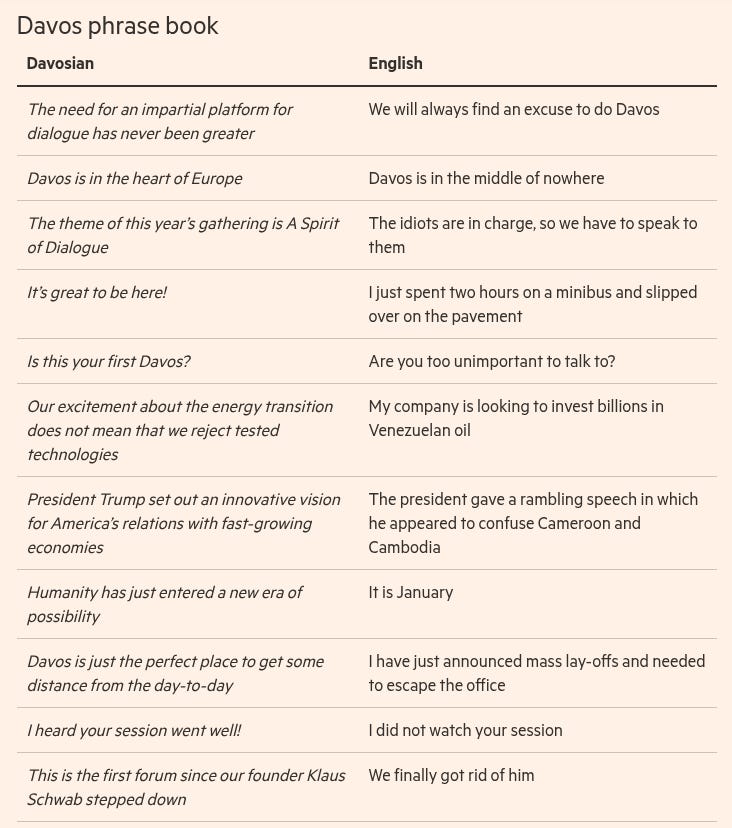
Let me pause for a bit so that you can read it.
However, this year, Davos didn’t really have many of these niceties. In fact, it was extremely blunt. World leaders were being brutally honest about their needs and wants — even going as far as berating other leaders.
In particular, many implicitly voiced how uncertain they were about the US being a reliable partner or ally. Of late, under the Trump administration, the US has been trying to shore up manufacturing within its own borders. For them, globalization is now a mistake.
As the US retreats from worldwide economic integration, so are other nations. They are all prioritizing indigenizing supply chains and reducing dependence on other countries, even if it’s not economically efficient to do so. It’s clear that on a global level, trust is broken.
To start with, let’s take Howard Lutnick, the US Secretary of Commerce. On a Davos panel, Lutnick went on a rant against Europe’s energy ambitions to go net-zero. Here’s what he said:
They are not in the middle — they are the flag, whichever way the wind blows. So if the wind blows one way, you’re told you should have solar; if it blows another way, you should have wind.
Why are you going to do solar and wind? Why would Europe agree to be net-zero by 2030 when they don’t make batteries? They don’t make batteries. By committing to 2030, they are effectively deciding to be subservient to China, which does. Why would you do that?
Why would the United States of America — which has oil and natural gas — try to convert entirely to electricity? China does not have oil and natural gas. Electricity and electric cars make perfect sense for them. That is practical and logical.
The point I want to make — and I want people to think about this — is that America First means the job of the government is to take care of its workers, to make sure their lives are better for it. That doesn’t mean America alone — but it does mean America first.
That is a lot to take in — even for Lutnick’s fellow panelists, who were clearly in shock with what he said. In essence, Lutnick is making a statement about what US foreign policy is today. For them, any dependence on China is not desirable, even if it could improve our chances in the battle against climate change.
But besides China, there are other details worth dissecting in his quote. For one, while reliance on China might not be nice to have, does that make an overreliance on the US for oil & gas inherently better? In 2024, oil production in the US reached an all-time high. Last year, the US swung into becoming a leader in natural gas production. The US basically controls the global markets for these commodities.
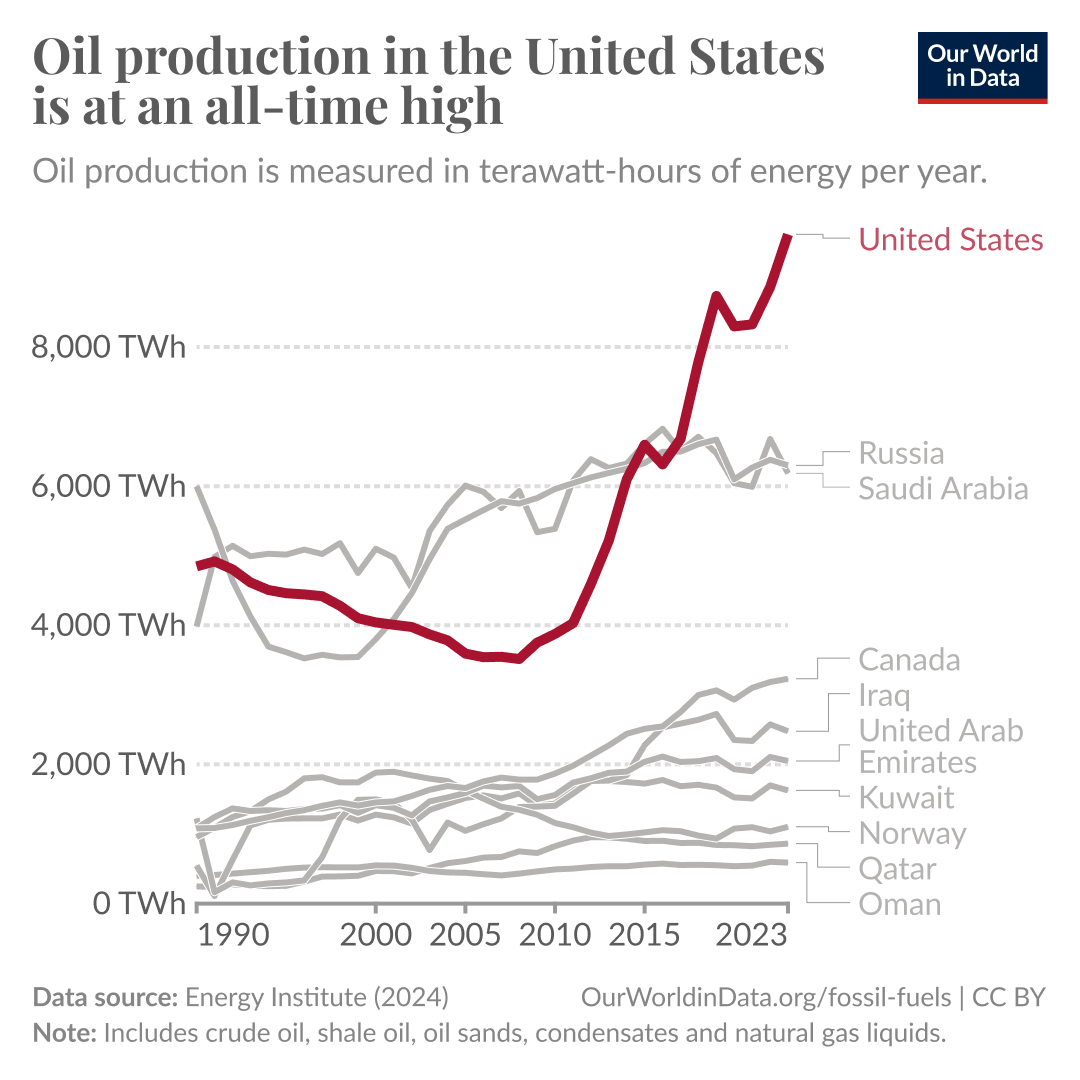
Countries that depend on procuring their oil needs from global markets know how volatile prices are and how that hurts their trade balances. So, they are trying to diversify away from that issue by scaling up renewables. With solar panels, the thinking goes, all the power is generated in-house, even if you import the panels from elsewhere. That inherently reduces the price volatility of renewables.
And the world is answering accordingly, just as solar prices keep dropping. India has jumped to becoming one of the biggest solar players in the world. In the 12 months since August 2024, the entire African continent imported 60% more solar panels than the preceding year. These imports are helping the world’s poorest nations reduce dependence on fossil fuels they do not have.
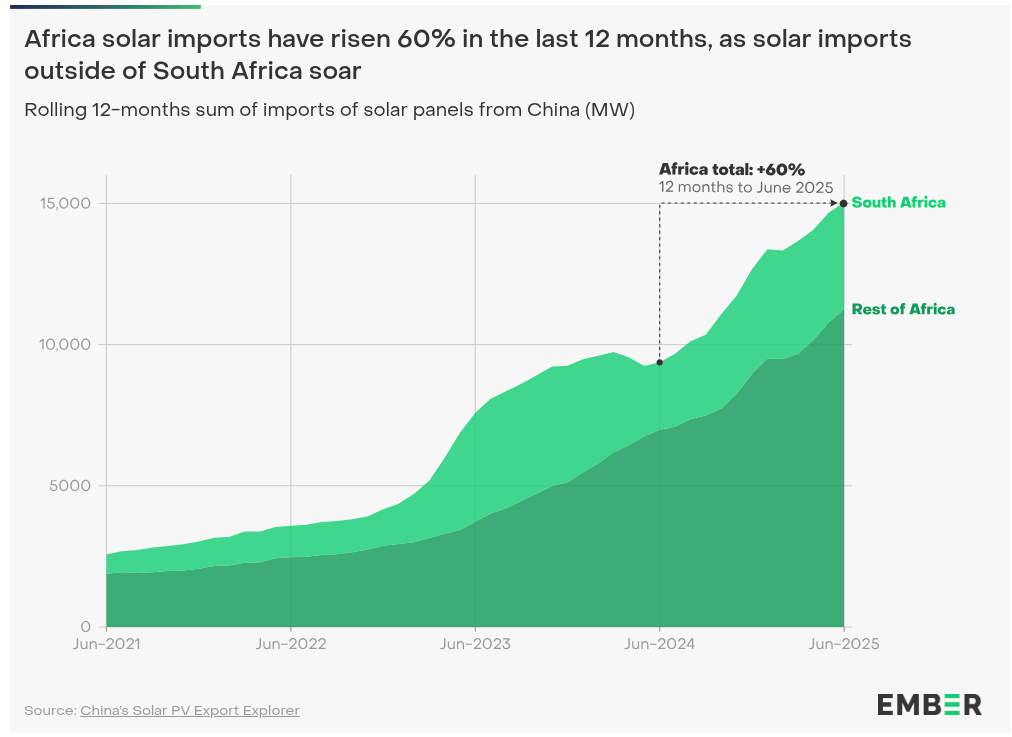
In other words, what other countries seem to think is: just because you only import the panels doesn’t make you subservient to the host country. In any case, this is better than being subservient to oil markets. Renewables give them much more control over their energy infrastructure. But oil & gas, on the other hand, is subject to massive price volatility, a finite supply, and often cartelisation by the oil-producing countries.
The other question that Lutnick’s quote raises is: Does Europe really not make any batteries of its own? Well, while it trails much behind China, Europe does have a battery manufacturing base. It is actively trying to scale the same, even attracting foreign investments to build within its borders. While not dominant, Europe has a meaningful output of batteries today.
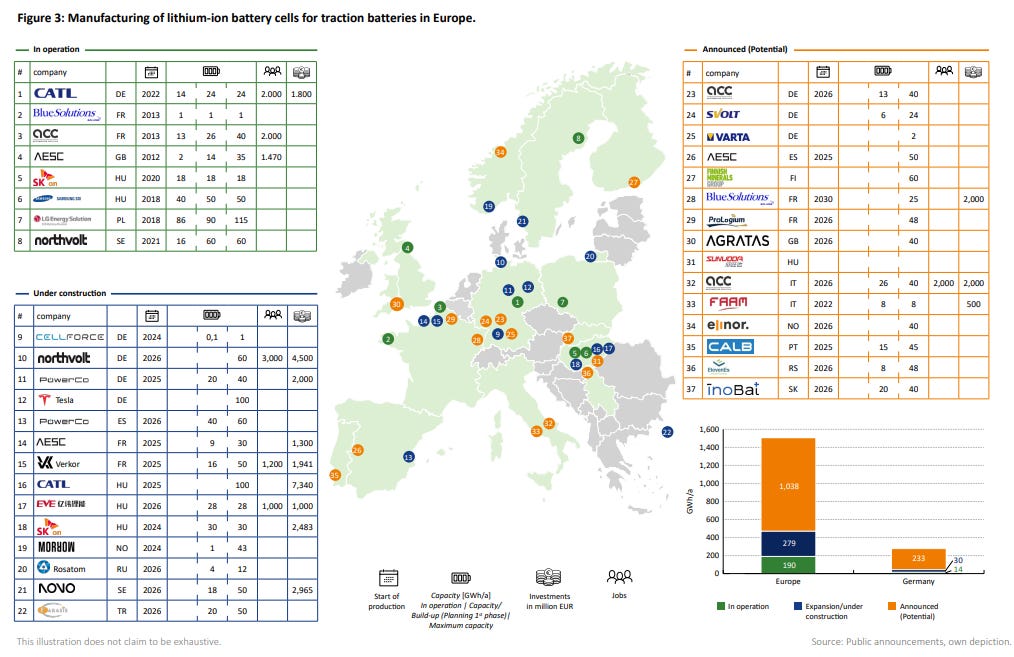
Lutnick (and the Trump administration as a whole) believes that globalization has been bad, primarily for the US. In his view, it is the cause for why dependence on China has increased — even though it was American companies who initiated the current form of globalization, by shifting their production to low-cost labor countries like China. And now, the US is trying to reverse it, even if it means sacrificing important climate change goals.
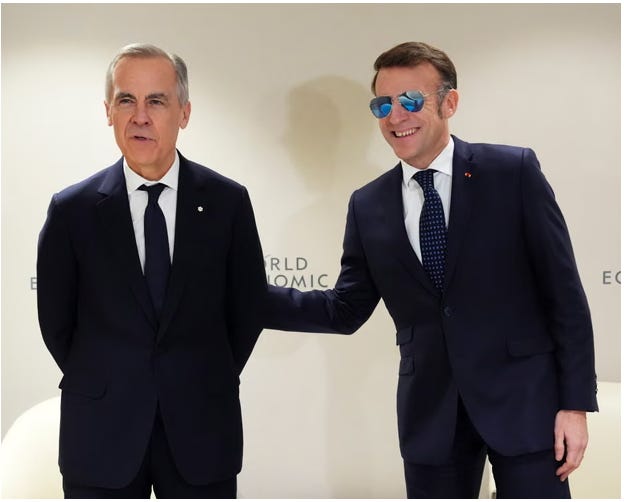
Anyhow, Lutnick was not met without a response from the target of his quote — if not directly, then indirectly. Emmanuel Macron, the President of France, made a speech while wearing an expensive pair of shades though there was no sunlight glaring at him. But, if he didn’t score too many points on style, he probably did on substance. Here’s what he said:
China is welcome, but what we need is more Chinese foreign direct investment in Europe — particularly in key sectors — to contribute to our growth and enable technology transfer. Not merely exporting devices or products into Europe, especially when some of these do not meet the same standards or are far more heavily subsidized than those produced in Europe.
Compared to what Lutnick said, Macron (and the EU overall) is clearly far more open to taking the help of China. Battery manufacturing is one of the sectors where Chinese firms like CATL have set up shop in Europe. Macron also mentioned why he doesn’t trust the US as strongly anymore, highlighting how the US kneecapped European exports:
Competition from the United States of America through trade agreements that undermine our export interests, demand maximum concessions, and openly aim to weaken and subordinate Europe — combined with an endless accumulation of new tariffs — is fundamentally unacceptable, even more so when tariffs are used as leverage against partners.
The drama doesn’t end in the speeches we did get to see, though. Apparently, at a private post-conference dinner in Davos, Christine Lagarde — the President of the European Central Bank — abruptly walked out when Lutnick continued to make a mockery out of Europe’s economy. The geopolitical conflict of our time, it seems, presented itself in petty fights at fancy private dinners.
The allyship that the US and Europe were known for has clearly badly fractured, to the extent that Europe is willing to create new, even if uneasy, alliances with a supposed rival like China.
Nowhere is this more evident than the speech given by Mark Carney, the Prime Minister of Canada, hailed by many as the star of the Davos show. In his speech, he declares an end to the old world order, away from globalization, and into a world far more uncertain and siloed. Even if you may not fully agree with them, it is how the world seems to be moving now.
This is a rupture, not a transition. Over the past two decades, a series of crises — in finance, health, energy, and geopolitics — have laid bare the risks of extreme global integration. More recently, great powers have begun to weaponize that integration: tariffs used as leverage, financial infrastructure as a tool of coercion, and supply chains turned into vulnerabilities to be exploited.
You cannot continue living under the illusion of mutual benefit through integration when integration itself becomes the source of your subordination.
India, of course, has not stayed silent in Davos. At a panel, IMF Chief Kristina Georgieva called India a “second-tier AI power”:
So, Ashwini, with an incredible talent base, the fastest-growing major economy in the world, and an emerging AI player — but clearly in the second grouping that Cristina is talking about — we have to think carefully about the path ahead.
To which Ashwini Vaishnaw did not agree, stating that India fell in the first-tier of AI powers, citing a 5-pillar approach:
Actually, clearly in the first group. And the reason for that is simple: there are five layers in the AI architecture — the application layer, the model layer, the chip layer, the infrastructure layer, and the energy layer. We are working across all five, and making strong progress in each of them.
At the application layer, we will probably be the largest supplier of services to the world.
Now, how true is this? Well, India is certainly trying to vie for a strong position in the AI value chain. But it’s still very far from success in many of the 5 pillars mentioned. For one, our chip capabilities are very nascent, though we’re attracting foreign investments now. Secondly, we still don’t have a state-of-the-art LLM, nor do we have the infrastructure yet. All of this combined wouldn’t put us in the first-tier by any means.
However, on two pillars, the minister may have a point. India is indeed proving to be a giant in renewable energy adoption. And on the application layer, while Indian IT is currently struggling to integrate AI, it has always been a valuable provider of services to the world and may continue to be so.
Some individual Indian states also converted many Davos meetings into worthwhile investment commitments. Delegations from Telangana and Uttar Pradesh have been trying to attract global capital, even signing MoUs at Davos.
In sum, Davos threw up a lot of questions. Its very existence was threatened by multiple speeches that went against the ethos of a globalized, peaceful world, where multilateral institutions like itself and the UN have failed. We haven’t even covered what Donald Trump himself was up to at Davos — but perhaps, the speeches of Carney and Macron told us enough. Yet, countries did get what they wanted out of the gathering, signing deals and agreements.
It seems that at the world’s most famous gathering of elites, everyone got what they wanted, even at the cost of harmony.
That’s it for this edition. Thank you for reading. Do let us know your feedback in the comments.
Hey daily briefers always wondered how the most basic commodity in our household—Milk ( dairy sector) works
Few aspects could be
1. How prices to packed milk kept stable generally for extended time?
2. How sector is organised like private firms vs neighbourhood milkman vs cooperatives
3. Which states work better in this domain ?
4. Business model like how they manage supply chain, seasonal cycles of milk production (surplus/scarce) & consumer demand management
5. Last year govt launched white revolution 2.0 - what it try solve & how it builds on earlier revolution by Dr Kurien
6. What else is needed in dairy sector
7. I have seen earlier episodes on how players like Amul pushing for protein enriched products—where would you place such new trends in dairy sector + are there any new trends
8. Finally RBI says farmer earn 70 paise for every consumer ₹1 & in context of India aa largest milk producer in world—what bottlenecks farmers face in fodder, productivity, market integration etc despite higher earnings
Really juciest stuff... exciting times ahead 👍