

Hi folks, welcome to another episode of Who Said What? I’m your host, Krishna. For those of you who are new here, let me quickly set the context for what this show is about.
The idea is that we will pick the most interesting and juiciest comments from business leaders, fund managers, and the like, and contextualize things around them. Now, some of these names might not be familiar, but trust me, they’re influential people, and what they say matters a lot because of their experience and background.
So I’ll make sure to bring a mix—some names you’ll know, some you’ll discover—and hopefully, it’ll give you a wide and useful perspective.
For all the sources mentioned in this video, don’t forget to check out our newsletter; the link is in the description.
With that out of the way, let me get started.
India tiptoes (forward) around Chinese investments
Over the last five years, India’s posture toward Chinese investments has only become more complicated. Since the Galwan Valley clash in 2020, India enforced the “Press Note 3” norms, which limited Chinese investments into India. And since then, India has adopted a precautionary stance with China.
However, at Business Standard’s event, Piyush Goyal seemed to hint that that strategy won’t forever be closed off. Here’s what he said:
“Also, in cases where our relationships with neighbouring countries have improved, we are keeping an open mind about how we can attract better technology and more investments, from China too. We are in dialogue, and it will be an evolving situation. We are open to newer ideas.”
In the same conversation, he also said:
“The government’s approach at the moment is to accelerate the approval process.”
Now, for all you could say, this could have been a statement meant just for display. But over the past six months, the thaw between Delhi and Beijing has gone from symbolic to substantive.
Prime Minister Modi met President Xi Jinping on the sidelines of the BRICS summit in October 2024, the first formal bilateral meeting between the two in five years. The two sides agreed to resume direct flights, ease visa restrictions, and — crucially — work toward normalizing economic ties.
And that diplomatic thaw has already started producing deals on the ground. Last year seemed to show some level of opening up. In batteries, for instance, we covered how 2025 saw a lot of deals. Sectors like EMS and pharma didn’t face a lack of activity either. But these seemed like more isolated incidents, rather than a broad national strategy.
But here’s where it gets really interesting. Goyal’s statement didn’t arrive in a vacuum. It came just weeks after India signed an interim trade deal with the United States — the first phase of which involves India lowering tariffs on American goods in exchange for the US easing some tariff pressure on Indian exports. Of course, this trade deal was effectively reset by a US Supreme Court order, but that doesn’t negate the fact that the ball has begun rolling.
And prior to that, India and the EU signed a landmark trade deal — the largest for both sides. In the past 3 years, India has signed trade agreements with Australia, the UK, UAE, Oman, and New Zealand.
So India is now simultaneously deepening trade ties with the US, accelerating a trade pact with Europe, and signaling an openness to Chinese investment, besides making connections with the rest of the world. One could even say that India might be positioning itself as the country that plays with everyone.
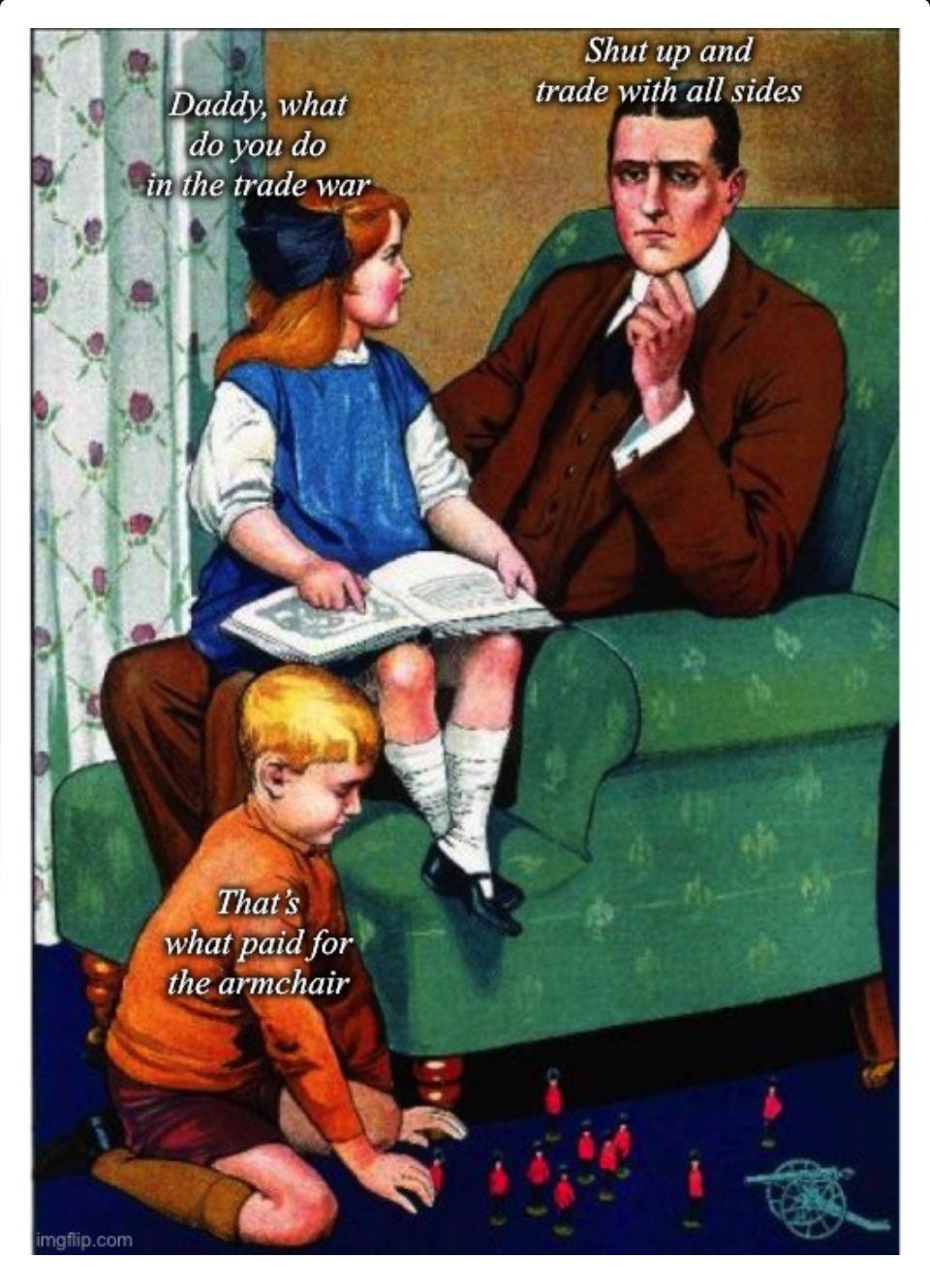
The US wants India as a counterweight to China in Asia and as an alternative manufacturing destination. Europe wants a trade partner that isn’t fully in the American orbit. And Chinese firms, with their declining domestic profits, need markets and manufacturing bases to reroute their supply chains, especially as Western tariffs bite.
India is trying to figure out how to be all of those at once. Each of these deals effectively acts as a hedge against the other.
Now, none of this means India is throwing the doors wide open. Goyal was careful to say “calibrated steps“. The government is only likely to ease restrictions on a sector-by-sector basis — starting with areas where India desperately needs Chinese expertise (EVs, batteries, solar, electronics manufacturing) and keeping walls up in areas considered sensitive (telecom, defence, critical infrastructure).
The model seems to be what some policy watchers call “controlled engagement” — let Chinese capital and technology in where it serves India’s industrial goals, but under structures that keep Indian partners in the driver’s seat and limit Chinese control. We’ve spoken about this in a previous edition of The Daily Brief.
The risk, of course, is that this balancing act gets harder as the trade war intensifies. The US has reportedly expressed discomfort with Indian overtures toward Chinese manufacturers. In fact, in the interim trade deal, India was somewhat forced to choose who we could trade with. One of the terms of the deal was that we had to significantly reduce our imports of Russian oil. One can assume that if that could happen, walking the tightrope between Washington and Beijing is going to require increasingly nimble diplomacy.
However, from a national security standpoint, it’s also difficult to assess some of these risks in many sectors. For instance, EVs have supposedly not yet opened up to Chinese investments because they can be exploited remotely by digital kill switches.
For now, India seems to have decided that the geopolitical benefit of keeping it out is higher than the discomfort of letting some of it in. Indeed, that will mean slower EV adoption, lagging capacity in key upstream parts of the solar value chain, and so on. But from a national security point of view, this looks rational.
Naturally, China’s own role in this equilibrium doesn’t escape scrutiny, either. Their willingness to use strong export curbs on rare earths makes them a fairly untrustworthy trade partner. Furthermore, the negative effects of their overcapacity on the rest of the world makes trade difficult with them.
India’s open-mindedness with respect to China might sound like gentle diplomatic language. But in the context of five years of heightened economic distrust with China, it’s a significant shift. India is recalibrating, all the while signing trade deals with everyone else in the room.
In a world that’s fracturing along trade lines, hedging might just be the best play India can make. But the window to do so is increasingly getting smaller.
That’s it for this edition. Thank you for reading. Do let us know your feedback in the comments.
Kya Hindi mein article post kr skte ho? I don't know English