


Our goal with The Daily Brief is to simplify the biggest stories in the Indian markets and help you understand what they mean. We won’t just tell you what happened; we’ll tell you why and how too. We do this show in both formats: video and audio. This piece curates the stories that we talk about.
You can listen to the podcast on Spotify, Apple Podcasts, or wherever you get your podcasts and watch the videos on YouTube. You can also watch The Daily Brief in Hindi.
In today’s edition of The Daily Brief:
1. India’s untapped pool of copper
With copper demand soaring and India importing over 90% of its concentrate, the country is sitting on a massive, untapped “above-ground” reservoir of copper trapped in old cables and electronics. However, while the informal sector is highly efficient at direct remelting, India severely lacks the advanced secondary refining capacity needed to upgrade complex, contaminated e-waste into high-purity metal—limiting how much of this urban mine can actually offset expensive imports.
2. Indian industry can’t let go of coal yet
Why hasn’t India’s coal consumption entered a lasting decline despite a historic surge in clean electricity? While solar and wind successfully met all new power grid demand over the last two years, heavy industries like steelmaking still fundamentally rely on coal to generate raw heat and chemically process iron ore. Because replacing these core manufacturing processes requires massive capital and new technology, India’s ongoing industrial expansion is still actively locking in decades of future coal demand.
The NSE IPO is now open until September 21. To understand how the business works and whether you should subscribe, do check out our breakdown of NSE’s DRHP from a few months ago.
India’s untapped pool of copper
When an old building is demolished, the electrical wiring usually doesn’t go with the rubble. The copper inside those cables could be old, but still worth something. An electrician or contractor pulls the cables out, a local scrap buyer purchases them, someone strips away the plastic insulation, and the bare metal is weighed, sorted, and sold.
That copper, in turn, can be melted down and turned into fresh wire, rod or other copper products. Unlike oil, which disappears the moment you burn it, copper doesn’t get consumed when you use it. It stays inside the product, whether that’s a cable, a motor or a transformer.
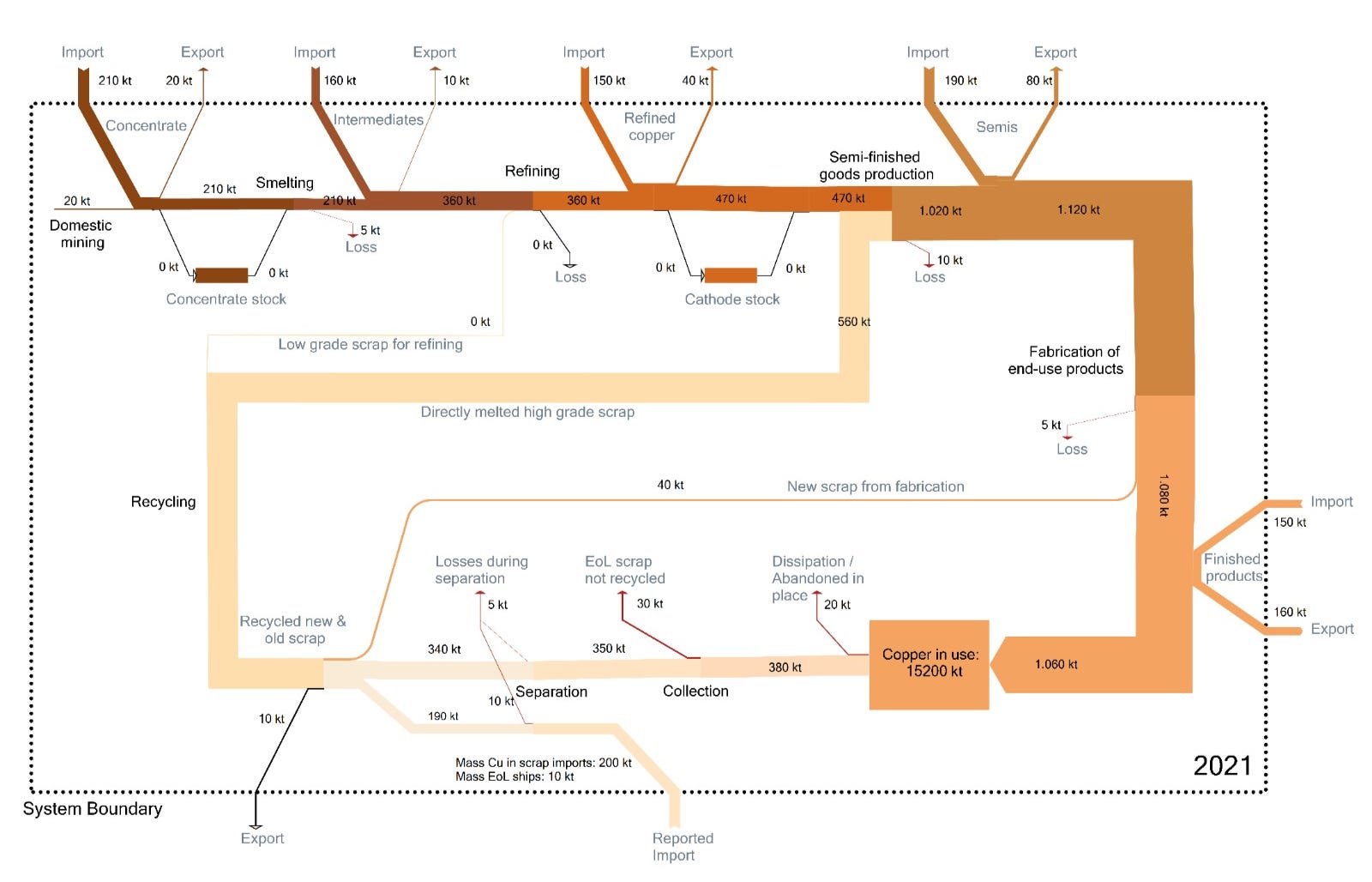
India has an enormous amount of this non-virgin copper sitting inside products. As of FY21, the country had ~15 million tonnes of copper actively in use, embedded in power grids, vehicles, ACs, computers and telecom cables.
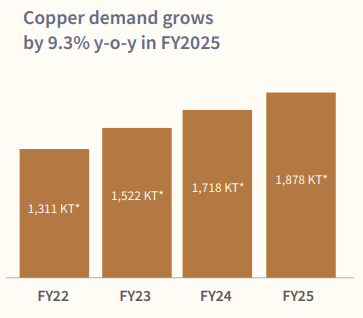
India’s copper demand in FY25 was about 1.88 million tonnes, up 9.3% from FY24. Of this, secondary copper accounted for 42%, up from 38% the previous year. That stock estimate has almost certainly grown since FY21, with roughly 1.1 million tonnes being added annually.
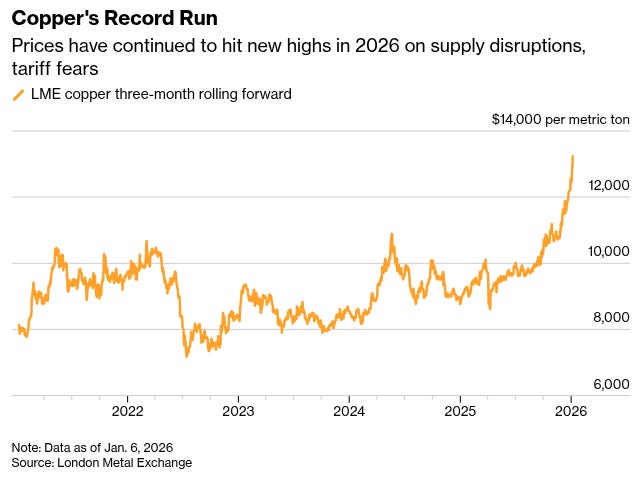
In a world where copper prices are only increasing, and India imports over 90% of its concentrate requirements, this secondary copper can provide a much needed cushion for our costs, even if it can’t ever fully replace primary copper.
Stock is not supply
We know that copper demand is increasing due to electrification, grid expansion, renewables, EVs, construction and data infrastructure. New mines take a decade or more to develop. India produces very little copper ore domestically. Demand is projected to grow to roughly 3 to 3.3 million tonnes by 2030 and 8.9 to 9.8 million tonnes by 2047.
For a more comprehensive dive on how the copper cycle works, we recommend watching our Subtext episode with Amit Kumar Gupta.
Is Copper in a Supercycle? | Subtext by Zerodha
Naturally, this makes the copper already above ground, inside components and infrastructure, look attractive. For instance, a power cable installed in a building this year might work perfectly well for decades. Building and infrastructure copper can remain in service for 30-50 years, while consumer goods and vehicles typically turn over in 15-20 years. However, naturally, you can’t extract this copper while the thing it’s embedded inside is still in use.
So, how much can you recycle out of this reservoir of copper every year? Well, for comparison, only about 380 kilo-tonnes (KT) of end-of-life copper became available for recycling in FY21. Today’s booming installations of solar farms, EV motors and grid cables add to the reservoir immediately. They won’t add to scrap supply for decades.
End of life
When copper does reach the end of its useful life in India, there’s an entire ecosystem to find it.
When someone replaces an AC, for instance, a kabadiwala (or garbage collector) typically shows up and pays cash for it. That material passes through neighbourhood scrap shops, then larger aggregators, to specialist dismantlers, before the copper inside it eventually reaches a processor or remelter. The chain can involve four or five intermediaries, but material rarely sits unclaimed at each link for long. This, as you might know, is still quite an informal sector.
However, large institutional scrap works on a different, more formal model. Factories, railways and power utilities auction off obsolete equipment through tenders. In fact, Indian Railways regularly auctions condemned locomotives and rolling stock through its IREPS platform, and individual lots can contain several tonnes of recoverable copper.
Now, how much of this collection really matters? Well, the numbers on this are conflicting.
One industry estimate puts the end-of-life copper recycling rate at 95-99%, attributing it to high collection efficiency. That number diverges sharply from a 2020 government framework that puts the copper recycling rate at just 20%.
The gap could be enormous partly because the two numbers are likely not measuring the same thing. The ICA figure counts what happens to copper that reaches end-of-life — how much of it gets collected and reused in any form? The government figure likely measures something different, perhaps recycled copper as a share of total demand, or copper processed through formal channels. But the framework doesn’t define its methodology clearly enough to say for certain.
What both numbers more or less agree on, though, is that collection is not India’s main problem.
Remelting versus refining
Now, “copper scrap” is not one uniform material.
A stripped copper wire from a demolished building is almost pure metal. An electric motor is enamelled copper windings trapped inside a steel casing. A transformer contains windings, steel cores and insulating oil. A printed circuit board has copper traces dispersed among plastics, solder and small quantities of gold, silver and palladium. These are all called copper scrap, but they require completely different processing.
International scrap specifications reflect this difficulty. The highest grades are clean, uncoated, unalloyed copper. The somewhat-lower grades, meanwhile, allow for some contamination, with copper content specified around 96%, minimum 94%. Further below that sit insulated wire, motor scrap, transformer material and complex e-waste, each with different recovery costs.
The processing route changes entirely depending on the starting material. Clean copper wire can often be melted directly, cast into rod and sold to a manufacturer without ever becoming a refined cathode. This is called direct remelting, and it dominates Indian copper recycling. Nearly all Indian copper scrap is directly remelted rather than going through secondary refining, with only about 1% undergoing secondary refining in FY21.
Dirty, mixed or contaminated scrap needs a far more involved process. It may require dismantling, shredding, physical separation of metals and non-metals, smelting to produce impure copper, fire refining, and finally electrorefining, where impure copper is dissolved from an anode and redeposited as high-purity cathode through an electrolytic process. That cathode can meet the strictest specifications. The London Metal Exchange’s Grade A standard caps the total of listed impurities at 0.0065%. More contaminated scrap needs further refining before meeting the purity needs of demanding electrical applications.
Getting from a contaminated circuit board to Grade A cathode also requires a different plant setup from melting clean wire. And India, by the government’s own assessment, has very little sophisticated secondary refining capacity. India is theoretically well equipped to re-melt good scrap, but poorly equipped to upgrade difficult scrap into high-purity copper.
The economics of scrap
Building a recycling business sounds simple enough is not easy, either.
A recycler’s margin is the spread between what they sell the processed copper for and what it costs to buy, transport, dismantle, sort, melt, refine and comply with environmental standards. You may subtract a few metal losses and financing costs as well from it. When copper prices rise, sellers of scrap know their material is worth more. That means higher scrap prices for recyclers, even if they can sell it at peak global prices later. Working-capital requirements will also likely increase.
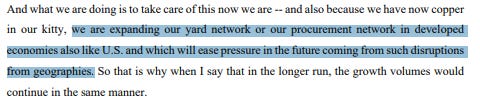
Gravita India, one of the country’s larger metal recyclers, shows this in its most recent earnings call. It reported its copper segment at roughly 50% capacity utilisation. Management discussed scrap-sourcing and logistics constraints and described plans for procurement yards in developed countries to lower sourcing costs. Plant capacity and high copper prices are not enough if you can’t secure the right feedstock at the right price.
What’s more, even as India has millions of kabadiwalas, a scrap-hungry industrial sector and a growing installed copper base, we actually imported 3.1 lakh tonnes of copper waste and scrap in 2023, worth about $1.67 billion (roughly ₹14,200 crore at ₹85/$). That is nearly the same order of magnitude as the best available estimate of India’s entire annual domestic end-of-life copper flow.
You see, scrap scattered across millions of households and workshops is not the same as graded, consistent tonnes arriving at a plant gate every month. India’s annual domestic end-of-life release is still limited by the age of its copper stock. In contrast, overseas scrap yards can supply processed, segregated grades that are easier to contract against.
You can see this in the trade data itself. When you divide the total import value by quantity for each source country, the average works out to roughly ₹610/kg for Saudi Arabian material and roughly ₹205/kg for UAE material, all under the same trade heading. That kind of gap only makes sense if the actual material being shipped is materially better in value.
In fact, Gravita’s management also said it was expanding procurement in developed economies because its existing developing-market yards supplied relatively little copper.
Meanwhile, Hindalco is constructing ₹2,000 crore secondary copper and e-waste recycling project in Gujarat. The company says recycling capacity is planned to scale from 50 KTPA to 200 KT per annum in phases. What makes it different from India’s existing recycling infrastructure is that, unlike a remelter that needs cleaner grades of copper, this facility is built around complex, low-grade material, including e-waste. It is equipped to deal with the gold, silver, and palladium recovered from circuit boards — and each of those can be sold in their own scrap markets.
India also notified Extended Producer Responsibility rules for non-ferrous metals in July 2025, effective from April 2026. The rules create two separate obligations. One, producers must meet progressively higher recycling targets, starting at 10% in FY27 and rising to 75% by FY33. Two, manufacturers, separately, must use a minimum share of recycled copper in new products, starting at 5% in FY29 and reaching 20% by FY32. Beyond tracking whether something got recycled somewhere, the second obligation forces manufacturers to actually buy and use secondary copper in their products.
Conclusion
None of this changes a basic arithmetic problem.
Say 30 tonnes of copper in old products reach end of life in a given year. A country recovers 90% of it, 27 tonnes. If total demand is 100 tonnes, recovered scrap covers 27% of it. Now demand grows to 150 tonnes, but end-of-life flows are still 30 tonnes because the stock hasn’t aged. The same excellent 90% recovery still produces 27 tonnes, which is now only 18% of demand. The demand just grew faster than old products could retire.
This is more or less what’s happening globally. Secondary copper’s share of total demand fell from about 37% in 2015 to 33% in 2023, even as recycled tonnage grew. For scale, even FY21’s entire estimated 380 KT end-of-life flow would equal only about 12% of projected 2030 demand.
Of course, India’s copper problem still requires mines, concentrates and imports.
At the same time, every kilometre of power cable, every transformer, every EV motor and every data centre being built right now is adding to the above-ground stock. Global copper scrap availability is expected to rise from roughly 16 million tonnes today to 27 million tonnes by 2050 as the current installation boom works its way through product lifetimes.
A grid cable installed in 2026 won’t become scrap until the 2050s or 2060s. An EV sold today becomes recyclable material only when it’s retired. So the same surge in copper demand that’s straining mine supply right now is also building a large urban reservoir that India will eventually need to tap in the future. It’s still early days, but that will depend on the decisions we make regarding refining capacity and supply in the coming years.

Indian industry can’t let go of coal yet
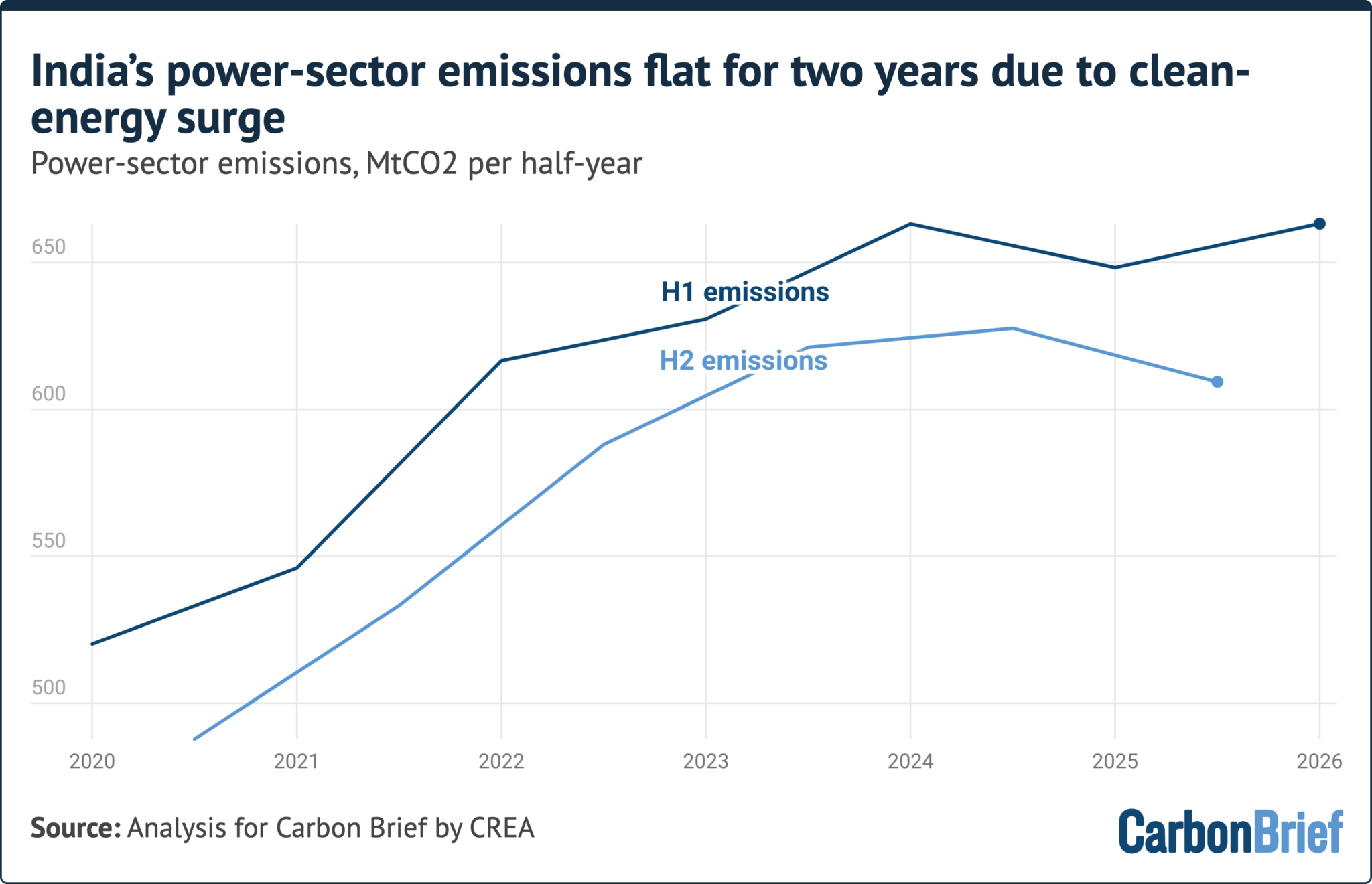
India generated about 7% more electricity in the first half of 2026 than it did two years earlier. It managed that increase without generating more power from coal.
Solar, wind, hydro and nuclear supplied the entire net increase, with solar doing most of the work. According to CREA’s analysis for Carbon Brief, this is the first time in more than fifty years that electricity demand has grown over a two-year period without coal power growing alongside it.
That is progress in coal’s biggest market. Electricity generation accounts for almost three-quarters of India’s coal consumption. For decades, growing electricity demand gave coal producers a dependable source of new business. Clean energy is now meeting more of that additional demand.
But this tells us something about how India is supplying electricity. It tells us much less about the factories India is building and what those factories will consume over the next few decades.
Coal hasn’t entered a lasting decline
There is also a limit to what the power numbers establish. The flat comparison includes a fall in power-sector emissions in the first half of 2025, followed by a rebound in 2026. Last year’s unusually early and strong monsoon helped by reducing cooling demand and increasing hydropower. Clean-energy growth has made a difference, but weather and demand still move the result around.
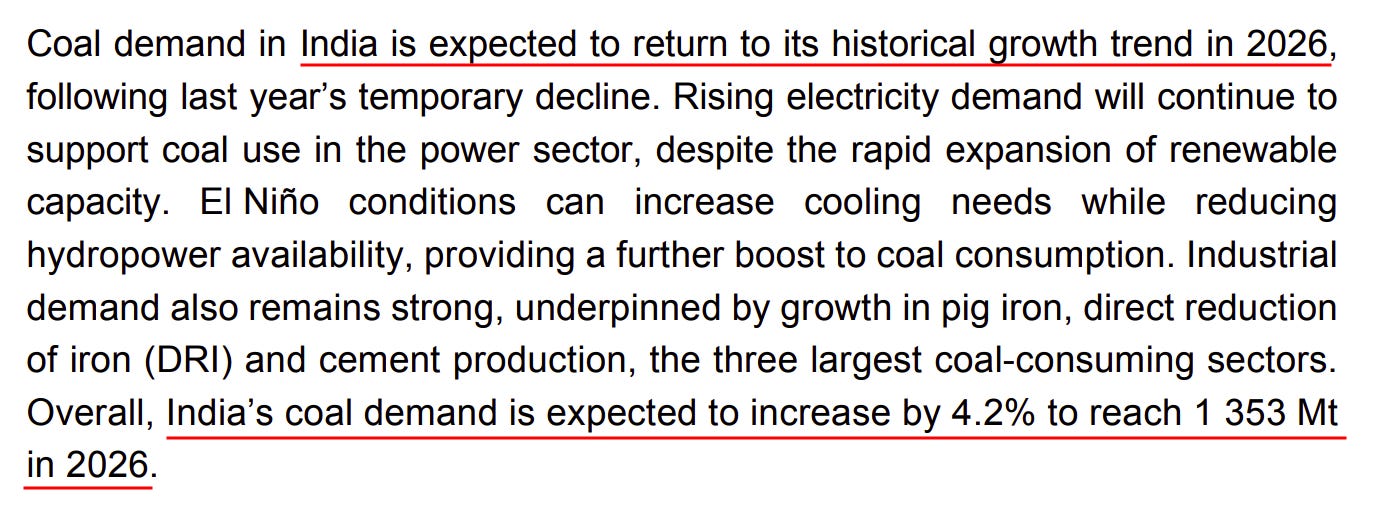
The IEA’s full-year forecast reflects that uncertainty. It expects India’s coal consumption to rise 4.2% to a record 1,353 million tonnes in 2026, with growth coming from both electricity generation and industry. Coal has not entered a dependable decline.
The question is how far the progress in clean electricity can eventually reach.
Factories need more than a cleaner grid
Consider what happens when a factory’s electricity supply becomes cleaner. Its motors and machines can carry on working as before. The change happens in the power system supplying them. The factory doesn’t have to replace every machine because more of its electricity now comes from solar.
A factory that burns coal directly faces a different investment decision.
It may use coal to produce steam, dry materials or heat a furnace. A solar farm supplying the grid won’t change that equipment. The owner has to decide whether replacing or modifying it makes commercial sense.
For many uses, the technology already exists. Electric boilers and industrial heat pumps can supply heat and steam used in industries such as food processing, textiles and paper. The IEA identifies costs, grid connections and policy barriers as major obstacles to their adoption.
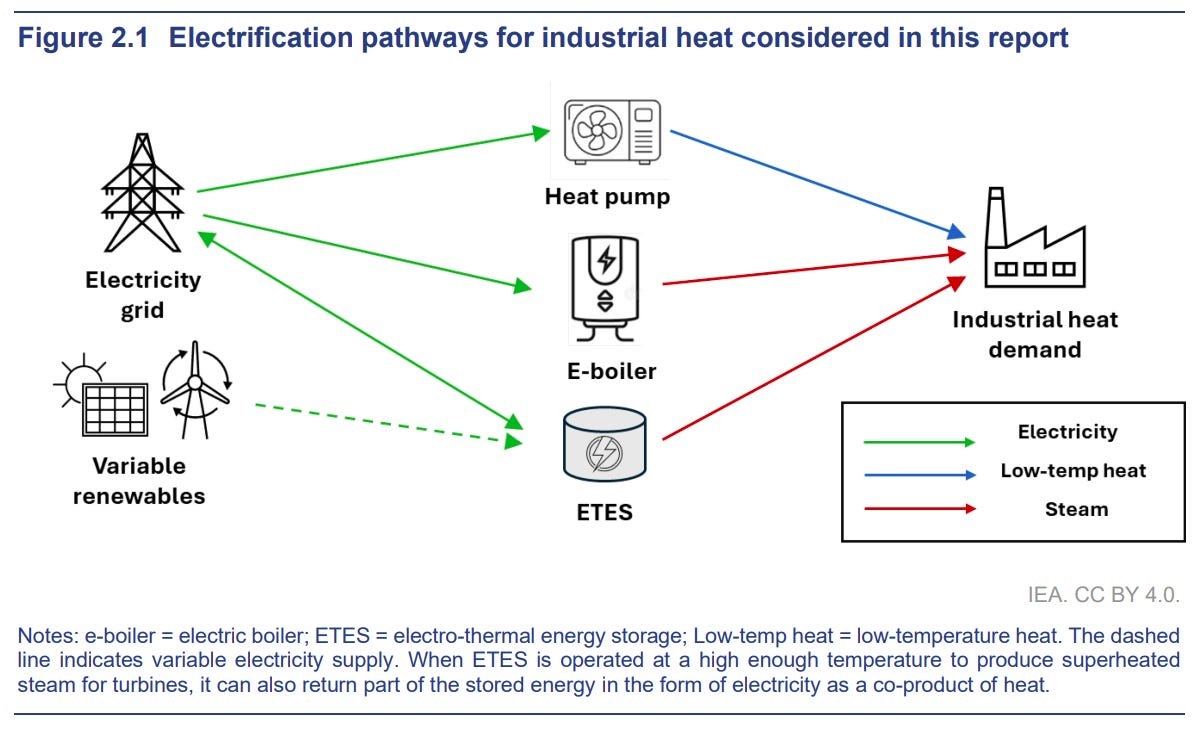
For the factory owner, the calculation includes the price of electricity when the plant needs it, the cost of new equipment and the reliability of supply. Cheap solar generation helps, but the business case has to work at the factory gate.
This is the problem behind SECI’s effort to aggregate industrial demand, which we covered last week. Arranging affordable clean electricity could make switching worthwhile for more factories. It still leaves them with equipment to finance and processes to change.
Steel’s problem starts before the electric furnace
Steel adds another complication.
To make fresh iron from ore, steelmakers must remove the oxygen bound to the iron. In conventional production, carbon from coal helps do that chemical work while also supplying heat. Replacing the heat alone doesn’t replace the whole process.
This matters even when the final steelmaking furnace runs on electricity. Much of India’s sponge iron is made using coal to remove oxygen from ore. That iron can then be melted in an electric furnace. The furnace’s electricity may become cleaner while the earlier stage continues consuming coal.
So “electric steelmaking” tells you only part of the story. You also need to know what went into the furnace.
There are ways to reduce this dependence. Recycling scrap avoids having to make all the iron afresh. Hydrogen produced using clean electricity can remove oxygen from ore through a different production process. But scrap availability limits how much steel can be made through recycling, while hydrogen-based production remains expensive.
The next round of investment
These constraints show up in actual investment decisions.
In March, Tata Steel opened a scrap-based electric furnace in Ludhiana, with capacity to produce 0.75 million tonnes of steel a year. It uses recycled steel to make construction rebars.
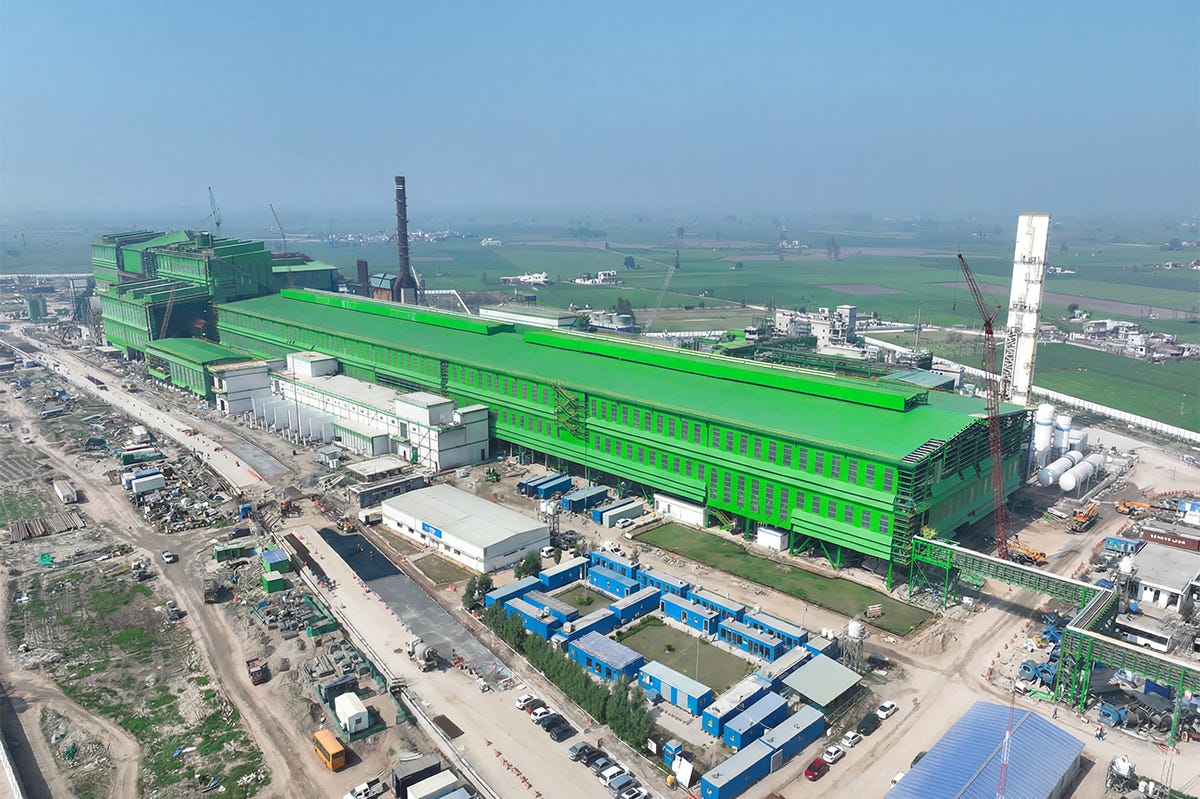
The company is also expanding through a much larger coal-based project. Its Kalinganagar expansion, inaugurated in May 2025, added 5 million tonnes of annual steelmaking capacity, supported by a new blast furnace and coke plant.
The plants serve different product markets, so their capacities aren’t interchangeable. But together they illustrate what the transition currently looks like: a company can invest in a cleaner production route while also substantially expanding production that depends on coal.
That is why announcements of renewable capacity, electric furnaces or lower emissions per tonne cannot, by themselves, tell us where total coal consumption is heading. We also have to look at how much production is being added through each route.
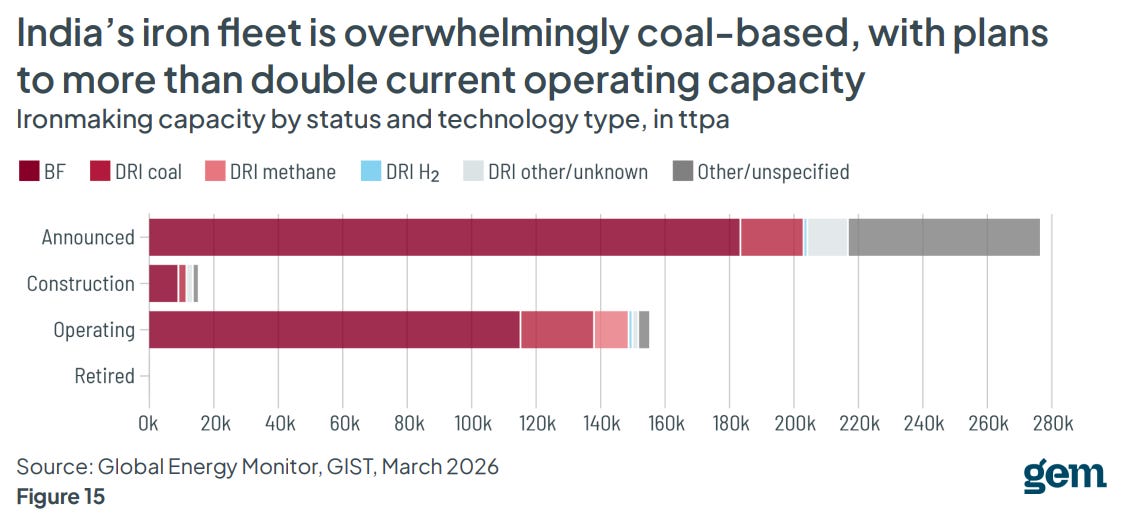
Across India, that expansion remains heavily tilted towards coal. The country targets 300 million tonnes of annual steelmaking capacity by 2030–31. In its 2026 assessment, Global Energy Monitor found that around 93% of the Indian ironmaking capacity in its development pipeline was planned around coal-based technology.
The government is also encouraging new uses for coal. Its coal-gasification programme supports projects that turn coal into chemicals and synthetic gas, partly to strengthen energy security. These investments would create additional industrial demand for coal even as renewable electricity expands.
Once such plants are operating, their owners have capital to recover and equipment designed around a particular fuel or production process. Changing course can mean another substantial investment, well before the first one has paid for itself.
But much of this expansion remains on paper. In Global Energy Monitor’s assessment, only 5% of the Indian ironmaking pipeline it tracked had entered construction.
That leaves a sizeable opportunity to change what gets built. India’s clean-power boom can make cleaner industrial production more viable. Whether factories take that route will depend on equipment costs, electricity supply, raw materials and the incentives shaping investment. Those decisions will determine how much new coal demand India builds into its economy.
- This edition of the newsletter was written by Vignesh and Kashish.
Our latest episode on Subtext is with Avantika Goswami and Trishant Dev from the Centre for Science and Environment. We speak to them about the impossible question facing developing nations today: how do you industrialise and decarbonise at the same time?
It covers why India’s domestic solar industry still struggles to compete with Chinese prices, what happens to the 10-15 million livelihoods tied to the coal belt during a green transition, the reality of how rich nations protected their own industries to build wealth, and the uncomfortable hypocrisy of Western climate policies and carbon border taxes.
Watch the full episode here.
Tidbits
[1] In the culmination of a long-drawn battle, the board of Tata Sons has finally approved a plan to list the group’s holding company. Tata Trusts Chairman Noel Tata, who wanted to keep Tata Sons private, was outvoted by all others on this issue. Meanwhile, Tata Sons has also chosen to re-appointe N Chandrasekaran as Chairman — Chandrasekaran had earlier resigned saying that he wouldn’t seek another term.
Source: Business Standard
[2] The Union Cabinet on September 16 approved raising the EPFO wage ceiling from ₹15,000 to ₹25,000 per month, bringing over 51 lakh additional employees under mandatory provident fund, pension (EPS), and insurance (EDLI) coverage. The ₹15,000 ceiling had been unchanged since September 2014, when it was raised from ₹6,500.
Source: The Hindu
[3] Goldman Sachs analysts suggest the US Federal Reserve could introduce another interest rate hike in October. Persistent strength in the labor market and elevated inflation data are keeping monetary policy tight despite earlier market expectations of rate cuts.
Source: Mint
[4] The government released a revised GOBARdhan scheme guidelines to accelerate clean energy adoption, assuring complete offtake of compressed biogas (CBG) produced by private plants. The policy sets standardized procurement pricing to encourage long-term investments in bio-energy infrastructure.
Source: Business Standard
[5] The Kremlin is rolling out fresh state support measures and export strategies to protect Russia’s position as the world’s largest wheat exporter. The initiatives aim to maintain competitive global pricing despite international sanctions and shipping challenges.
Source: Bloomberg
Beyond Today’s Brief
There’s always more happening at Markets by Zerodha.
The Chatter: What is driving Solar Industries’ order book momentum across defence and commercial explosives? And what do PhonePe’s latest financial disclosures signal for its expansion in digital payments and market dominance?
Aftermarket Report: How did selling pressure at higher levels leave Nifty struggling below 23,300 despite ending in the green? And why do markets continue to stay constrained as immediate positive triggers remain elusive?
Subtext: Former SEBI Whole-Time Member Ananth Narayan breaks down why the Indian rupee faces persistent depreciation pressures, how foreign portfolio flows impact market reflexivity, and the policy trade-offs facing currency management.
Join us on WhatsApp, where we share interesting soundbites from concalls, articles, and everything else we come across throughout the day. You’ll also get notified the moment a new video or article drops so that you can read or watch it right away.
Thank you for reading. Do share this with your friends and make them as smart as you are 😉