

Our goal with The Daily Brief is to simplify the biggest stories in the Indian markets and help you understand what they mean. We won’t just tell you what happened; we’ll tell you why and how too. We do this show in both formats: video and audio. This piece curates the stories that we talk about.
You can listen to the podcast on Spotify, Apple Podcasts, or wherever you get your podcasts and watch the videos on YouTube. You can also watch The Daily Brief in Hindi.
In today’s edition of The Daily Brief:
1. What did a government audit find in India’s EV subsidy scheme?
A CAG audit of India’s FAME EV scheme revealed major missteps, including misallocated budgets, widespread localisation rule violations by manufacturers, and severe portal accounting mismatches. Additionally, public charging infrastructure lagged drastically behind schedule, leaving key targets missed and installed chargers unusable.
2. Why are major fragrance companies under investigation?
India’s competition regulator is investigating global fragrance giants like Givaudan and IFF over suspected price collusion and anti-poaching agreements. Although scents represent a tiny fraction of product costs, fragrance houses hold immense leverage because formula changes carry high technical risks.
What a government audit found in India’s EV subsidy scheme?
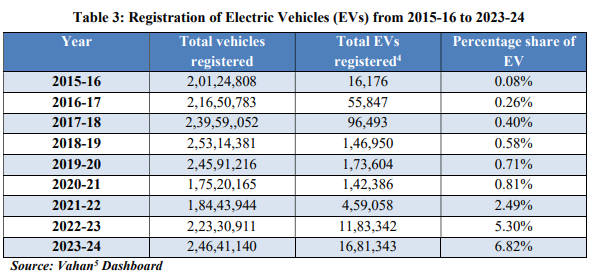
In 2015, 0.08% of vehicle registrations in India were electric vehicles. By 2023-24, that had risen to 6.82%. There are many reasons for that jump. But FAME, one of the government’s main EV schemes, would certainly have helped.
It paid manufacturers a cash incentive for every eligible EV sold, bringing the price down for buyers.
FAME started small in 2015. FAME II followed in 2019 and ran until 2024, with ₹11,500 crore allocated to it. The scheme was not just about making EVs cheaper. It also funded public charging stations and EV research, while requiring manufacturers to gradually replace imported parts with locally made ones to remain eligible for subsidies.
But it did not work quite as smoothly as those headline numbers suggest. The Comptroller and Auditor General (CAG), the government’s official auditor, recently reviewed nine years of the scheme and found plenty of problems with how FAME was run.
The government got the mix wrong
When FAME II was designed, the government had to guess which EVs Indians would buy. It got that mix wrong. Of the ~₹8,600 crore set aside for vehicle incentives, ₹2,000 crore went to two-wheelers, ₹2,500 crore to three-wheelers, ~₹550 crore to four-wheelers and ~₹3,550 crore to electric buses. By March 2023, two-wheelers had already used 127% of their allocation. Three-wheelers had used just 16%, and four-wheelers 28%.
So in May 2023, the government moved the money around. Two-wheeler funding rose 75%, while allocations for three-wheelers and four-wheelers were cut by 72% and 54%, respectively. The Ministry said this was not simply because Indians preferred scooters over cars. The weak demand and limited charging infrastructure had held back three- and four-wheelers, while two-wheelers had already taken off. The CAG agreed with the shift, but said the original estimates were unrealistic, given how much money had to be moved so late in the scheme.
The three-wheeler target makes the point. FAME II originally aimed to subsidise 5 lakh vehicles, then cut that target to about 1.55 lakh. It eventually subsidised roughly 1.65 lakh, which the government called 106% achievement. Against the original target, it was closer to 33%.
The subsidy checks were full of holes
FAME II was not just meant to get more people to buy EVs. It was also meant to build an EV manufacturing industry in India. Under its Phased Manufacturing Programme, companies had to gradually replace imported parts with locally made ones. These included the onboard charger, hub motor and motor controller.
To receive an incentive, a manufacturer had to get a sample vehicle tested and certified, then promise that all vehicles sold under FAME would continue meeting these localisation rules.
That promise was where the problem began. Once a company was certified and started receiving incentives, there was no regular system to check whether the vehicles it was selling still met the rules. Manufacturers were meant to renew their eligibility certification periodically. But the government largely relied on them to report their own compliance.
The issue emerged only after complaints that some manufacturers were violating the rules. Testing agencies then examined company records, inspected factories and took vehicles apart to check whether the parts were actually made in India.
They found that five manufacturers were still importing parts that should have been made locally. These companies had also failed to renew their annual certification. The CAG does not say how many manufacturers were examined in total, only that these five had collected ₹468 crore in incentives despite the violations.
Two have since returned ₹190 crore, including interest. The other three still owe ₹278 crore. The Ministry has ordered them to deregister, barred them from its schemes for two years and referred the case to the Serious Fraud Investigation Office. The report does not name the five manufacturers, and we could not independently confirm their identities.
The Ministry says PM E-DRIVE, which replaced FAME, has tightened the process. Testing agencies must now randomly pick vehicles from customers or factories each year, take them apart and verify whether the required parts are made in India.
A separate issue exposed another weakness. To qualify for the subsidy, an electric two-wheeler could not have an ex-factory price above ₹1.5 lakh. Three manufacturers got around this by leaving the onboard charger out of the listed price and selling it separately as an accessory.
But the charger was not optional. It was a mandatory part, and one that also had to be made in India. Selling it separately kept the official vehicle price below ₹1.5 lakh, allowing the models to qualify for subsidies. The government paid ₹1,420 crore in incentives on them.

The Ministry asked manufacturers to refund customers for the separately sold chargers. But the CAG said that did not fix the main problem. Had the charger been included in the vehicle’s price from the start, many models would have crossed the ₹1.5 lakh limit and not qualified for the subsidy.
We also found reports from 2023 of a similar issue. Ola Electric, TVS Motor, Ather Energy and Hero MotoCorp had separately charged customers for chargers on electric scooters. After the Ministry intervened, all four agreed to refund the cost, amounting to a few hundred crore rupees.
The portal could not track the money
Both the localisation violations and the charger issue were caught only after incentives had been paid. Ideally, they should have been flagged while claims were processed. That was partly the job of the online portal used to process and track incentive payments. But the CAG found serious problems with the portal itself.
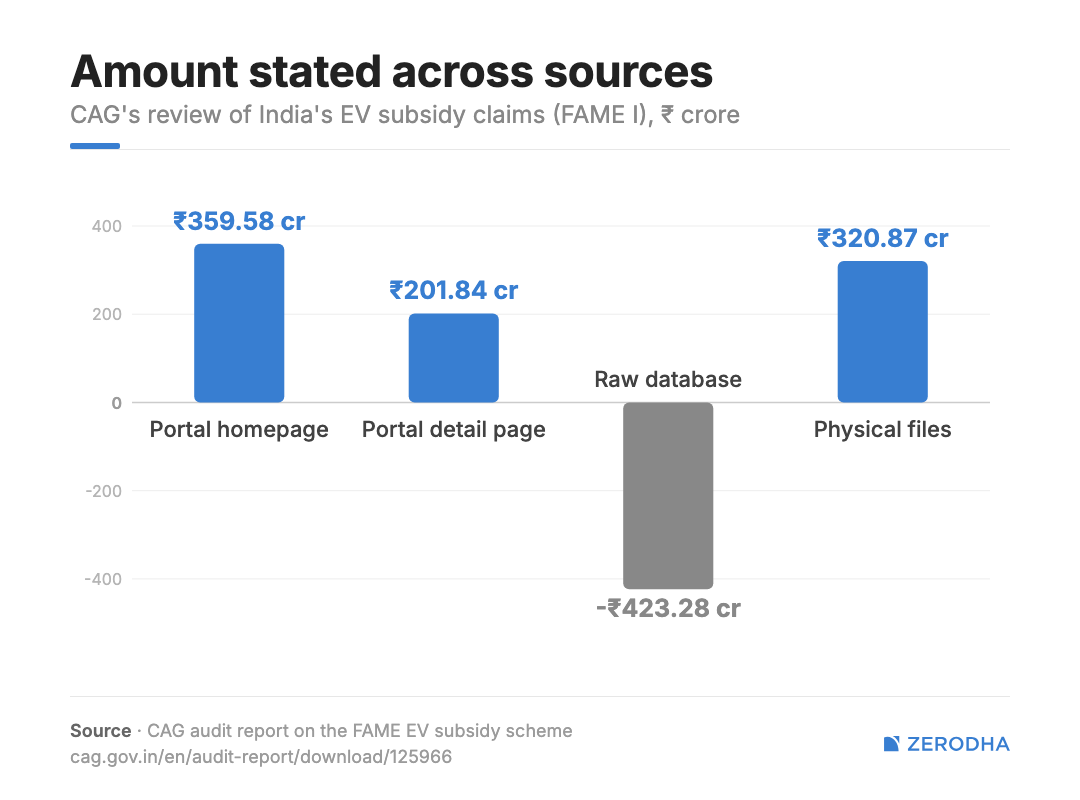
For FAME I, which ran from 2015-16 to 2018-19, the CAG compared records from the portal, its underlying database and the Ministry’s physical files. All three should have matched. Instead, each showed a different number.
The portal homepage showed ~₹356 crore claimed. Another section showed just ~₹200 crore. The raw data behind the portal showed an even stranger figure negative ~₹423 crore.
The Ministry’s physical files had yet another number: ₹321 crore. But they did not contain individual vehicle details, so the CAG could not cross-check the claims. There were four different sets of numbers for the same scheme. With no reliable record to fall back on, the CAG said it could not verify whether FAME I incentives were correct, or even valid.
For FAME II, the Ministry built a new portal with the same vendor that had built the troubled FAME I portal, even though it had not figured out what went wrong earlier. The new portal had different problems. It accepted claims with invoice dates from 2027, 2044 and even 2088 — decades after the scheme was meant to end — as well as dates from 1975 and 1990, before FAME even existed.
It also accepted duplicate vehicle registration numbers, and paid some duplicate claims. For much of FAME II, the portal was not directly linked to Vahan, the government’s vehicle-registration database. Officials instead had to manually compare Excel files to check whether subsidy claims matched registration records.
So, for years, a scheme handling thousands of crores relied on manual checks for something as basic as whether a subsidy claim was genuine.
Chargers that never arrived
So far, the problems were with incentives paid on EVs. But FAME was also meant to build the charging network those vehicles needed. Here too, it fell far behind plan.
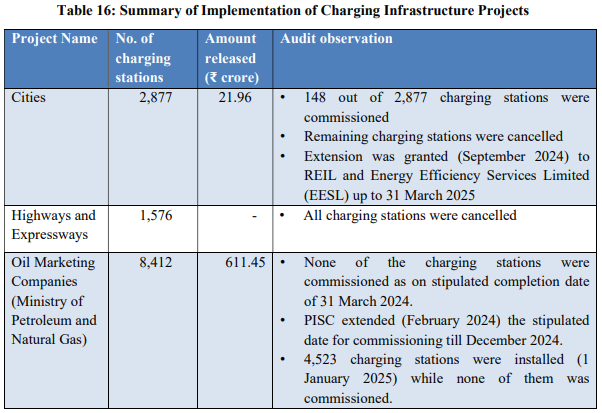
FAME II’s city-charging programme was meant to set up public chargers at community spaces and workplaces. This mattered especially for people in apartments or without dedicated parking, who cannot charge an EV overnight. The government approved 2,877 stations. Only 148 were set up and made operational.
A separate plan for 1,576 stations along highways and expressways was cancelled after barely any progress. Another 8,412 were assigned to three state-owned oil marketing companies. But by the March 2024 deadline, not one had been commissioned—that is, connected to power and ready for use.
CAG auditors also inspected 104 charging stations in 2023, built by BHEL, REIL and EESL across five cities and two highway stretches.
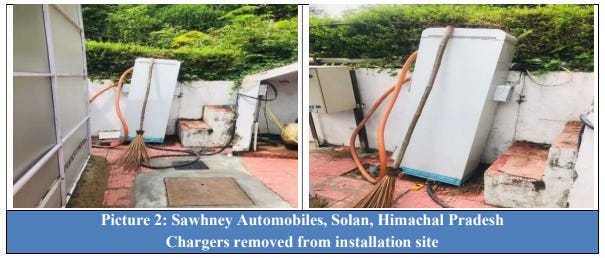
Many simply could not be used. Some had no power supply; others had been removed or could not be located. Some were damaged, while software problems stopped the Ministry from monitoring others remotely. At a few sites, staff did not know how to operate the chargers. At one, a car charger had been installed in a two-wheeler parking spot.
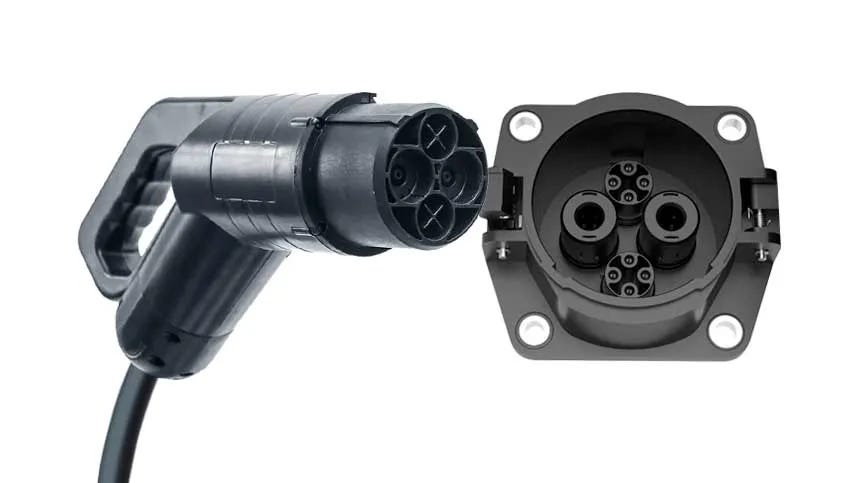
CHAdeMO chargers may be the clearest example of money spent on infrastructure nobody could use. CHAdeMO is a fast-charging plug mainly used by Japanese EVs, and the government required agencies to install it under its city and highway projects. It expected Japanese automakers, which had a large share of India’s passenger-car market, to launch CHAdeMO-compatible EVs here. They never did.
By the time the requirement was dropped, agencies had already ordered and, in some cases, installed these chargers. Across FAME scheme, ₹10 crore was spent on these chargers that, according to the CAG, could not be used because no compatible EVs were on Indian roads.
The bigger lesson from FAME
The problems went beyond vehicle subsidies and charging infrastructure. FAME I also funded 16 research projects to develop India’s EV technology. By the time of the audit, only nine were complete. Four had been shut before completion, one was cancelled and two were still ongoing.
Some fixes came during FAME itself. In 2023, the Ministry brought in IFCI to manage the scheme, automate claims and finally link the FAME portal directly to Vahan, the government’s vehicle registry. After the localisation violations surfaced, testing agencies introduced a common process in December 2024 to take vehicles apart and check whether the required parts were actually made in India.
PM E-DRIVE, which replaced FAME, now requires annual strip-down tests to check localisation rules. It also uses Aadhaar-authenticated e-vouchers when an EV is bought, adding another check against fraudulent claims.
None of this takes away from the fact that FAME helped more Indians switch to EVs. But schemes like FAME are usually judged by their biggest numbers: the outlay, the vehicles subsidised and the jump in adoption. Those numbers are real, and they make for easy headlines. But this audit shows why they do not tell us whether a scheme actually worked.
Money can be released and still be spent badly. A charging station can be installed and never switched on. An incentive can go to a vehicle that should never have qualified, simply because nobody checked. None of this shows up in the outlay or adoption figures. It only shows up when someone looks at what happened to the money after it left the government’s hands. That is what this audit did, and what most public conversation around a scheme like this misses.
FAME helped more Indians switch to EVs. But this report makes clear that this fact alone tells us far less about the scheme than it seems.

Why are fragrance companies under investigation?
Making a bottle of shampoo involves many small jobs. Surfactants remove oil and dirt. Conditioners make hair easier to manage. Preservatives stop the product from spoiling. Then there is the separate formula that gives the shampoo its familiar smell.
That formula is often developed by a company whose name never appears on the bottle.
Givaudan, dsm-firmenich and International Flavours & Fragrances, or IFF, are three of the world’s largest fragrance houses. They create scents used in shampoos, soaps, detergents, deodorants, cosmetics and perfumes.
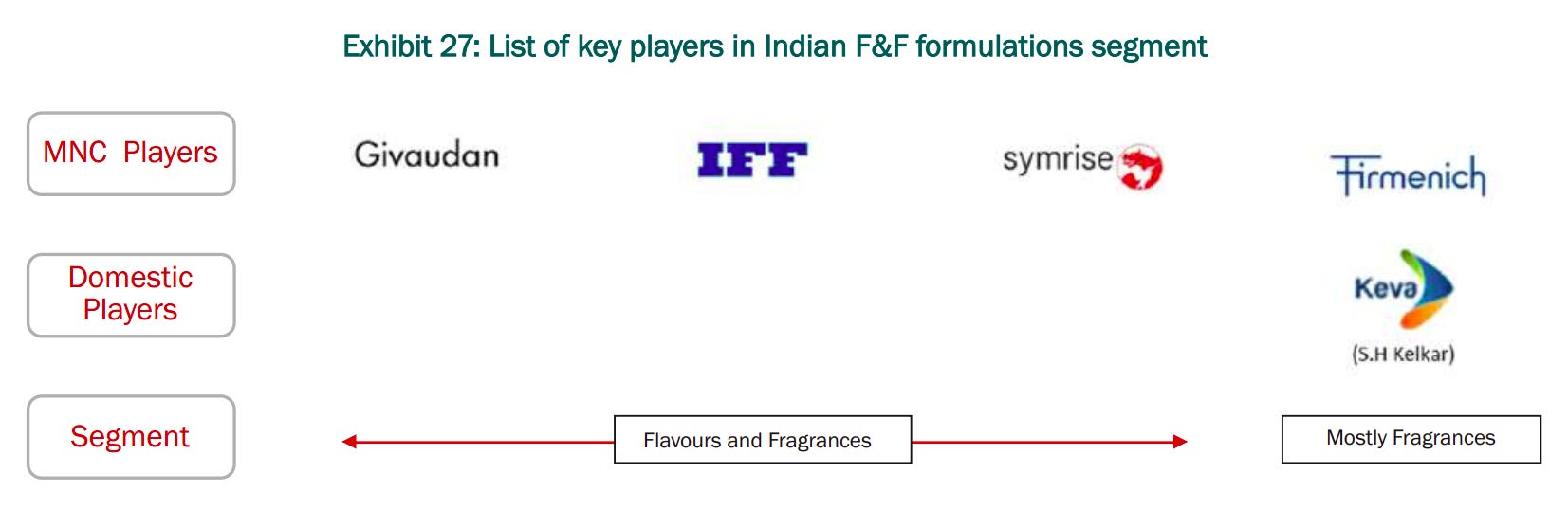
India’s Competition Commission is investigating whether the three colluded on prices instead of competing independently. There is no finding of wrongdoing yet. But the case becomes more interesting once you understand how the industry works.
What goes into a fragrance
A commercial fragrance is made from aroma chemicals, natural extracts, essential oils, solvents and other materials that help it work properly. A fragrance house combines these into a proprietary formula, which is then added to shampoo, detergent or another consumer product.
Some companies specialise in one part of this chain. India’s Privi Speciality Chemicals, for instance, makes aroma chemicals. But the industry is not divided so neatly. Large fragrance houses make some ingredients themselves, use them in their own formulations and may even sell them to other fragrance houses. IFF says it sells certain fragrance ingredients even to competitors.
The formula has to do more than smell pleasant. A detergent fragrance must remain stable in an alkaline mixture, survive storage and a wash cycle, and leave the intended scent on fabric. A shampoo fragrance must work with surfactants and other ingredients without separating, degrading or changing the product.
These formulations are eventually sold to consumer companies making everything from soaps to cosmetics. They usually send a product brief to their approved suppliers, test the proposed formulations and choose one based on scent, cost and technical performance.
What makes this industry so different?
Before getting to the collusion allegations, there are two questions worth separating. Do a few companies dominate this market? And why do fragrance houses have so much power over their customers?
There are plenty of local and niche fragrance companies. But the number that can serve multinational consumer-goods companies across products and countries is much smaller. That does not, by itself, establish that they are dominant under competition law. CCI would need to define the relevant market and assess their actual market shares.
Fragrance is usually a small part of a product’s cost. According to some estimates consumer fragrances account for only 0.5–2% of end-product costs. For fine fragrances, the figure is around 4–6%.
But smell can have an outsized influence on whether people recognise and repurchase a shampoo or detergent. Changing suppliers may mean creating a new formula, running stability and performance tests, clearing regulatory checks and possibly conducting fresh consumer trials.
That gives fragrance houses unusual power. Their product is cheap relative to the finished product, but changing it can be risky. A consumer-goods company may not want to alter a familiar scent just to save a little money.
The barriers to entering this top tier are also steep. It is not just about spending money on a factory. It requires years of accumulated knowledge around formulas, ingredients, consumer preferences, regulation and application testing.
At the end of 2025, IFF employed roughly 3,000 people in research, innovation, creation and design. It spent $694 million on R&D and held 849 granted US patents. Most of its formulas are kept as trade secrets.
Large FMCG companies also maintain “core lists” of approved suppliers. A new fragrance house must build the scientific capability, supply chain, regulatory infrastructure and customer trust needed even to get invited to compete. That makes it harder for new players to break in, which in turn helps the existing giants stay entrenched.
Talent is part of this moat too. CCI is separately examining allegations that some of the same companies agreed not to hire one another’s employees.
The industry depends on specialised perfumers, chemists and technical staff. Givaudan’s perfumery course alone lasts four years, during which students learn roughly 500 ingredients. Restricting employee movement affects salaries. But it causes bigger problems too. People moving between companies is one way specialised knowledge spreads, including to smaller competitors. Limiting that movement could reinforce the barriers that already protect the largest fragrance houses.
India is not alone
The Indian case did not emerge in isolation. Many authorities across the world began coordinated investigations into the fragrance industry.
The Swiss regulator named Givaudan, Firmenich, IFF and Symrise. It said it was examining possible price coordination, restrictions that prevented rivals from supplying certain customers, and limits on the production of particular fragrances.
The European investigation was also initiated in 2023 and remains unresolved. In 2024, however, the European Commission separately fined IFF €15.9 million after a senior employee deleted WhatsApp messages exchanged with a competitor during an inspection. That was a finding of obstruction, not cartelisation.
The US Justice Department closed its investigation in February 2026, although private cases brought by fragrance buyers continued. IFF paid $26 million to settle claims brought by direct purchasers, without a finding of liability.
None of this proves that the companies fixed prices or restricted hiring. CCI will need evidence that competitors actually coordinated with one another.
Similar price increases are not enough on their own. These companies face many of the same input costs, like raw materials, freight and energy. If those costs rise together, their prices may also rise together without any agreement between them. The industry’s concentration and high entry barriers explain why regulators are looking closely, but not evidence that proves collusion.
- This edition of the newsletter was written by Vignesh & Mridula.
Cash & Copium #4
In the latest episode of Subtext, Abid, Bhuvan, and Aakanksha dissect the structural conflicts of interest in mutual fund distribution, the red flags hidden inside your CAS statement, and why keeping your portfolio simple will always make you more money than chasing “cute” thematic funds.
You can watch the full episode on YouTube.
Tidbits:
1. Sashidhar Jagdishan to exit HDFC Bank in October 2026 after deciding against another term
HDFC Bank’s managing director and CEO Sashidhar Jagdishan has formally informed the board he will not seek reappointment and will retire on October 26, 2026. The decision follows a period of governance scrutiny, highlighted by the abrupt resignation of the bank’s part-time chairman earlier this year, and puts the focus on succession at India’s largest private-sector lender.
Source: Livemint
2. OpenAI unveils custom Jalapeño AI inference chip with Broadcom
OpenAI has introduced Jalapeño, its first custom AI processor, developed with Broadcom specifically for running model inference. The chip is designed to improve efficiency and reduce OpenAI’s reliance on Nvidia hardware for inference workloads.
Source: The Times of India
3. NPCI readies UPI AutoPay interoperability for consumers and merchants
The National Payments Corporation of India is preparing to implement an interoperability framework for UPI AutoPay, allowing users to move existing recurring payment mandates between UPI apps without cancelling and recreating them. The framework reduces customer and merchant lock-in while allowing businesses to shift mandates between payment gateways more seamlessly.
Source: Livemint
4. ONGC explores deepwater drillship acquisition to support Mission Samudra Manthan
Oil and Natural Gas Corporation has issued an expression of interest to acquire deepwater drillships or form joint ventures to secure dedicated drilling capacity for offshore exploration. The initiative supports the government’s ₹84,084 crore Mission Samudra Manthan scheme, aiming to reduce dependence on foreign-owned chartered rigs as India expands its deepwater energy search.
Source: Business Standard
5. Hair loss drug developers become Wall Street’s next aesthetic health bet
Investors are increasingly backing companies developing new treatments for pattern hair loss, aiming to capitalise on consumer-health demand following the success of GLP-1 weight-loss drugs. Capital inflows are rising as several experimental therapies advance in a category that has seen few major new treatment options for decades.
Source: Bloomberg
Beyond Today’s Brief
There’s always more happening at Markets by Zerodha.
The Chatter: What connects Indian Railways’ expansion to our power grid? How is TCS using its Porsche partnership to reshape European mobility? Plus, updates from Hexaware, Max Life, Tempsens, and Gokaldas Exports.
Aftermarket Report: How did Nifty recover 80+ points from sub-24,000 lows to close near 24,080? What drove crude oil above $91 as Middle East tensions flared? And what boosted India's Q1 FY27 GDP growth to a strong 7.8%?
Points & Figures: How did India’s microfinance sector recover after writing off 17% of its loan book? This edition looks at tighter regulation, falling delinquencies, and a two-speed recovery, with large NBFC-MFIs taking 98% of fresh borrowings.
What we’re reading: How did ITC move from cigarettes to biscuits, and how can rogue AI be held accountable? This week’s list covers ITC, Anthropic’s AI findings, rogue AI regulation, SEBI regulators, “thick” art, and our offline reading club.
Join us on WhatsApp, where we share interesting soundbites from concalls, articles, and everything else we come across throughout the day. You’ll also get notified the moment a new video or article drops so that you can read or watch it right away.
Thank you for reading. Do share this with your friends and make them as smart as you are 😉
While the FAME subsidy story is fascinating, I think Govt. should push B2B adoption of EV vehicles i.e. passenger buses used by State or City corporations (BMTC/MTC etc), since these operate on fixed routes thereby negating requirement of extensive charging infra..
For the 2nd story, was wondering if ownership was common in these companies via large index funds (Blackrock,Vanguard etc.) (which was referred to in last week's Mindover Markets substack).. Say if there are companies with stakes in all competing companies in a industry, is there a higher likelihood of collusion?
The deepest line in this piece is "money can be released and still be spent badly" - and the same lesson holds at the level of a single vehicle. I write for evriskindex.com, an independent site tracking EV recalls and documented failure patterns (mostly North American and UK markets, so a different slice than FAME's two-wheeler world), and the pattern rhymes exactly: headline numbers - vehicles subsidised, recalls "completed", chargers "installed" - tell you almost nothing until someone verifies what happened afterward. A portal accepting invoices dated 2088 is the funny version; a recall database marking a battery inspection "complete" with no record of the actual finding is the consumer version, and it quietly decides who pays a five-figure repair bill years later. PM E-DRIVE's annual strip-down tests are the right instinct: verification beats attestation, every time. And if India builds a public per-vehicle recall and defect history early - Vahan already provides the registry spine - it would leapfrog what most Western markets still do not have. Excellent breakdown.